



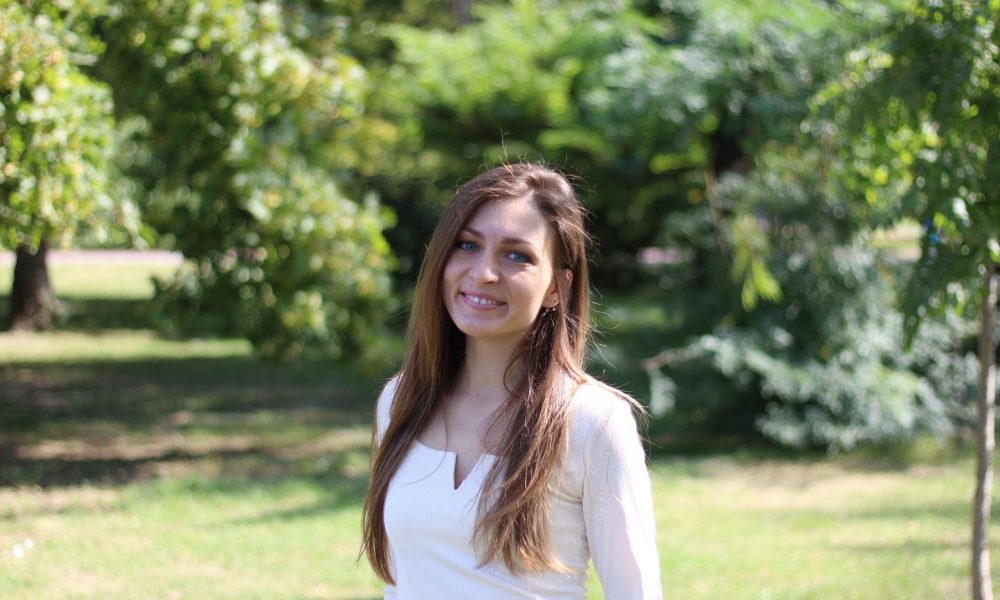
Today we’d like to introduce you to Aleksandra Milanova.
Hi Aleksandra, can you start by introducing yourself? We’d love to learn more about how you got to where you are today?
I was born in Macedonia, a small country in Southeast Europe, and like my country, everything about me growing up was small. I was a tiny girl, living in a one-bedroom apartment with my family, in a small town… But there was one thing about me that was always pretty huge–my dreams. It took courage to dream in the world I lived in as Macedonia struggled through a horrible political transition once it gained its independence. The education, the economy… everything was corrupted and tough to navigate. But I was a pretty optimistic girl–got it from my mother (thanks mom!)–and I believed anything was possible.
Writing was a hobby of mine since I was in elementary. I would write poems, imagining them in a book with my name across the cover. I also wrote essays and fictional prose, but none of my writing made it beyond my hard drive. It wasn’t until I was in my mid-20s when I wrote my first screenplay and felt like it was something I could share with the world. I knew little about screenplay story structure and I started with self-education. My native language is Macedonian, so I read a bunch of books to improve my English while fantasizing about (surprise, surprise!) Hollywood. Realistically, I couldn’t be further from Hollywood and all the odds were against me, but remember optimism? That optimism had led to high performance in school throughout the years and I had gained a B.S. in Economy, as well as an M.S. in Project Management, with high GPA. Those grades earned me a full screenwriting scholarship in LA, and that was when my dreams started to materialize.
I got my M.F.A. in Screenwriting in 2016 from the New York Film Academy (Los Angeles Campus) and continued working as a writer on several projects in LA and Macedonia. I still have a long way to go, but I do stop from time to time, take a deep breath, and acknowledge how far I’ve come.
Would you say it’s been a smooth road, and if not what are some of the biggest challenges you’ve faced along the way?
I think growing up in a country with a corrupted political system and poor economy made me pretty resilient and immune to external adversity. The biggest challenges I’ve had to overcome were internal. Overcoming the fears of failing, getting rejected, getting negative feedback… I had to learn to silence the voice of doubt that overwhelmed my mind every time I was stepping into the unknown. Career growth depends on personal growth. I had to dig deep and find all the damaging beliefs that were instilled in my mind by society.
Just being a foreigner in Hollywood was also a challenge. But not because of the industry. In fact, the American society is one of the most open and understanding when it comes to foreigners. The issues were coming from my limiting beliefs. For the longest time after I moved to LA, I worried about fitting in. I had started this journey alone in a new country, with almost zero knowledge of the world around me. I didn’t feel confident enough with my English and I was struggling with the thought that I will never be as good as the other writers. After I got my first job, I experienced an intense culture shock that paralyzed me for months. I was struggling to communicate, scared that I would say something wrong. Thinking back, it astounds me how scared I was. It was a steep learning curve, but I survived.
Can you tell our readers more about what you do and what you think sets you apart from others?
I am a television and film writer. It’s the form of writing that suits me best and it’s where my words shine the brightest, so I stick to it. When it comes to genres, though, I’m pretty versatile. My first film outside of school was a short horror, titled Photobombed, which was selected by several horror film festivals across the US and in the UK. After that, I was staffed on a sitcom in Macedonia, so I went from horror directly to comedy. I was then staffed on a second TV show (same production, also sitcom) and found my voice as a comedy writer. In the meantime, I wrote another film (Faithful), a psychological thriller that was filmed in LA and won a dozen awards at film festivals, including Best Narrative Film from the Los Angeles Film Awards. I have worked on a few other projects for indie producers in LA, most of which were dramas and fantasies. One challenge of this industry is that it’s highly competitive, and standing out from the crowd is tough. Most people say you should stick to one genre and create a clear brand, but I believe my versatility is a strength. My identity is complex. I’ve experienced both communism and capitalism, war and peace, freedom and oppression, I’ve experienced a rustic village life, a small-town life, and also a big metropolis modern life. I have lived in Europe and the US… and so on and so forth. So I just embraced my truth and ran with it. So far, it works.
Networking and finding a mentor can have such a positive impact on one’s life and career. Any advice?
Outside of school, I haven’t worked with mentors a lot, but networking is my forte. The most important advice I would give is: Build relationships, not connections! Many people see networking as an immense challenge, and that’s because they are setting high expectations right off the bat. The key is to build relationships without expectations. If you approach someone with the purpose of using them for something you need, you’re doing it wrong. Relationships are more about giving rather than receiving. Go into a conversation ready to help, not secretly expecting help. The relationships that are built in this way are more fruitful.
The second advice is: Networking is not a numbers game, so choose quality over quantity. Of course, you can have many acquaintances, but at the end of the day, what really counts is how many people truly believe in you.
Third: Keep the people you share a common vision with, but don’t force a relationship when there is no connection. Sometimes you just don’t vibe with someone, and that’s okay. Wish them all the best and move on.
Lastly: Be yourself. You don’t want a relationship with someone who doesn’t like the true you. So instead of following behavioral trends, do the things you would naturally do. That’s the fastest way to becoming the best version of yourself.
Bonus: Be kind! Sometimes people forget about this and work against themselves. Simply treat others like you want others to treat you.
Contact Info:
- Twitter: https://twitter.com/AleksMilaTweets


Image Credits:
Goran Lozanovski Bob Delgadillo
Popular
-

Christina Wren Steps Into the Director’s Chair to Tell Stories That Feel Like Home
-

Portraits of the Valley
-

LA’s Most Inspiring Stories
-
JordanL on ‘Breathe,’ Belief, and Building a Movement Beyond the Music
-
Megan Birney Rudert on How Access to Light Is Powering a More Sustainable and Equitable Future
-
Linda Kneidinger on Building Lasting Change Through Small Steps and Self-Compassion