




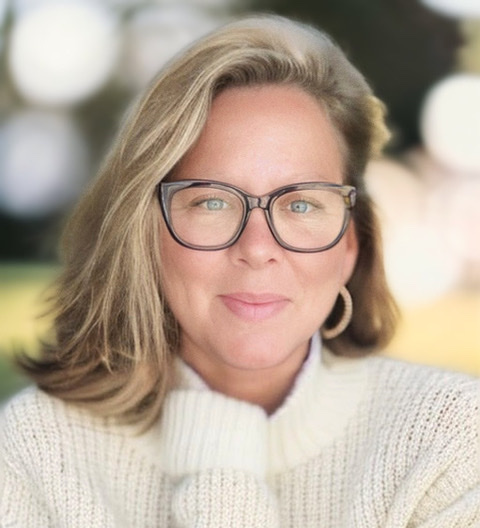
Today we’d like to introduce you to Melissa Kinzler
Hi Melissa, so excited to have you on the platform. So before we get into questions about your work-life, maybe you can bring our readers up to speed on your story and how you got to where you are today?
Q: Can you walk us through your story – how you started and how you got to where you are today. You can include as little or as much detail as you’d like.
A: I never imagined that my journey would lead me from conservative boardrooms to chaotic disaster scenes and ultimately to lively litigation negotiations, much less intriguing international peace-building. Hailing from Northern California, I began my executive career in the world of commercial banking with a private firm. We worked a 9 to 5 schedule with long business lunches and had federal holidays off. Commercial banking was a traditional field, where continuity and stability were highly valued.
At the time, I never imagined that one day I’d find myself mediating high-stakes conflicts on a daily basis. In those days my career was shaped by close collaboration with bank presidents, where I facilitated the expansion of commercial lending divisions. Success in that field demanded more than financial acumen; it required forging relationships with hard-to-reach leaders of high net worth, developing dossiers on each financial institution, and analyzing their metrics. Earning their trust so my then-company could work with their assets, was my forte.
A decade later, this trust-building skill eventually led me to the complex field of commercial disaster reconstruction, where I assisted clients as they navigated the labyrinthine process of rebuilding after devastating disasters; fires, floods and shootings. Many decisions have to be made quickly in these situations, and professionals trusted me to advise them. Reconstruction projects of this magnitude are a mosaic of competing interests and multiple stakeholders: well-heeled investors, lenders, legal teams, insurance adjusters, compliance officials — these disasters cause many ripples. The discussions that follow get heated. I was often the only female in the room and also the only one without formal legal training. I had worked my way up the ladder, and I wanted to continue on to law school after earning my Psychology degree – but was sadly delayed by an accident. I was hit by a drunk driver right after graduation and spent years recovering from my injuries. When finally better, I entered the workforce to make up for my lost income (while my case percolated in the background and a negotiated settlement dragged on). Soon, life caught up with me and my career was in motion. A handful of years and two companies later, I found myself in the corporate C-Suite. I realized it was finally time to pursue that higher education I so desired. By then I had earned the trust of key players who valued my integrity in a field notorious for ethical ambiguity and sought to expand on this foundation. In the years that passed, the field of ADR had grown exponentially and now appeared a far better path for my interests than becoming an attorney. Some attorneys I knew were getting out of law and into mediation for a better quality of work-life balance, moving from an adversarial to collaborative ethos. Now, my capacity to empower decision-makers in tense, multi-stakeholder negotiations and my understanding of human dynamics was an asset of a different kind— one for the future mediator I was destined to become. This asset would also later save my life- though I didn’t know it at the time.
Alright, so let’s dig a little deeper into the story – has it been an easy path overall and if not, what were the challenges you’ve had to overcome?
Q: Has it been a smooth road? If not, what were some of the struggles along the way?
A: Well, two distinct struggles on my way to becoming a dispute resolution professional come to mind. First, I had no control over the auto accident and my subsequent injuries. I was hit while stopped at a red light. The legal process had to run its course. My frustrations mounted as I realized my plans for the immediate future were hijacked. Many of my clients feel the same way when navigating a lawsuit. The speed of my recovery was determined by several others’ participation, not just my own will; similarly to entrenched disputes, it took meeting with many experts to devise a plan and develop a strategy of moving forward to achieve best outcomes.
What I didn’t anticipate was the benefit unlocking a next-level experience of mental strength, flexibility, and patience. I embraced the difficult process, trusting my medical team to lead the way. Settling lawsuits through mediation can be similar, by trusting your legal team. In the relam of conflict management it is also similar- one must trust dispute resolution trainers to show you how to best navigate conflicts. In ADR, to be effective, one must participate in their own solution, cultivate patience, uncover hidden limitations, and sometimes face the uncovered blind spots of one’s own unique perspectives. It’s a lot to process for even clients that are seasoned professionals.
My capacity to empower others to make good decisions under duress blossomed on a day far removed from boardrooms and construction sites. I was out of the office with a bad cold, and stopped at a local deli to pick up some chicken soup… an errand that would soon turn my world upside down. While paying at the register, two masked men stormed in, armed with a gun and a machete. It was a robbery, and I found myself in the center of it. Upon facing the robbers, the lone staff member, the cashier collapsed in fear- her screams echoing off the walls. The last customer of the day, I stood in shock for a moment—then a machete appeared before me, and a gun was pointed at my face. They demanded my wallet, which held my first significant paycheck since my divorce. Having lost everything in the divorce, surrendering that hard-earned money was not high on my list. But I didn’t resist the robbers. Not exactly.
Instead, I did what I had learned in the rooms of negotiation over the years: I stayed calm, focused, and present. I absorbed details of the scene and listened intently to their exchanges. I began speaking to them in a grounded voice, slowing down the exchanges with my tone and cadence, aiming to defuse the situation one word at a time. I created what I now understand (after my formal training at Harvard Law School) as a pocket of time and space, where certain considerations could be made and self-reflection could occur even in the midst of chaos. I engaged in three things with the robbers – questions for consideration, empathy phrased as understanding and curiosity about the intent versus impact of their actions. Soon, a moment of clarity arose for them. In a methodical way, I prompted the robbers to think more critically about their steps: Were they only thinking of this as a prank? I am a real person; they are committing a crime and this is no joke. I told them a bit about me, including my name, humanizing myself. Is this gun even real, I ask, staring down the barrel? The robber narrows his piercing blue eyes and pulls back the hammer with a loud click as a way of answering me. I look away for a moment, breaking confrontational eye contact. I ask, are they really willing to graduate from robbery to murder tonight? Do they know what the inside of a men’s prison sounds like? Smells like? (I am triggering self-reflection and also activating the pre-frontal cortex, necessary to access memories and organizational thoughts). Finally, the gunman blinks and swallows hard, indicating fear. I’ve hit a nerve. I tell them they could leave right now but ask them to consider how, for every minute they stay in this standoff with me, they risk someone arriving and calling the police. There are 1000 police officers in the city and its 238 square miles. That equates to 4 cops for every mile of the city. Did they believe they would get very far without an arrest or a gunfight? The deli was in the heart of the city, 12 miles from the highway, with a stop light and intersection every two blocks (here I am inserting facts to show them a few blind spots, as fight or flight doesn’t effectively allow for rational decision making- adrenaline can cause a freeze). Officers shoot to kill. Is it worth the few hundred bucks they have in their hands right now? (I am prompting them to consider their WATNA). The robbers are very still now, only moving their eyes, glancing at each other instead of staring me down, but they haven’t moved their weapons yet. I can imagine the thoughts flying between them. I press on their sense of urgency and reality. What was their plan to evade the cops once they arrived? How would they even get out of the restaurant? It might be better to leave now and never have to find out, I say (prompting them to consider their BATNA). The gunman never gets close enough to grab my wallet out of my hand, which tells me they are afraid to get in a tangle. I slowly pull a few small bills out of my wallet, unintentionally leaving a fan of others still visible. I extend the loose bills to the gunman with his muzzle still trained on my face. It’s an offering to help them get going, but it’s not everything I have. It’s a settlement of sorts to allow them to accept the situation for what it is, save face and leave with something. After what seemed like a long and tense standoff, the gunman finally leans forward and, ever so slowly with his pale blue eyes trained on me, slides the bills out of my hand (acceptance of offer) before both robbers back away with great care, until they disappear through the back door as silently as they arrived. Resolution accomplished. Shaken but unharmed, I retained most of my money and provided detectives with detailed descriptions The robbers had hit 6 other locations but could not get an ID until now. The detectives were stunned with my details. In truth, I was too. The subconscious registers and stores far more than we realize under duress. Does this sound similar to a negotiation you might have experienced in a lawsuit? To many, it actually does.
When looking back, I see that the detectives recognized something in me that day that I had not recognized in myself —a keen ability to influence peaceful resolutions even under extreme pressure. When they asked how I managed to talk the armed robbers down, I wasn’t quite sure how to answer them, though in my gut I sensed it wasn’t entirely different from the high-stakes negotiations I faced in my professional life. Ironically, I later learned that some of the conflict resolution techniques I used that day align with those used by former FBI hostage negotiator Chris Voss (who now trains Fortune 500 executives and attorneys in conflict resolution through his firm, Black Swan LTD) as well as the neuroscience moves taught at Harvard’s Program On Negotiation. Many negotiators are street smart and intuitively know how to do this, but don’t have the formal academic names for the techniques. That’s okay – ability matters more than labeling. However, I felt called to pursue a formal education to better hone my craft for the professional community I wanted to serve, which resulted in better comprehension of both mediation and negotiation in action. My grandfather, always a supporter of higher education (and a longtime Princeton University librarian himself), would have been proud of me for running down my dreams of going to graduate school, despite it taking a little longer than planned.
In the aftermath, as I reflected on these unusual events in my journey, I found myself unexpectedly called into new roles—adviser, consultant and eventually, mediator. Following the robbery, I underwent counseling, as was customary and provided by the city as part of a crime response unit at the time. My therapist marveled at my resilience, and I was equally surprised, but relieved. I was grateful to be in a good place and felt lucky to have come out of the life-changing experience more present, grateful, and courageous than before.
At its core, mediation is about self-determination; the real work of a neutral is empowering others to have both clarity and agency about their situation so the participants can make informed decisions about their own destiny, rather than having an arbitrator choose it for them or leave it up to a judge to decide. Being skilled at guiding parties to uncover their own true value needs (vs. wants) in settlement talks is paramount for a mediator. These conversations can be very hard for participants and knowing how to guide people in these crucial conversations is not something every mediator can do. That’s one reason why we often see some mediators simply shuttling numbers back and forth without offering the attorneys the support they really need to make clearer, more deeply informed decisions. Back at the deli all those years ago, I awakened to the enormous value in earning the trust of others in order to to guide them in the crucial conversations they need to have not only about their life today, but also about the impacts of today’s decisions on their respective futures. Looking back, I realize now I already possessed the first seeds of a mediator.
A few years later, I enrolled in a master’s degree program with an amalgam of ADR components, earning an MA in Conflict Resolution, Negotiation, and Peacebuilding, in Los Angeles. Mentored by a U.S. Ambassador teaching international conflicts there, I refined my skills further before I attended Harvard Law School at his suggestion, where I earned certifications in Mediation and Conflict Management as well as Dispute Resolution and Negotiation over two years’ time. Once I left Harvard, I continued to meet informally with David Seibel at Insight Partners in Boston, to sharpen what he taught me in his mediation course at The Program on Negotiation at HLS. I was also fortunate enough to receive valuable contributions to my approach from David Hoffman of Boston Law Collaborative. These early influences provided me with a refined and reflective approach to mediation as a principled negotiation. Fate seemed to echo through my life’s work when I discovered that Chris Voss was a longtime friend of my earlier mentor, the Ambassador. Coincidence or kismet? Our paths eventually crossed at my alma mater when Voss gave a talk on negotiation techniques in the Ambassadors international dispute resolution class. It was a moment that reinforced my sense of destiny calling.
Like many new mediators, in my first year of practice I wrote articles, gave presentations and built relationships that led to landing mediations. My mediation career took off rapidly, and I worked hard to keep up without burning out. Some days the tail wagged the dog. It’s a delicate and difficult balance in our field, so be kind to anyone you know who works in law or dispute resolution. In my first year, I mediated three cases each week, continually honing my approach while participating in organizations like the American Bar Association, Academy of Court-Appointed Neutrals and the Association for Conflict Resolution as well as regional bar associations. By my second year, I was lucky enough to collaborate with esteemed Arbitrator Janice Sperrow, and entered into a formal mentorship with celebrated Commercial Mediator Jeff Kichaven, who is ranked among the top 1%, of mediators, globally. It’s important for me to remain teachable, as every case is unique so mediators must remain curious and avoid thinking they know it all. Jeff and I are enjoying collaborating on a few projects now. He is generously expanding my perspective and style. Jeff will continue to guide me as I refine my own practice, my own approach, and my own ethos in commercial mediation over the next two years through our membership with IAM: International Academy of Mediators.
Appreciate you sharing that. What should we know about Commercial Medaition by Melissa Kinzler?
Q: Please tell us more about your business or organization. What should we know? What do you do, what do you specialize in / what are you known for? What sets you apart from others?
A: As a mediator of legal disputes, I mediate settlements for litigation attorneys, both in-person and via Zoom. My passion lies in furthering the field of mediation as well. I train attorneys, judges and diplomatic stakeholders in other countries to further the use of mediation abroad. This reduces the caseload on the courts, offers greater satisfaction for the parties and expands the skill set of the training participants. My area of practice is commercial disputes—including partnership disagreements, intellectual property conflicts, and business disputes. I most enjoy multi-party stakeholder settlement structuring, crafting tailored solutions that address the unique needs of each party and prevent prolonged litigation. My expertise also extends to international and cross-border disputes, where my understanding of intercultural nuances is useful to clients around the globe. Trained and mentored by some of the world’s finest mediators, my approach and practice are built on a foundation of integrity, neutrality, and a commitment to reducing the financial and emotional costs associated with protracted disputes. I like to bring clarity to complex issues through a deep understanding of legal, business, and human dynamics. It’s important to me to uncover hidden value in each case, knowing that each case is precious to the attorneys who toil over them, often for years, before we finally mediate. For my mediation practice, I offer a flat fee, and I begin with pre-mediation consultations to understand the dispute’s context and identify key issues, setting the stage for effective mediation. I also offer follow-up services as needed to assist clients in any support they might need after agreement is made.
I enjoy staying current with the needs of people living in the modern world, often mobile and untethered from their desks since the pandemic. Recognizing the evolving needs of today’s interconnected world, I offer online (Zoom) mediation services. Whether clients are on different continents or working from home, I make it possible for negotiations to continue without the logistical burden of traditional mediation. To further streamline operations, I am one of the first private-practice mediators in Southern California to employ artificial intelligence to manage the day-to-day functions of my practice. For the past two-three years, I have integrated AI technology into my office management. This allows me to focus more effectively on cases and accommodate clients faster, while upholding strict confidentiality protocols that keeps casework distinctly separate.
AI is innovative but must be used with the utmost responsibility in our field. My early contributions to the International Bar Association’s Working Group on Artificial Intelligence In Mediation helped shape the responsible-use guidelines we have today. The AI office tools I employ are fully aligned with the latest AI guidelines published by the American Bar Association (ABA), ensuring that confidentiality, security, and ethical standards are rigorously upheld while enhancing the efficiency and effectiveness of my services.
So maybe we end on discussing what matters most to you and why?
Q: What matters most to you? Why?
A: Trusted relationships are at the heart of everything I do and hold deep significance for me. I’ve maintained both business and personal connections for decades, believing in the power of connection and community. These relationships also serve as valuable mirrors, reflecting truths about oneself. Having lost family members, loved ones and colleagues over the years, I’ve witnessed firsthand that no one ever laments not spending more time at the office. Instead, the regrets often center on wishing they had invested more time in their relationships or expressed themselves more fully. My clients don’t want to spend more time in mediation than they have to, and I respect their time as precious. That being said, depth and weight takes time. I’ve found that cultivating curiosity about others enhances not only my cases, but my life, my relationships and overall communication. I live with immense gratitude for the challenges I’ve faced and the curiosity they’ve awakened in me. Though daunting at the time, these experiences have shaped my character and deepened my sense of integrity. I take cases other mediators are afraid of or find impossible to resolve. I’ve learned that asking for help is an empowering act – the result of which allows me to empower others in their moments of greatest need. Leaning into my relationships during pivotal moments taught me that I could thrive in the face of adversity—and today I strive to help others do the same.
After the robbery at the deli, I worked as a volunteer to help hundreds of others in multiple countries who had experienced some sort of tragic event, showing them how to navigate conflict more effectively in the years that followed, so they too could cultivate greater resilience, more effective self-advocacy, and improved communications that reflected their true values. This work laid the foundation for a deeper understanding of the cases I encounter today. Lawsuits are profoundly disruptive; they’re stressful, exhausting, and unpredictable. Many clients feel as though they’re being held at gunpoint to accept a settlement. They are no more willing to surrender their hard-earned money than I was in that deli. Because of my experience, I understand that need to hold firm. That’s why I guide both sides to negotiate smarter, not harder, toward a resolution that meets their needs and provides an outcome with which they can both live.
Having been on all sides of the negotiation table, I believe I bring a deep understanding of, and empathy with, each of the unique parties in my mediations. This perspective aids me in carrying out my role as true neutral. My business background positions me to stand shoulder-to-shoulder with both sides, facilitating information exchanges, cultivating discussions of details to gain better clarity, and shoring up self-advocacy while navigating the intricate web of issues they face. I don’t simply shuttle numbers back and forth or browbeat parties into submission until an impasse, or worse – a substandard agreement — is reached. Instead, I dig deeper into the underlying interests and needs until a clearing appears—a space where possibilities can emerge, and practical solutions can be vetted. That space is almost always there in each mediation, waiting to be uncovered.
I’ve built my reputation on my ability to hear not only what is said at the proverbial table but, more importantly, what is left unsaid. By observing subtle, non-verbal communication and intuitively tuning into the undercurrents that shape negotiations, we are able to address individuals unvoiced hopes and fears, latent insecurities, and unexpressed aspirations. This heightened awareness allows me to unlock even the most entrenched conflicts so we can begin the process of resolution. My journey from Silicon Valley to commercial banking, to disaster reconstruction, and ultimately to commercial mediation, may appear unconventional at first glance. Yet for me, it’s been a natural evolution—one marked by decades of quiet, diligent work. Each step has honed my ability to cut through the noise and help parties find a productive way forward. Throughout these years, I’ve been growing, learning, and steadily pursuing my dream to reframe conflict in a way that is both productive and useful. Each step has deepened my understanding of communication, human needs, and the pathways to common ground.
I believe every dispute, no matter how entrenched, is an opportunity for meaningful resolution. But trust is paramount—without it, mediation doesn’t even get off the ground. I work to earn that trust by bringing my proven track record of neutrality and expertise to every case. By bringing a proven track record of neutrality and deep expertise, I earn that trust in every case.
When people reach a settlement, they break free from endless battles and reclaim the part of their lives that litigation often puts on hold – this is when my core work feels most rewarding. Finally, the parties can move on from their dispute to reclaim their everyday joys.
Pricing:
- Please request a fee schedule through my website
Contact Info:
- Website: https://www.melissakinzler.com
- LinkedIn: https://Linkedin.com/in/melissakinzler

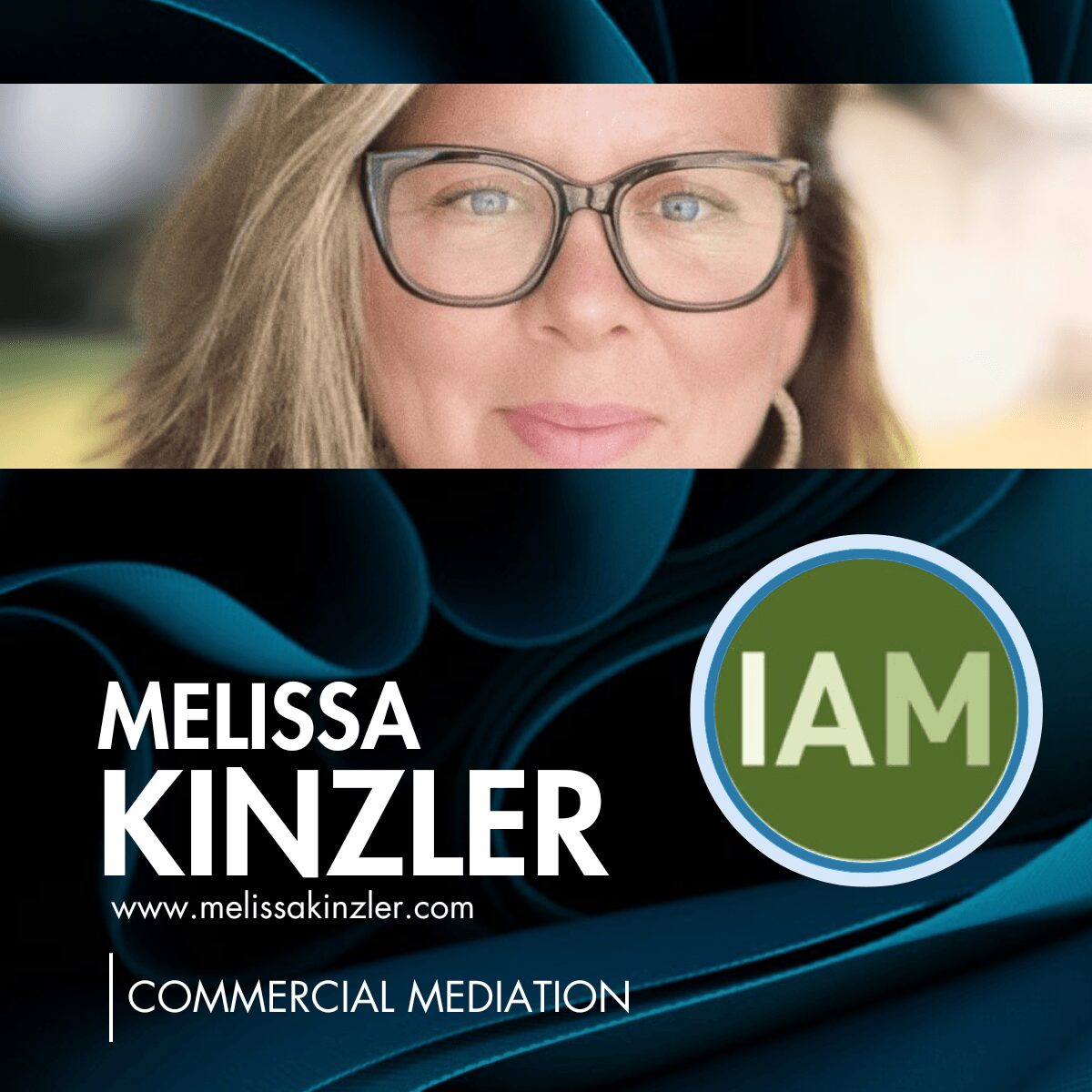
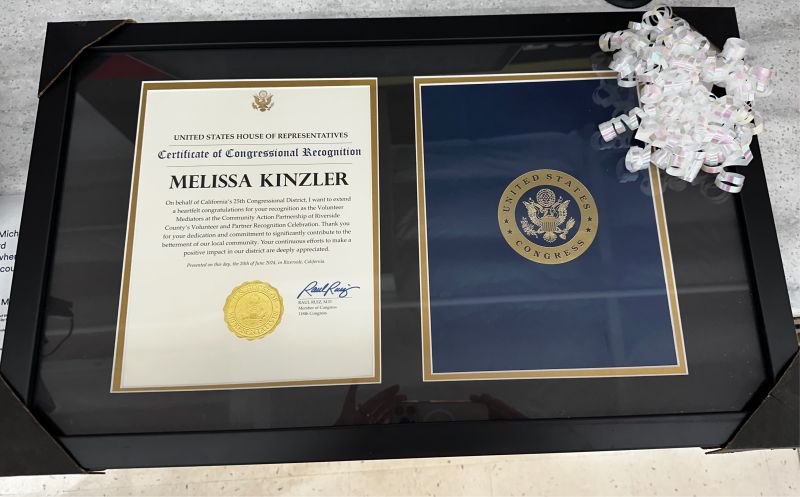
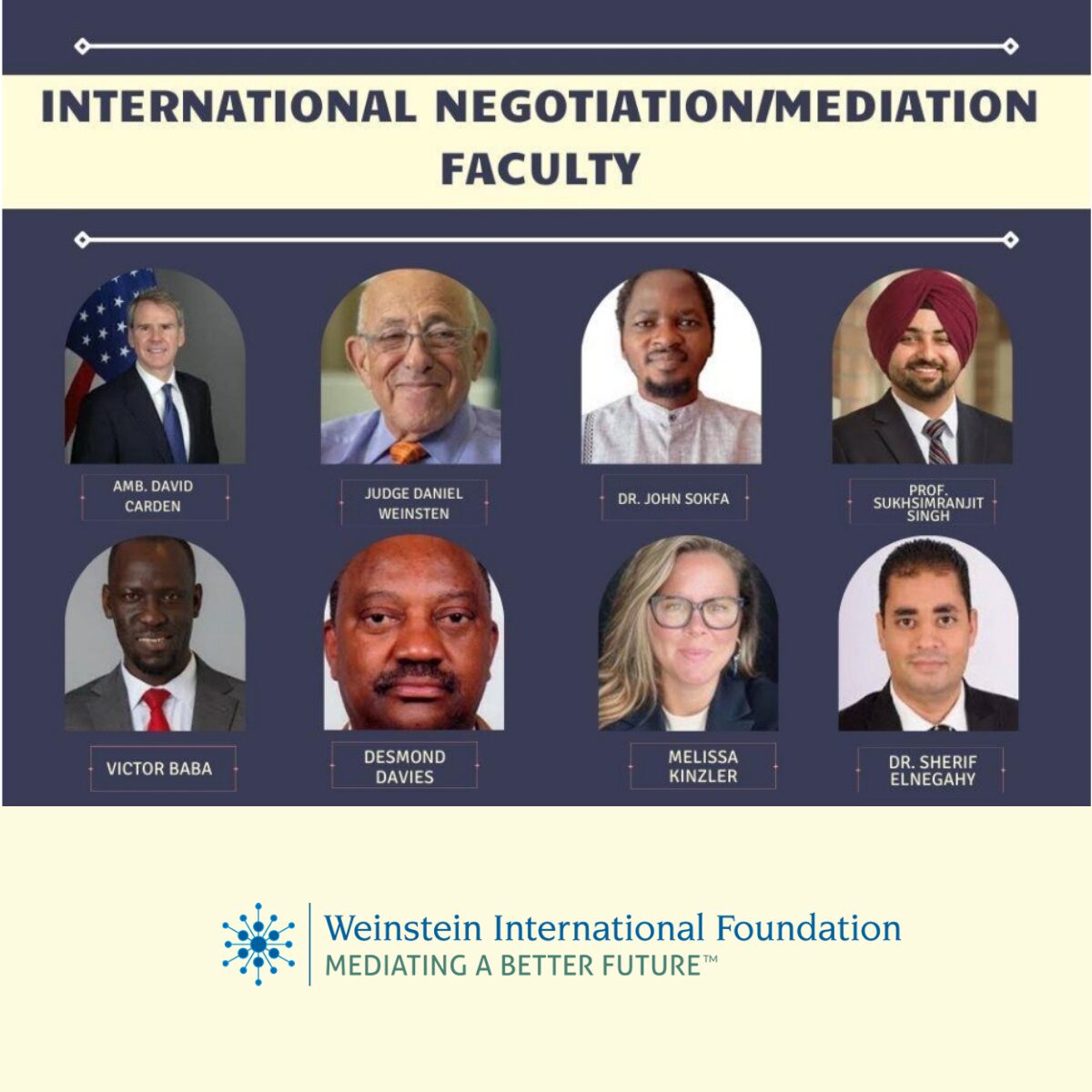
Image Credits
Weinstein Foundation Mediation Faculty photo supplied by Victor Baba, Jr.
Popular
-

JordanL on ‘Breathe,’ Belief, and Building a Movement Beyond the Music
-

Megan Birney Rudert on How Access to Light Is Powering a More Sustainable and Equitable Future
-

Linda Kneidinger on Building Lasting Change Through Small Steps and Self-Compassion
-

Jolana Nika on Redefining Modern Connection Through Intentional, Real-Life Experiences
-

What did suffering teach you that success never could?
-

Who saw you clearly before you could see yourself?


