




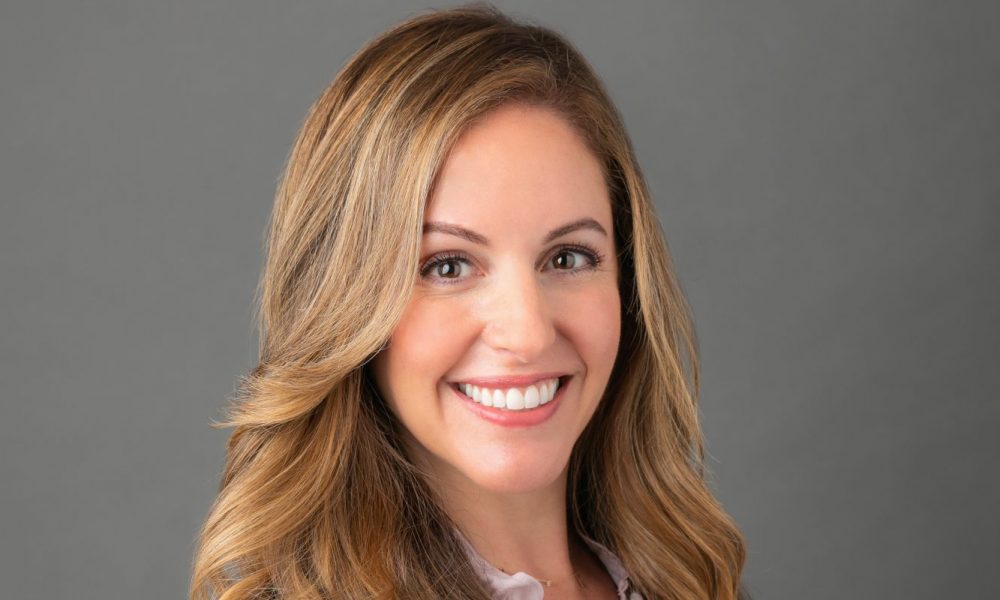
Today we’d like to introduce you to Dr. Lindsey Sterling.
Hi Dr. Lindsey, it’s an honor to have you on the platform. Thanks for taking the time to share your story with us – to start, maybe you can share some of your backstory with our readers.
I was always fascinated by the brain and how it relates to our behavior and personality. As an undergraduate Psychobiology student at UCLA, I had a job at a lab where we dissected brains to better understand the neurochemistry of Alzheimer’s disease. At the same time, I loved helping people. Even as a middle school student, I was a peer counselor and talked other students through their daily crises. I also grew up with a family member on the autism spectrum and felt a connection to people who saw the world in different and unique ways. I knew I wanted to merge these two passions—my curiosity about the brain and helping others.
While I was an undergraduate student, I had the opportunity to work with my great-uncle, who was also a clinical psychologist. He and his wife, a speech therapist, had founded a school for autistic children in the Boston area. I spent two Summers with them, immersed in the world of autism, and fell in love with the kids. I was simultaneously fascinated by what was happening in their brains to make them see and experience the world differently and became attached to the children and their families. I got so much joy out of working with them each day and learned so much from them. After college, I continued to get more experience in neuroimaging as well as learning about the genetics of autism through a position at Autism Speaks (a research program that was called The Autism Genetic Resource Exchange.)
I went on to pursue a PhD in child clinical psychology specializing in autism, as this gave me the opportunity to formally combine these two loves- the science and the people. The graduate program at The University of Washington (UW) follows the “scientist-practitioner” model, providing the perfect mix of scientific rigor and clinical practice. It allowed me to steep myself in the genetics, physiology, and neuroscience of autism and other developmental disorders while working daily at the UW Autism Center, conducting diagnostic evaluations, learning different treatment modalities, and working closely with psychiatrists, neurologists, and other psychologists. I learned to appreciate the multi-disciplinary approach to supporting neurodiverse families.
University of Washington trains students to be academics. We become comfortable and experienced writing grants, running research studies from start to finish, publishing peer-reviewed research papers, and presenting at international conferences. But our final year of the program includes a clinical “predoctoral internship” that we match with to round out our clinical training. I was fortunate to match at the developmental disabilities track at UCLA, which gave me the breadth of experience I was seeking by working more closely with neurodiverse adults, as well as children with a range of conditions. I stayed at UCLA for my postdoctoral training, where I wrote and was awarded a grant from the National Institutes of Health to support my research about the physiology of anxiety in autistic youth.
Continuing on my academic journey, I took on professor positions at Claremont McKenna College, as well as California State University, Long Beach (CSULB.) I felt so lucky to land a tenure track position at CSULB and was able to cultivate my research lab and mentor students. But I missed working directly with families. I had to do some soul-searching about why I wanted to go to graduate school and what kept me invested in my training for so many years. I started to cultivate a private practice on the side to fulfill that piece that I was looking for. Eventually, after a few years, I took the scary plunge and left the security of academia to pursue private practice full-time.
After about a year in full-time private practice focusing on autism, I was inundated with referrals and didn’t feel like I had good options in terms of where to send people, especially adults on the spectrum. I had a couple of more junior colleagues who had been asking me if we could somehow work together. The formation of the team happened somewhat organically, as I took on clinicians to meet the demands.
I feel so fortunate because I have known almost all the clinicians on my team for many years, and I have been able to be very selective about bringing on clinicians who are truly experts in neurodiversity. We have been able to build a multi-disciplinary team that allows us to collaborate and consult with one another, making us better clinicians and providing even better service to our families. I can confidently say that I would feel comfortable sending my own kids to any of the clinicians on our team. They are the best.
As of now, our team includes three clinical psychologists, two therapists, and one psychiatrist, in addition to an administrative team. It’s been a gift to choose my own colleagues and build a program that I believe best addresses the needs of the neurodiverse community.
Can you talk to us a bit about the challenges and lessons you’ve learned along the way? Looking back, would you say it’s been easy or smooth in retrospect?
Even though things have happened somewhat organically, it has not always been smooth. I was trained to be a professor and a clinician. Our training does not include how to start or run a business or how to be an entrepreneur. When it comes to more of the corporate and human resources aspects of the clinic, I’ve had to find formal outside business consultation and learn on the job. It can also be a bit lonely, as it’s uncharted territory. I don’t have a model that I am building my clinic on. Having a unique group and clinic is so exciting, but it also means forging ahead without much direction, which can be uncomfortable for someone who has always followed a structured path. Although I have colleagues in private practice, I don’t know any who have created anything similar to what I have built, so there is no roadmap in terms of next steps. Each time I bring on a new clinician or add a new service, I have some apprehension about whether it will work out and if we are moving in the right direction to best support the community. I’m learning to have more confidence in my own instincts!
As you know, we’re big fans of The Sterling Institute for Autism. For our readers who might not be as familiar, what can you tell them about the brand?
The Sterling Institute for Autism is a private group practice made up of therapists, clinical psychologists, and psychiatrists. We are known for providing evidence-based, family-centered treatment and diagnostic assessment in a neurodiversity-affirming framework. We see youth and adults of all ages. Unlike many small private practices, we have the benefit of providing a multi-disciplinary approach. Our team members regularly consult with each other and collaborate around treatment planning and diagnostic conceptualization, to make sure each client gets thorough attention. We don’t follow a formula or a script. We are flexible and provide individualized services. Each person is unique, so our approaches are unique too.
In terms of what sets us apart from others, we are truly passionate about the field of neurodiversity. It’s amazing to see that this has become a popular topic, and many clinicians out in the community are starting to gain training and build their programs to meet the need. I am glad that there is now so much awareness and acceptance around autism and neurodiversity. (When I started graduate school, many people had never heard the word “autism”!). But I can say unequivocally that this is our field of expertise and has been for decades. It is our life’s work. We are familiar with the research and have even contributed to it ourselves. We are also familiar with the nuanced clinical cases that come our way and have become particularly experienced with adults (and women!) on the autism spectrum. This is a growing need as many children age out of more structured and formal supports that school has provided for them. Other providers refer clients to us because they know that neurodiversity is our niche, and we love working with these complex and unique cases.
Neurodiversity also includes conditions like ADHD, giftedness, and what we call “twice exceptional” people (someone who has a diagnosis like autism and is also gifted.) Because no one fits in a box, we also see clients who have social anxiety, mood symptoms, and related challenges. In fact, we are all trained as general child psychologists, therapists, and psychiatrists, with additional training and expertise in neurodiversity. We love helping clients celebrate their differences while also acknowledging and validating what’s difficult.
Having gone through rigorous academic and clinical training myself, I have high expectations in terms of the quality of services we provide. To that end, I have been very selective about bringing on clinicians who I truly believe are remarkable. Most of them went to graduate school with the intended goal to become an expert in autism and neurodiversity. They have trained at some of the best academic institutions and have set themselves apart in the field. Most importantly, each clinician is truly a pleasure to work with. While we all see ourselves as academics, we are “people people” who prioritize the human connection first and foremost. I get feedback constantly from our clients about how wonderful and personable their therapist or psychiatrist is. They can tell how much we love our work and love getting to know each new client. We want each client and their family to feel comfortable, supported, and a collaborative partner in their own treatment or diagnostic process.
How can people work with you, collaborate with you, or support you?
We love collaborating with other providers! Being experts in autism and neurodiversity also gives us the humility to know when we are not experts in something else. We love having experts in other areas come speak and hold discussions, or to consult about complicated cases. Similarly, we love going to schools, clinics, workplaces, and other organizations and sharing what we know about neurodiversity and how to best support neurodiverse people.
In addition to consultation about neurodiversity, we are open to taking on new clients! Along with providing individual therapy, diagnostic assessments, behavioral planning, parent consultation, and medication evaluation and management, we run process groups for neurodivergent teens and adults. We also just launched our dating groups for young adults. We love getting new referrals and figuring out how we can best support them. Our mission is to create a ‘home base’ for families so that they don’t have to search and create a piecemeal team to get the best support. We have it all in one place!
Contact Info:
- Website: https://www.sterlingautism.com
- Instagram: https://www.instagram.com/sterlingautism
- Facebook: https://www.facebook.com/SterlingAutism
- Linkedin: https://www.linkedin.com/in/lindseysterlingphd/
- Other: https://a.co/d/1dNFY1F
Popular
-

Christina Wren Steps Into the Director’s Chair to Tell Stories That Feel Like Home
-

Portraits of the Valley
-

LA’s Most Inspiring Stories
-

JordanL on ‘Breathe,’ Belief, and Building a Movement Beyond the Music
-

Megan Birney Rudert on How Access to Light Is Powering a More Sustainable and Equitable Future
-

Linda Kneidinger on Building Lasting Change Through Small Steps and Self-Compassion


