




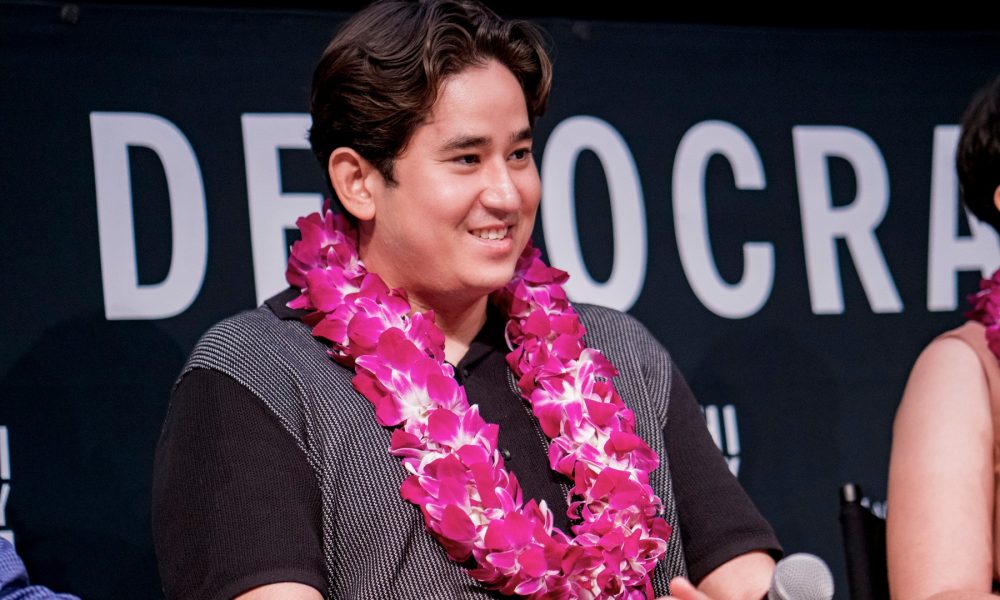
Today we’d like to introduce you to Paul Goodman.
Hi Paul, thanks for joining us today. We’d love for you to start by introducing yourself.
I studied film in college at UC Santa Barbara and moved to LA with a group of friends from school. We started working in the film industry and two of us ended up shooting for Discovery’s Whale Wars (re-branded as Eco Warriors). This took us out of the city and onto a ship of 35 people that navigated through international waters looking for illegal fishing vessels. We ended up spending over three months at sea and was part of a five-person team that documented the whole adventure.
My film career really began when I was diagnosed with cancer at age 25. That was seven years ago and in that time, I was able to pivot from set jobs on locations to writing, directing and editing; pretty much anything I could do from my hospital bed. It was all narrative and would help me develop what would be an honest attempt to follow my passion in the film industry. Within the first year of chemotherapy and cancer treatment I decided to start my own production company and since then have made a handful of shorts and two feature films. I named the company Eight East – a testament to the cancer floor at my hospital.
Would you say it’s been a smooth road, and if not what are some of the biggest challenges you’ve faced along the way?
Getting diagnosed with Acute Lymphoblastic Leukemia at age 25 put an immediate end to any professional momentum I had made up to that point. Any dreams of traveling the world, pursuing jobs in remote locations and open oceans or even jobs in my hometown of Los Angeles; all of it had been deleted by my doctors and my body. I was confined to a room, chained to the wall by a tube that fed into my chest. That was the first hard thing. My whole life was changing but it was hard to understand the reach of that change.
One thing that was certain was my assured belief in my imminent death. No one ever told me it was a certainty, the words they used were “fighting chance”, but with the context and fear of a cancer diagnosis, I assumed it was inevitable. Almost to allow any hope in would undermine my mental determination to accept my death. But for the whole first year of chemotherapy and treatment, I didn’t die, which my whole family and I were generally positive about. After that first year, I began to loosen my grip on doom and thought that maybe there was still enough time to do something I could be proud of. Something that gave me more than cancer – drive and purpose and control of my identity and self-worth. At least before my blood turned green and I melted into a chemistry project or whatever happens when your bone marrow acts evil.
I opened up to a relationship (with my now wife), something I had been avoiding ever since she appeared over my bedside and told me that she loved me and we would be together forever. Usually, that’s a red flag. I also thought about how I would channel my continued creativity and passion for filmmaking but which lacked any outlet. I had my laptop and I would mess around editing little videos of old vacations with friends and would write scripts with no agenda. With a year of hard survival under my belt, I was beginning to believe that my death might not be so immediate. Maybe it might even last another year. Gasp. I started my production company and committed to making a feature film before I died.
Two years later, we would shoot Evergreen, a whole-ass feature film. Two people carpool from LA to San Francisco but end up going much farther. An escapist, romantic drama that takes two people and has them drive as far away from here as they can – each for their own reasons. Mine was the tube connecting me to the wall. Mine was the threat of death and the anguish of all those who loved me in my life. I wrote it, thinking every day the location scout is going to be amazing.
Alright, so let’s switch gears a bit and talk business. What should we know about your work?
I am in a space that confuses me daily. For the past seven years, It’s possible the thing I could be best at is surviving cancer but that isn’t a naturally transferable skill. Sometimes, in the pre-production of a feature film, it can feel like I’m mainlining a bag of neon chemo except when it hits me, there’s no button I can press that calls for a nurse who might mercifully offer me an Ativan to ease the pain of talking to payroll companies. No amount of cancer surviving will ever help with payroll companies. So far, this skill I’ve developed – not dying – has really only helped me accomplish one thing in my professional life. To push myself beyond what I thought I was capable of. It has catalyzed the efforts to make two feature films in four years with complete independent financing and editorial control. I’ve been introduced to dozens of editing software and nourished those proficiencies so that I may produce in such a haste to make my death deadline. And with the extraordinary talents of our crew and cast and all those involved in making these films under our banner, we’ve been able to accomplish so much in my life.
What matters most to you?
Right now, professionally, it is telling Japanese American and AAPI stories through film. Our most recent feature, No No Girl, tells the story of a family that discovers clues in their late grandmother’s belongings, hinting at a cache of family valuables that was buried, secretly, in their backyard in the wake of Pearl Harbor and the incarceration of Japanese Americans in WWII. The film premiered at the Japanese American National Museum in August of 2022 and the tickets sold out online in 20 minutes. Immediately following that event we had a one-week showing of the film at the Laemmle in Glendale and in that week sold almost a thousand tickets. Now, in the late winter and spring of 2023, we are taking the film on tour to communities who have invited us all over the country. Private screenings and film festivals in San Jose, San Francisco, Portland, DC, Austin and more keep coming. The one thing at each of these screenings that remains the same is the impact I see it having on the Japanese American community in particular. Being half Japanese myself, it means a lot to have the stories of my childhood be validated by those whose ancestors (or they themselves) were also displaced so many years ago. As I’m writing this, we are about to embark on a two months journey around the country and at each stop, I want to reiterate my passion to continue telling these underrepresented stories.
Contact Info:
- Website: www.eighteastproductions.com
- Instagram: @notsogoodman
- Youtube: @notosgoodman


 Image Credits
(for photos with lei flower arraignments around neck): Andrew Ge
Popular
-

Christina Wren Steps Into the Director’s Chair to Tell Stories That Feel Like Home
-

Portraits of the Valley
-

LA’s Most Inspiring Stories
-
JordanL on ‘Breathe,’ Belief, and Building a Movement Beyond the Music
-
Megan Birney Rudert on How Access to Light Is Powering a More Sustainable and Equitable Future
-
Linda Kneidinger on Building Lasting Change Through Small Steps and Self-Compassion


