




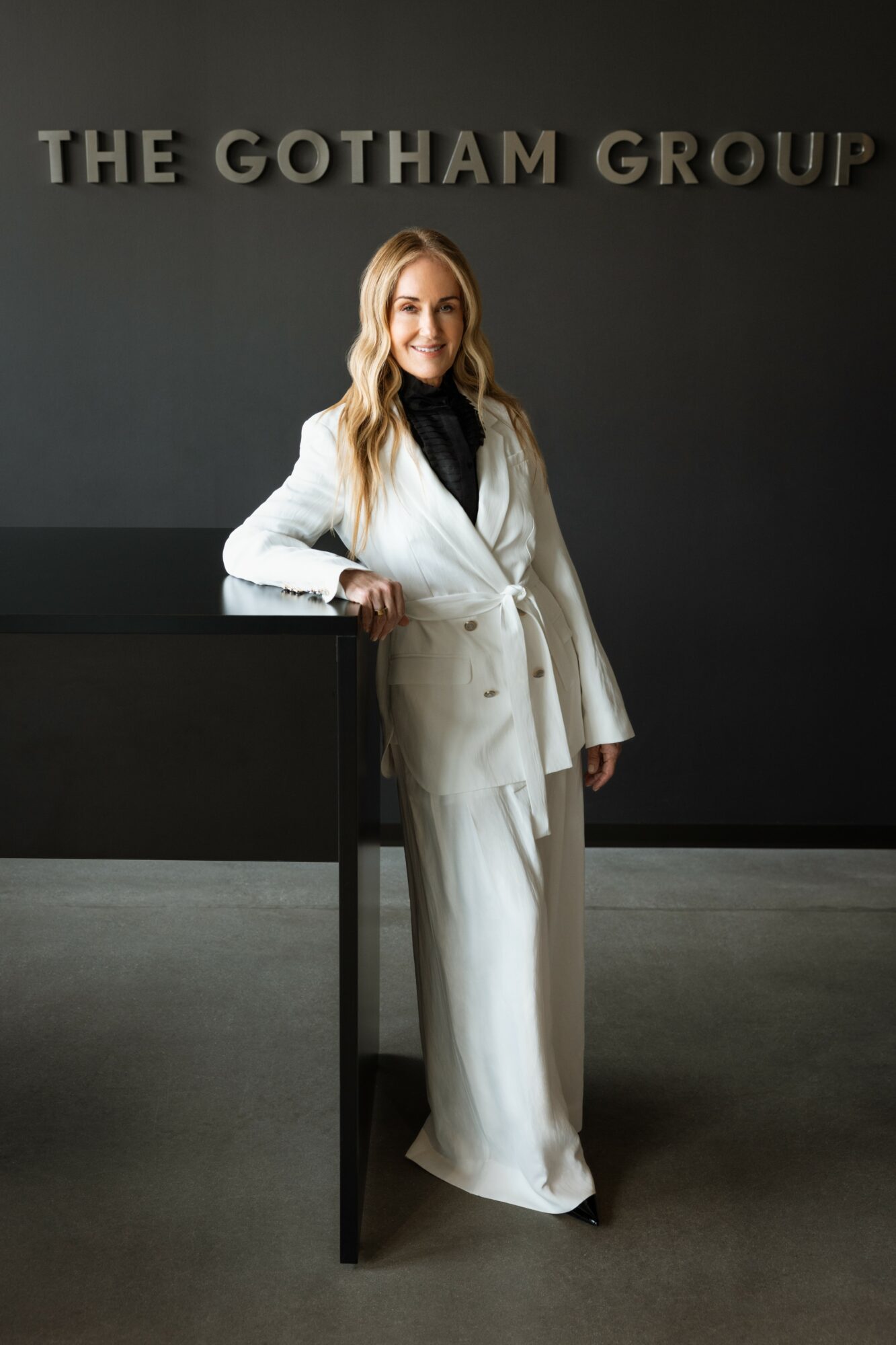
Today we’d like to introduce you to Ellen Goldsmith-Vein.
Hi Ellen, thanks for sharing your story with us. To start, maybe you can tell our readers some of your backstory.
I took a somewhat unconventional path into the entertainment business. I actually started my professional life in finance at Merrill Lynch before making the leap to William Morris Agency, where I worked in television packaging. I didn’t come into Hollywood with a master plan; I was curious, ambitious, and willing to follow the things that genuinely interested me.
One of those things was animation. I had loved animation since I was a kid: The Flintstones, The Jetsons, Peanuts, and early in my career I realized that it was an area of the business that most of the major agencies simply weren’t paying much attention to. I went on to work at Nelvana, where I had the opportunity to develop animated film and television projects, and that experience gave me a real understanding of both the creative and business sides of the medium.
More than 30 years ago, I founded The Gotham Group around the idea that there was tremendous talent and opportunity in spaces the rest of the industry was overlooking. Animation was our foundation, but from there we continued to grow: into literary management, film and television, publishing, and ultimately producing. What has always interested me most is finding extraordinary storytellers, helping them build meaningful careers, and recognizing great material wherever it comes from.
Over the years, Gotham has grown from that original idea into a global management and production company. We’ve had the privilege of bringing projects like The Spiderwick Chronicles, The Maze Runner films, Stargirl, Wendell & Wild, Percy Jackson and the Olympians, Juror No. 2, and many others to audiences around the world. But I think what I’m proudest of is that the core philosophy hasn’t really changed: find talented people, believe in them, work incredibly hard on their behalf, and don’t be afraid to go where everyone else isn’t looking.
I’ve also been fortunate to build the company on my own terms. Gotham remains the only major management and production company in Hollywood owned solely by a woman, which is something I don’t take for granted. When I started, I certainly wasn’t thinking about making history: I was focused on creating the kind of company I wanted to work at and building something that could last. More than three decades later, I still feel incredibly lucky that I get to spend my days with storytellers and stories I believe in.
Alright, so let’s dig a little deeper into the story – has it been an easy path overall and if not, what were the challenges you’ve had to overcome?
Definitely not – although I think the challenges have been an important part of building both the company and my own resilience.
When I started Gotham, animation was still considered a relatively small corner of the entertainment business. I saw enormous potential there, but many people in the industry simply didn’t take it seriously. Later, when we began expanding into live action, producing, publishing and other areas, I was told more than once that I was “just the animation lady” and should stay in my lane. In some ways, being underestimated became an advantage. It forced me to trust my instincts rather than follow what everyone else was doing.
There was also the reality of being a woman building and owning a company in an industry that, particularly when I started, was overwhelmingly male at the highest levels. There were certainly moments when I had to work harder to be taken seriously or to have my voice carry the same weight in a room. I learned fairly early that I couldn’t spend too much time worrying about what other people thought I was capable of. I had to focus on the work, the people I believed in and the company I wanted to build.
And entertainment itself is never a smooth road. There is so much rejection and uncertainty in this business. Projects you love can take years to come together, deals fall apart, the marketplace changes, and sometimes you can do everything right and something still doesn’t work. Building a company through more than three decades of those changes has required a tremendous amount of flexibility and perseverance.
I think one of the biggest lessons I’ve learned is that success is rarely one enormous breakthrough. For me, it has been about continuing to show up, staying curious, surrounding myself with talented people and being willing to evolve without losing sight of what made Gotham special in the first place. Some of the things that initially looked like obstacles ended up pushing us toward the opportunities that defined the company.
Can you tell our readers more about what you do and what you think sets you apart from others?
My work really sits at the intersection of management, producing and storytelling. At The Gotham Group, we represent writers, directors, authors, illustrators and other creative talent, while also developing and producing film and television projects. I spend a great deal of my time identifying exceptional people and material, helping shape careers and projects, and figuring out how a great story can find its best life – whether that begins as a book, a screenplay, an animated project or something entirely unexpected.
Gotham originally became known for animation, and that remains an incredibly important part of our DNA. We were early in recognizing that animation deserved the same level of sophisticated representation and career-building as any other part of the entertainment industry. Over time, that philosophy expanded into live action, publishing, literary management and producing.
I think what we are particularly good at is recognizing potential before it is obvious. Sometimes that means finding a writer at the very beginning of their career, sometimes it means seeing the film or television potential in a piece of intellectual property, and sometimes it simply means believing in an idea that other people have overlooked. I’ve always loved that part of the job.
What I am most proud of is not any one project, although I have been incredibly fortunate to work on projects and with creators that I deeply admire. I am proud of the careers we have helped build, the relationships that have lasted decades, and the company culture we have created. This is an extraordinarily relationship-driven business, and I have always believed that you can be ambitious and competitive while still operating with loyalty, integrity and humanity.
I also think Gotham has always been willing to operate a little differently. We have never been particularly interested in following the crowd. We look for areas where we believe there is opportunity, we take creators seriously, and we stay very close to the creative process. Because we are both managers and producers, we are often able to think about a project from many different angles while still keeping the storyteller at the center.
More than anything, I am proud that after more than three decades, I still feel excited by discovering a new voice or reading something that makes me think, “I have to help get this made.” That enthusiasm for great storytelling is ultimately what built Gotham, and it is still what drives me today.
We’d love to hear about how you think about risk taking?
I do think of myself as a risk-taker, although probably not in the traditional sense. I have never been interested in taking risks simply for the sake of being bold. For me, risk is really about conviction: being willing to trust your instincts when you see an opportunity that other people may not see yet.
There have been several moments in my career that felt risky at the time. Leaving a more traditional path in finance to go into entertainment was one. Starting The Gotham Group was certainly another. And building a company around animation at a time when much of the industry viewed it as a niche was a very deliberate bet on something I believed was being undervalued.
As Gotham grew, we continued to take those kinds of risks. Expanding beyond animation into live action, literary management, publishing and producing meant stepping outside of the box people had put us in. There were people who thought we should simply stay where we had already been successful. But I have always believed that if you become too comfortable with how other people define you, you stop evolving.
That does not mean every risk works. This business teaches you very quickly that there are no guarantees. You can believe deeply in a person or a project and still have things not come together the way you hoped. But I would much rather make a thoughtful decision based on what I believe than make a safe decision simply because everyone else is making it.
I also think one of the biggest risks in business is becoming afraid to change. Industries evolve, audiences evolve, technology evolves, and you have to be willing to evolve with them while still knowing what your core values are.
So my approach to risk is to be informed, surround myself with smart people, listen carefully, and then ultimately trust my own judgment. Some of the most important decisions of my career were ones where there was no obvious roadmap. Looking back, those are often the decisions that created the greatest opportunities.
Contact Info:
- Website: https://gotham-group.com/
- Instagram: https://www.instagram.com/ellengoldsmithvein/


Image Credits
Stella Kalinina
Jon Vein
Popular
-

Greg Hex Is Turning the Everyday Kitchen Knife Into a Modern Design Object
-

Portraits of the Valley
-

LA’s Most Inspiring Stories
-

Rick Norris Learned That Building a Successful Business Means Building a Life You Actually Want to Live
-

How Olivia Rush Turned Survival Into a Mission to Help Others Keep Going
-

How Bibi Goldstein Is Helping Entrepreneurs Reclaim Their Time by Embracing the Power of Delegation


