




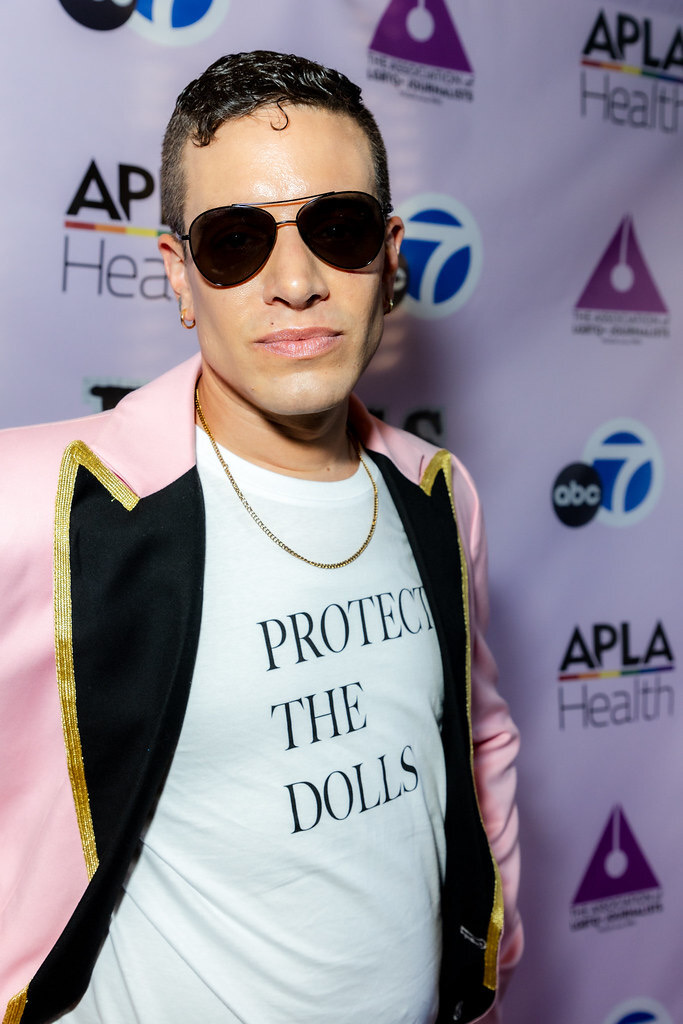
Today we’d like to introduce you to Damian Pelliccione.
Hi Damian, it’s an honor to have you on the platform. Thanks for taking the time to share your story with us – to start maybe you can share some of your backstory with our readers?
I started out acting and producing new media projects, where I learned everything I know now about working in digital entertainment. What kept nagging at me was that LGBTQ+ audiences were massively underserved: our stories were treated as niche, and brands had no reliable way to reach the community authentically at scale.
That gap led me to co-found Revry in 2015, [a global streaming network built for queer audiences. Over time we grew from a content library into a full media company: distribution across FAST and CTV platforms, our own originals like King of Drag, which drew 38 million impressions and 200+ watch parties worldwide in its first season, and our own ad tech, the PrismRiot programmatic exchange and a data management platform, so brand demand flows directly into our community.
Today we’re focused on the creator economy: building talent from our own shows into stars with real community reach, and connecting them with brands.
Can you talk to us a bit about the challenges and lessons you’ve learned along the way. Looking back would you say it’s been easy or smooth in retrospect?
Definitely not smooth. A few things stand out.
The first was advertising itself. Brand-safety tools routinely flagged LGBTQ+ content as “unsafe,” so even advertisers who wanted to reach our audience were being blocked from doing it automatically. That’s a big part of why we built our own ad exchange and data platform: we couldn’t rely on infrastructure that treated our community as a risk.
The second was fundraising. Investors often saw queer media as a niche rather than a large, loyal, high-spending market, and we had to keep proving the opposite.
The third was the climate around LGBTQ+ visibility. Corporate support can pull back quickly when the political mood shifts, and Pride budgets shrinking. We’ve chosen to lean in rather than retreat, which has paid off in the long run.
Every one of those struggles pushed us to own more of our own stack and audience, and that’s ultimately what made the business stronger.
As you know, we’re big fans of you and your work. For our readers who might not be as familiar what can you tell them about what you do?
I’m co-founder and CEO of Revry, a global media company built for LGBTQ+ audiences. My work sits where content, community and technology meet: we create and distribute original programming across FAST and CTV platforms, and we built our own ad tech to monetize that audience.
What I specialize in is turning community into a business without losing the community. I’m known for building Revry from the ground up / championing queer creators / bringing ad tech into a space that never had it, and for proving that queer audiences are a market, not a niche.
There are a few things I’m most proud of:
King of Drag, our original competition series, which put drag kings in the spotlight in a way no one else had and reached 38 million impressions and 200+ watch parties worldwide in its first season.
Our award-winning ad exchange, PrismRiot, and our data management platform. We built them because existing tools were blocking advertisers from reaching our audience, and now they let brands do it directly and authentically.
What sets us apart is that we own the whole loop. Most media companies make content, or distribute it, or sell the ads. We do all three, and we’re part of the community we serve. That means we can develop talent from our own shows, grow their reach, and connect them with brands in a way that’s both authentic and measurable.
Do you have any advice for those looking to network or find a mentor?
My biggest piece of advice is to stop thinking of it as “networking” and start thinking of it as showing up. The most valuable relationships I’ve built didn’t come from cold LinkedIn messages. They came from being in the room at community events, galas and industry gatherings, and having a real conversation instead of a pitch. Some of my best connections started with talking about something that had nothing to do with business.
A few things that have worked for me:
Lead with what you can offer. Even early in your career, you have something to give: a perspective, an introduction, help on a project. People remember who helped them.
Follow up, and keep following up. One meeting is a contact; staying in touch over years is a relationship. A short note when you see something relevant to them goes a long way.
Look for mentors in more than one place. I’ve never had one single mentor. I’ve had people I lean on for fundraising, others for creative, others for just getting through a hard week. A peer a few steps ahead of you can be as valuable as someone at the top.
Find your community. For me, the LGBTQ+ community has been a huge source of support and opportunity. Whatever your community is, invest in it, because those are the people who’ll show up for you.
Ask for something specific. “Will you be my mentor?” is a big ask. “Could I get 20 minutes of your take on this decision?” is easy to say yes to, and often turns into mentorship naturally.
Contact Info:
- Website: https://www.Revry.com
- Instagram: https://www.instagram.com/damianmedia
- Facebook: https://www.facebook.com/DamianMedia/
- LinkedIn: https://www.linkedin.com/in/damianmedia/?isSelfProfile=true
- Twitter: https://x.com/damianmedia
- Youtube: https://www.youtube.com/@Revry

Popular
-

Portraits of the Valley
-

LA’s Most Inspiring Stories
-

Greg Hex Is Turning the Everyday Kitchen Knife Into a Modern Design Object
-

Rick Norris Learned That Building a Successful Business Means Building a Life You Actually Want to Live
-

How Olivia Rush Turned Survival Into a Mission to Help Others Keep Going
-

How Bibi Goldstein Is Helping Entrepreneurs Reclaim Their Time by Embracing the Power of Delegation


