



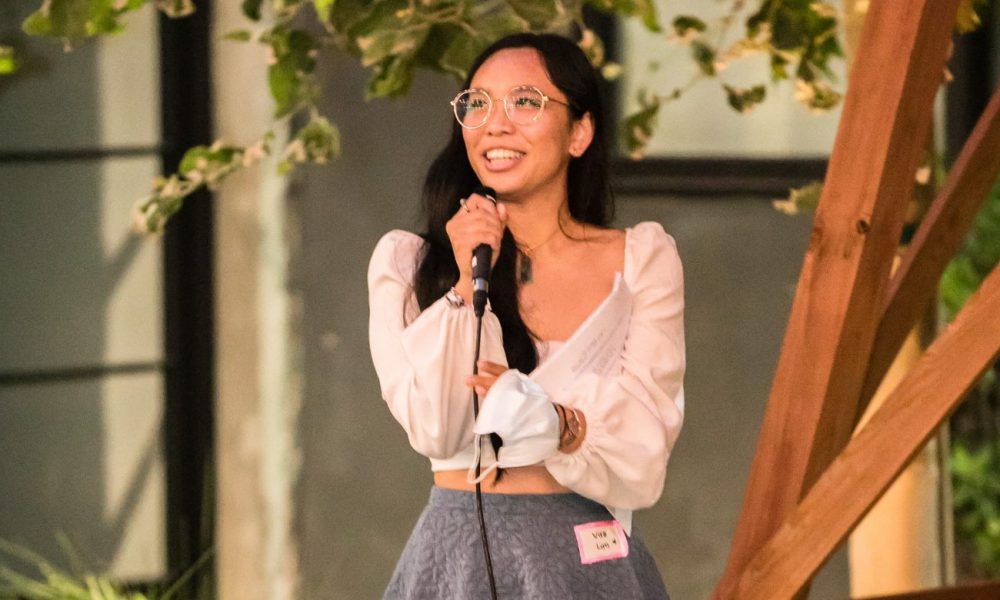
Today we’d like to introduce you to Liviera Lim.
Hi Liviera, we’d love for you to start by introducing yourself.
I guess as an arts educator, there are two sides to my journey: the art side and the educator side.
On the art side, I started in the church kid’s choir when I was a toddler. I kept performing all through grade school – church choir, school plays, worship band, that kind of stuff – and I just became really passionate about the arts. My parents would take me to plays and concerts; I remember just wanting to do stuff like that. I was always making little skits with stuffed animals for my sister, playing pretend with my friends, coming up with songs, making dances, writing poetry, and really looking for any creative opportunity I could find. By the time I was a senior, I was a regular cast member in school shows, president of the theatre tech club, the artistic director of a student-run theatre company, and technical director of two shows. I was also in a video production class, captain and choreographer for the cheerleading team, and took dance lessons outside of school. It was a lot, and I’m pretty sure I pulled way more all-nighters than any growing teenager should, but I just had such a passion for all of it that it was worth it. I decided to study theatre and film at the University of Southern California and just kept acting, producing, and writing theatre and film.
On the education side, my journey starts in a similar place: church, which has always been and continues to be a big part of my life. I went to Vacation Bible School every year that I can remember, and when I was 11, I volunteered as a junior counselor for toddler VBS. Over the summer, I kept volunteering and then working at camps, both at my church and locally through high school and college. During the school year, I was a pretty good student. I LOVED school. When I was a kid, I had actually skipped a grade and did well academically, but I would beg my parents to send me to summer school anyway because of how much I enjoyed learning. I also tutored other students in Latin and math and used to make Facebook groups for my classes where I’d post notes from class or announcements and stuff. I just really enjoyed learning, teaching, and working with students, so I kept trying to find opportunities to do that. Summer after I graduated from USC, I wasn’t ready to settle into a job yet, so I applied to yet another summer camp and just had an incredible experience, not only in getting to build connections with the campers and other counselors but also getting to teach drama, dance, archery, Zumba, swimming, and a bunch of really cool activities. That’s when I knew I wanted to continue working with youth.
Where these two things — arts and education — met is how I really started to become passionate about social activism and change. At USC, I got involved in the arts and service. I went to the Artist as Citizens Conference held at Julliard, volunteered as a medical clown at LA-USC County Hospital. I also started volunteering and then interning for Young Storytellers, a nonprofit that provided mentorship to students in creative writing and storytelling. In my junior year is when I really started pursuing this idea that the arts could be used to make the world a better place. After my post-grad camp experience, I was looking for something that would combine my love of working with youth, the arts, and education. I reached back out to Young Storytellers and they just so happened to be looking to fill a position that falls so I applied, interviewed, and started working there until now. I really love how I get to work with creative writing curriculum and train folks in implementing that curriculum with students. I feel like it gives me a really well-rounded perspective on the material and now that I’m also working on my master’s degree in social justice education, it feels good to be able to apply what I’m learning directly to my work.
Alright, so let’s dig a little deeper into the story – has it been an easy path overall and if not, what were the challenges you’ve had to overcome?
When I teach storytelling, we have a whole lesson dedicated to the importance of obstacles, and I think one of the big things about the human experience is how we learn to overcome challenges. For me, there have definitely been a number of internal and external challenges.
Externally, I feel like time is always the biggest challenge, wanting to do so much but never having enough time to do it all. Balance is really important, and it’s definitely something I struggle with to varying levels of success. Working full-time while going to school – part-time, thankfully – is definitely a challenge, especially when you throw in other priorities like exercise, having a social life, and self-care. I always want to do everything, but in reality, I have to prioritize to make sure everything I need to do gets done and I’m also staying healthy emotionally and physically.
Another obstacle is money, of course, since (higher) education has a cost. As much as I love school and wish I could just spend all my time doing research and getting a doctorate degree, concessions have to be made so I can fund my own education, as well as other expenses. So I’m working on my master’s part-time, I work full-time, I apply for scholarships each year, and when the time comes for even more school (which is the goal), I’ll still be on the lookout for jobs I can do while studying and other funding sources to pursue learning what I need to in order to work towards the change I’d like to see in the world.
Internally, it seems almost cliché to mention imposter syndrome, but it’s real. It’s often difficult for me to talk about my accomplishments like they’re a big deal, and as much as I’m proud of my life thus far, there’s definitely a tendency to focus on the next achievement or milestone instead. When I don’t see the end in sight or I feel stuck, I get into this emotional rut and question whether I’m on the right path. I try not to compare myself to others and to remind myself of all the things I am doing, but it’s easy to fall into the trap of not thinking it’s enough. I’m probably harder on myself than anyone else, honestly, so I’m kind of a victim of my own perfectionism. I think after the pandemic especially, there’s also just a fear of the unknown. I would say I’m pretty cautious about life-altering decisions, mostly because I’m afraid of the consequences of risk. I’ve always been pretty sure about the general direction I wanted my life to go, but I tend to be way more skeptical about the specific avenues to get there.
Another big internal struggle is also processing everything that’s happening in the world. Spending so much time in the social change space by working at a nonprofit and pursuing a degree in social justice education, sometimes I look at the news and I’m overwhelmed. I see all the bad things happening and I feel so small. It makes me take everything into perspective. On the one hand, I get the privilege of working to make the world a better place in small ways, but on the other, we still have such a long way to go. It took me many years and breakdowns to let myself take breaks from the news and social media. Learning about Deepa Iyer’s social change ecosystem framework, as well as Your Truth At Work’s healing circles, really helped me become okay with stepping away from social media and “keyboard warrioring.” It’s important to work spreading the word to encourage people to act, AND when it starts to impact my health, I also don’t have to ignore the toll it takes on my other work in the social change space. Ultimately, I know I’m doing my part; I plan to spend the rest of my life doing so. I don’t have to do it all.
Thanks for sharing that. So, maybe next you can tell us a bit more about your work?
The thing I’m really passionate about is how arts, media, and storytelling act as cultural pedagogy, teaching us about ourselves, others, the world, and how we all connect and relate to one another. Critical thinking is a huge tenet in my life and I really want to contribute to building things that make people think and experience life differently than what they’re used to.
When I approach work, I have 4 things that I sort of aim for. The first is that my work is a source of discovery. I believe we can learn from and teach through the arts, so when I am a part of a project, I want to make sure it’s grounded in research where each participant comes away with new knowledge and perspective. With that in mind, I think we really need to think about what our work says and go into the creation process with intention so I tend to ask a lot of questions and do a lot of that research to make sure there’s a grounded vision for the final product. I, of course, have blind spots as we all do, so I do prefer collaborative projects where I get to work with other people and specifically people with really diverse points of view and experiences. The final thing I really look for is meaning in my projects, whether it’s a project that flips traditional art on its head, is a topical exploration on something I’m curious about, or has a social justice message.
A lot of the projects I’ve worked on kind of allow for some sort of exploration, which is a huge part of my teaching and artistic philosophy. For Young Storytellers, I’ve worked on a few different projects I really loved. The ones that stick out are narrating for The Story Clubhouse, which was just a wonderful way to connect over student stories during the lockdown; acting in Story Time, where I got to have a bunch of fun writing about and hosting a show all about storytelling; and presenting at the BOOST Conference on integrating social-emotional skills into learning spaces. It’s also important to me to work with students directly so I spend an hour a week mentoring students in middle and high school on personal narrative writing as well.
Outside of work, I’ve also worked on various projects through various companies and organizations across LA. I got a really cool chance to work on the early design as a narrative writer and education consultant for a media literacy video game through Alterea Inc., which I did until I started grad school. In my free time, I’ve also acted in a bunch of immersive theatre shows over the years, from a Harry Potter-themed show to one based on different cultural mythologies for which I also helped write the show. This past summer, I did an SCP show called Signals through Last Call Theatre and a devised site-specific show called RISE: An Immersive Exploration of Gun Violence in Schools.
RISE in particular was such an amazing project to be a part of and probably the one I was most proud of. The show had the audience with us in a classroom as we acted out a typical day in class, responding to an active shooter and the aftermath of healing from a school shooting. It was a deeply emotional experience devising the piece and we got to bring a lot of our own identities and experiences to the project. I felt like my experiences definitely informed my character, and I was excited to contribute my knowledge as an educator to the show. There were a lot of tears in the audience and many found it a very moving experience, which is always rewarding for a creative person.
I think I’ve worked on a lot of stuff that’s really unique and meaningful, so I’m very lucky to be able to participate in that kind of work.
In terms of your work and the industry, what are some of the changes you are expecting to see over the next five to ten years?
I think with just how technology is progressing, especially at the speed that it is, there’s going to be a response to a need for the arts to be a lot more intentional and accessible. I think Hollywood is coming out with a lot of stories that both represent groups that may not have been as well-represented in the past while also speaking to universal experiences and feelings. With theatre specifically, there is a growing niche of interactive entertainment and immersive theatre that allows audiences to engage with stories and worlds on a more personal level. Immersive entertainment to me feels like a huge opportunity to really invite people to partake in something that may be different from their everyday lives but reflects experiences and feelings that are very familiar. I see a lot of new media that’s doing the work to unpack and question experiences and norms that have existed for a long time.
In the education sector, I think there’s a growing number of tools, especially digital ones, that make learning more engaging and accessible, even outside of the classroom. There’s also a movement I’ve seen towards culturally responsive teaching that focuses on soft skills and critical thinking while also using students’ lived experiences and funds of knowledge to inform classroom practices. This is particularly important to me because tying in students’ backgrounds and interests builds their intrinsic motivation to learn and has the potential to help them build connections between what they’re learning in school to everything else they experience in life.
Ultimately, I’m really interested in the way the arts and education worlds intersect, which I feel they do more and more as time goes on. I’m excited to continue exploring how to incorporate the arts, media, and creativity into teaching and training practices in academic and professional settings. I’m also super intrigued about how being more intentional about the purpose or message of art and making it more accessible has the potential to spur moving and relevant art going forward.
Contact Info:
- Website: www.livieralim.com
- Instagram: https://www.instagram.com/livieralittleasian
- Youtube: https://www.youtube.com/user/vytal2life


 Image Credits
Brandon Moningka Vivian Morey Jenny Graham Michael Warker Bell the Cat Films Young Storytellers
Popular
-

LA’s Most Inspiring Stories
-

Portraits of the Valley
-

Rick Norris Learned That Building a Successful Business Means Building a Life You Actually Want to Live
-
How Olivia Rush Turned Survival Into a Mission to Help Others Keep Going
-
How Bibi Goldstein Is Helping Entrepreneurs Reclaim Their Time by Embracing the Power of Delegation
-

Victoria Hasson is Redefining Voice Coaching Through Community and Collaboration


