


Today we’d like to introduce you to DaEun Jung.
DaEun, let’s start with your story. We’d love to hear how you got started and how the journey has been so far.
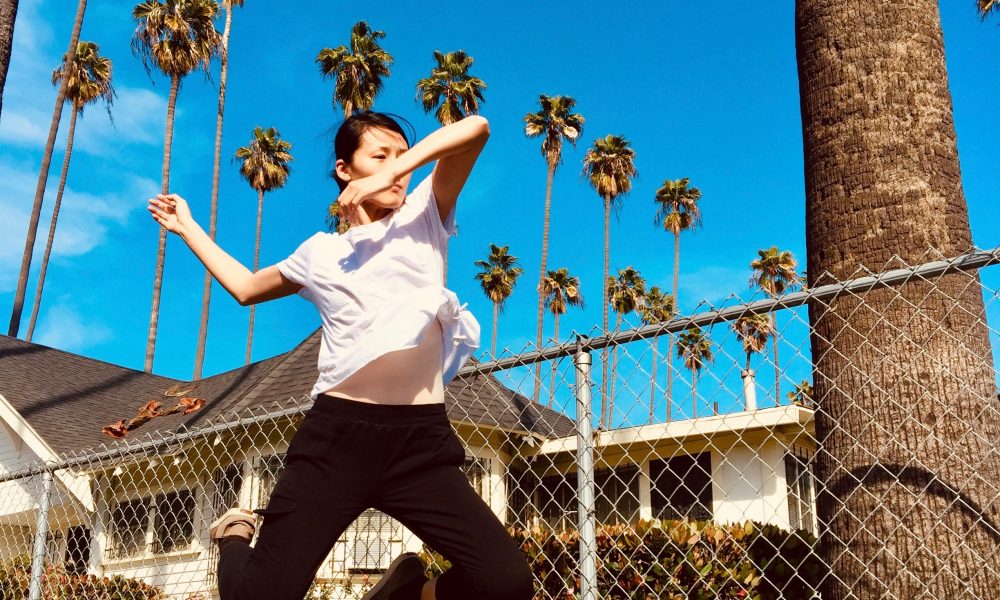
I was a little girl who simply loved to dance in any given setting. I would dance to the music from the radio, follow the singers’ choreographies on TV, and create a group dance with kids in the neighborhood. One day, my mom lost me in a huge building. After an hour of desperate search, she finally found me dancing in the main lobby surrounded by a crowd as if I had rehearsed for the big gig. I consider this as my first solo public site-specific improvisational performance.
Noticing my passion for dance, my working-class parents sent me to the government-run national art school in Seoul. During my six years of conservatory training at the Gugak National Art School, I was trained in different types of Korean dance such as court dance, ritual dance, folk dance, and contemporary Korean dance along with ballet and modern/contemporary dance in intensive hours. With this overwhelming curriculum in a competitive atmosphere, I found myself physically and mentally exhausted, losing my childhood joy of dancing.
What kept my passion for dance were dance-making courses and creative dance activities in the school program or seeing innovative dance performances outside. The chair of the dance department strove to provide experimental dance composition classes and student-initiated choreographic opportunities in such a technique-oriented, college-entrance-focused dance education system. Meanwhile, I was exposed to dance performances of mixed genres and scales outside of school. New works of internationally renowned dance companies, young choreographers’ boundary-breaking contemporary dances that sourced forms and concepts of classical Korean dance, and solo dancers’ virtuosic performances at the national dance competition were catalysts to my body and mind exhausted from the rigorous training.
After my college years followed by professional dance company experience focused on Korean dance practice, the UCLA World Arts and Cultures/Dance (WACD) MFA program was a turning point in my choreographic journey. My fascination with the historical post-modern, contemporary dance makers grew and their methods became exemplary associations to my work. I was intrigued by the compositional ideas of Merce Cunningham, Trisha Brown, and Anne Teresa De Keersmaeker, as well as somatic practices, branched from Deborah Hay, Alexander Technique, and Skinner Releasing Technique.
During the process of my thesis project, I contemplated how to define my practice and myself in the context of the contemporary American dance world. I began redefining myself as a contemporary dance maker not necessarily representing my cultural background which oftentimes pigeonholes me. Upon this manifesto, I believe I liberated my trained dance forms from the cultural narratives at my MFA thesis concert.
Since my graduate study in WACD, I have been privileged to present my solo and group works to transregional research-based dance communities and share my practices in the broad LA area through artist-in-residence and performance opportunities.
Great, so let’s dig a little deeper into the story – has it been an easy path overall and if not, what were the challenges you’ve had to overcome?
I used to have serious issues in dancing in a group especially with set movement forms and formations. My previous dance company, where I worked for three years as one of sixty dancers, would present scaled group pieces in traditional Korean dance repertoire which featured controlled moves and steps in precisely choreographed timing and formations. I was often in a slightly off-angle or offbeat from the group so the artistic director Master Cho would call me out for the sake of the perfect form. I thought I was just responding to my groove, but then the range of my grooviness exceeded the boundary of the form in the group. As my anxiety for group dance grew, I started questioning the nature of my body in the group, even losing track of the choreographic sequence in the midst of making effort to figure out what was the next phrase.
I appreciated Master Cho for finding other roles with which I could liberate my grooves such as solo parts and character dances in the company’s new choreographic projects including The Moon, a contemporary dance-drama that has toured around the world for the past ten years. I truly enjoyed working by myself and performing without the anxiety while infusing my choreographic ideas into the company’s notable works. However, the memory of anxiety haunts me even these days, as I still sometimes have dreams about finding myself all alone, unable to go up on the stage due to unexpected problems with costumes, props, or my body failing to remember the choreography, whereas all the other dancers seem well-prepared for the performance. My questions about group dance also remain until now:
-Where in the spectrum of being in the same track of steps/moves, should we define it as unison? What satisfies groupness for the sake of dancing bodies or viewers?
-How can we create room to infuse our spontaneous agency when we dance set/patterned moves?
-How can we explore and enjoy the individual or collective groove in a communal dance activity? What structures help or hinder to unleash the groove?
These questions later intersected with my belief in the joy of my ancestors’ communal folk dances. That was when I began working on a project called Earthian Folk Dance (EFD), a movement research and practice aiming to create a contemporary folk dance that can be shared by bodies of mixed backgrounds. Upon the premise that people living on Earth all belong to the same tribe, Earthian, EFD promotes mono-culturalism and kinesthetic connectedness while challenging the hyper-individuality of post-modern choreographies and hyper-cultural-representations of traditional folk dances. EFD has been developed and shared in collaboration with six Earthian dancers through performances and workshops at performance venues including Automata, Camera Obscura, LA Dance Project, and 18th Street Arts Center while engaging with local communities in Santa Monica, Koreatown, and LADT.
EFD is a parent-practice of Groovy Dancers which is a class form of EFD’s investigation focused on the process to establish communal body grooves.
Groovy Dancers – what should we know? What do you guys do best? What sets you apart from the competition?
Groovy Dancers is a dance class that welcomes all body-mind participants who are ready to share their groove in an embracive atmosphere. We explore simple to complex step patterns in both solitary and collective manners while some Korean and Earthian dance steps are introduced and new step patterns are discovered. Groovy Dancers celebrate participants’ dancing grooves, which can be traditional or new, individual or universal, ephemeral or repetitive, through one’s steps and body responses.
The evening begins with a breath-led warm-up, which is informed by the ancient Korean dance training, focused on relaxation as a preparation for bodies to render effortless moves. After the guided exploration of various step and body patterns, class culminates with a communal steppy jam to familiar or risky songs that would unleash your groove. As a community of people, Groovy Dancers would love to incorporate your dance or musical practices. Class would love to learn trained or un-trained step patterns from you. We are also planning to have an Earthian Folk Night that welcomes bringing your own instrument to play with the Earthian percussion group.
On December 21, Groovy Dancers will have an open performance event to share our practice along with Byoul, DaEun Jung’s solo project in collaboration with vocalist Melody Shim. Class participants in any week can perform in the final public presentation!
Pricing:
- Groovy Dancers Monday Night Class (7-9pm) at Pieter Performance Space – $15-20
- DaEun Jung’s Byoul & Groovy Dancers Performance Dec 21 (8:30pm) at Pieter – Free with non-monetary donation.
Contact Info:
- Address: Pieter Performance Space
420 West Avenue 33
Unit #10
Los Angeles, CA 90031 - Website: www.daeunjung.com
- Phone: 8183314126
- Email: daeundance@gmail.com
- Instagram: https://www.instagram.com/daeunychum/
- Other: https://pieterpasd.com/events/daeun-jung-groovy-dancers-heel-ball-toes-and-breath-2019-11-04/


Image Credit:
Personal Photo: DaEun Jung has the credit
1. by Gabriel
2. by Gabriel
3. by Charles Han
4. by Charles Han
5. by Charles Han
6. by Miles Brenninkmeijer
7. by DaEun Jung
8. by Choi Sung-bok
Suggest a story: VoyageLA is built on recommendations from the community; it’s how we uncover hidden gems, so if you or someone you know deserves recognition please let us know here.
Popular
-

Que Johnson on Building Brands That Last: From Visibility to True Market Authority
-

Christina Wren Steps Into the Director’s Chair to Tell Stories That Feel Like Home
-

Portraits of the Valley
-

LA’s Most Inspiring Stories
-

JordanL on ‘Breathe,’ Belief, and Building a Movement Beyond the Music
-
Megan Birney Rudert on How Access to Light Is Powering a More Sustainable and Equitable Future