


Today we’d like to introduce you to Paul Tavenner.
Paul, can you briefly walk us through your story – how you started and how you got to where you are today.
I grew up in a musical family. My mom didn’t play an instrument and regretted it, so she made of each play an instrument for one year. After that, it was up to each of us to decide to continue or not. She got two professional musicians out of the deal!
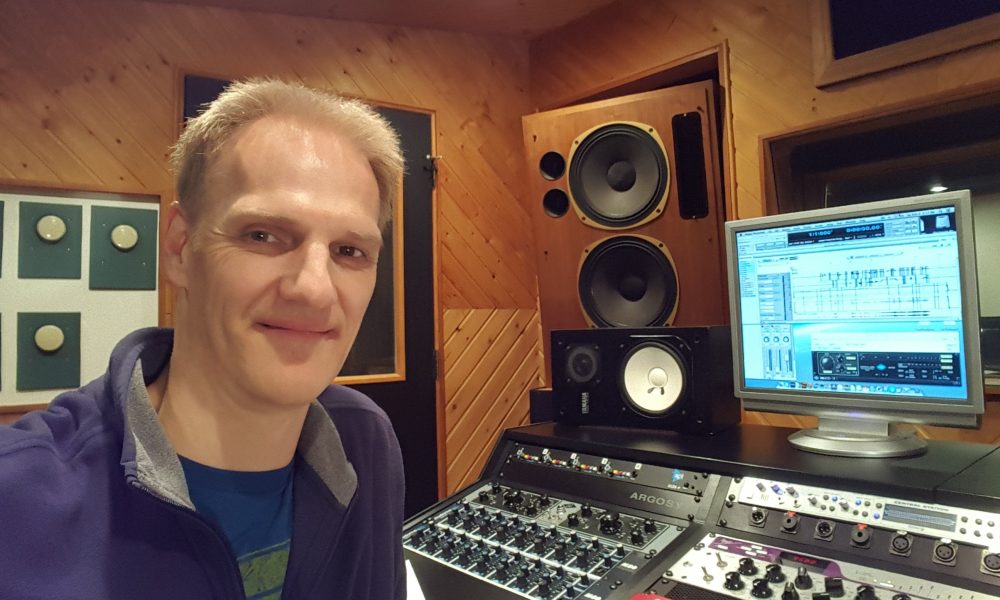
After high school, I studied music production, engineering, and performance at Berklee College of Music in Boston. Once I got my degree, I moved to Los Angeles where I worked at various recording facilities including Capitol Records, Producers Workshop, Kitchen Sync Studios, CBS-TV City, and others. After getting some solid experience in the industry, I started a CD mastering company called Man Alive Music Productions in 1989. My startup was the lower cost and independent alternative to the major mastering houses in LA. I ran this business by utilizing other studios that had down time. Eventually, I was able to buy my own studio in Granada Hills, CA where I’ve been for 17 years.
Now that the music industry is in the midst of redefining itself, I find that my business survives because there is a strong independent music community that still needs a high quality, reasonably priced full-service studio to record their music. I’m also a performing musician and that proves useful when addressing the needs of my clients.
We’re always bombarded by how great it is to pursue your passion, etc – but we’ve spoken with enough people to know that it’s not always easy. Overall, would you say things have been easy for you?
Not long after I bought my current studio, the industry was arguably beginning a decline. One major reason had to do with more affordable and advanced technology for recording equipment. Major studios since the 1970’s had to make huge investments in mixing consoles, microphones and other equipment. As computers, software and other “disruptive” digital devices arrived in the mid to late 90’s, a new DIY industry began to emerge. This put many studios out of business. Gone were the “demo” sessions that were the bread and butter of many studios which were now being done in somebody’s garage.
Another major “bump” in the road occurred when digital music files were being downloaded for free. Initially, this didn’t affect recording studios much. But over time, the result of music being acquired by listeners for free had a trickledown effect on studios. It’s difficult to justify a recording budget when the product can be acquired freely.
One key to staying afloat in today’s climate is diversity. Being able to service different types of musical styles and record them well, will always be a valuable skill.
So let’s switch gears a bit and go into the Big City Recording Studios story. Tell us more about the business.
My business is to record, edit, mix, master and sometimes perform on and produce artist’s recordings so that they have the best-sounding product to take to market. My facility is especially sound-proofed to keep outside sounds from coming in, studio sounds from getting out, and to create a listening environment inside that allows me to make adjustments to the sound that will translate to consumer devices, including cell phones and top of the line audiophile speaker systems, in a pleasing and competitive way.
There are a few different ways to accomplish this:
One way is by recording each musician in their own room, or “iso” booth so that the microphones only pick up that instrument’s sound. Meanwhile, each musician will be using headphones to allow them to hear the other musicians while recording. A good example is recording a rock band with a singer. If the singer is in the same room as the drums, bass, and guitars, then the singer will be completely drowned out and it will be very difficult to create a finished sound that is pleasing to the ear. Placing each musician in their own room allows me to sculpt each sound without sacrificing the sound of the other instruments.
Not all recordings require this type of isolation, however. Often times, I will record classical and jazz musicians in the same room. This is because they will perform better, and the mix will sound better if they are able to hear themselves and the other musicians without headphones. In this approach, it’s really important that the room that sounds good as the microphones will be picking up not only the instruments but the sound of the room.
I’m probably most known for many of the jazz recordings I’ve done over the years, although I have had the privilege of working with some innovative and well-known pop and rock stars and some movies.
I’m most proud of being able to work with independent musicians who will be well-known one day. I find the energy and passion they exude early in their careers quite rewarding to be a part of. I would also say that I’m proud to have been able to develop my skills to a high level in a variety of musical styles including jazz, pop, rock, classical, and opera. I have also been able to develop skill sets covering a wide range of technical skills including recording/mixing, editing, and mastering. The old school fostered specialization of engineers generally in one or two of those categories. The independent artist movement was a catalyst for me to develop and master many musical styles and technical recording skills.
Ultimately what sets me apart from others is that, especially as time goes on, I come from the old-school background of musicianship and recording techniques, but because of the changing music industry in the last 10-15 years, I have had to become highly skilled in multiple musical styles and technical skills which are more common with younger engineers and producers. So, I have an understanding of the current needs of young artists but can apply some very valuable tools that come from older tried and true methods. I’m also not a bad guy to work with! Actually, I can’t stress how important it is in this business to treat it as the service industry that it is. In other words, artists really need to feel you are hearing them clearly and helping achieve their vision. I view myself as somewhat of a tour guide or even a waiter. It’s my job to understand clearly what an artist wants and then navigate the technical “waters”, which can definitely be treacherous at times, to help them achieve their vision.
Has luck played a meaningful role in your life and business?
I subscribe to the saying that “luck is a combination of preparation and opportunity”. I think it’s lucky that I found my studio where I’ve been for 17 years now. I found it through a very close friend who needed a studio to record his album. I was in that band and we recorded his album there. Five years later, I owned that studio. It was lucky because had I not recorded there, it’s unlikely I would have pursued it.
I also believe that every situation has a potential opportunity. I don’t mean that in an exploitive way, but more in a way to connect with someone where a mutually beneficial outcome may occur. This can happen in situations that appear to be lucky or unlucky. Luck in either form is something random, but what you do with it is a different story.
Pricing:
- Recording/Mixing/Editing is $80/hour including the studio and me as the engineer.
- Mastering is $100/hour unless the project was recorded/mixed by my studio, then it’s $80/hour.
- Laying down drum tracks – please inquire. I can perform with a group or add drums to an existing song.
Contact Info:
- Address: 17021 Chatsworth St
Granada Hills, CA 91344 - Website: www.bigcityrecording.com
- Phone: 818-753-3959
- Email: paul@bigcityrecording.com
- Instagram: coming in 2017
- Facebook: coming in 2017
- Yelp: https://www.yelp.com/biz/big-city-recording-studios-granada-hills
- Other: Google Business: Big City Recording Studios


Popular
-

Que Johnson on Building Brands That Last: From Visibility to True Market Authority
-

Christina Wren Steps Into the Director’s Chair to Tell Stories That Feel Like Home
-

Portraits of the Valley
-

LA’s Most Inspiring Stories
-

JordanL on ‘Breathe,’ Belief, and Building a Movement Beyond the Music
-

Megan Birney Rudert on How Access to Light Is Powering a More Sustainable and Equitable Future