



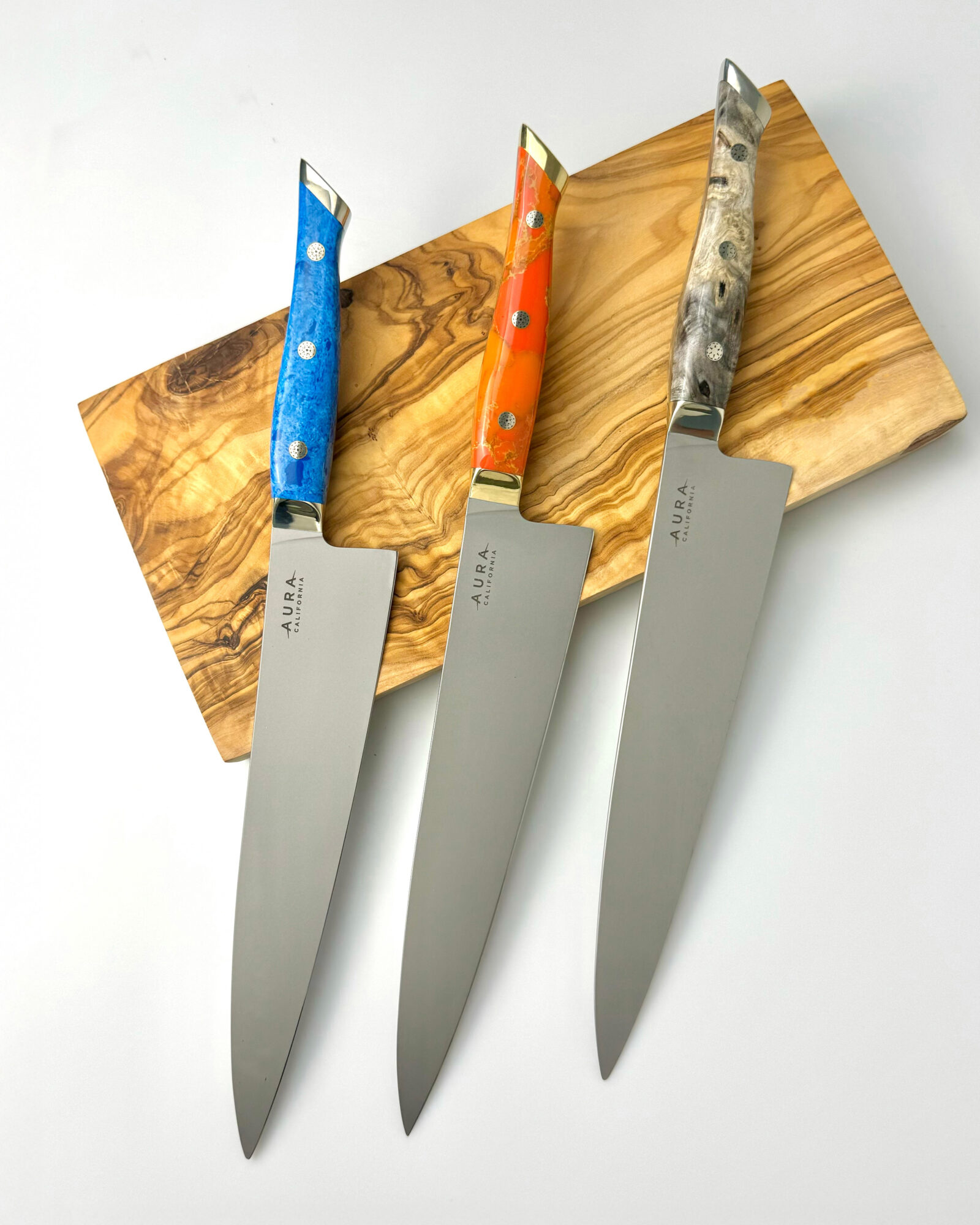
Greg Hex isn’t interested in recreating the traditions of centuries-old knifemaking, he wants to explore what an American culinary knife can become next. Through Aura California, he brings together precision-ground CPM MagnaCut steel, gemstone and rare-wood handles, and a distinctly modern design sensibility to create functional pieces meant to be used every day and kept for generations. Behind the materials and engineering is an even simpler philosophy: the true purpose of a beautiful knife is found in the meals, rituals, and connections people create with it.
Greg, let’s start with the big picture. When most people hear “handcrafted American knife,” they picture a forge and a walnut handle. You’ve gone somewhere completely different. What are you making?
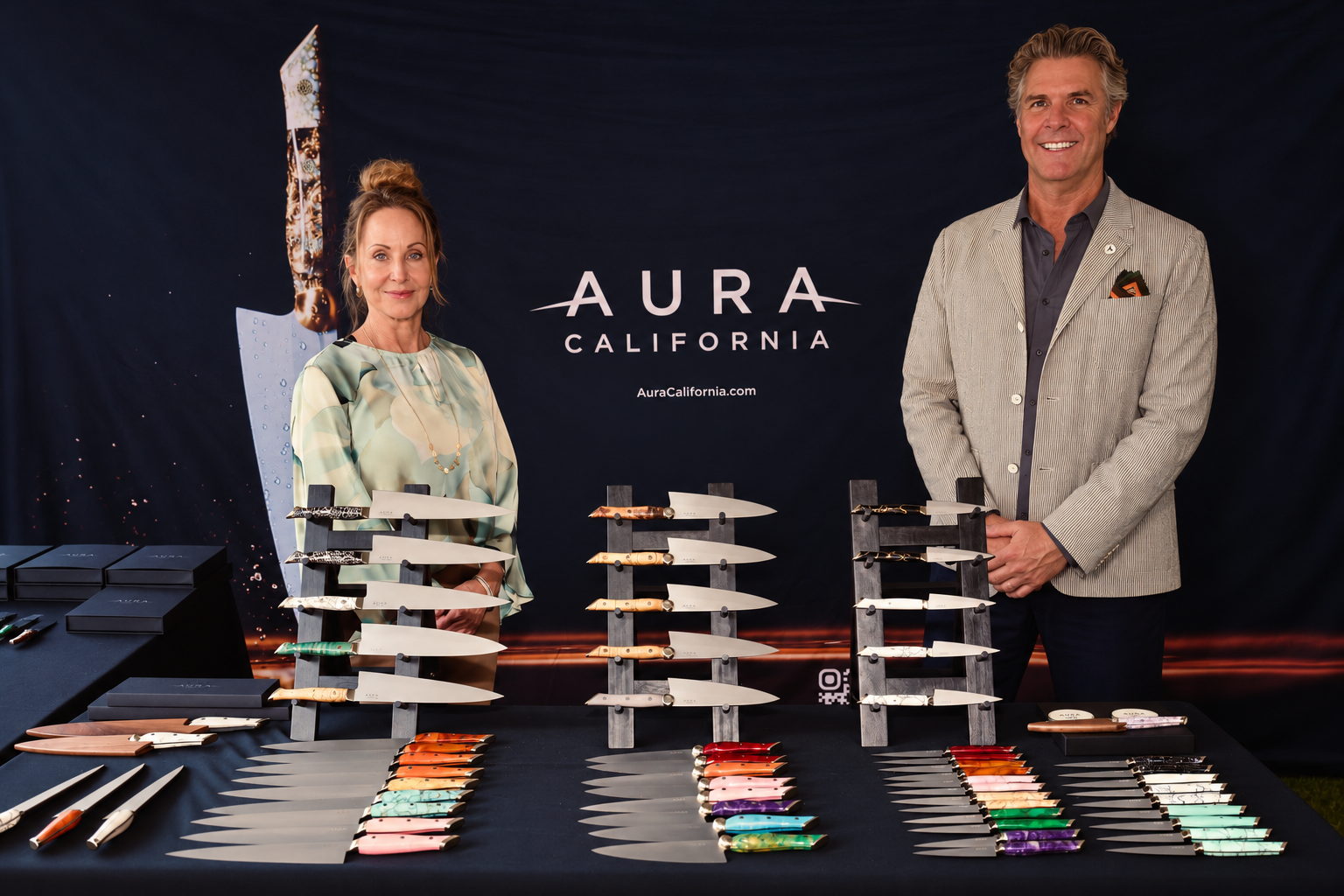
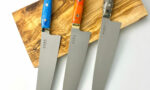
We’re making culinary knives, but I’d argue we’re really making design objects that happen to be extraordinary in the kitchen. Aura California is bespoke and American-made: chef knives, utility knives, paring knives, and steak sets. But the whole thing is built on a different premise than most of American knifemaking. The blades are CPM MagnaCut, a powder-metallurgy stainless steel, precision-ground rather than traditionally forged. The handles are gemstone or stabilized rare wood, where the material itself decides the character of the piece, so no two are alike. And the design language is clean and modern, not rustic. We set out to make something you’d want to display and something you’d actually cook with every day. Both at once.
Why now? Why are people suddenly willing to think of a kitchen knife as more than a tool?
I think a few things are happening at the same time. People are cooking at home more seriously, and they’ve discovered that the tools genuinely matter. At the same time there’s a broader hunger for objects with real provenance and permanence, things that are made by someone, made to last, made with intention. The culture is tired of disposable. When someone spends real money now, they want it to mean something and they want to know where it came from. A knife sits right at that intersection. It’s the one tool you touch every single day, and it can also be a genuine piece of craft. People are ready to see it that way.
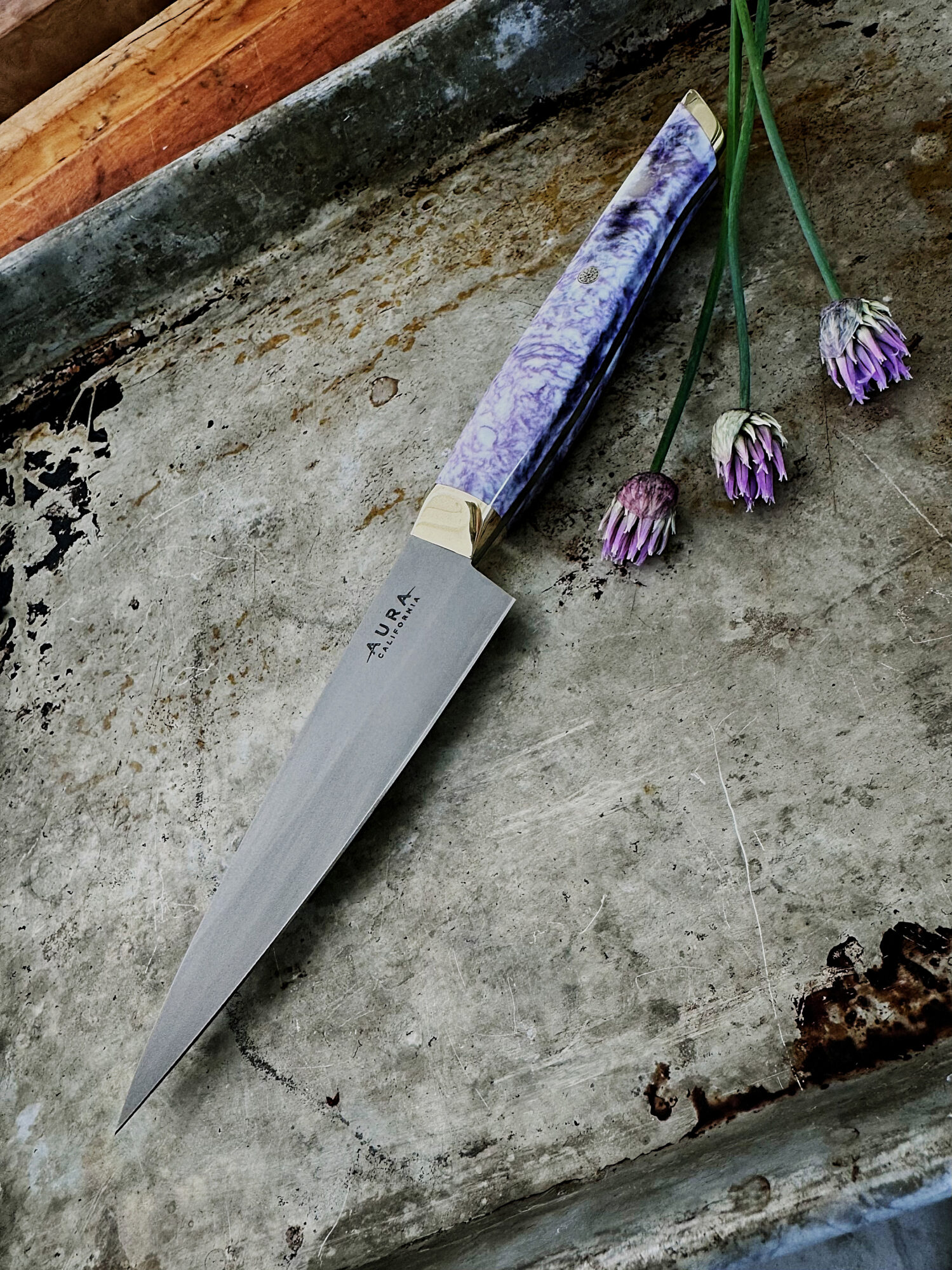
Walk us through what actually makes one of your pieces a design object and not just a nice knife.
It comes down to the marriage of engineering and natural artistry. On the performance side, CPM MagnaCut is about as good as culinary steel gets right now, a rare balance of edge retention, toughness, and corrosion resistance you can’t get from conventional steel. That’s the engineering. Then the handle is where each knife becomes a singular object. We work with solid gemstone and stabilized fine woods, and because those are natural materials, the stone or the grain dictates the final character. We’re not stamping out a thousand identical pieces. We’re revealing what’s already in the material. That combination, precision on the blade and individuality in the handle, is what turns it from a product into an object.
You could make these anywhere. Why California, and why does that matter to the work?
California matters because of what it represents creatively. There’s a whole tradition of American knifemaking rooted in heritage and forging lineage, and a lot of it comes out of New England workshops or the Pacific Northwest forging scene. That’s beautiful work, but it’s a different story than ours. California is a design and creativity capital. It’s where a lot of the most interesting thinking about materials, form, and modern craft is happening. Making Aura here isn’t incidental. The light, the food culture, the design sensibility, the willingness to try something that doesn’t look like what came before, all of that is in the work. We’re a California idea about what an American knife can be.
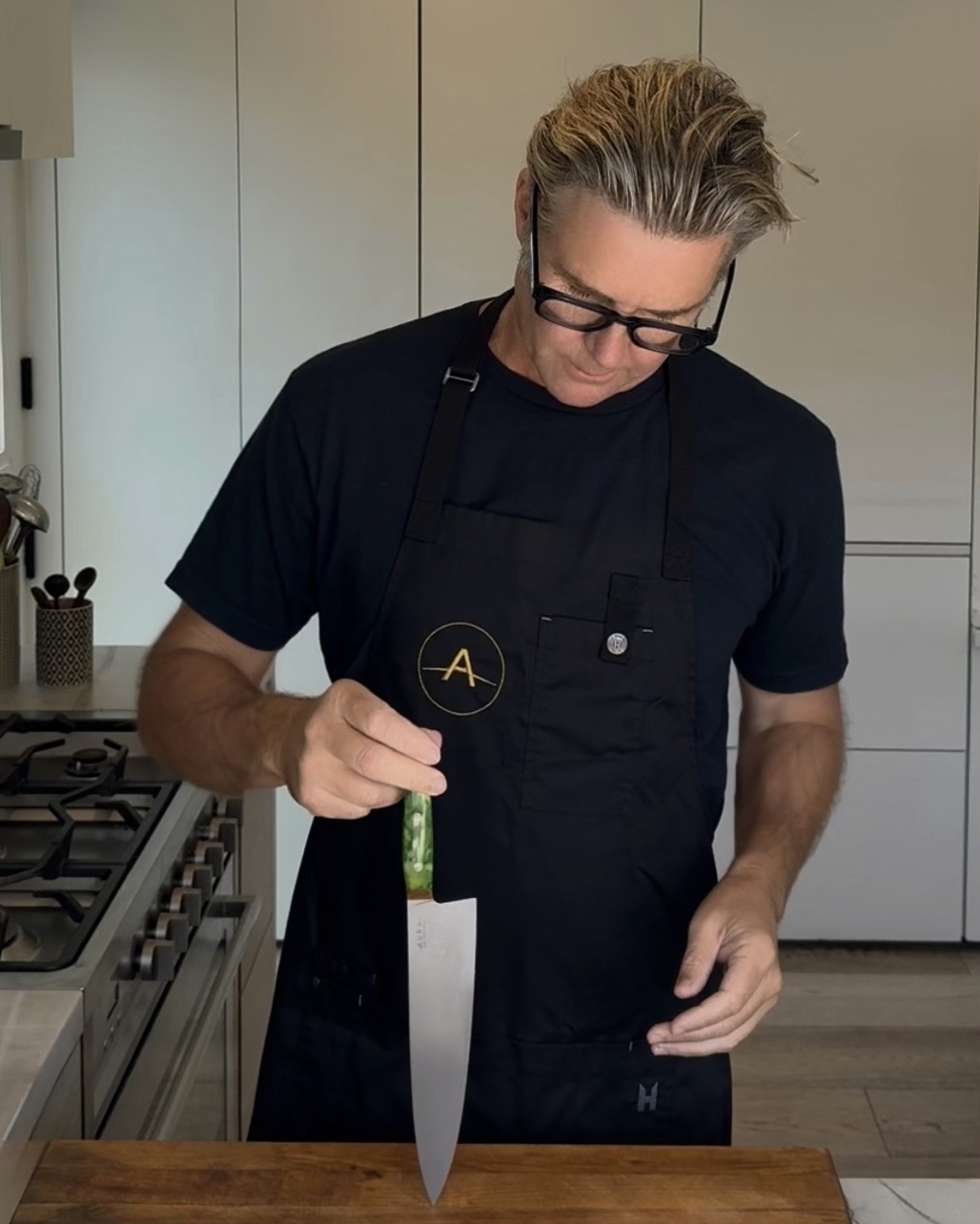
There’s a whole world of heritage knifemaking out there, from Japanese masters to centuries-old European houses. Where do you fit, and where do you deliberately not?
I have enormous respect for those traditions. The Japanese forging masters, the honyaki makers, the old European houses with three hundred years of history, that’s some of the finest craft on earth and I’d never pretend to be replicating it. But that’s exactly the point: we’re not trying to. We’re not claiming a centuries-old lineage or copying a forging technique that belongs to another culture. We’re building something new, a modern American design language for the culinary knife. Traditional in the sense that it’s genuinely handcrafted and made to last, but contemporary in materials, in form, and in the idea that a working knife can be a piece of modern art. We’re not the next chapter of an old book. We’re trying to write a new one.
Your brand talks about stewardship, not ownership. In a disposable world, what are you really asking people to do?
We’re asking people to keep something. Most kitchen tools are designed to be used up and thrown away, and we’ve all just accepted that. We design ours to be inherited. When you own an Aura knife, you’re not really the end of the line, you’re a steward of an object that can outlast you and get passed on with a story attached. That reframes the whole relationship. You take care of it, you use it for years, and eventually it belongs to someone else who knows exactly where it came from. In a world full of disposable everything, choosing to keep and pass on a beautiful, useful object is almost a quiet act of resistance. That’s the meaning part of what we do.
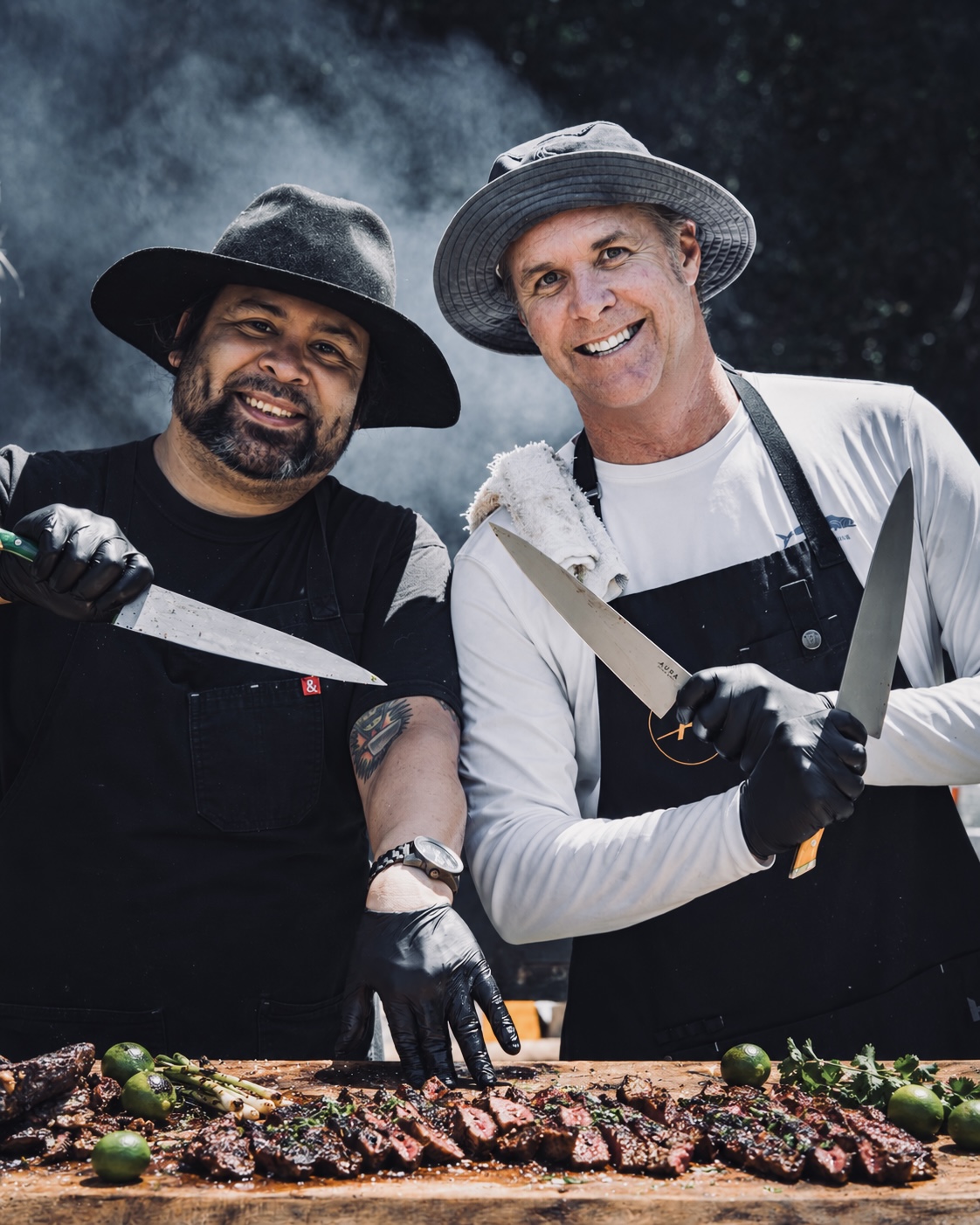
Beyond the object itself, what’s the point? Where does one of your knives actually live?
At the table, ultimately. All of this, the steel, the gemstone, the design, only matters because of what it’s in service of, which is people cooking for each other. Cooking is one of the oldest acts of love there is. A knife is where that begins, the first tool you pick up when you decide to make something for the people you care about. So as much as we obsess over the object, the real purpose is the meal, the gathering, the connection. The knife is beautiful so that the ritual around it feels a little more considered. That’s where it lives, and that’s what it’s for.
What’s next for Aura California?
More of what we do best: deepening the craft, expanding the material palette, and building the kind of partnerships and community that fit who we are. We’re intentional about growth. We’d rather be the brand people discover and remember than the one that’s everywhere. The bigger goal is to keep making the case that American knifemaking can be modern, design-led, and genuinely artful, and that some of the most interesting culinary craft in the country is happening right here in California. If you cook, if you care about where your tools come from, come find us.
Links:
- Website: https://www.auracalifornia.com/
- Instagram: @auracalifornia
Popular
-
Greg Hex Is Turning the Everyday Kitchen Knife Into a Modern Design Object
-

Portraits of the Valley
-

LA’s Most Inspiring Stories
-

Rick Norris Learned That Building a Successful Business Means Building a Life You Actually Want to Live
-

How Olivia Rush Turned Survival Into a Mission to Help Others Keep Going
-

How Bibi Goldstein Is Helping Entrepreneurs Reclaim Their Time by Embracing the Power of Delegation