




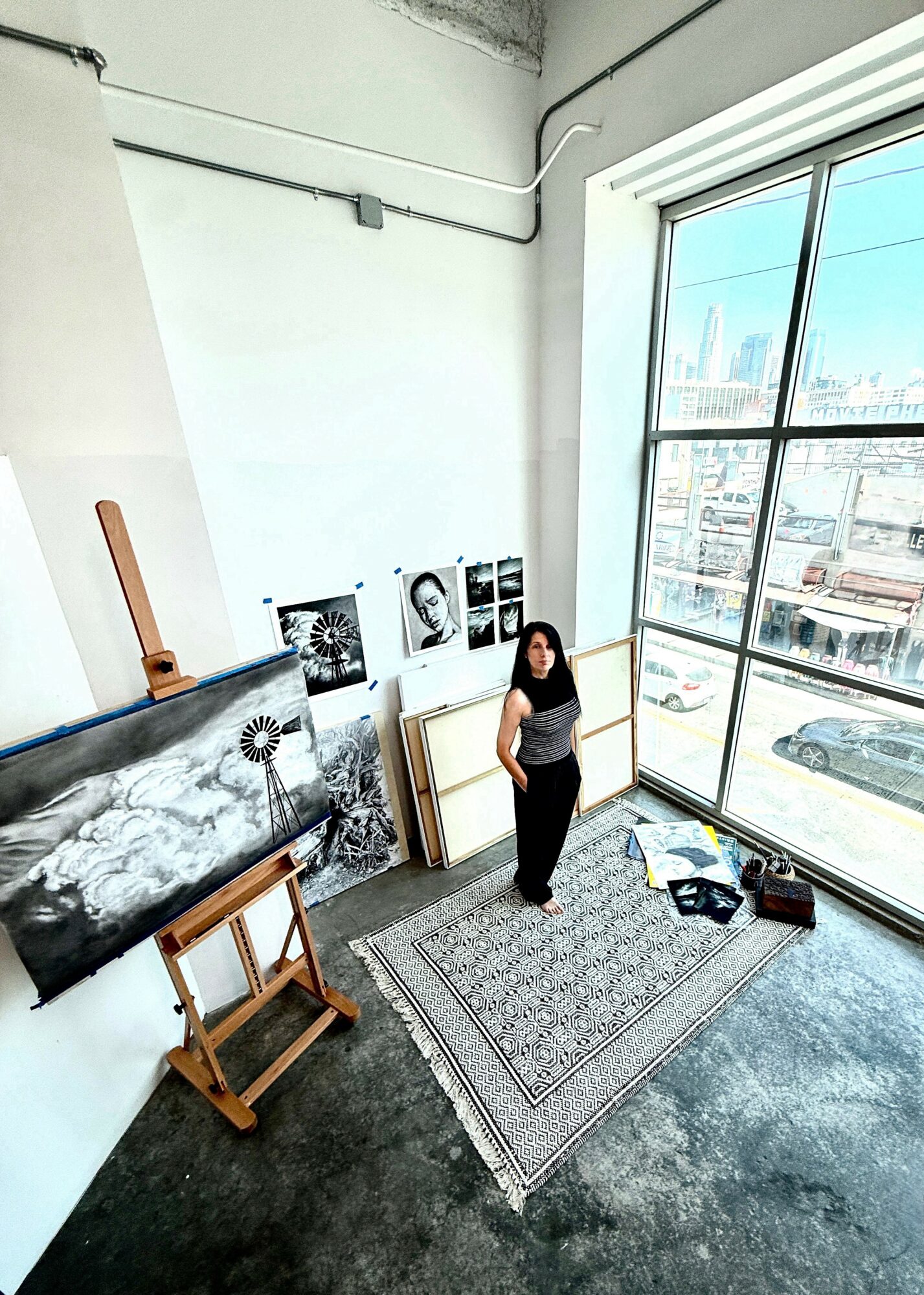
Today we’d like to introduce you to Maria A. Schneider.
Hi Maria A., so excited to have you on the platform. So before we get into questions about your work-life, maybe you can bring our readers up to speed on your story and how you got to where you are today?
I am an Argentine artist currently based in Los Angeles. My relationship with art began very early in my life. I started studying drawing at fourteen with Eduardo Pardo, a master of charcoal and pastel, and at fifteen I participated in my first group exhibition. Years later, already a mother of two, I fulfilled my dream of studying Fine Arts at Escuela Carlos Morel (EMBA) in Quilmes, Argentina, where I graduated with a degree in Visual Arts Education. During those years, I also studied with surrealist master Roberto Gatti, who became a teacher, friend, and guide, and I spent a year studying stage design at Teatro Colón in Buenos Aires.
After graduating, I opened my own studio and taught art until 2014, while continuing to develop my own practice. Over the years, I worked as an artist, teacher, curator, gallerist, and cultural organizer, participating in exhibitions, public art, murals, and educational and social projects in Argentina and internationally. I was also invited to serve as a juror for various art competitions.
My work has taken me to different countries and has become part of both institutional and private collections. In 2005, I was invited to present a solo exhibition at the Casa de la Cultura del Chimborazo in Riobamba, Ecuador, where one of my works was acquired for its collection. In 2011, I participated in Festari in Suhareka, Kosovo, where two of my works entered the collection of the city gallery.
In 2012, I was invited by the Intiñan Museum at the Middle of the World in Ecuador to create a lithic piece representing Argentina as part of a project dedicated to the ancestral heritage of different countries. After researching ancestral cultures in Argentina, I chose the Ambrosetti Menhir of Tafí del Valle as my reference. I created the piece in Ecuador, and it was installed at the museum during the equinox celebration in the presence of the Argentine ambassador. It remains part of the museum’s collection today.
I moved to Los Angeles in December 2014. In 2016, my husband and I founded an art gallery dedicated to Latin American art, which we ran for nearly ten years, presenting artists and developing exhibitions and community projects. In 2023, I was invited to contribute a work to the gala of the Museum of Latin American Art (MOLAA) in California.
After the gallery closed, I returned fully to my own artistic practice. After many years also devoted to teaching, curating, and supporting other artists, my attention is once again centered on the studio and on drawing. In a meaningful way, I have also returned to charcoal, the medium I first encountered at fourteen. I don’t feel that I am starting over; I feel that I am bringing together the different parts of the same life.
We all face challenges, but looking back would you describe it as a relatively smooth road?
It definitely hasn’t been a completely smooth road, but over time I’ve come to understand that the challenges have also shaped the way I see my life as an artist.
One of the biggest challenges has been keeping my own artistic practice at the center while taking on so many different roles within the art world. Over the years, I taught art, curated exhibitions, worked in cultural management, ran a gallery, and dedicated a great deal of time to supporting other artists. I loved those experiences and learned enormously from them, but there were periods when my own work had to share space with many other responsibilities.
Moving from Argentina to the United States brought another kind of challenge. I had spent many years building my career and relationships within the art world in Argentina, and arriving in Los Angeles meant finding my way again, meeting people, understanding a different cultural landscape, and rebuilding a professional community.
At the same time, that change gave me a new perspective. It made me think differently about belonging, memory, family history, and the relationship we maintain with the places we leave behind. Those questions are beginning to become part of my work.
Perhaps the most important challenge has been learning to accept that an artistic life does not necessarily follow a straight line. There are periods of visibility and periods of quiet, moments of certainty and moments when you have to begin again.
In some ways, I am beginning again now, but not from zero. I carry with me everything I have learned and experienced over the years, and I am bringing all of it back into the studio.
Alright, so let’s switch gears a bit and talk business. What should we know about your work?
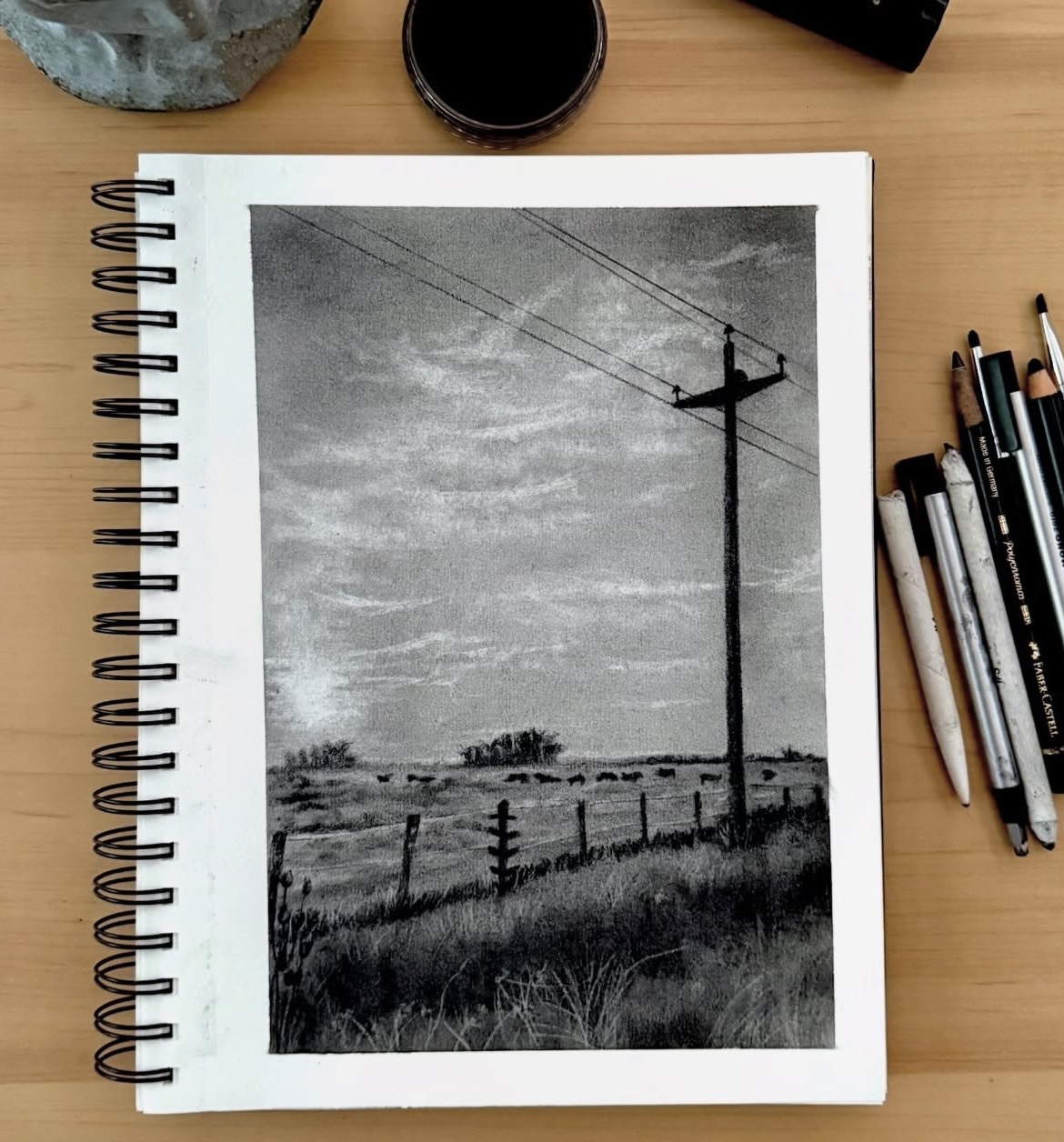
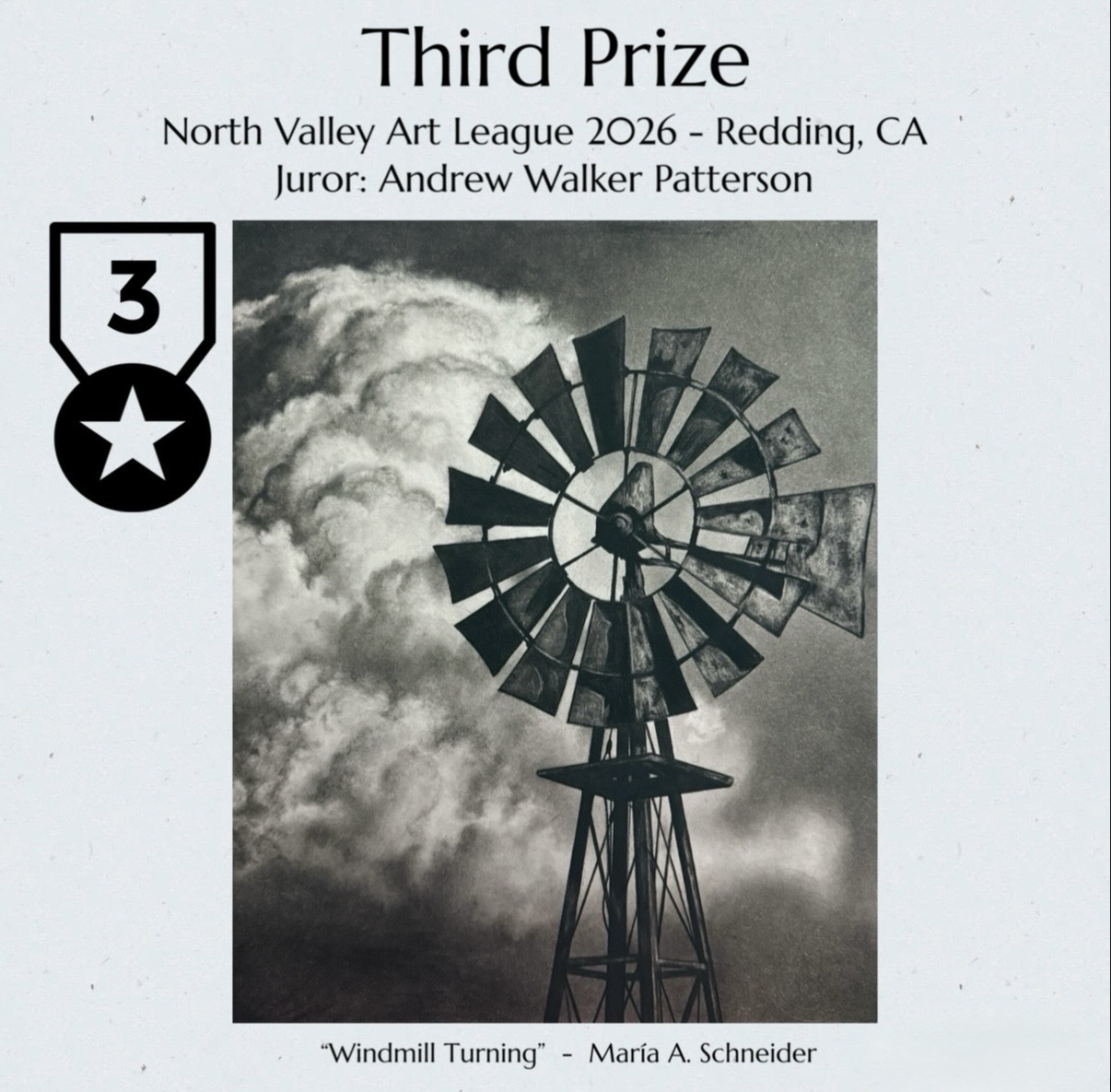
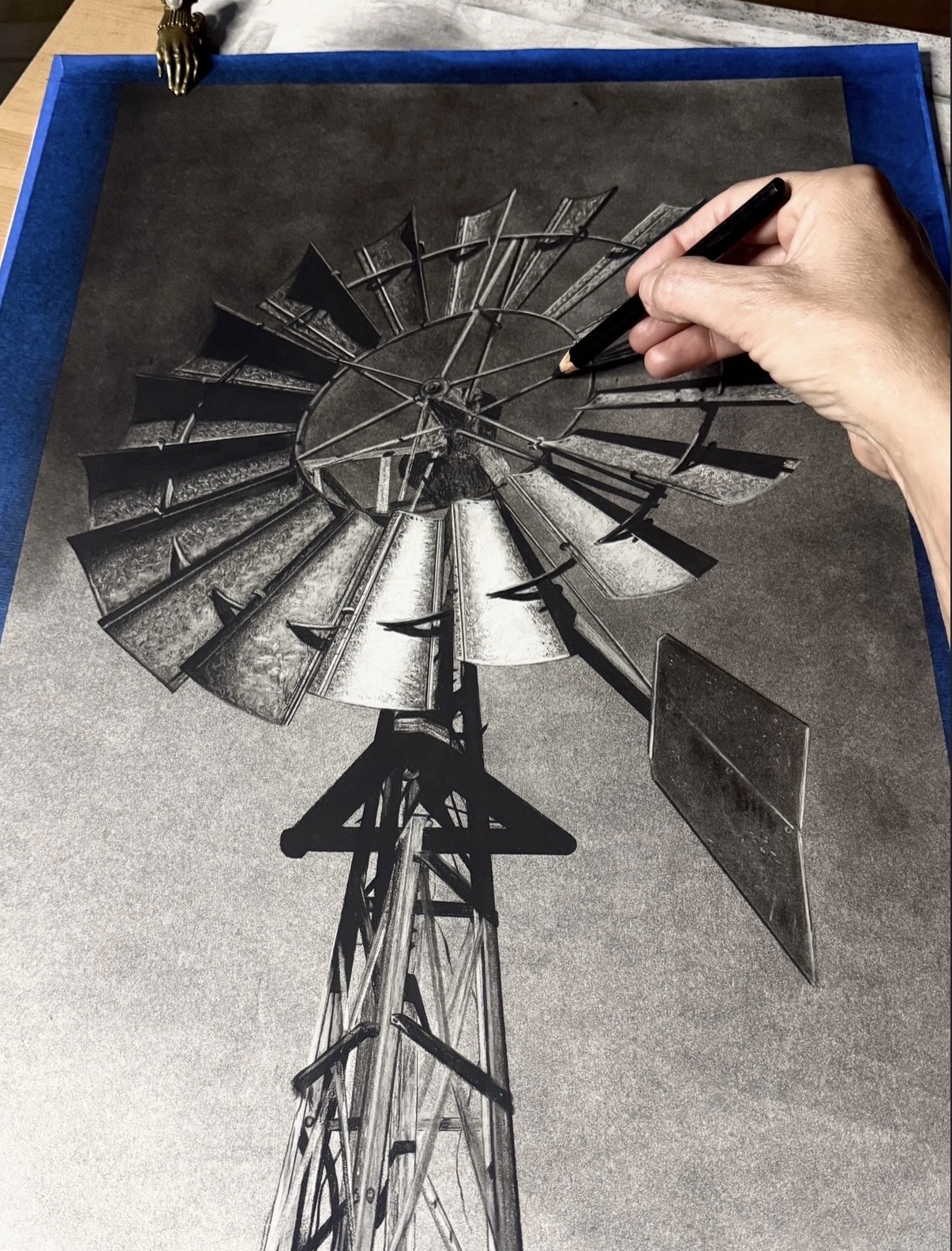
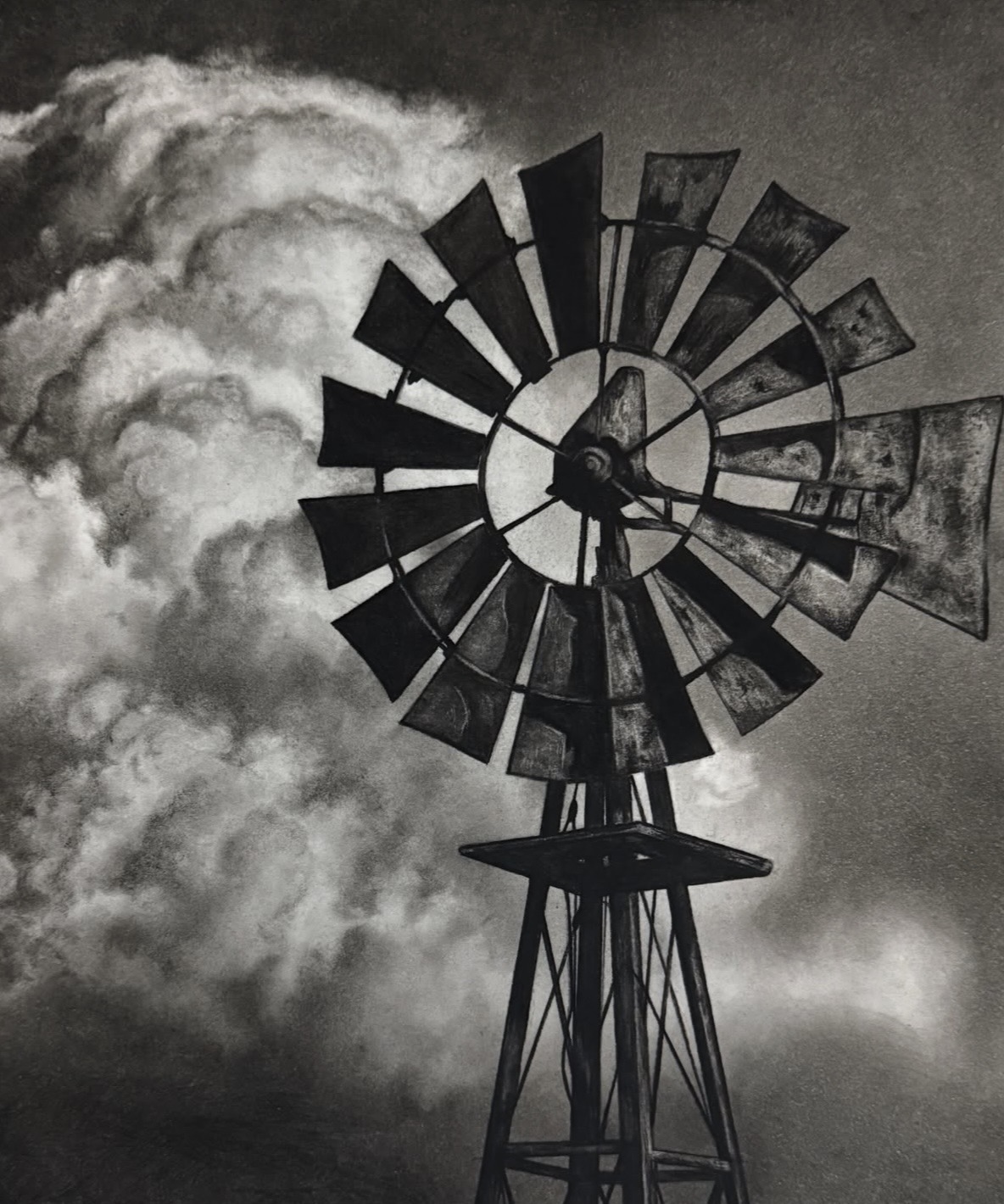
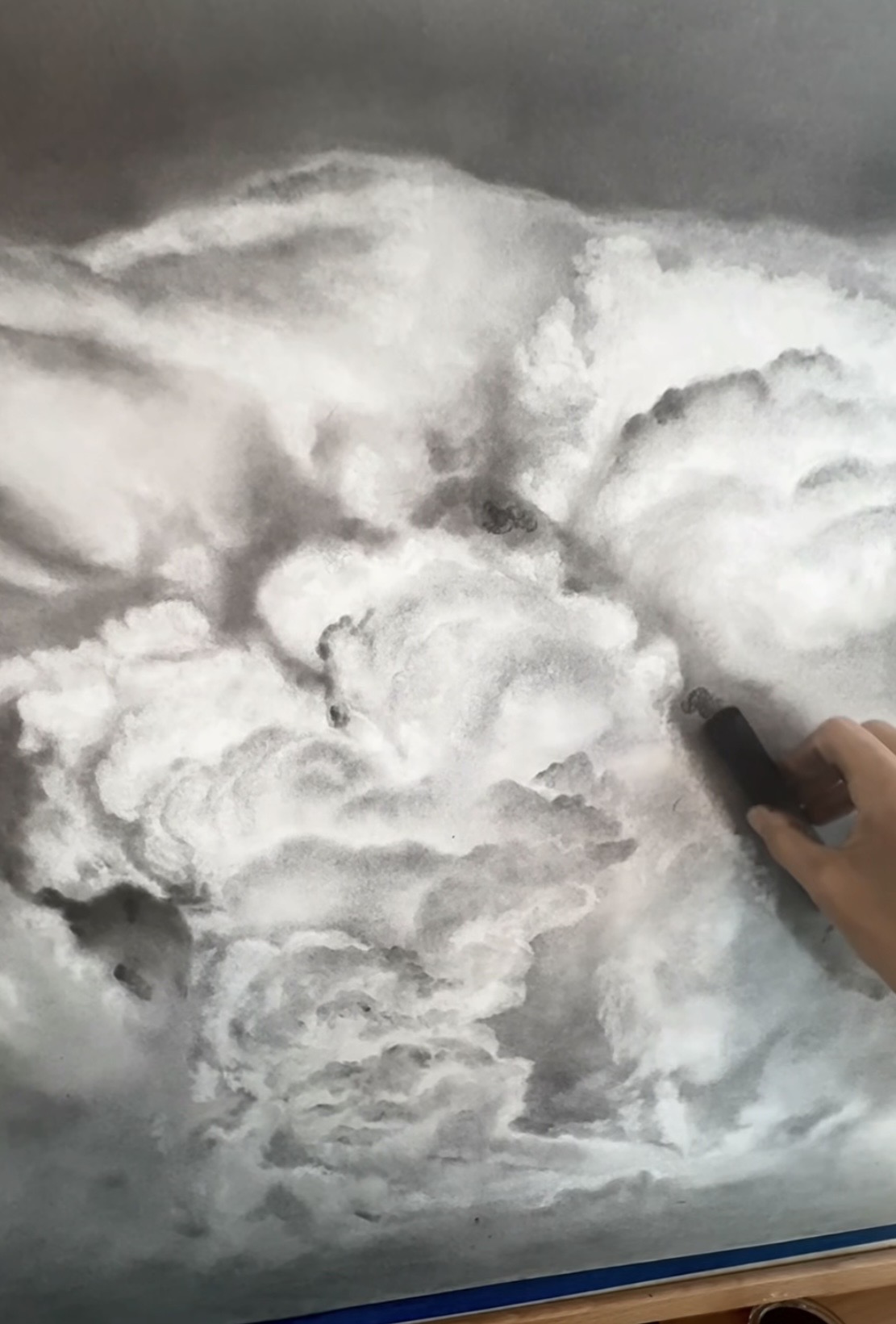
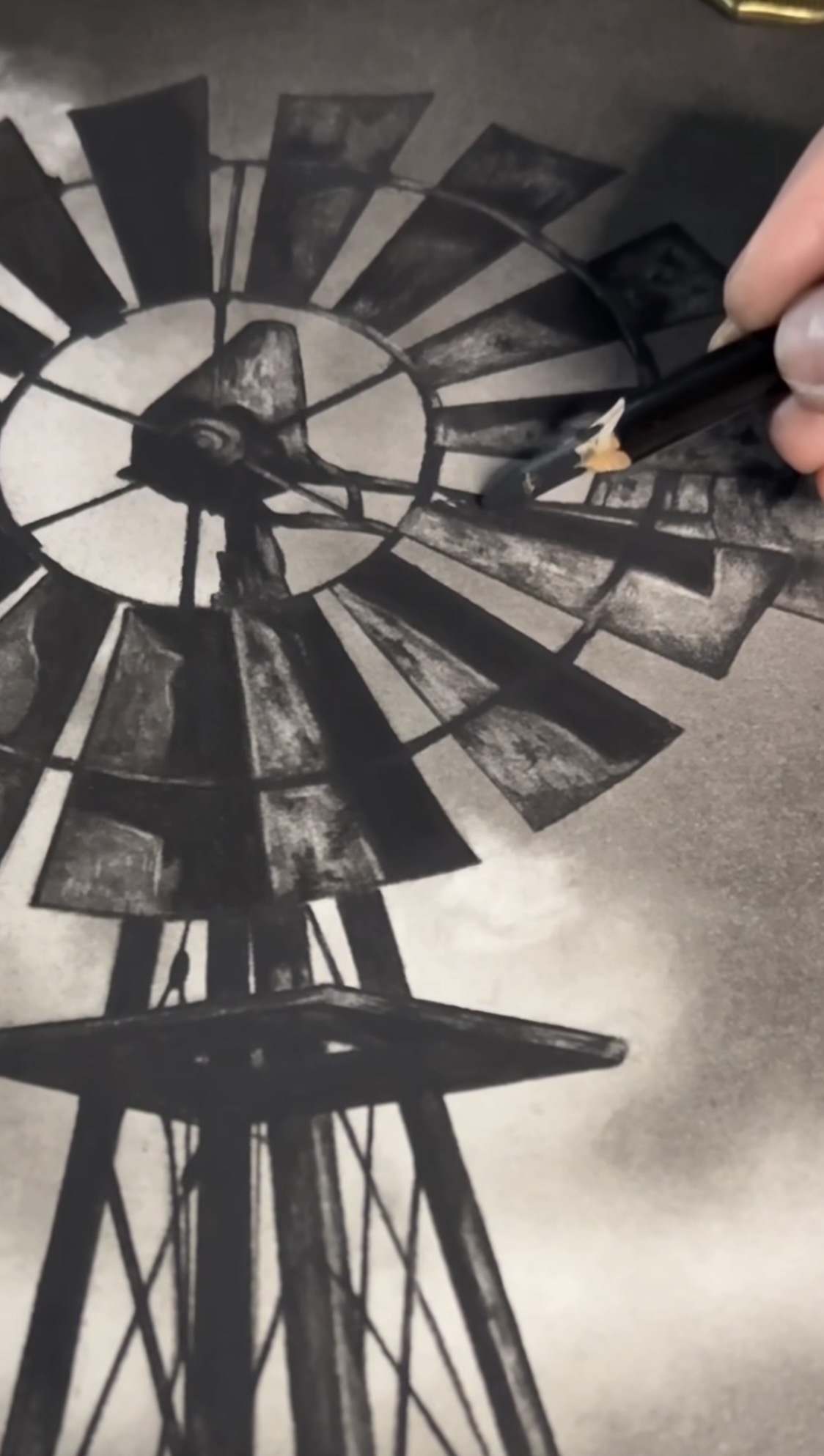
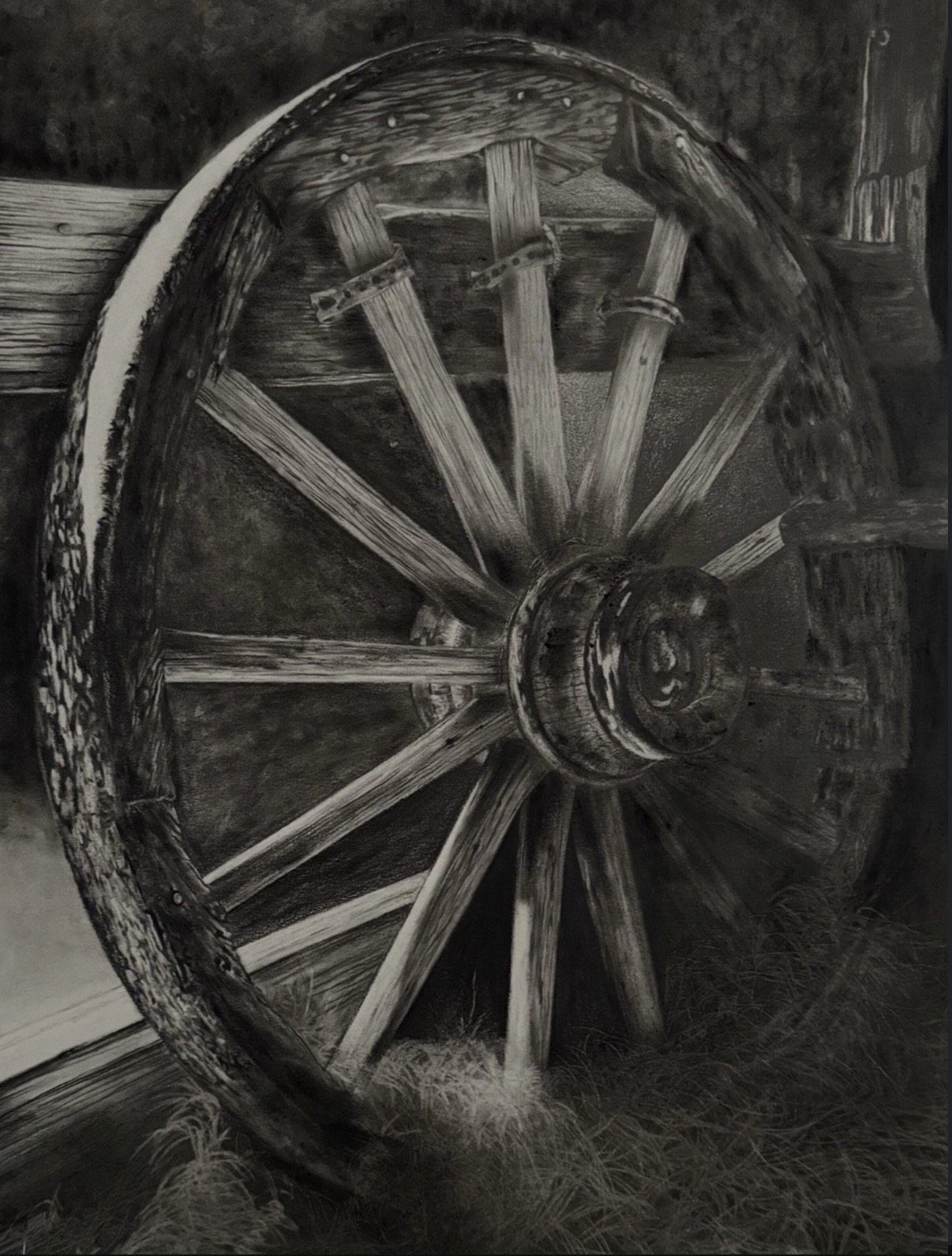
Drawing has always been at the center of my artistic practice. I work primarily with charcoal and graphite, and I am especially drawn to detail, light, texture, weathered surfaces, objects, landscapes, and places that seem to carry traces of time.
For many years, I felt very close to Surrealism, something that was also present in my artistic training. Over time, however, my work began to transform through a deep reconnection with memory and place. After many years, I returned to the countryside where I had spent part of my childhood with my grandparents, and that return changed the way I looked at things and also the way I drew.
It was then that I began moving toward a more hyperrealistic language. I think that need for precision emerged, in some way, as a means of preserving memory. There are places, objects, landscapes, and small details that remain within us long after we have left them behind. Drawing them with such attention became a way for me to pause in front of them, recover them, and preserve something of what time inevitably transforms.
I don’t know if I will always need to work in such a photographic way. The work changes as we change. But today I understand that this level of detail has less to do with reproducing an image than with the need to remember and understand what I am looking at.
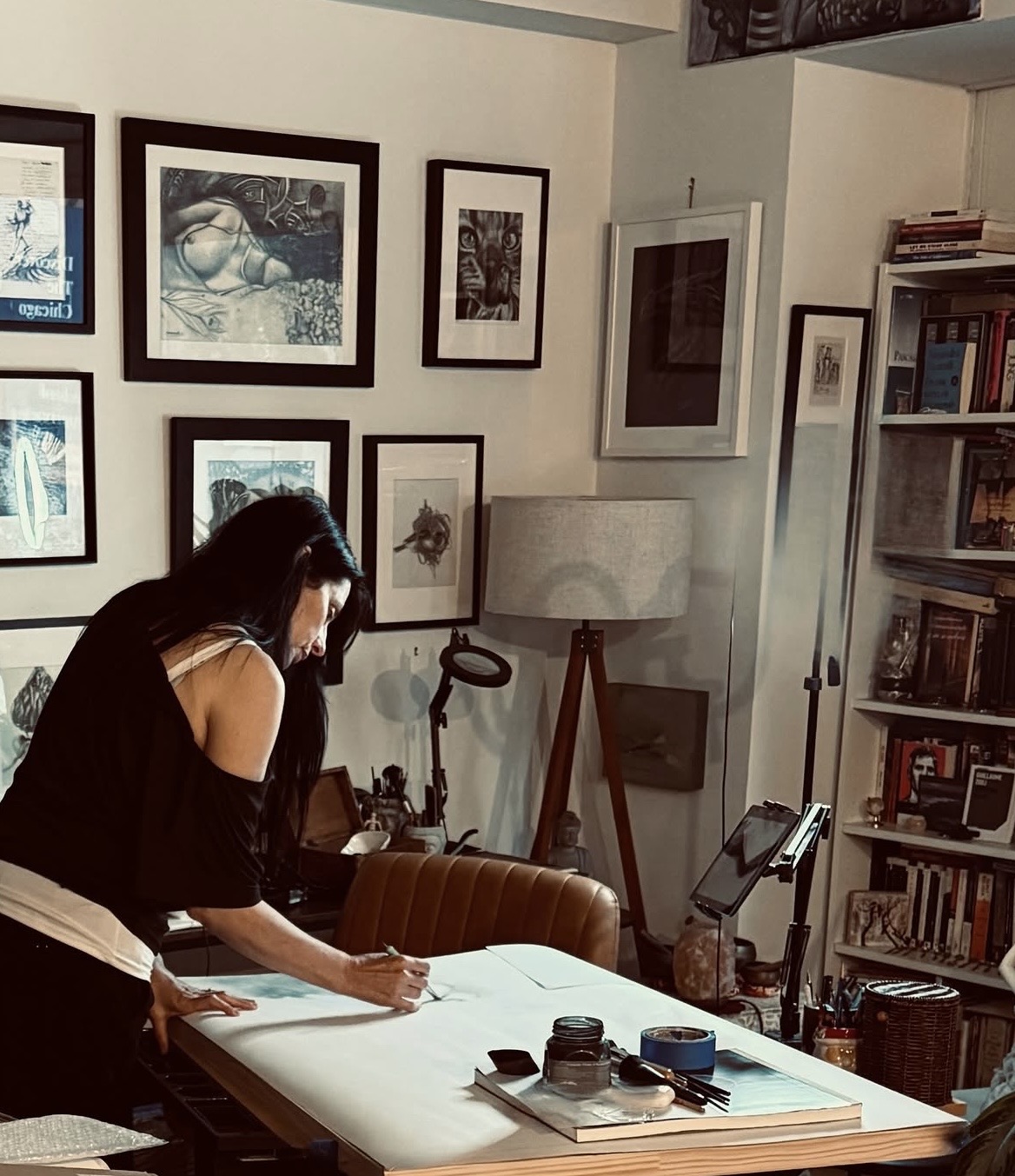
My drawings require many hours of work and observation. For me, that time is an essential part of the process. As I draw, details, relationships, and meanings begin to emerge that I may not have noticed at first. At some point, observation stops being simply observation and begins to become interpretation.
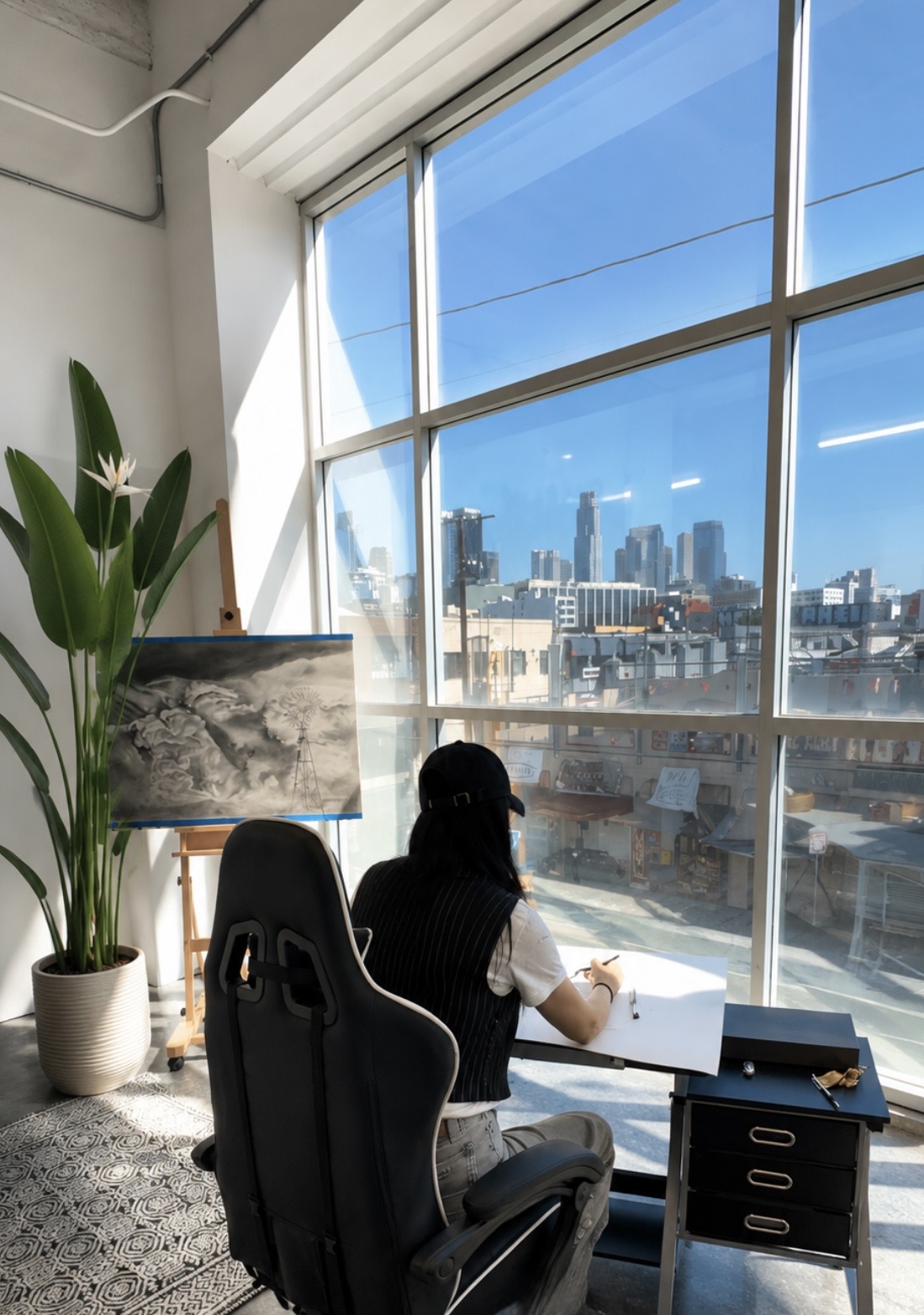
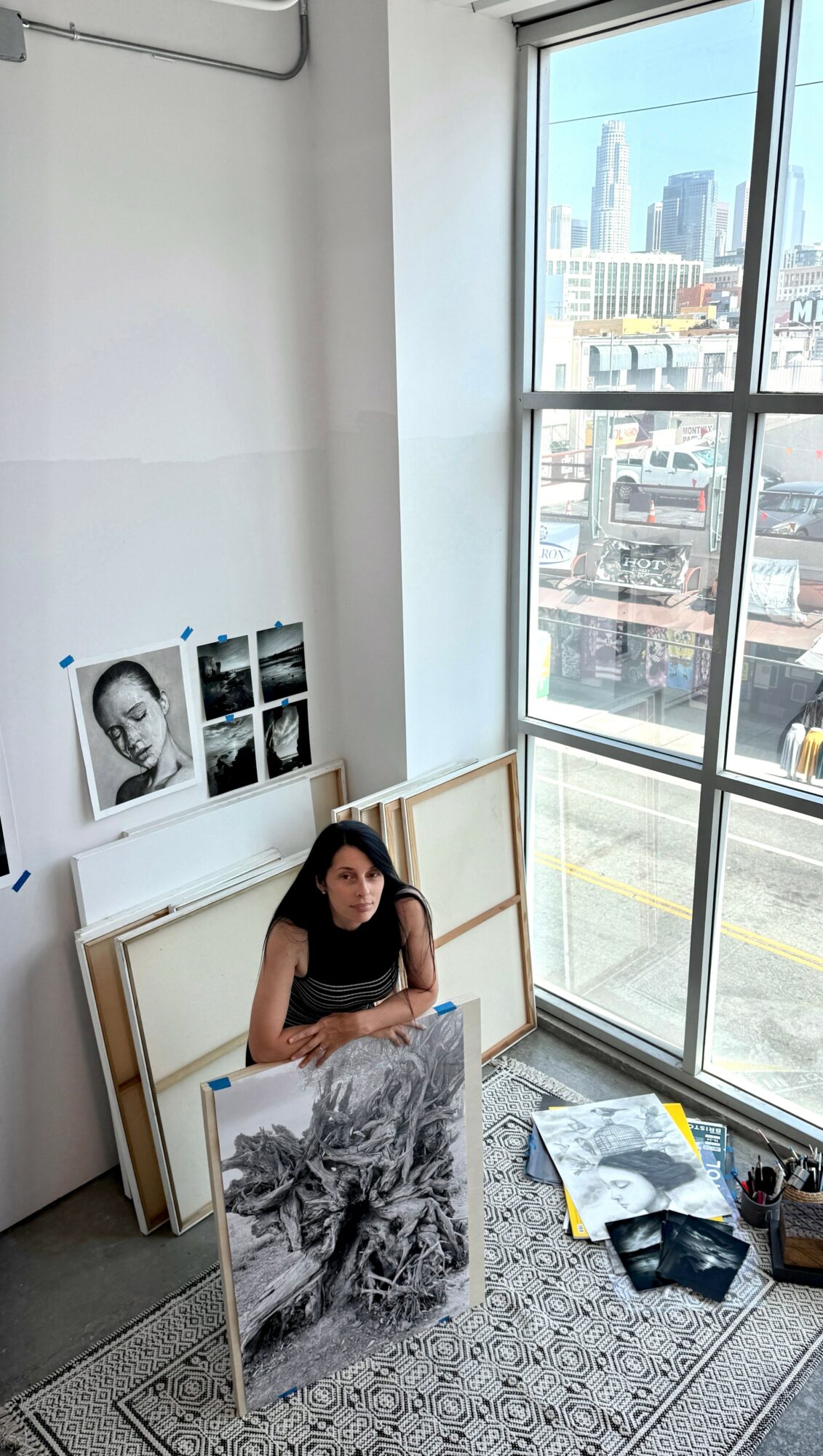
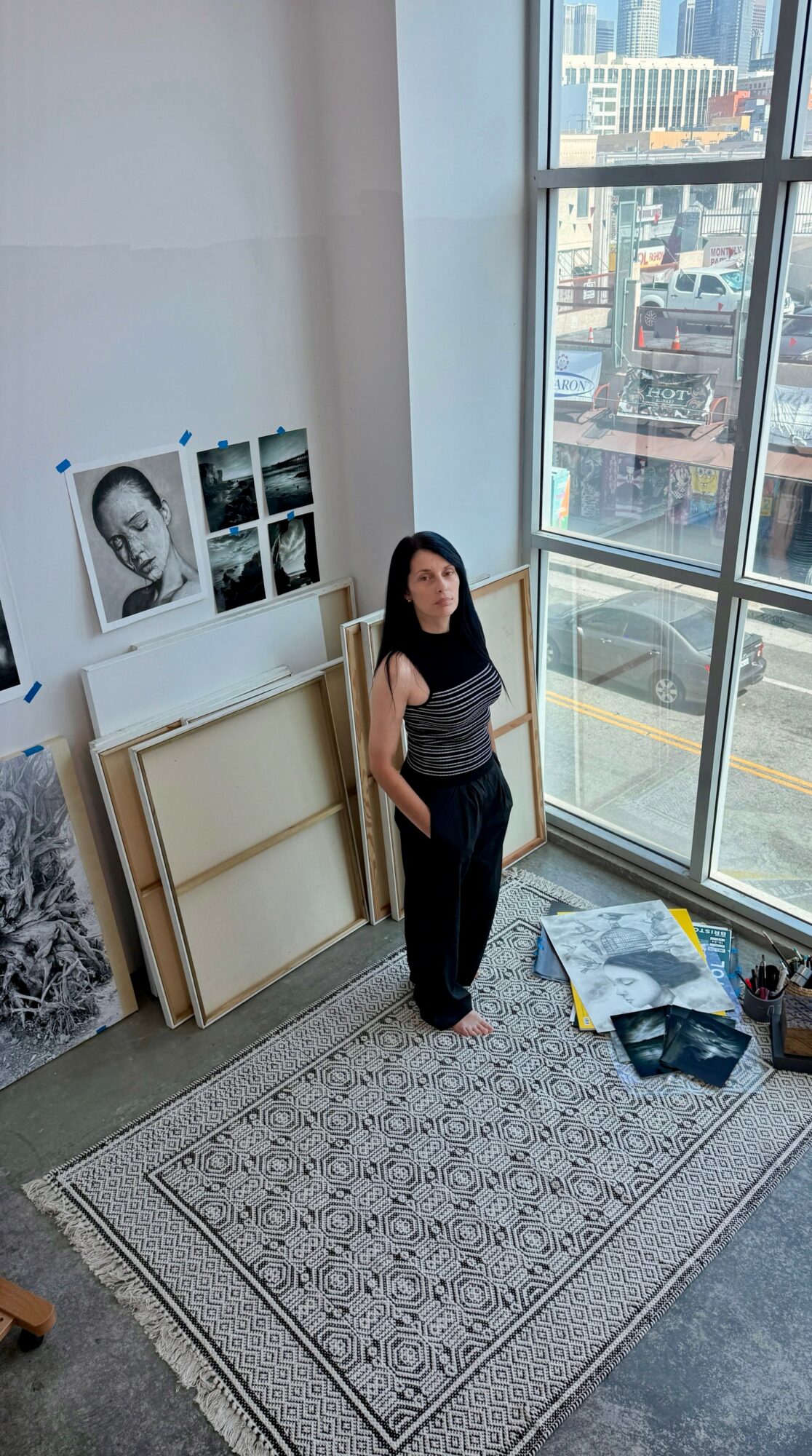
I currently have my own studio in Downtown Los Angeles, with a large window overlooking the city. This new space is also influencing my work. Having a studio where I can step back from a drawing, see it from different perspectives, and live with it for many hours is encouraging me to work on an increasingly larger scale. At the same time, there is a contrast that interests me deeply: while I work with memories, landscapes, and places connected to my personal history, the city of Los Angeles is constantly in front of me.
In this new stage, I am also developing more complex compositions and exploring my genealogy and family history. I bring together photographs, objects, landscapes, and fragments belonging to different moments and generations, creating compositions in which images that may initially seem unrelated begin to establish connections with one another.
I am increasingly interested in this relationship between memory, place, and genealogy, not only what we remember because we experienced it ourselves, but also what we receive from those who came before us. The places we inhabit, houses, objects, and family photographs can hold a kind of memory that continues to accompany us even when we are far away from them.
What I am most proud of is having maintained a lasting relationship with drawing throughout the different stages of my life. My path has not been linear, but drawing has always been there, changing along with me. Today, being able to devote myself fully to my work again and bring together so many experiences, places, and memories within it has a very special meaning for me.
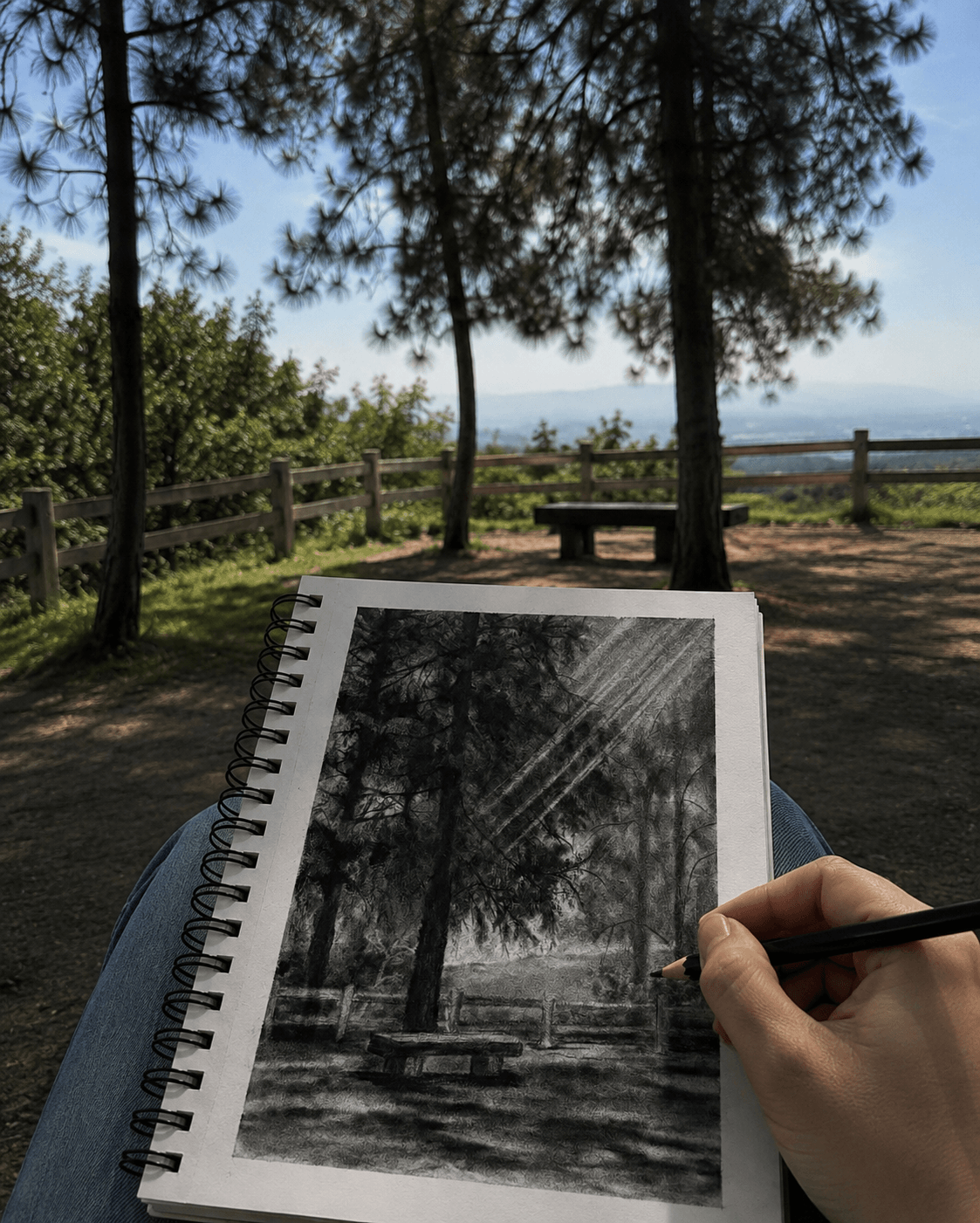
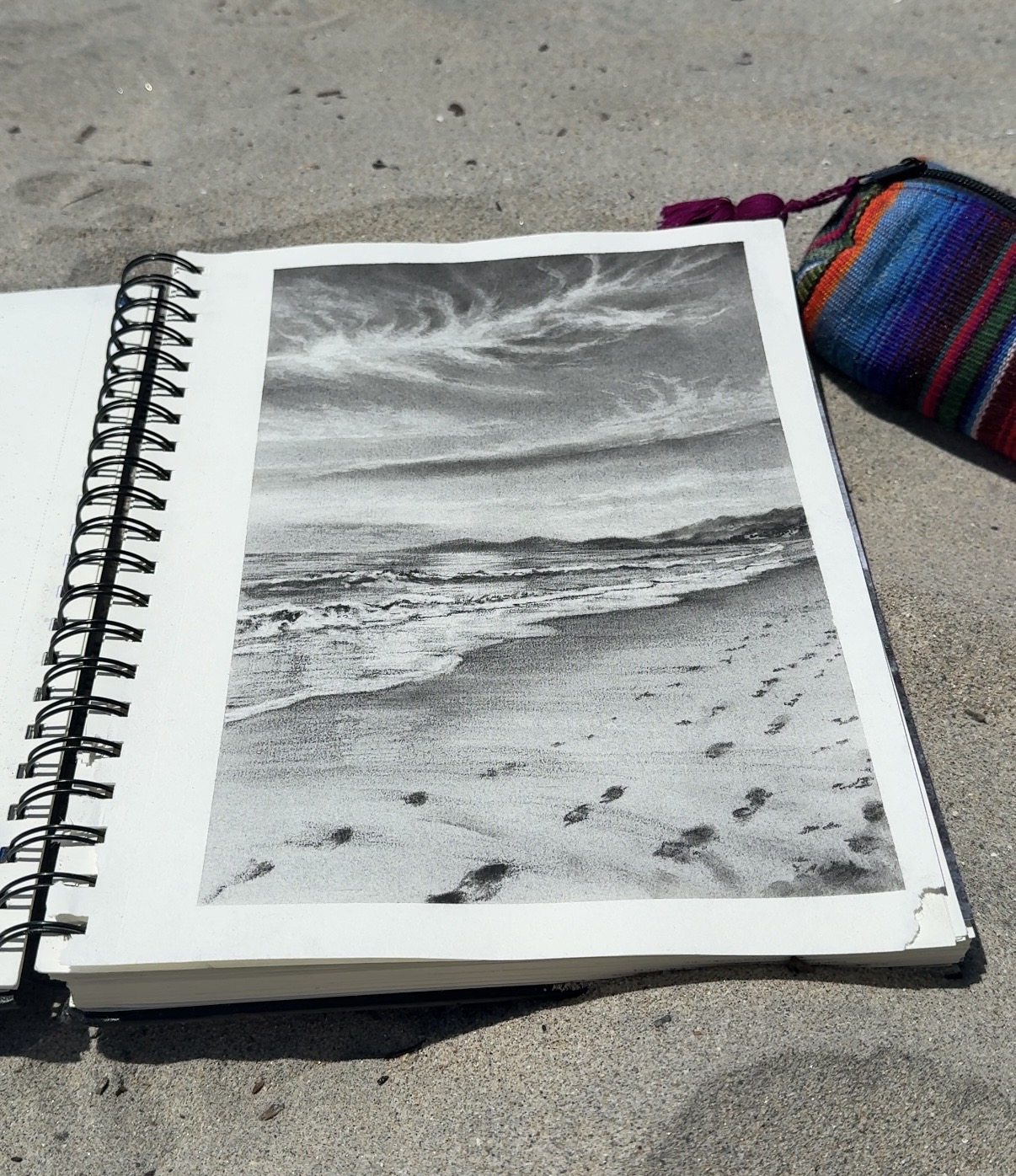
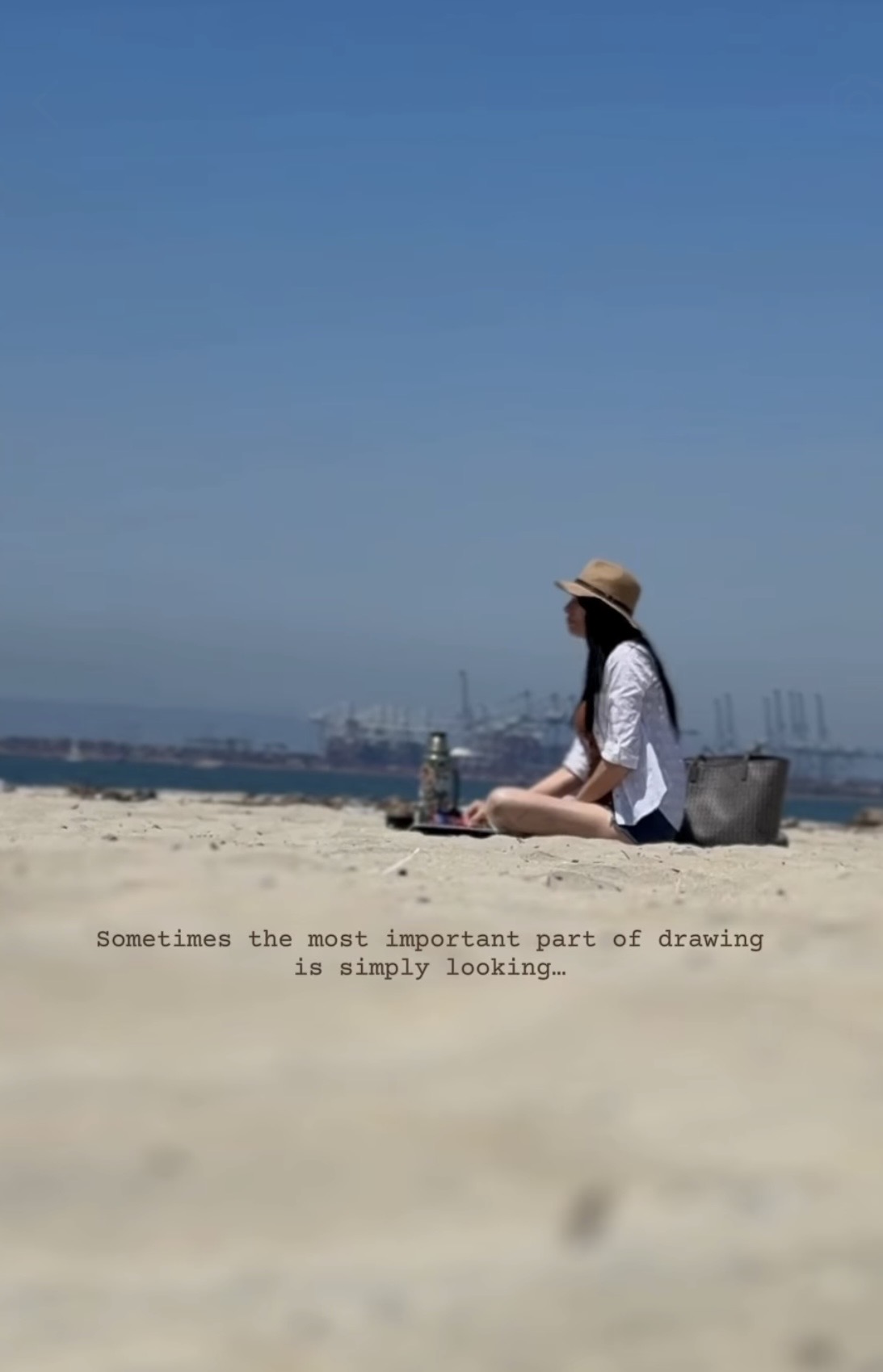
Alongside my studio practice, I created Sketchbook with Maria, which allows me to relate to drawing in a completely different way. I draw directly from life, often while exploring Los Angeles or traveling. It is a much more immediate and spontaneous process: it might begin with a landscape, a tree, a street, or simply something that made me stop and look.
I love that contrast. A large charcoal drawing may take me weeks of work in the studio, while a drawing in my sketchbook can emerge from an unexpected moment. One allows me to slowly explore memory and build an image over time; the other asks me to be completely present with what is in front of me.
Although they are very different processes, both come from the same place: curiosity, observation, and attention. For me, drawing is a way of slowing down and looking deeply, sometimes to recover something that belongs to memory, and other times simply to discover what was right in front of me and might otherwise have gone unnoticed.
What were you like growing up?
I was very fortunate to grow up surrounded by both art and nature. My father is a musician, composer, and songwriter. He studied accordion and piano at the conservatory, so creativity was always a natural part of our family life. Art was never presented to me as something distant or extraordinary; it was simply part of the way we lived.
Some of my most vivid childhood memories come from the time I spent in the countryside with my grandparents. I loved being around animals, riding horses, and being surrounded by the many dogs my grandfather always seemed to have. I remember the rhythms of life there: my grandfather would wake up very early to go out to the fields while I stayed with my grandmother.
What stays with me most is the simplicity of those experiences. Going into town for groceries, being with my grandparents, spending time with the animals, being outdoors—completely ordinary things that, looking back today, no longer seem so ordinary. They taught me to appreciate simple things and to understand how unique they can become when we truly pay attention to them.
Then, when I was fourteen, something shifted. I remember feeling an almost physical need to make art, a kind of fire in my chest. I insisted to my father that I wanted to study art, and I found an art workshop at a local library. That was the beginning. There I discovered charcoal, and by fifteen, I had participated in my first group exhibition.
Looking back, the path toward art had begun long before I understood what it meant to be an artist. First came learning to observe: the animals, the landscape, the light, and the rhythms of everyday life. Then came that intense need to create something from what I saw and felt.
Contact Info:
- Website: https://www.mariaschneiderarts.com/
- Instagram: https://www.instagram.com/maria.a.schneider.art
- Youtube: https://youtube.com/@mariaa.schneiderart
Popular
-

Portraits of the Valley
-

LA’s Most Inspiring Stories
-

Rick Norris Learned That Building a Successful Business Means Building a Life You Actually Want to Live
-
How Olivia Rush Turned Survival Into a Mission to Help Others Keep Going
-

How Bibi Goldstein Is Helping Entrepreneurs Reclaim Their Time by Embracing the Power of Delegation
-
Victoria Hasson is Redefining Voice Coaching Through Community and Collaboration


