




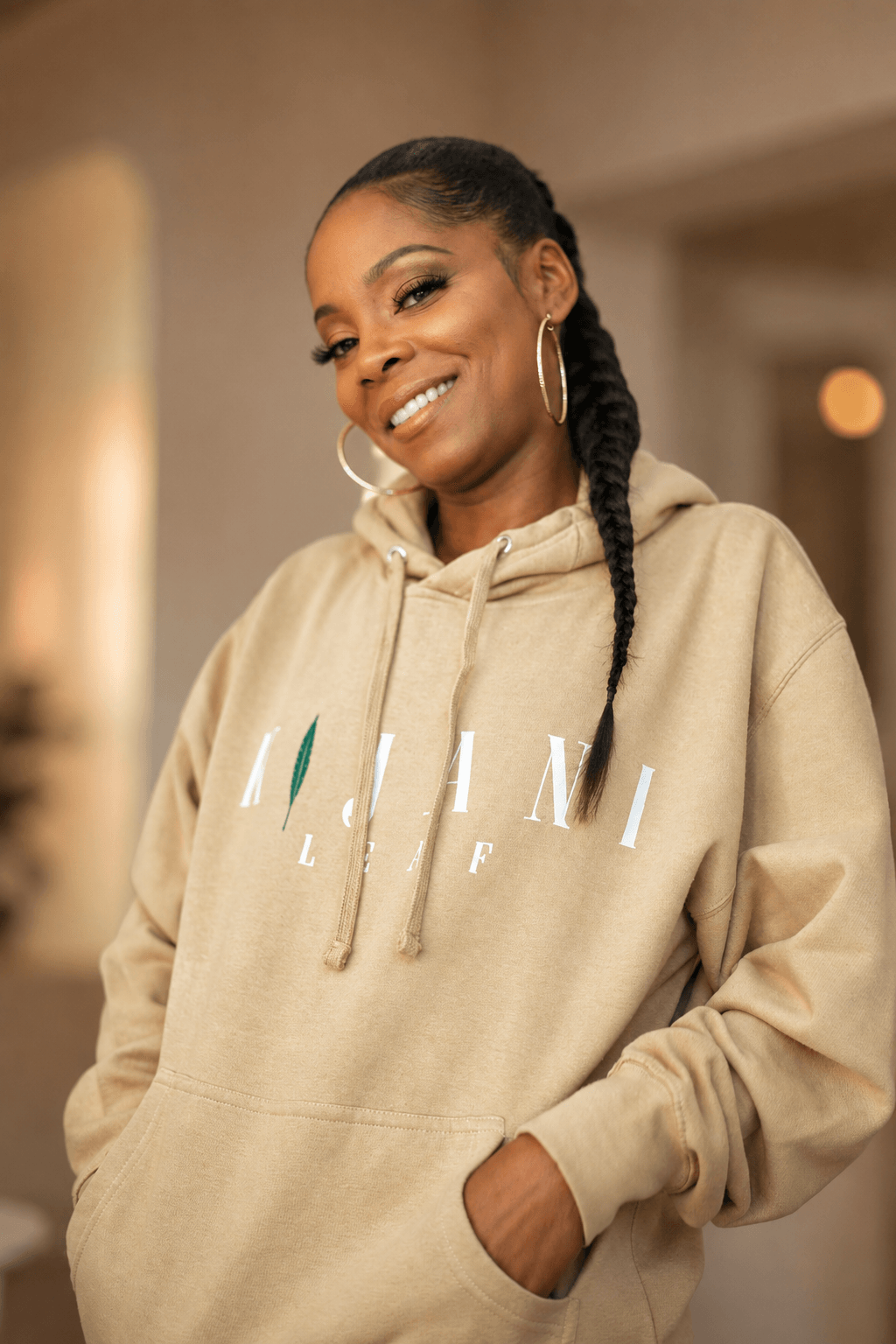
Today we’d like to introduce you to Amber Nicole.
Hi Amber, thanks for joining us today. We’d love for you to start by introducing yourself.
Growing up in the fast-paced city of Inglewood, California shaped my perspective and strengthened my drive from an early age. But one experience in particular forced me to grow up much faster than I ever should have.
In 1999, I was 19 years old, four months pregnant—and arrested for murder.
I can chuckle now at how unbelievable that sounds, but at the time there was absolutely nothing funny about it. I was falsely accused of a crime I did not commit. Eventually, the Inglewood Police Department realized I had nothing to do with the murder, but somehow, I still found myself caught in the system. Drugs were allegedly found among my personal belongings. Go figure.
Unfortunately, growing up in Los Angeles—Inglewood, to be exact—stories like mine were not unheard of. I had no criminal record, yet I watched the charges against me go from murder, to attempted murder, and finally to drug possession.
My cousin, who represented me as my attorney, gave me a painful reality check: I could remain in custody and fight to prove the drugs were not mine while risking having my baby in jail, or I could accept the drug charge, complete a diversion program and go home.
Having my child in jail was never an option.
So, I accepted the charge.
Ironically, I completed the drug-diversion program with flying colors. I was young and certainly living my life, but I wasn’t a drug addict. Sitting in classes with people who were genuinely battling addiction while knowing I didn’t belong there was surreal.
What is harder to summarize is what that experience did to me. I was 19, pregnant and incarcerated for a murder I didn’t commit. My cellmate had been accused of murdering her own child. I was being exposed to realities no pregnant 19-year-old should have had to process.
That experience could have destroyed me. Instead, it became part of the foundation of the woman I am today: a mother, grandmother, entrepreneur and advocate who learned very early that sometimes survival requires you to create your own way forward.
And this is where life gets interesting.
In 2019, the City of Los Angeles created its Social Equity Cannabis Program to address some of the harm the War on Drugs inflicted on individuals and communities disproportionately impacted by cannabis criminalization. The very drug charge that once felt like a permanent stain on my life became part of what qualified me for the program.
Talk about turning lemons into lemonade.
I ultimately won the social-equity lottery, positioning me—provided all licensing and compliance requirements were met—to pursue dispensary ownership through Kijani Leaf.
But for me, Kijani was never supposed to be just about owning a dispensary.
My own experience with the criminal justice system made social equity personal long before it became an industry term. Through Kijani, my work has grown around cannabis education, cultural advocacy, responsible consumer experiences and equity-centered business development. I want people to understand cannabis beyond the product itself: its science, its history, its culture and the communities that paid a tremendous price during prohibition but have too often been left out of the economic opportunities created by legalization.
That means creating educational experiences around cannabinoids and product literacy, having honest conversations about cannabis culture and equity, and helping brands, entrepreneurs and communities approach the industry with intention rather than simply following the newest trend.
My work in cannabis has also allowed me to advocate more directly for social-equity entrepreneurs and underrepresented communities navigating an industry that can be extremely difficult to enter—even when a program was supposedly created to give you an opportunity. Access to a license is one thing. Access to capital, mentorship, compliant operations, partnerships and sustainable business infrastructure is another.
That distinction matters to me.
Social equity cannot simply mean allowing people harmed by the War on Drugs into the room. It has to mean creating pathways that allow them to stay in the room, build something sustainable and participate in the wealth being created by an industry that once criminalized them.
Then COVID happened.
Like it did for so many people, the pandemic completely changed the trajectory of my plans. Courts closed. Businesses closed. Everything seemed to change overnight. Suddenly, I had something I wasn’t accustomed to having: time.
I started connecting the dots.
I thought about my family, my friends, the birth of my grandson and all the people around me who suddenly needed help. I kept asking myself: Where can I be useful? How can I make sure my family and other families have what they need during a time like this?
That question gave birth to my nonprofit, Pay It 4Ward.
With the help of my sister, we developed a relationship with Costco that allowed Pay It 4Ward to receive containers of goods for donation. We became part of a larger network of people and organizations committed to getting resources into the hands of those who needed them. Since then, Pay It 4Ward has been able to touch hundreds of families and individuals.
When I look at my life now, I understand that these things are all connected.
The frightened 19-year-old sitting in jail could never have imagined that one day the very experience designed to limit her future would help position her to fight for ownership and opportunity in an industry built on something people from communities like mine were once incarcerated for.
Kijani is part of that full-circle story.
Pay It 4Ward is part of that story.
My family is part of that story.
And social equity is more than a business opportunity to me—it is about what happens when people who have survived broken systems are finally given the resources, knowledge and ownership necessary to build something different.
I cannot change what happened to me at 19. But I can absolutely decide what I build from it.
And apparently, I’ve gotten pretty good at making lemonade.
Can you talk to us a bit about the challenges and lessons you’ve learned along the way. Looking back would you say it’s been easy or smooth in retrospect?
The road has definitely not been a smooth one; to be honest, it’s been a trial by fire. While I was trying to find an equitable partner for my dispensary license, dealing with staggering layers of Injustice and hardship became a thing. Ordinary startup stress doesn’t compare to the walls I hit. At the exact same time I was hunting for a fair business partner, I was actively testifying for my late son-in -law’s murder case. In the middle of those trials I was suddenly fired from my job because my employers inexplicably thought I was lying about why I needed time off for court. “They are probably reading this article right now (winks eye). If so they know they should be ashamed of themselves.” Stripped of my financial safety net while enduring the most heartbreaking time of my life, I had to pour every once of my remaining energy into being there for my daughter, my grandson, and the one that was on the way. As a parent of a daughter, there’s nothing more comforting than knowing that she is safe and loved. That you no longer have to worry about her because the love of her life would be there whenever she needed. It went from a business dream to a literal fight for survival. Dealing with that betrayal in financial loss alongside my grief was incredibly heavy, but it ultimately turned me into the unstoppable entrepreneur I am today.
As you know, we’re big fans of you and your work. For our readers who might not be as familiar what can you tell them about what you do?
I specialize in navigating the complex highly regulated world of legal cannabis to build a premiere dispensary experience. My work is focused on educating consumers/ curating top-tier products/ creating a safe and Equitable space for the community. I create business models where community equity, tech. and legal cannabis intersect.
I am most proud of how I’ve been able to transform profound personal tragedy into a lasting, positive impact. The person I am today was forged in the absolute hardest trials, but I was shaped into my true purpose. What I do goes far beyond just operating a cannabis dispensary- i specialize in purposeful entrepreneurship.
Today I am known for my uncompromising standards in business and my deep heart for community equity. At Pay It 4Ward, we find families in need, but before we bless them with resources, those families must find someone else in need to help as well. Hence the name Pay It 4Ward- it creates a continuous chain of giving . I am most proud of the fact that I didn’t let my tragedies break me instead they forced me to become the leader I am today
I think what sets me apart from others is that I’ve never given up after facing immense personal tragedy and financial betrayal, I kept pushing. I refuse to compromise on equity, fairness and true community impact.
Any advice for finding a mentor or networking in general?
When looking for a mentor. Don’t just look for someone who has the exact same story as you. Look for people who possess the specific skills you currently lack. For any field I would say look for mentors who excel in highly regulated industries, supply chain logistics or complex corporate partnerships. More personal advice that I would give when looking for mentors for your nonprofit foundation, you need to look for successfully scaled non-profit foundations or excel in large-scale fundraising. However it is very important to also look for leaders who also respect your grit. A mentor who only cares about the bottom line will not understand the heart behind your passion.
What works for me is knowing that the best mentorships are two-way streets. My current mentor tells me all the time to make sure you ALWAYS bring value.
Contact Info:
- Website: https://gopayit4ward.org
- Instagram: Always_Payit4ward

Popular
-

Portraits of the Valley
-

LA’s Most Inspiring Stories
-

Rick Norris Learned That Building a Successful Business Means Building a Life You Actually Want to Live
-

How Olivia Rush Turned Survival Into a Mission to Help Others Keep Going
-

How Bibi Goldstein Is Helping Entrepreneurs Reclaim Their Time by Embracing the Power of Delegation
-

Victoria Hasson is Redefining Voice Coaching Through Community and Collaboration


