





Today we’d like to introduce you to Ana Nogales.
Hi Ana, so excited to have you on the platform. So before we get into questions about your work-life, maybe you can bring our readers up to speed on your story and how you got to where you are today?
I was born and raised in Buenos Aires, Argentina, in a very small family where I was deeply connected to the people I loved. Looking back, I can see that the seeds of what would eventually become my life’s work were planted very early.
Like many families, mine carries experiences and pain from intergenerational trauma. I became very sensitive to the suffering of those around me, particularly children, as my mom repeatedly told me there were children without parents who had nothing to eat.
I remember being about eight years old and thinking that when I grew up, I would create an orphanage where children without families could experience the love and security of a foster family. I obviously did not know anything about organizations, funding, mental health, or social services. I simply knew that I wanted children who were hurting to have a place where they could feel loved and protected.
That desire continued as I grew older. At thirteen, I felt that I wanted my life to have meaning and purpose. Although Catholicism was not the religion in which I had been raised, I approached a priest and asked whether I could become a nun. My request was declined, but my desire to dedicate myself to helping others remained.
When I was about fifteen, I began visiting a children’s hospital because I wanted to offer companionship to children who were suffering. I had the idea of making muñecos de trapo—handmade cloth dolls—to bring to the children. I asked friends to help me make them. My little project was not particularly successful, and I certainly did not have many resources, but I did what I could.
Years later, I would understand that these childhood experiences were already pointing me toward my future.
My mother played another important role in that future. She always encouraged me to pursue higher education—an opportunity she herself had not had. When it came time to choose a career, however, I was uncertain about what direction to take.
Initially, I pursued science, mathematics, and physics. Eventually, I realized that I could not imagine spending my professional life working in isolation in a laboratory. I needed a human connection.
Not knowing what to do, I made an appointment with a psychologist, hoping he would help me decide on a career. Interestingly, I did not receive much career advice from him. What happened instead was much more important: I became fascinated by what he was doing.
That encounter opened a door.
I knew I wanted to help people, and I began considering social work and psychology. By then, I had been formally employed since I was seventeen and had already experienced some difficult work environments. I wanted a profession in which I could eventually develop greater independence while still dedicating my life to helping others.
The decision became clear: I would become a psychologist.
I attended university in Buenos Aires and completed my education in psychology. Approximately three or four years after graduating, I made another life-changing decision: I moved to the United States.
It was not an easy decision. My family had already moved here, however, and throughout my life, being close to the people I love has always been extremely important to me.
Arriving in the United States presented an entirely new set of challenges. Professionally, I had education and experience, yet I was not sufficiently immersed in American culture to fully understand the community in which I was now living. My English was also limited. I found myself in the uncomfortable position of knowing that I had professional abilities while simultaneously having to learn how to function within a completely new culture.
I was fortunate to find my first significant opportunity in Los Angeles at a community agency serving the Latino population, including individuals involved with the probation system.
That experience opened my eyes.
I learned about the realities facing Latino families in the United States—their struggles, their strengths, their cultural experiences, and the enormous gaps that existed in access to mental health services. I was learning not only how to practice my profession in a new country, but also how to understand the community I would eventually dedicate much of my career to serving.
Still, there was another goal I had not abandoned: I wanted to become a licensed psychologist.
To accomplish that, I needed to return to school and obtain my doctorate degree. By then, I was also a mother. My daughter was approximately four years old, and pursuing a doctoral degree while working and raising a child required sacrifices not only from me but from my family.
My sister became an essential part of that journey. She supported me and helped care for my daughter so that I could continue my education. Every weekend, I drove to San Diego to attend classes. I continued working as a counselor while studying and raising my daughter.
It was exhausting at times, but every trip represented another step toward the dream I had carried with me from Argentina.
Then something completely unexpected happened.
One day, I stayed home from work because I had the flu. While watching television, I saw an Argentine host on the screen. I became excited simply because I saw someone from my country on American television. On impulse, I called him.
That telephone call changed another part of my life.
He invited me to participate in a television program as a guest. I accepted, and that appearance became the beginning of my career in media. One invitation led to another. I began making television appearances and eventually had my own daily radio program, which became very successful. Later, I hosted a daily television show for another two years.
At first glance, psychology and media might appear to be two completely different careers. For me, they became extensions of the same mission.
I discovered that I could help one person at a time in my office, but through radio and television, I could reach thousands of people who might never walk into a psychologist’s office. I could talk openly about mental health, trauma, relationships, domestic violence, family problems, and subjects that were often surrounded by silence or stigma, including sex.
Media became another way of serving the community.
When I finally became a licensed psychologist, my professional and financial circumstances began to change. For the first time, I had greater stability and the ability to invest not only my time but my own resources into something larger than myself.
That opportunity allowed me to create a new beginning for Casa de la Familia.
By then, years of working directly with the Latino community had helped me understand more clearly what was missing. I had seen families affected by trauma and violence. I had seen people who desperately needed psychological services but encountered cultural, linguistic, financial, and systemic barriers to receiving them.
I began to understand that my professional life could be more than a career. It could have a purpose.
In many ways, when I look back, Casa de la Familia does not feel like something that suddenly began at one particular moment. Its roots were there much earlier.
My path was certainly not a straight one. There were obstacles, detours, sacrifices, unexpected opportunities, and many people who helped me along the way. But there was one thread connecting all of it: a desire to transform pain into something meaningful and to use whatever opportunities I was given to help others.
What began as the dream of a little girl in Buenos Aires eventually became a profession, a voice in the media, and a commitment to building services for people affected by trauma and violence.
And perhaps that is the most important part of my story: I did not begin with a master plan for where I would be today. I began with a sense of purpose. Each experience helped me understand that purpose more clearly, and each challenge prepared me for the next opportunity.
Alright, so let’s dig a little deeper into the story – has it been an easy path overall and if not, what were the challenges you’ve had to overcome?
The development of Casa de la Familia has involved significant challenges, particularly because the need for culturally responsive mental health services has always been much greater than the funding available to provide them. Financial limitations made it difficult to respond to the enormous need in the community, especially among individuals and families who had experienced trauma, domestic violence, sexual abuse, and other painful circumstances.
However, funding was only one part of the challenge. Mental health stigma was another major barrier. Many people in the community were afraid to speak openly about their emotional pain. Seeking psychological help could be associated with being labeled as “crazy,” weak, or somehow defective. For individuals already struggling with trauma, violence, immigration experiences, or family difficulties, the fear of judgment often prevented them from reaching out for professional support.
I realized that simply providing traditional mental health services was not enough. We had to find creative ways to bring mental health education into the community rather than waiting for the community to come to us. Art became one of those bridges.
I began writing plays that addressed subjects people were often afraid or ashamed to discuss openly. Through theater, audiences could see difficult experiences represented on stage, identify with the characters, and begin conversations about issues that had previously remained hidden. The purpose was not simply entertainment; it was to normalize conversations about mental health, trauma, domestic violence, sexual abuse, and other stigmatized experiences.
I also incorporated music and songs that communicated messages of resilience, empowerment, and hope, particularly in relation to domestic violence. Sometimes a message that may be difficult to receive in a clinical or educational setting can reach people differently through a story, a character, or a song.
Another challenge became apparent as the work expanded: many professionals themselves had not received adequate training in trauma, domestic violence, and culturally responsive approaches to mental health. Providing services to the community therefore required more than treating individual clients. We also needed to strengthen the capacity of the professionals serving them. This led me to develop training programs designed to give clinicians and other community professionals greater knowledge, practical skills, and sensitivity when working with survivors and their families.
As you know, we’re big fans of you and your work. For our readers who might not be as familiar what can you tell them about what you do?
My work has focused on trauma, domestic violence, sexual abuse, human trafficking, and the psychological impact of violence on individuals, families, and communities. Throughout my career, I have been particularly committed to serving communities that may face barriers to mental health care because of stigma, culture, language, financial limitations, or fear of being judged.
What I am most known for is my ability to bring mental health out of the therapy room and into the community. I realized early in my career that providing clinical services alone was not enough. Many people who desperately needed help would never walk into a mental health clinic because they were afraid of being labeled or ashamed to talk about their emotional pain. I therefore began looking for creative ways to reach them.
I used theater, music, radio, television, community education, and professional training as vehicles for mental health education and violence prevention. I wrote plays addressing subjects that people often did not want to talk about, including mental illness, domestic violence, sexual abuse, and human trafficking. I also used music and songs to communicate messages of resilience, empowerment, and hope. My goal was to create an environment where people could recognize themselves in a story and begin talking about experiences that had previously been surrounded by silence and shame. I am especially proud of the development of Casa de la Familia. Building the organization required perseverance and creativity because the need for services has always been enormous, while financial resources have been limited. Despite those challenges, we created a place where people affected by trauma and violence could receive culturally sensitive mental health services and where education, prevention, advocacy, and professional training could occur alongside clinical care.
What sets me apart is the integration of psychology, community service, education, advocacy, and the arts. I have never viewed mental health exclusively as something that happens between a therapist and a patient. Mental health is also influenced by families, culture, communities, education, and the messages people receive about whether it is acceptable to ask for help.
What I am most proud of is not one individual accomplishment. It has created different ways for people to find a path toward healing. For one person, that path may begin in therapy. For another, it may begin by watching a play, hearing a song, attending a community presentation, listening to a discussion about mental health, or finally realizing, “I am not alone, and it is okay to talk about what I am experiencing.”
Do you have any memories from childhood that you can share with us?
My favorite childhood memory is of an elementary school teacher who believed in me at a time when I needed someone to see my potential. Her encouragement changed the course of my self-esteem. Because she believed in me, I began to believe in myself.
She made me feel capable, valued, and encouraged to try things I might otherwise have been afraid to attempt. Looking back, I realize that what may have seemed like a simple action from a teacher had a profound and lasting impact on my life.
That experience also taught me something I have carried throughout my personal and professional journey: one person who believes in you can change the direction of your life. Her influence helped shape my desire to do the same for others—to help people recognize their own strength, especially during moments when they may not be able to see it themselves.
Contact Info:
- Website: https://casadelafamilia.org
- Instagram: https://www.instagram.com/casadelafamilia
- Facebook: https://www.facebook.com/Casadelafamilia.org
- LinkedIn: https://www.linkedin.com/company/casa-de-la-familia/?viewAsMember=true
- Youtube: https://www.youtube.com/channel/UCmXCfoA14WQGhij_gHm82og/featured
- Other: https://www.tiktok.com/@casadelafamilia
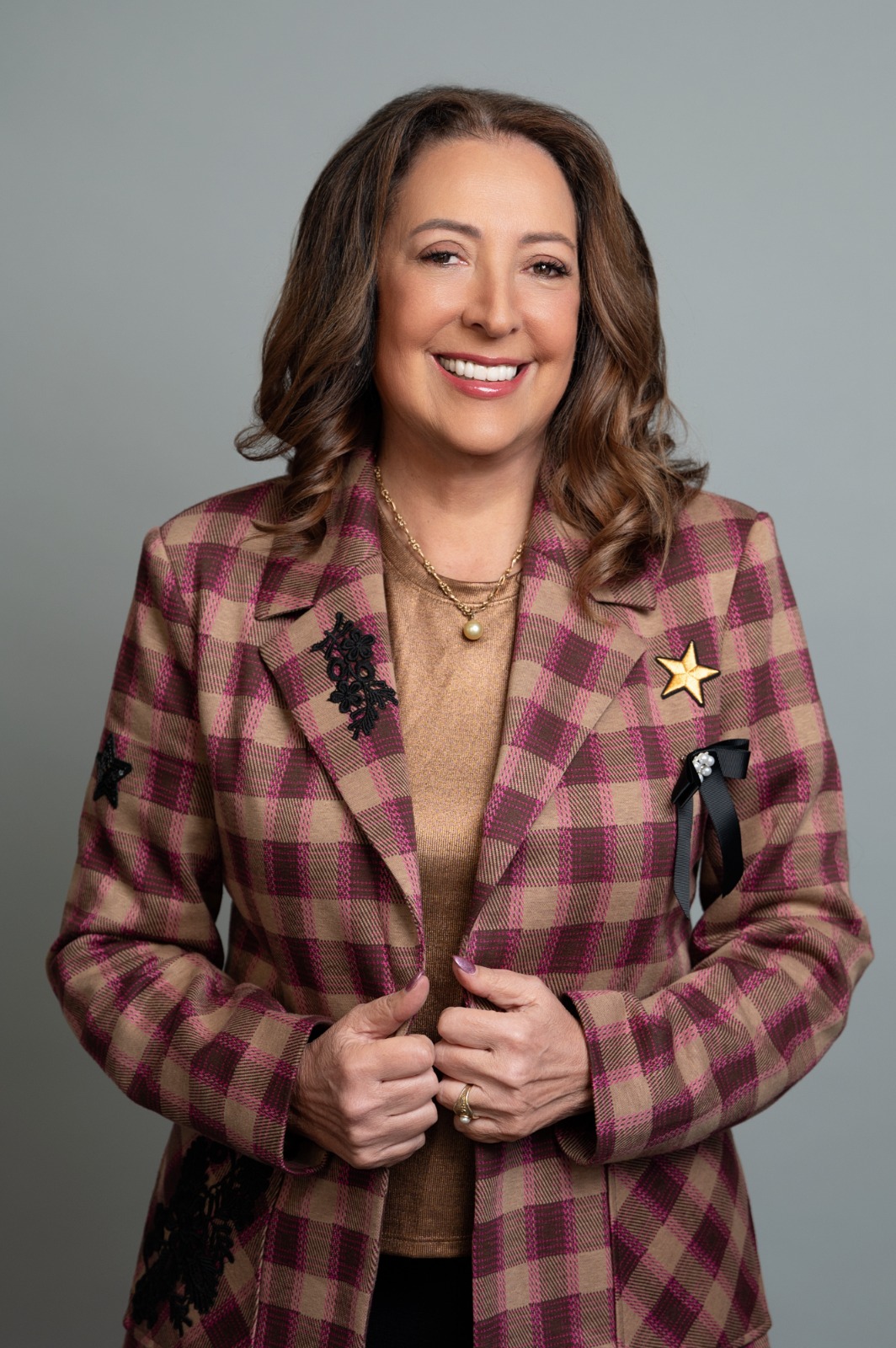
Image Credits
Photographer: Nancy Ramos
Popular
-

Portraits of the Valley
-

LA’s Most Inspiring Stories
-

Rick Norris Learned That Building a Successful Business Means Building a Life You Actually Want to Live
-

How Olivia Rush Turned Survival Into a Mission to Help Others Keep Going
-

How Bibi Goldstein Is Helping Entrepreneurs Reclaim Their Time by Embracing the Power of Delegation
-

Victoria Hasson is Redefining Voice Coaching Through Community and Collaboration


