




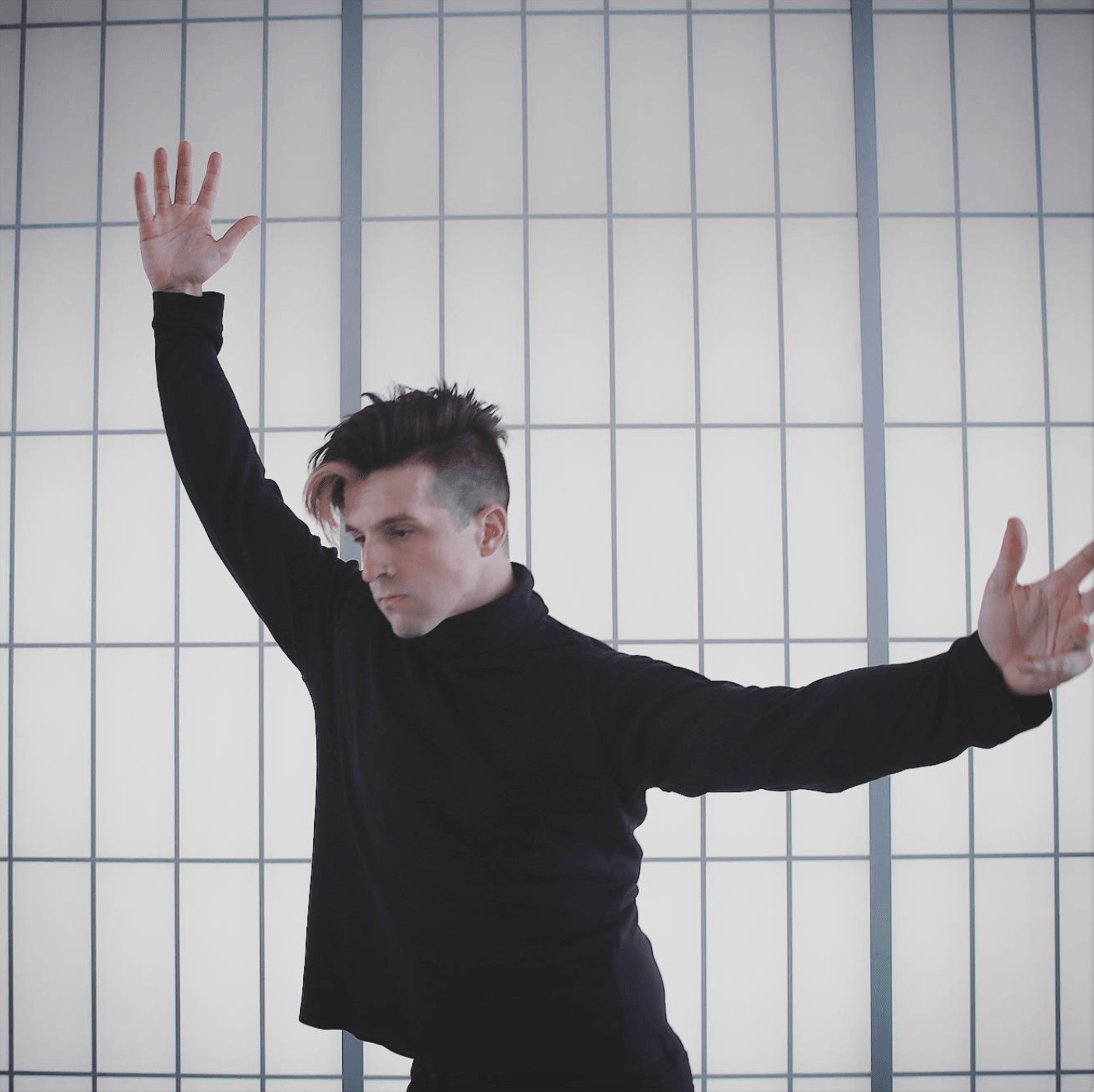
Today we’d like to introduce you to Eric Shiring.
Eric, we appreciate you taking the time to share your story with us today. Where does your story begin?
My journey into dance started in a somewhat unconventional way. In high school, I was playing football while secretly taking dance classes.
At the time, I was living in Cedar City, Utah, and I had always been drawn to the arts, particularly visual art. I loved going to dances, and someone once told me that I had a good sense of rhythm and should try taking a dance class. So I did.
The problem was that dancing wasn’t exactly encouraged for men in my world/family at the time. For about a year, I would tell my parents I was going to the gym when I was actually paying for my own dance training at a small local studio. It wasn’t until I invited them to the talent show at school they found out. Eventually, I was invited to join high school’s dance company, and somewhere along the way, what started as curiosity became something much bigger. I realized I had found something I genuinely loved. I felt safe, I felt seen, and I felt joy.
I went on to studying dance at Southern Utah University on a scholarship, and as my training became more intensive, I began to understand that this didn’t just have to be something I enjoyed—it could actually become my career. Due to my program I was able to be exposed to several professional dance companies works and was able to experience many dance opportunities outside of my college program.
At first, my dream was fairly simple: I wanted to perform on big stages and somehow make a living doing something that made me feel alive.
Like most artists, getting there wasn’t particularly straightforward. I eventually moved to Los Angeles and experienced the very real struggle of trying to establish yourself as a working artist. But slowly, I found my footing. I had opportunities to dance alongside several professional companies, music videos, film, commercials, Disney, Universal Studios, and work with artists I never imagined I would meet, and perform on stages that the high school kid from a small town in Utah could never have imaged.
Along the way, my relationship with dance expanded. I became a teacher. I became a choreographer—which ultimately became one of my greatest artistic loves. I performed, created, taught, and continued trying to understand what kind of artist I wanted to be.
Then an injury changed it all.
While working as a stunt performer, I was injured and told that my career dancing was essentially over. I remember that diagnosis becoming less of an ending and more of a challenge. My immediate reaction was essentially, watch me. It was actually much more vulgar, but I figure and I can’t add that here.
Within a year, I was dancing again. Recovery required patience, and my relationship with my body and my work had changed, but I was able to find my way back to something I loved.
That experience eventually helped propel me toward a graduate program in London, where I received a scholarship to attend the University of Roehampton and pursue my MFA in choreography. While living in the UK, I danced with Combination Dance Company, taught weekly classes in multiple styles, and had the opportunity to create several works of my own.
London fundamentally changed how I understood myself as an artist. I fell in love with critical conversations around art: not simply asking whether something was beautiful or entertaining, but asking why we make it, what it communicates, who gets access to it, and what our responsibility is as artists.
I originally imagined that the next chapter of my career would be in higher education. Then COVID arrived.
Universities throughout the UK experienced significant disruption and budget cuts, and the path I had envisioned toward becoming a professor suddenly became much harder to pursue. I returned to the United States and found myself rebuilding again.
That rebuilding ultimately became one of the most important parts of my career.
I began teaching dance in public schools, where I had the privilege of working with elementary-aged students as well as students with disabilities, special needs, and medical fragilities. That experience expanded my understanding of what dance education and accessibility could mean. At the same time, I began realizing that the traditional education system wasn’t where I ultimately wanted to build my career.
Eventually, I stepped into a position supervising a recreational dance program, and something clicked. I realized that I loved arts leadership.
I loved thinking beyond a single classroom, performance, or piece of choreography and considering the larger ecosystem that allows artists, educators, organizations, and communities to thrive.
After another move and another period of transition, I decided to return to California. I continued teaching, but I knew I wanted to move more intentionally into arts administration and leadership. When I learned about an opportunity with Invertigo Dance Theatre, I applied for the General Manager position with an unusual amount of certainty. I remember thinking, This is my job. This is my way in.
In many ways, it was.
Today, one of the greatest strengths I bring to arts leadership is that I have experienced the dance world from almost every side of it. I have been the student trying to find permission to dance. I have been the professional dancer, choreographer, teacher, artist, administrator, manager, and now director.
Each role has taught me to see the same ecosystem from a different perspective.
More than any individual accomplishment, I am proud that I have continued.
My career has rarely followed the path I expected it to take. Injury changed it. COVID changed it. Moving across countries and states changed it. Working with different communities changed it. But every time the path shifted, I became curious about what the next version could look like.
That curiosity and adaptability have become central to the kind of leader I want to be.
As I look toward the future, I am increasingly interested in bridging the gaps that exist between different dance communities and challenging the idea that dance belongs to only certain bodies, backgrounds, institutions, or audiences.
I believe dance is for everybody and every body.
More broadly, I believe art should be accessible to everyone. I want to help create spaces where people aren’t simply invited to observe art, but are encouraged to question it, feel something because of it, discuss it critically, participate in it, and perhaps even discover a part of themselves through it.
I think back sometimes to that teenager in Utah who had to pretend he was going to the gym just so he could take a dance class.
A great deal of my career has been about finding my way into spaces where I wasn’t always certain I belonged.
The work I want to do now is about making sure fewer people have to ask for that permission.
Compose:
Inquiry: Production Tech Support (Lighting, Audio, Projection) – Nov 13 & 15 | Invertigo Dance Theatre
Would you say it’s been a smooth road, and if not what are some of the biggest challenges you’ve faced along the way?
It has not. From lack of support, to an injury, to covid, to the hustle of attempting to make it in a field where you are critically looked and and critiqued, in ways that don’t always feel correct. It’s constant guess work, the practice of letting go, and resilience. What I have noticed recently is all the bumps that I am learning about in art leadership and the ever changing world of dance in Los Angeles. Once has to be adaptable and ready to pivot in any given moment.
( I felt like I described quite a few in last section. Please let me know if you would like me to add more)
Thanks for sharing that. So, maybe next you can tell us a bit more about your work?
My creative work has always been centered around community building. It’s been amazing to realize that the work I do that pays the bills is also, at its core, about building community. I love being able to work with different people, bring our worlds together, and see what we can create. Whether that leads to new opportunities, deeper connections, or simply space for exploration.
I’m beyond proud of how my approach to creating movement has evolved. I’ve moved away from the idea of simply offering movement and saying, “Ready, go. Do as I say.” Instead, I’m much more interested in collaboration and what can happen when we create together. I love being able to look at something, question it, decide whether it works, and ask whether it actually feels connected to what we’re trying to create.
I think I’ve realized that this way of working extends far beyond choreography. I bring that same curiosity and collaborative approach into many areas of my life—from creation and arts administration to leadership and even my relationships. I’m constantly interested in how different people, ideas, and perspectives can come together to create something that perhaps none of us would have arrived at on our own.
Any advice for finding a mentor or networking in general?
I believe I have been lucky to find mentors without directly seeking them. I have found by being authentic and open to as many moments as possible, that people have been placed in my life that have become mentors for me. I am still learning how to be a better networker, but I truly believe by being open to knowing that anyone in life can be a teacher or a potential friend allows room for expansion whatever that may be.
Contact Info:
- Website: https://invertigodance.org
- Instagram: invertigodance
Popular
-

Portraits of the Valley
-

LA’s Most Inspiring Stories
-

Rick Norris Learned That Building a Successful Business Means Building a Life You Actually Want to Live
-

How Olivia Rush Turned Survival Into a Mission to Help Others Keep Going
-

How Bibi Goldstein Is Helping Entrepreneurs Reclaim Their Time by Embracing the Power of Delegation
-

Victoria Hasson is Redefining Voice Coaching Through Community and Collaboration


