




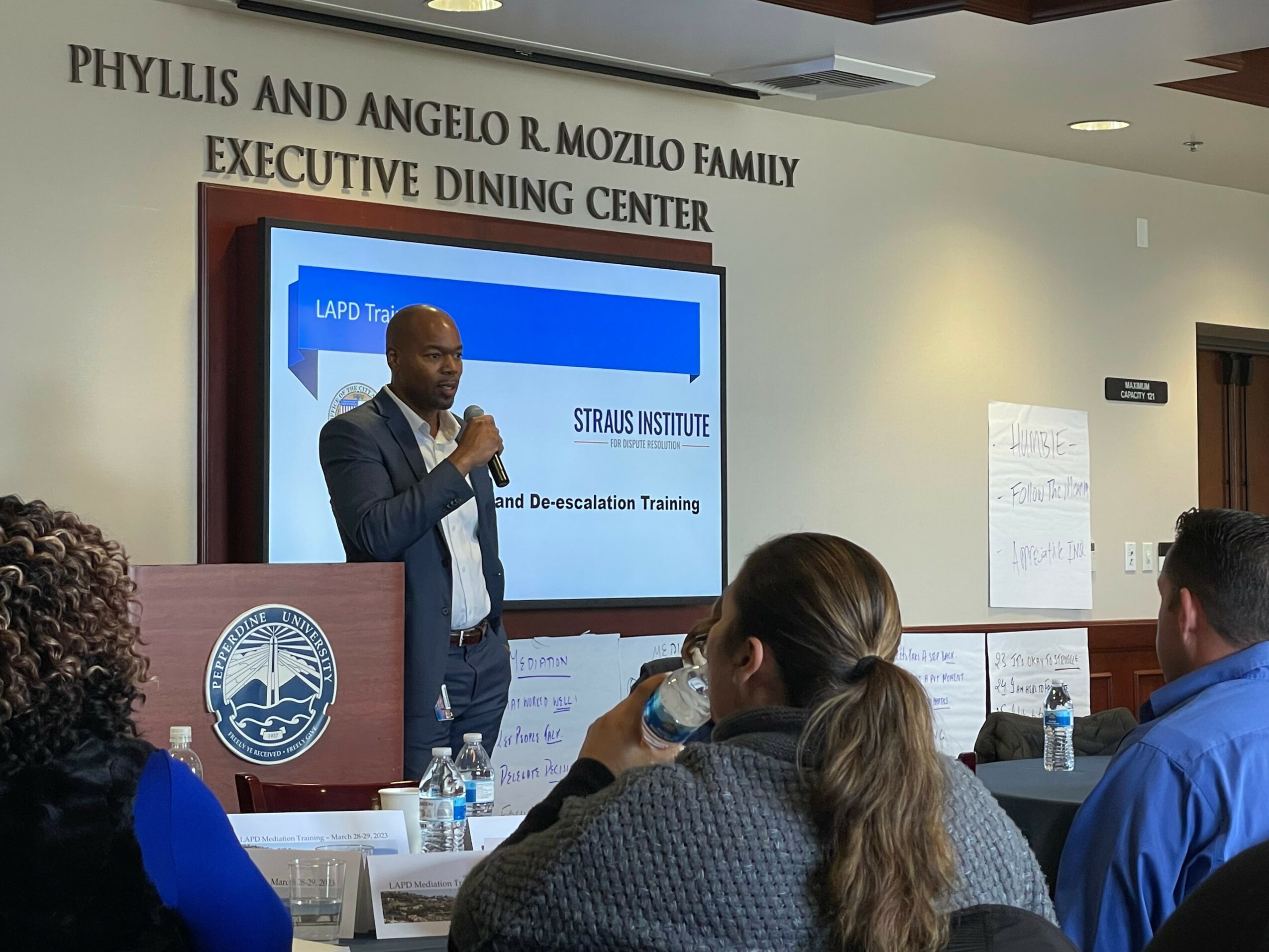
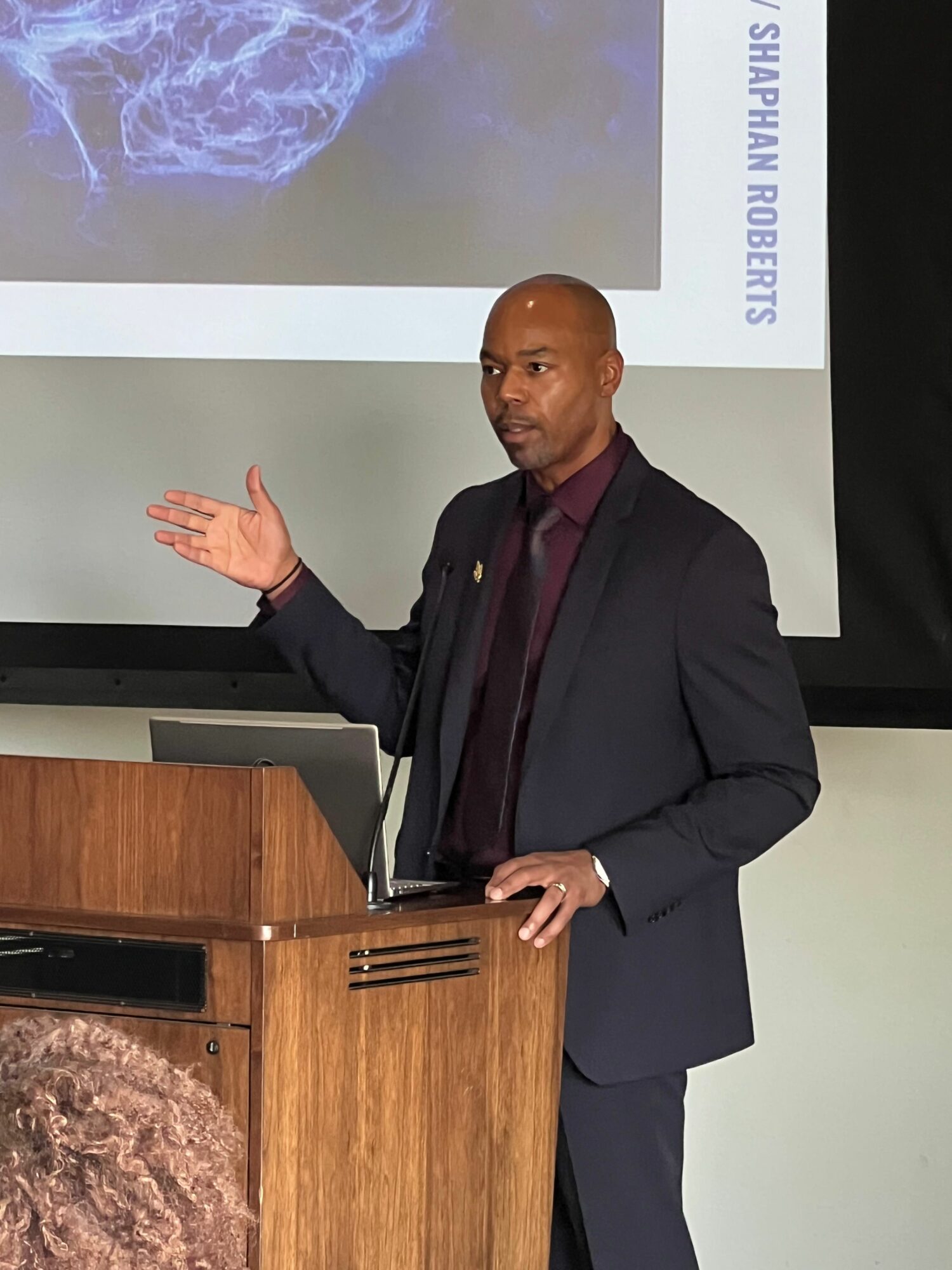
Today we’d like to introduce you to Shaphan Roberts.
Hi Shaphan, so excited to have you on the platform. So before we get into questions about your work-life, maybe you can bring our readers up to speed on your story and how you got to where you are today?
I grew up in South Central Los Angeles at a time when the city was deeply divided by race, geography, opportunity, and trust. I attended school across town, which meant I was constantly moving between communities that often viewed one another from a distance. Those experiences taught me early that people can live in the same city and experience completely different realities.
The civil unrest following the Rodney King verdict was especially formative for me. I remember watching the city unravel and hearing my father say, “The system is broken.” That statement stayed with me. Over time, I began to understand that my role would be to help people navigate broken systems, difficult conversations, and deep divisions.
My professional journey has not followed a perfectly straight path. It has included business, education, conflict resolution, community engagement, leadership development, and public service. Each experience helped me better understand how people, organizations, and communities respond to conflict, change, trauma, and uncertainty.
A major turning point came through my work with the Los Angeles City Attorney’s Office, where I led dispute resolution initiatives and helped develop programs designed to rebuild trust between communities and law enforcement. I later helped create a mediation program focused on biased policing complaints involving the Los Angeles Police Department. That work showed me that even in highly charged situations, meaningful dialogue can create greater understanding, accountability, and movement toward healing.
Today, I serve at Pepperdine University’s Straus Institute for Dispute Resolution, where I teach, develop programs, and help expand the reach of conflict resolution education. My academic research has also focused on what happens to communities after civil unrest, particularly how trust, hope, trauma, identity, and perceptions of law enforcement shape the path forward.
I have also continued building initiatives such as Resonant Leadership Institute and Beyond the Dialogue, which are designed to help leaders, law enforcement professionals, and communities engage conflict more effectively, strengthen relationships, and create more constructive paths forward.
When I look back, I can see that the experiences that once exposed me to division and broken systems ultimately prepared me to become a bridge builder. My work today is about creating the tools, spaces, and systems that allow people and communities not only to resolve conflict, but to grow through it.
We all face challenges, but looking back would you describe it as a relatively smooth road?
It has definitely not been a smooth road. My journey has been rewarding, but it has also required a great deal of resilience, patience, and faith.
One of the biggest challenges has been that my path has not been traditional or linear. I have had to build credibility across very different spaces, including government, higher education, law enforcement, community organizations, and business. Each environment has its own culture, expectations, and barriers, and learning how to navigate those systems while remaining true to my values has taken time.
The work itself can also be difficult. When you are working at the intersection of race, policing, trauma, and community trust, people often enter the conversation carrying deep pain, fear, frustration, and skepticism. There are rarely simple answers, and progress does not always happen as quickly as we would like. At times, I have had to continue believing in the work even when resources were limited, institutional resistance was present, or the impact was not immediately visible.
I have also learned that creating something new often means being willing to move forward before everyone fully understands the vision. Some of the programs I am most proud of began as ideas that required persistence, relationship-building, and a willingness to keep going through setbacks.
Along the way, there have been disappointments, closed doors, and moments when I questioned whether the effort was worth it. But those experiences strengthened my sense of purpose. They taught me that meaningful change is rarely convenient or immediate. It is usually built through consistency, trust, and the courage to remain present when the work becomes uncomfortable.
The road has not been smooth, but every challenge has helped prepare me for the work I am doing today.
As you know, we’re big fans of you and your work. For our readers who might not be as familiar what can you tell them about what you do?
My work sits at the intersection of conflict resolution, leadership, education, and community engagement. I help people and institutions navigate difficult conversations, particularly where there has been a breakdown in trust.
At Pepperdine, I teach, develop programs, and help expand conflict resolution education. Through Resonant Leadership Institute, I also design trainings and initiatives for leaders, law enforcement professionals, community members, and organizations seeking to engage conflict more constructively.
I specialize in high-conflict environments involving race, culture, identity, policing, trauma, and institutional trust. I am probably best known for building bridges between groups that may not naturally trust one another and creating spaces where people can speak honestly, feel heard, and move toward greater understanding.
One of the things I am most proud of is helping to create a mediation program for biased policing complaints involving the Los Angeles Police Department. The program brought officers and community members together to address experiences that might otherwise have deepened division and mistrust. I am also proud of Beyond the Dialogue, an initiative that brings law enforcement and community members together to learn, build relationships, and develop practical skills for navigating conflict and de-escalating tense situations.
What sets me apart is the combination of lived experience, academic research, and practical application that I bring to the work. I grew up in a community deeply affected by many of the issues I now study and address professionally. I have also worked inside government, higher education, community organizations, and law enforcement partnerships. That allows me to understand the concerns and constraints on multiple sides of a conflict.
I do not approach conflict as something that simply needs to be eliminated. When handled well, conflict can reveal what has been ignored, create opportunities for growth, and become a pathway toward stronger relationships and better systems. My goal is to help people remain in difficult conversations long enough to discover what may be possible on the other side.
Can you talk to us about how you think about risk?
I do not think of risk-taking as being reckless. For me, risk is about being willing to move toward something meaningful even when the outcome is not guaranteed. I try to weigh the consequences, prepare as much as possible, and then ask whether the opportunity is aligned with my values and purpose. Sometimes the greater risk is remaining comfortable and never pursuing the work you feel called to do.
Much of my career has involved stepping into spaces where there was no clear roadmap. Helping develop a mediation program for biased policing complaints was one example. The issues were deeply personal, politically sensitive, and surrounded by understandable mistrust. There was always a risk that community members, law enforcement, or institutional leaders might question the process or my role within it. But I believed there needed to be a space where people could move beyond written complaints and official responses and speak directly to one another about the impact of what had occurred.
Building programs such as Resonant Leadership Institute and Beyond the Dialogue has required a similar kind of risk. Creating something new means asking others to believe in a vision before there is a long track record behind it. It requires investing time, energy, relationships, and resources without knowing exactly how quickly the work will grow or where it will ultimately lead.
My educational and professional journey has also been unconventional. I have moved across business, government, higher education, community engagement, and conflict resolution rather than following one predictable path. At different points, I have had to trust that the experiences would eventually connect, even when the full picture was not yet visible.
I have learned that courage does not mean the absence of fear or uncertainty. It means making a thoughtful decision and moving forward despite them. I am willing to take risks when the potential impact is meaningful, the decision is grounded in integrity, and I believe the opportunity can create something better for the people and communities involved.
Contact Info:
- Instagram: https://instagram.com/room.reader
- LinkedIn: https://linkedin.com/in/shaphanroberts/
Popular
-

Portraits of the Valley
-

LA’s Most Inspiring Stories
-

Rick Norris Learned That Building a Successful Business Means Building a Life You Actually Want to Live
-

How Olivia Rush Turned Survival Into a Mission to Help Others Keep Going
-

How Bibi Goldstein Is Helping Entrepreneurs Reclaim Their Time by Embracing the Power of Delegation
-

Victoria Hasson is Redefining Voice Coaching Through Community and Collaboration


