




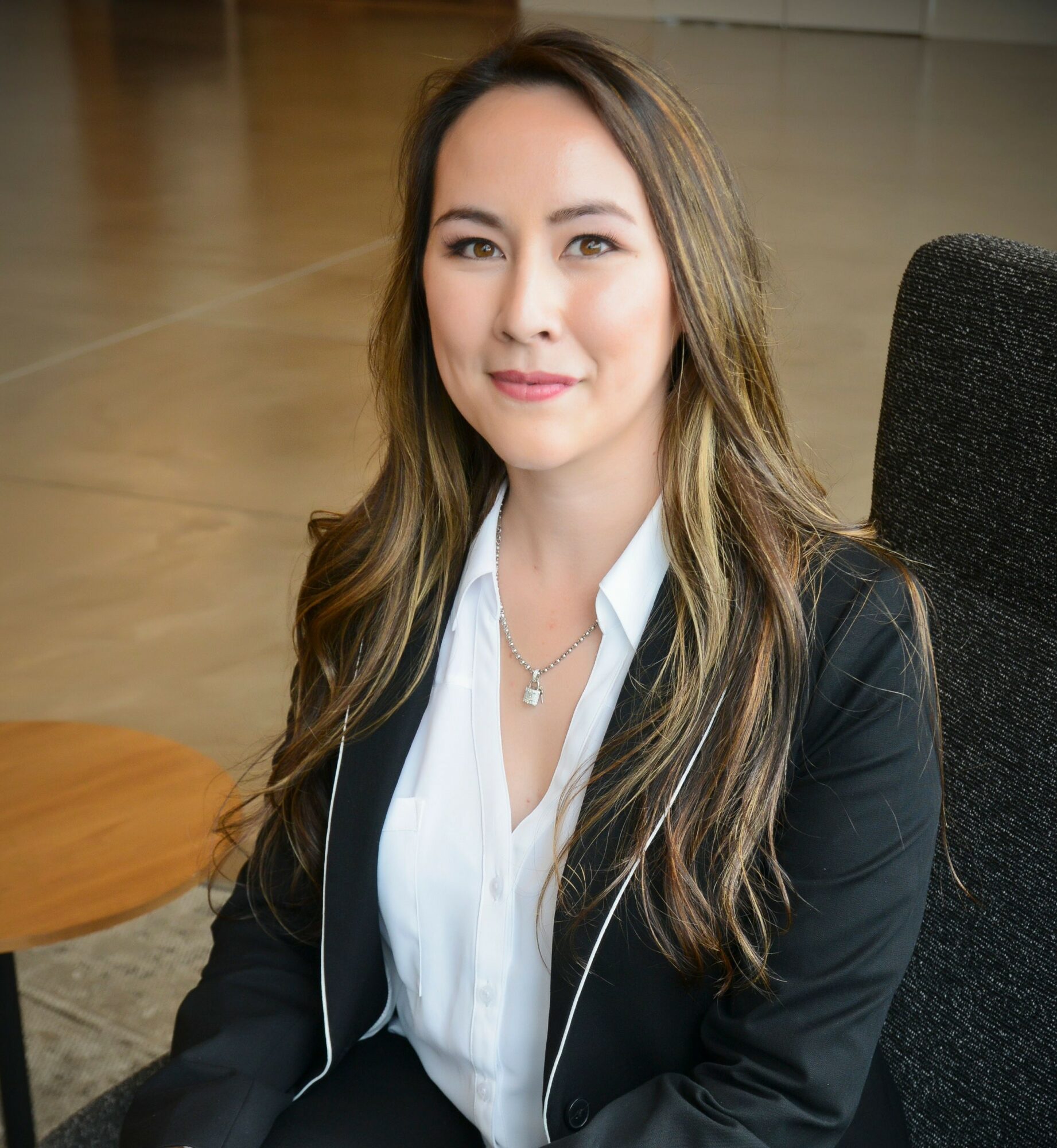
Today we’d like to introduce you to Sonya Tien.
Hi Sonya, thanks for joining us today. We’d love for you to start by introducing yourself.
From 17 Scholarships to Two Coasts: An Interview with the Founder Building a Modern Personal Injury Practice
Tien Law Firm, with offices in North Carolina, Los Angeles, and Orange County
________________________________________
There’s a particular kind of confidence that comes from having earned your seat at the table twice—once academically, and once in the courtroom. That’s the impression you get within minutes of talking with Sonya Tien, an accomplished personal injury attorney who built her firm from the ground up in 2013 and has since been named a Super Lawyers Rising Star seven years running.
Her path there wasn’t conventional, and it started earlier than most. Tien was on her own from the age of 14, working full-time through her teenage years while still earning top grades. She graduated from UNC Kenan-Flagler Business School with 17 scholarships, went on to Columbia Law School, earned the academic honor of becoming a Harlan Fiske Stone Scholar, and trained in the pressure-cooker world of BigLaw in New York City—before walking away from that track entirely to build something of her own, first on the East Coast and later on the West.
We sat down with her to talk about independence, ambition, risk, and what it actually takes for a woman to build and run a solo practice across two states.
________________________________________
“I was applying to scholarships like it was a part-time job.”
Let’s start at the beginning. Seventeen scholarships is an eye-popping number. What was that process actually like?
People hear “17 scholarships” and assume I must have had some secret formula. I didn’t. I just refused to accept that money was going to be the reason that I didn’t get to go to college. I treated the applications like a part-time job—essays, interviews, follow-ups, all of it, on top of a full-time job and a full course load.
Did that experience shape how you think about running a business later?
Definitely. Building a scholarship portfolio one application at a time is similar to running a small business. I was pitching myself, managing a pipeline, and handling rejection without letting it stop me. I didn’t connect the dots until years later, but the discipline I built at seventeen and eighteen years old is the same discipline that let me open a firm with no client base and no safety net, just acquired skills and an indomitable determination to succeed.
________________________________________
Alright, so let’s dig a little deeper into the story – has it been an easy path overall and if not, what were the challenges you’ve had to overcome?
On her own since 14
Before we get to the scholarships and the law degrees, I want to go back further. You were on your own starting at 14. What did that actually look like?
A lot of independent problem-solving. It’s the honest starting point for everything that came after. I was working full-time from a very young age, while still trying to be a normal student and get good grades. There was no financial cushion, no fallback plan. If something needed to get paid for, I was the one figuring out how.
How did that shape the way you approached school and, later, your career?
It gave me an urgency that a lot of my peers didn’t have. I wasn’t in school to have an experience—I was in school because it was my way out and my way up. Every job I worked, every hour I put in, was in service of a bigger plan. It also made me resourceful in a way you can’t really teach. When you’re used to solving your own problems at 14, very little about running a law firm later in life feels impossible by comparison.
You bought your first home at 17, using surplus money from your scholarships. That’s a remarkable detail.
I had applied for so many scholarships and stacked enough of them that I ended up with money left over after tuition and expenses were covered. Buying my first home at 17 years old wasn’t about real estate—it was about stability and building permanence out of nothing.
Appreciate you sharing that. What should we know about Tien Law Firm?
From Columbia Law to the BigLaw grind
BigLaw teaches you rigor and how to perform at the highest level under pressure with tight deadlines. It teaches you how to work at a volume and pace most people can’t imagine and how to hold yourself to a standard where “good enough” doesn’t exist. I’m so grateful for it.
________________________________________
The leap to founding a law firm
In 2013, you left that world to start your own firm. Starting their own law firm is a leap most attorneys never take, especially women in a field still dominated by men at the ownership level. What did that first year actually look like?
Really busy. People imagine you hang a shingle and clients walk in. What actually happens is you’re doing everything—marketing, intake, billing, legal work, going to court, managing the firm’s technology, all of it. I didn’t have a firm behind me anymore or a tech department. I had a bar license, a business degree, and a very clear idea of what kind of lawyer I wanted to be for my clients. I had to get extremely tech savvy at the outset.
________________________________________
Building across two coasts
You didn’t just build one firm—you expanded into Los Angeles and Orange County, California, while maintaining your North Carolina base. Why California, and why maintain both?
They’re very different legal and cultural environments, which is part of what makes it work. Personal injury law has real regional texture—how juries think, how insurance carriers behave, how courts move—and understanding both markets makes me sharper in each one. It also meant I could build a practice that wasn’t dependent on a single local economy or a single court.
________________________________________
On being named a Super Lawyers Rising Star seven times
Seven consecutive years as a Super Lawyers Rising Star is a rare streak. What does that recognition mean to you?
The honest answer is that awards are nice, but they’re not why I do this. What it represents to me is strong performance and consistency—that year after year, the work that I do holds up. In personal injury law, your reputation is built case by case, client by client. Getting recognized once could be a good year. Getting recognized seven times in a row means something structural is working, not just something lucky.
What do you think sets your personal injury law firm apart from the rest?
Empathy, compassion, and refusing to treat clients like a file or case number. A lot of injury law firms, frankly, run on volume—sign clients, settle fast, and move to the next file. I built my firm to do the opposite. I want to actually know my clients, understand what they lost, and fight for what that’s really worth, not just what’s administratively convenient for an insurance company.
________________________________________
Why personal injury law
Of all the directions an Ivy League-educated and BigLaw-trained attorney could go, why personal injury law specifically?
Because I know what it’s like to deal with major obstacles and have no one in your corner. When you’ve spent your teenage years figuring out how to survive without a safety net, you develop a very personal understanding of what it means to be up against a system that’s bigger and better resourced than you are. Large insurance companies are exactly that kind of system—they have teams of adjusters and lawyers whose entire job is to minimize what an injured person and their family recover. Somebody has to stand on the other side of that with just as much skill and none of the intimidation.
So the motivation is personal, not just professional.
It is entirely personal. When an injury victim or family comes to me after a loved one has been seriously hurt, I know what it feels like for their whole world to turn upside down overnight—the medical bills, the lost income, and the fear about what happens next. I built my firm so that the people going through that don’t have to face an insurance company alone the way I had to face a lot of things alone. It’s the reason I’ve dedicated my career to helping injury victims and their families recover.
________________________________________
Last question—after everything, from being on your own at 14 to building an East Coast and West Coast law firm, what are you proudest of?
That the fourteen-year-old figuring out how to survive on her own and the woman running this firm today would recognize each other. Every job I worked, every scholarship I chased, every school that I applied to, and that house I bought at 17—none of it was random. It was all one person refusing to give up. I didn’t lose that girl. I just found bigger rooms to bring her into, and now I get to use everything she taught me to fight for other people who need a strong advocate in their corner.
________________________________________
Sonya Tien is the founder of Tien Law Firm, a personal injury law firm with offices in North Carolina and Southern California. On her own since age 14, she worked multiple jobs throughout her education, earned 17 scholarships, and purchased her first home at 17. She is a graduate of UNC Chapel Hill’s Business School and Columbia Law School and has been named a Super Lawyers Rising Star for seven consecutive years.
Contact Info:
- Website: https://tienlawfirm.com
- Instagram: https://instagram.com/tienlawfirm
- Facebook: https://www.facebook.com/TienLawFirm/
- LinkedIn: https://www.linkedin.com/company/tienlawfirm
- Twitter: https://x.com/TienLawFirm
- Youtube: https://www.youtube.com/@tienlawfirm
- Yelp: https://www.yelp.com/biz/tien-law-firm-irvine-4
- Other: https://www.yelp.com/biz/tien-law-firm-los-angeles

Popular
-

LA’s Most Inspiring Stories
-

Portraits of the Valley
-

Rick Norris Learned That Building a Successful Business Means Building a Life You Actually Want to Live
-

How Olivia Rush Turned Survival Into a Mission to Help Others Keep Going
-

How Bibi Goldstein Is Helping Entrepreneurs Reclaim Their Time by Embracing the Power of Delegation
-

Victoria Hasson is Redefining Voice Coaching Through Community and Collaboration


