




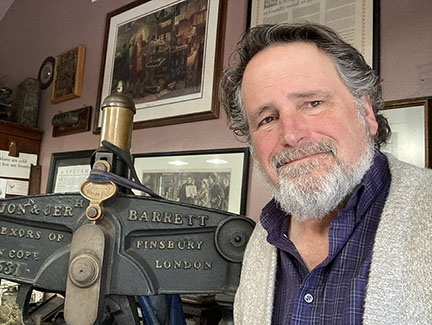
Today we’d like to introduce you to Mark Barbour.
Alright, so thank you so much for sharing your story and insight with our readers. To kick things off, can you tell us a bit about how you got started?
The International Printing Museum was created in 1988 to house the Ernest A. Lindner Collection of antique printing machinery. Over the course of 50 years, Lindner acquired gems of the printing industry from around the United States and Europe, housing them in his downtown Los Angeles warehouse at 12th and San Pedro Street, an area known in its day as the Printing District but now the Fashion District. His collection had only been on display twice at the Science Museum, first in the early 1970’s and again in the late 1980’s. Dave Jacobson, a successful printing businessman was inspired to create the museum and create a legacy for the industry. Having curated the Shakespeare Press Museum in San Luis Obispo for 4 years, Dave brought me into the project as the Founding Curator. It was my charge to create the displays, exhibits and programs of the Printing Museum Fr0m the beginning, I took a distinct approach away from the traditional concept of just showcasing the presses and machines in a static environment. Thought beautiful to look at, a collection of antique machines needs to be more than mere statues of history to attract and keep the attention of the public.
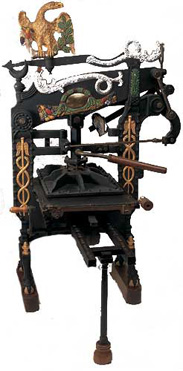
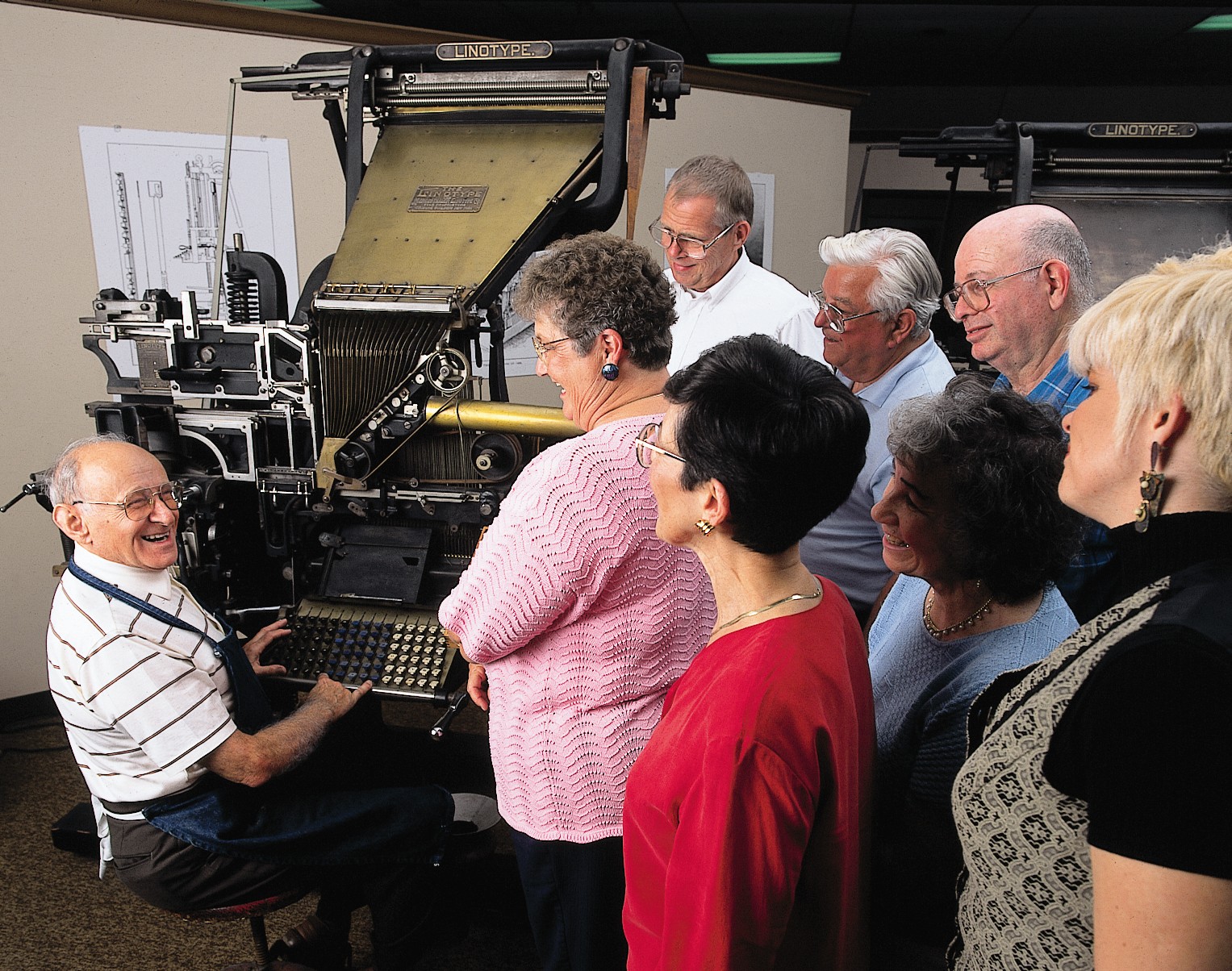
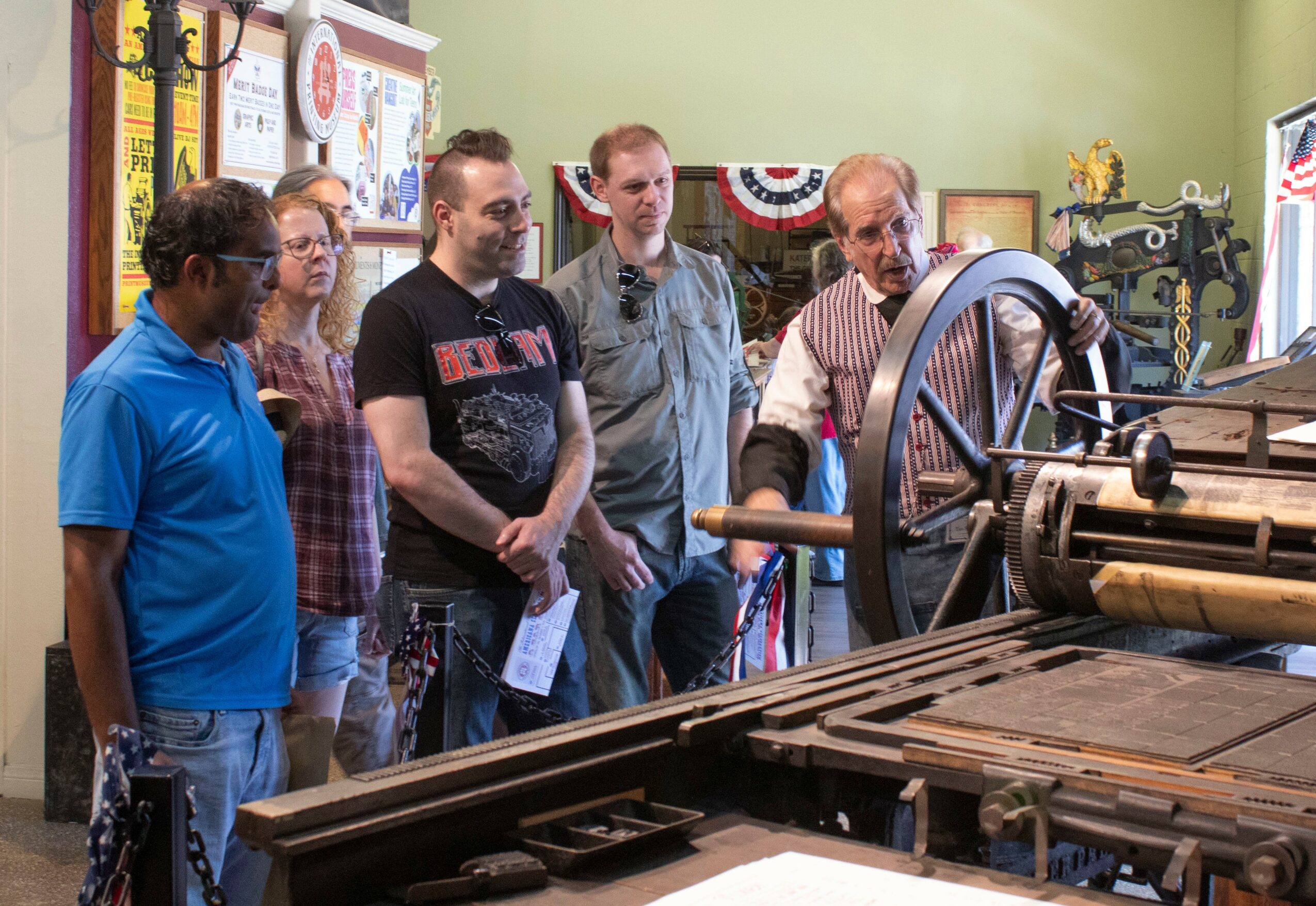
Printing has been and remains the fabric of civilization, and in the words of Charles Dickens, necessary to the existence of free man. Rather than simply showcase the machines of the printing industry and present dates and historical information, the collection needs be used as a springboard to tell stories of American and world history, of great inventions and inventors, of freedom and Western Civilization, of literacy and art. Printing connects to all of our lives and history. Through working and interactive tours, the Printing Museum began to make this history come to life for all ages. From casting metal type and printing on Gutenberg’s printing press, creating Franklin’s famous Poor Richard’s Almanack or printing the first copy of the Los Angeles Daily Times, guests marvel at the stories each machine tells. The mighty Linotype typesetting machine of 1890 that revolutionized the world once again like Gutenberg in 1890 captures the attention of everyone as the clatter and whirr of moving parts creates a line of type for a book or newspaper.
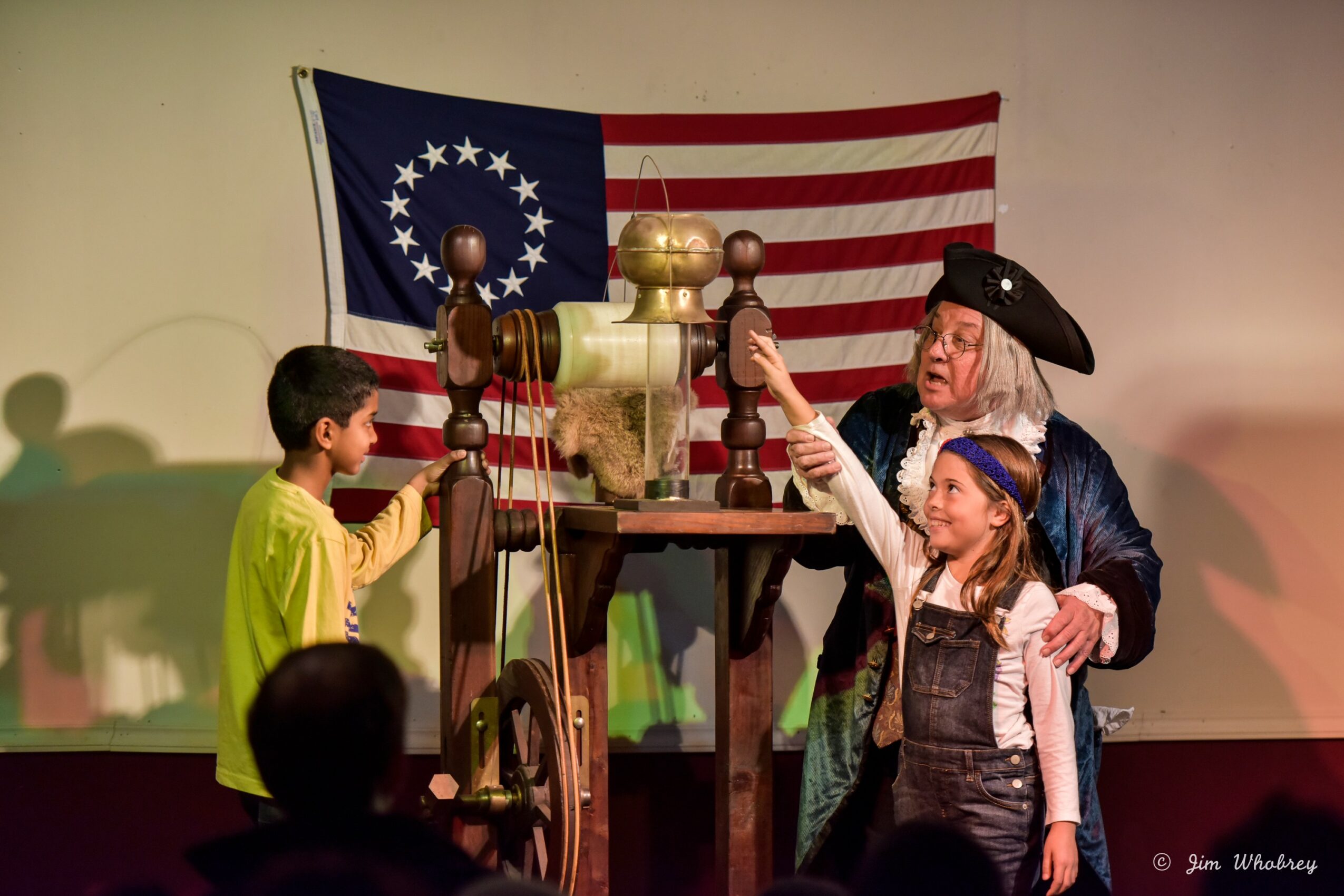
Since the beginning, we have even used theatre to tell these stories with Benjamin Franklin regaling audiences on this life and many inventions role as a Founding Father. To showcase how diverse the museum’s school tours are, I created the Constitutional Convention Tour, where students as delegates of the original colonies debate with Franklin the ideas that formed the Constitution. After signing their own Constitution, these students enjoy a tour that highlights the great documents of freedom, including printing their own copy of the Declaration of Independence, a document that was indeed printed on July 4th and not written out so beautifully as it was a month later.
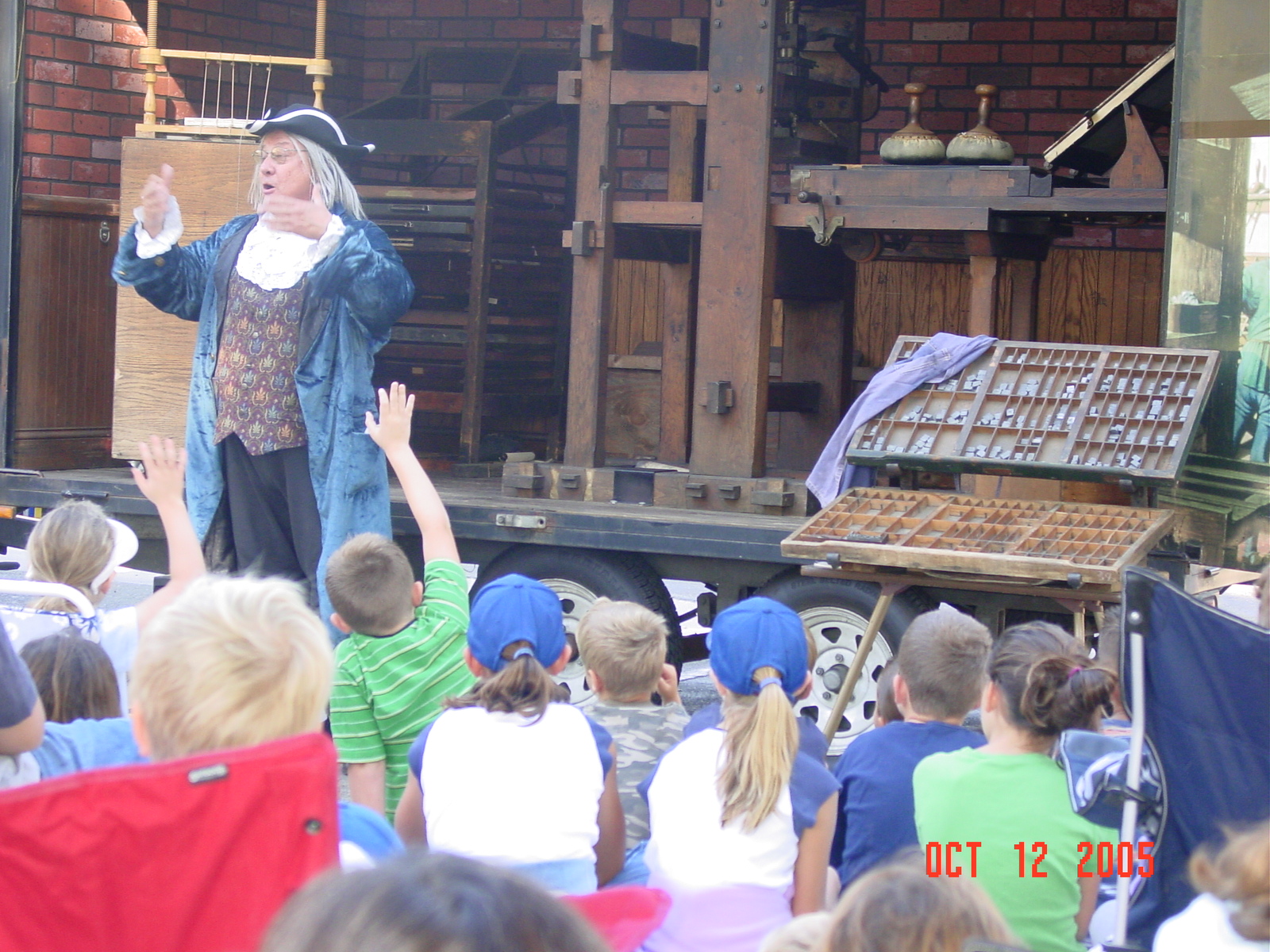
In 1997, to expand the Printing Museum’s reach to schools, I created a Museum on Wheels featuring Franklin’s colonial printing shop and wrapped in images depicting the 5,000 year history of books. This mobile programs annually visits hundreds of schools through California and Arizona. Each year all of the museum’s educational programs impact over 15,000 students with our curriculum-based tours.
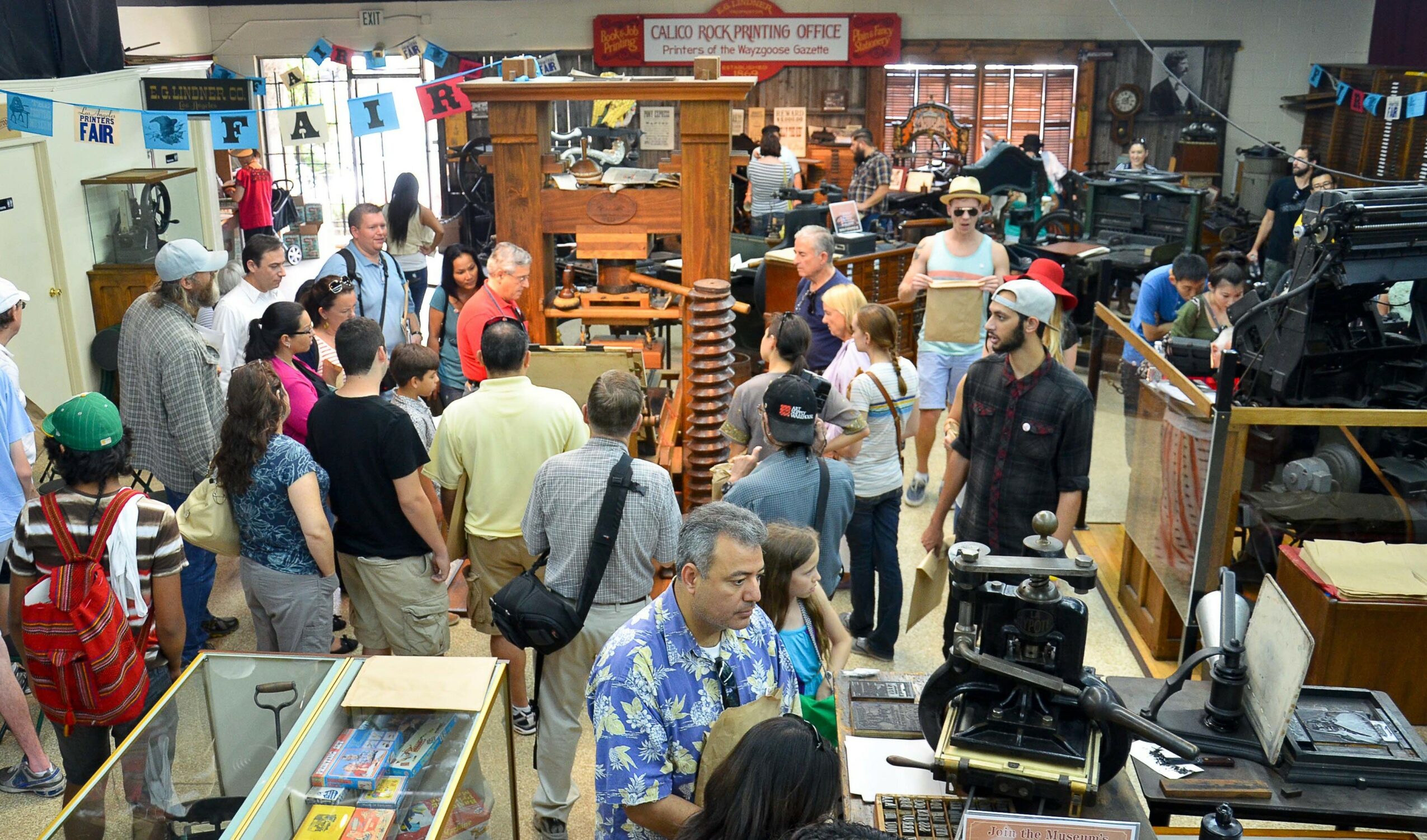
We work with nearly 1,000 scouts through our merit badge programs for boys and girls. Each quarter, we offer public programs such as our Krazy Krafts Days offering hands-on graphic arts experiences, our Typewriter Festival: QWERTY, or our annual Americana Car show celebrating the revolutionary machines of printing and the automobile. And every October, we have the Los Angeles Printers Fair, showcasing over 100 artists/vendors and attracting over 2,000 people who come to celebrate printing and the book arts. As a unique art show, guests get to engage directly with the artists, print on the antique press and explore this beautiful and creative art process.
For the last 6 years, I have been building our Book Arts Institute, a 4,000 sf teaching lab that offers a full range of publicly accessible classes for adults and kids. We now have close to 100 classes per year in all of the book arts, from letterpress to papermakitng and bookbinding to calligraphy and screen printing.
The International Printing Museum remains one of the largest such museum’s in the country with a world-class collection of machines and artifacts that continues to grow. But it is really the stories those machines tell, and the creative engagement with the public of all ages that truly makes this museum a cultural gem of the Los Angeles area.
I’m sure it wasn’t obstacle-free, but would you say the journey has been fairly smooth so far?
Probably the largest challenge and obstacle for the Printing Museum is how to connect with the public and make the collection relevant. It would be a rare day that anyone would wake up and have the independent idea to seek out a printing museum to visit. Though printing has always been the fabric of civilization, and in the words of Charles Dickens, necessary to the existence of free man, printing remains invisible to nearly everyone. It is ubiquitous and ever-present in all of our lives every day but it is seldom thought about. But the process of printing remains a fascinating one, how a blank piece of paper or cloth suddenly has an image on it. When you get to participate in that creative process, it becomes magical and memorable. Though our collection is beautiful and important on its own, and deserves to be preserved, it is the many communities we serve through our programs that give the collection relevance and allows it to be preserved for future generations.
The second and equally challenging obstacle is how to fund an esoteric museum such as the Printing Museum. The museum remains as a stand-alone museum without the benefit of funding from the founders or the government. Developing the required financial support has led to the broad programming and very creative ways to secure funds. Besides the tours and public programs, the museum regularly rents presses to the film and television industry, restores and sells surplus machines to artists and hobbyists, develops donors from within and outside the printing industry, and for the last 6 years we have been building an endowment to underwrite the International Printing Museum into the future.
Obstacles are not dead-ends or roadblocks unless you let them. Rather, they are opportunities to think outside the box you find yourself in and develop ideas and possible new directions never considered before. This has been and remains my approach to building the Printing Museum.
How do you think about luck?
Though the Printing Museum’s success has happened through lots of passion and effort, decades of planning and implementing ideas, even an entrepreneurial drive, sheer luck has a distinct role. I graduated college with a degree in printing management and four years of running a small college-based printing museum where I experimented with all of these ideas of making a printing museum work. My first year in college I had the opportunity to meet Ernie Lindner and see his amazing collection at the Science Museum. Four years later in 1988, I am tapped by Dave Jacobson to be the curator of the new museum. That random selection was to be the salvation of the Lindner Collection and the International Printing Museum because if the approach to the new museum was anything like what was done in the past, a static display of technology, the museum would have most certainly failed. I look for opportunities, I creatively develop ideas and I tirelessly implement my vision for the Printing Museum. But we must always be ready for the sudden possibilities that present themselves, though always with the courage to walk through those doors.
Contact Info:
- Website: https://www.printmuseum.org
- Instagram: @printmuseum
- Facebook: @InternationalPrintingMuseum
- Twitter: @PrintMuseumCA
- Youtube: @InternationalPrintingMuseum
Popular
-

LA’s Most Inspiring Stories
-

Portraits of the Valley
-

Rick Norris Learned That Building a Successful Business Means Building a Life You Actually Want to Live
-
How Olivia Rush Turned Survival Into a Mission to Help Others Keep Going
-

How Bibi Goldstein Is Helping Entrepreneurs Reclaim Their Time by Embracing the Power of Delegation
-

Victoria Hasson is Redefining Voice Coaching Through Community and Collaboration


