




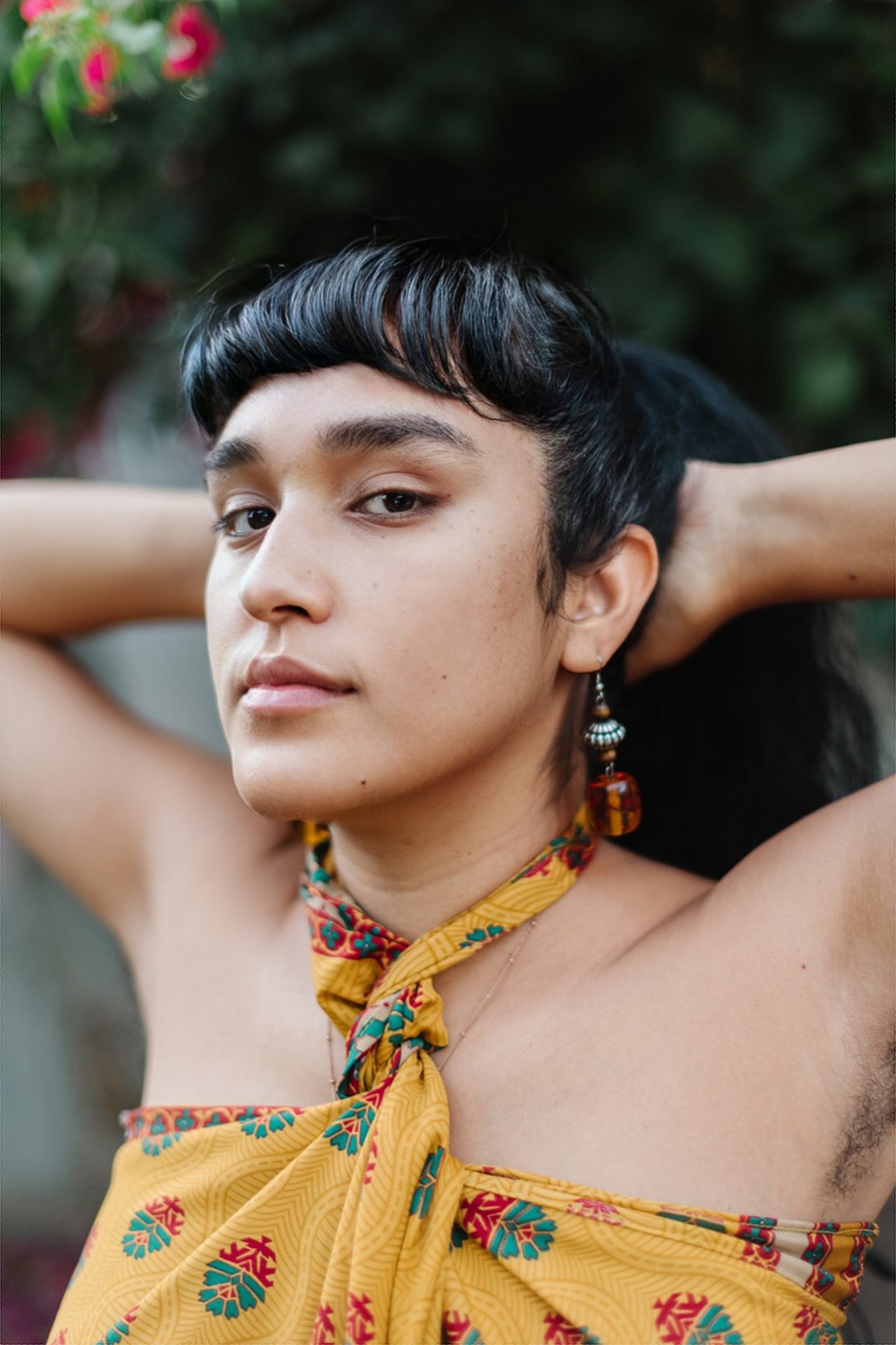
 Today we’d like to introduce you to Pānquetzani Ticitl. They and their team shared their story with us below:
Panquetzani honors the 4,000-year-old traditions of her foremothers + integrates her lifetime of study into her practice + daily life. She comes from a matriarchal family of folk healers from the valley of Mexico (Tenochtitlan, Texcoco, y Tlaxcala), La Comarca Lagunera (Durango + Coahuila), and Zacatecas. Hearing family narratives of doctoring + deep transformation led Panquetzani to trust that all people have innate wisdom that can revolutionize their personal, family, + community well-being.
In 2007, Panquetzani decided to take her practice outside of her own body + lineage to serve her community. As a traditional herbalist, healer, + birthkeeper, Panquetzani has touched over 3,000 wombs + bellies spread across three countries + two dozen cities in the last decade. Since 2012, as the foundress of Indigemama: Ancestral Healing, she has taught 93 live, in-person intensives, workshops, and trainings, totaling more than 1500 hours of live instruction and countless hours of free + online education.
Can you talk to us a bit about the challenges and lessons you’ve learned along the way. Looking back would you say it’s been easy or smooth in retrospect?
Indigemama came out of a deep need and calling from my community. I started out helping friends, family, and their friends with birthing, sexual health, and womb healing practices. I loved sharing my stories, ways of healing, and gave them bodywork and consultations freely, without asking anything in return for many years. By the time I had my second son, my home was like a community center: People in and out, getting worked on, borrowing books, harvesting from my garden, sending their kids outside to play with mine, and eating the nutritive traditional foods I taught them to prepare.
At three months postpartum, I had a challenging day. I was wearing my baby while doing sobadas and rebozo bodywork. I fed a whole family, sent them home with books and fermented goodies, and hoped for a minute to rest before bathing my boys and having dinner. My eldest son walked in the house full of dirt, tired and hungry. I walked over to our small kitchen to serve him frijoles, veggies, and wild rice from our slow cooker. Just when I thought I had it all together, I realized there was not one drop of food left. Our guests helped themselves to every drop. Disappointed and trying to calm my son (and myself), I opened the fridge in search of a quick, nutritious bite for us all. We had nothing.
I hadn’t realized I was generously offering everything we had without any boundaries. My (now) ex-partner walked in the door and saw that our guests had left a mess: toys, books, and snacks were spread across the wood floor, I was exhausted, and both babies were crying. I asked him to go and get us groceries so I can make dinner. Instead, he shamed me for living in filth and having no food for my kids. He was no help. He stormed out of the house for me to figure out everything on my own. I cried with the kids, realizing I wasn’t the mom I wanted to be. I wasn’t living the life I wanted to live. My community didn’t support my well-being in the way I supported them.
I felt betrayed by everyone. Then, overcome by mental clarity, I realized that I built this life, and I can build another one. I vowed to myself and my children that from there on out, they’d have a present mother who fights for them and herself before anyone else. Indigemama was born out of my realizing that holistic wellness means reclaiming my own merit, strength, and healing. I deserve to be well, just as my client does. My children deserve to have a happy, present mama, and it’s my job to make sure I have my needs met to make that happen.
I began charging for workshops, private services, and products. My work continued to blossom, and I’m able to help more and more folks every day in a way that’s sustainable for me and my growing family.
As you know, we’re big fans of Indigemama. For our readers who might not be as familiar what can you tell them about the brand?
Indigemama: Ancestral Healing helps hundreds of women and folks each year attain optimal health. Inspired by Mexican Traditional Medicine (MTM), we have offered 100+ workshops throughout the “United States”, and internationally. Indigemama believes that mothers + primary parents are bearers of cultura, our first teachers and healers. Indigemama honors that human life comes through the womb and that an intimate connection to the divine + Earth are maintained through this channel.
Through hands-on healing, distance coaching, and dynamic education, Indigemama helps you maintain harmony, beginning with your matriz. To date, Indigemama has assisted more than three thousand women + folks across borders, using the tools of womb healing sobadas (womb massage), herbalism, traditional bodywork, + birth keeping.
One of my specialties is the sobada de matriz, or Mesoamerican womb massage. I don’t like to call them massages because they’re not like Western massages where you focus on the muscles for release and relaxation. Sobadas do help you relax, but they also work with the tendons, ligaments, fascia, and bones. Our traditional bodywork has a holistic view of the body where the organs affect your muscles, which affect your bones. We call this concept a matriz caida. According to Mesoamerican medicine, your matriz should sit slightly above your bladder, about three fingers above the pubic bone, and two fingers below the belly button, right in the center, or midline of your body. If your womb is poorly positioned, you may experience painful periods; low libido; bloating; pelvic congestion; inflammation of the gut and pelvic region; hormonal imbalance; and (sorry) painful intercourse. Your matriz is attached to networks of arteries, veins, nerves, and ligaments. When there’s adequate circulation, flow, and warmth, your blood moves, oxygenating your pelvic region. This sustains your sexual vitality, sensuality, cell integrity, and reproductive health. Someone with optimal circulation is aroused easily, more likely to have orgasms, have painless periods, and sensation in the pelvic region (lift up your hands and praise the Earth if this is YOU).
When your womb is prolapsed or tilted, in Mexican Traditional Medicine (MTM), we call it caida de matriz, or a dropped womb. Western Medicine refers to it as a retroflexed, retroverted, or tilted uterus. If I fell or had a susto (fright) growing up, I remember hearing of la matriz caida. I never really understood what the heck they were talking about. I just went with it. It was just the way the elder generations talked, and things they did, like giving us limpias with herbs and huevos if we cried or had berrinches.
When there’s mental or physical stress on your womb (or uterus) area, the alignment of your uterus is off.
Some causes of la Matriz Caida:
Sitting in chairs
Driving long hours, or very often
Physical inactivity
Physical and emotional Stress
Gut dysbiosis or poor digestion (irritating foods)
Improper movement or habitual movement with little to no variety
Incorrect exercise
Poor posture
Malnutrition
You can email me at hi@indigemama.com if you’re interested in one of my online courses.
How do you define success?
I’m writing a book about reclaiming la cuarentena using Mexican Traditional Medicine for postpartum. It tells you exactly what to expect after giving birth, from day 1 to 40. A lot of people plan for birth, but the crucial postpartum period is forgotten, which harms our bodies and babies. My favorite part of writing a book has been writing alongside other women in the community who are also writing books on intergenerational healing. We plan our own writing retreats, meet up on weekends, and hype each other up via group text. Throughout this whole process, I feel my ancestros y comunidad behind me. Writing my book has been a slow, joyous process that I have many, many people to thank for.
Contact Info:
- Website: http://www.indigemama.com/ http://www.indigescuela.com/ https://indigemama.mykajabi.com/
- Instagram: https://www.instagram.com/indigemama/
- Facebook: https://www.facebook.com/Indigemama/
- Twitter: https://twitter.com/indigemama
Image Credits
Management, Production, PR, Editing: Alessio Filippelli Photography: Olive La Vida, Edgar Ibarria
Popular
-

JordanL on ‘Breathe,’ Belief, and Building a Movement Beyond the Music
-
Megan Birney Rudert on How Access to Light Is Powering a More Sustainable and Equitable Future
-

Linda Kneidinger on Building Lasting Change Through Small Steps and Self-Compassion
-

Jolana Nika on Redefining Modern Connection Through Intentional, Real-Life Experiences
-
What did suffering teach you that success never could?
-

Who saw you clearly before you could see yourself?


