




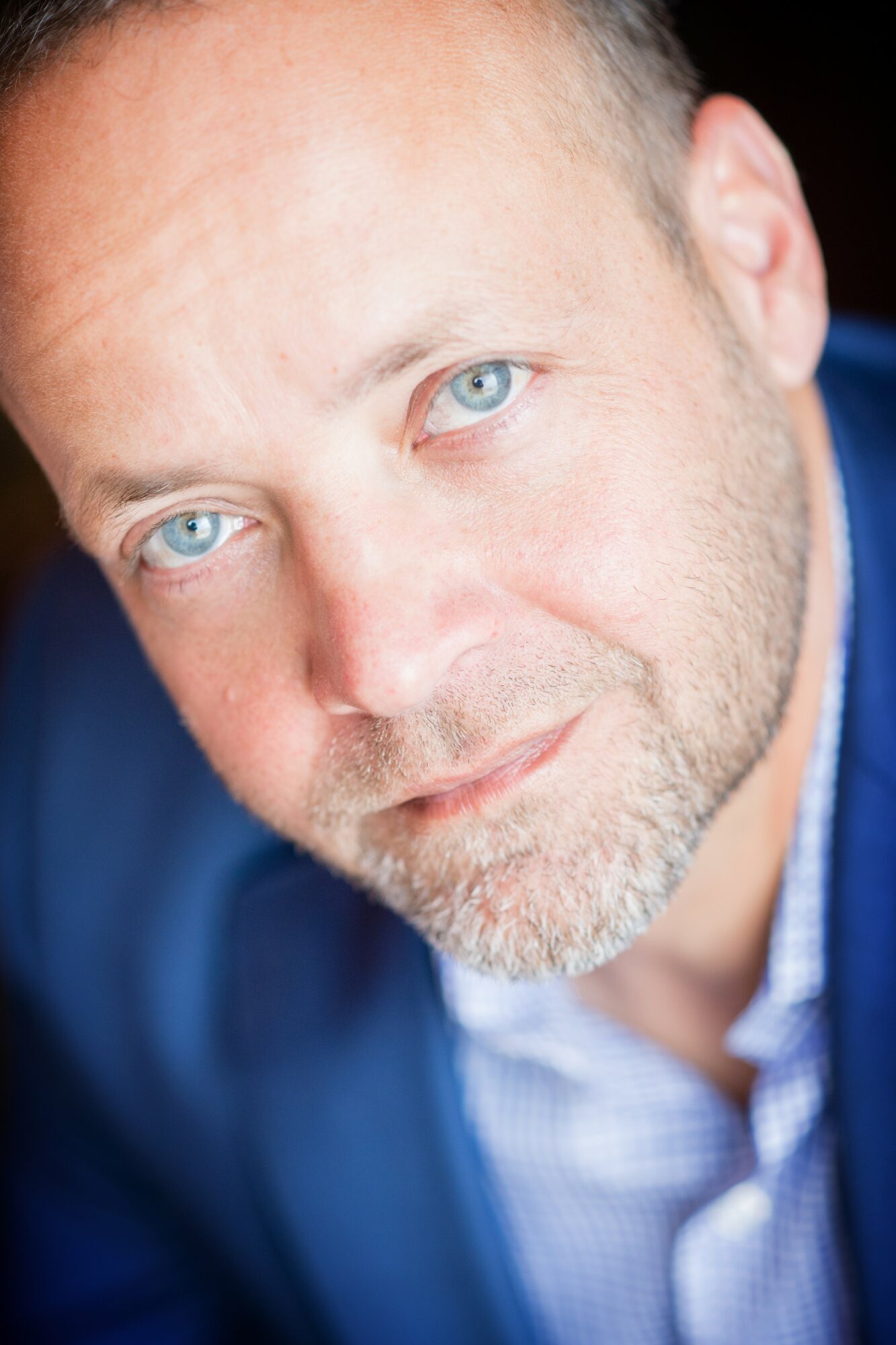
We recently had the chance to connect with Jim Hjort and have shared our conversation below.
Hi Jim , thank you so much for taking time out of your busy day to share your story, experiences and insights with our readers. Let’s jump right in with an interesting one: What do you think is misunderstood about your business?
That it’s not about giving advice, and I’d say that whether I’m wearing my coaching hat or my psychotherapist hat. Advice is cheap. You can find someone on any city streetcorner who would be happy to tell you what you should do with your life.
But what do you gain from that? At best, you’ll get a well-intentioned, well-reasoned perspective to add to the thousand other ones you receive every day. But, at the end of the day, you’re still left having to sift through them all, make your own decision, and bear the consequences of that.
Advice-giving reinforces the idea that the answer to “what’s right for me?” somehow lies outside of you. But I believe that the ultimate source of wisdom lies in the one tiny speck of the universe that’s unlike all the rest: the part that constitutes you, and you’re the only one with an all-access pass to that.
I don’t blame people for seeking advice in a world in which much of what we’ve historically taken for granted seems to be in a state of flux in recent years. But a skillful coach or therapist will know how to help you discover or rediscover your internal, infallible guidance instead, so you’ll have a foundation for lasting change and well-being.
Can you briefly introduce yourself and share what makes you or your brand unique?
I’m a personal development trainer and coach, specializing in helping people through major life events, like career pivots, relationship upheavals, or rock bottoms of feeling stuck or directionless.
Most of what I do is informed by the latest theory and research in neurobiology, psychology, sociology, and other social and life sciences. I also happen to be a licensed psychotherapist, which is a separate practice. In both, however, I approach a new engagement with a0discovery sss client as a transformative process, and one in which I play a critical, supportive, expert role while they client maintains their self-determination.
I think of it as being the copilot and navigator, making sure the plane is safe, sound, and doesn’t get lost, leaving the client free to just enjoy flying to new places. Now, often, the client isn’t sure of the destination when we start. All they know is that they aren’t happy with the status quo.
The artistry of my work, which complements the science of it, lies in knowing how to create an optimal environment for self-discovery for each individual client. If there’s any kind of work in which a paint-by-numbers approach doesn’t work, it’s this one.
Thanks for sharing that. Would love to go back in time and hear about how your past might have impacted who you are today. What was your earliest memory of feeling powerful?
To answer this, I need to explain a bit about where I came from. This is actually my second career. A long time ago, I was a private equity executive, which I had sort of pursued by default. I graduated college with a degree in sociology and abnormal psychology, and a lot of debt, so rather than staying in school, I grabbed a job as a real estate appraiser. Over the years, I worked my way into consulting and finance, and ultimately a senior executive position at a startup, managing $2 billion with three other people.
That career was a lucrative one, complete with VIP travel and all the other material trappings of success. But it never felt like more than a placeholder. In my spare time, I was on a quest for meaning, purpose, and fulfillment that I never could find in the business world. I started migrating back to my original interests from my college days, volunteering on a crisis line on the weekends.
One day, I did the unthinkable, and walked away from all of the security of material comforts. If you ever want to know what it’s like to be looked at like you have two heads, tell a roomful of Wall Street people that you’re quitting to go to grad school to work in social services!
Although I knew deep in my bones that I was making the right choice, it was still difficult and scary to step that far into the unknown. But I did it not because I was fearless, but in spite of my fear, and that was the earliest time I felt that kind of power, over myself and the trajectory of my life.
I’ve continued to cultivate that kind of courage and power one step at a time, by doing difficult things whenever I can, and it’s what I’ve dedicated myself to helping my clients achieve, as well.
What did suffering teach you that success never could?
I had a pretty difficult upbringing, experiencing homelessness and a family member with mental illness in my childhood. That left me pretty unbalanced and miserable entering young adulthood, with no clear sense of who I was or what to do with my life. The material success I achieved in private equity did nothing to help those problems, which was an important observation.
It forced me to realize that I was seeking a life of meaning and purpose not just as an alternate way to live, but that it was the only path I would have to a truly happy life. Giving up and “settling” for material success as my reason for being was no longer an option. I had to practice something radically different: start making choices based on aspects of myself I knew and felt to be true, and trusting that by doing so, however my life ended up looking, it would be gratifying.
I’m glad that I didn’t have an easier go of things. My suffering allowed me to see the limits of what material success could provide, and opened the door to discover a much richer way to live.
I think our readers would appreciate hearing more about your values and what you think matters in life and career, etc. So our next question is along those lines. Is the public version of you the real you?
Yes, in the ways that matter, anyway! I may not divulge deeply personal content publicly, but in terms of how I move through the world, I’d like to think that what you see is what you get. It wasn’t always this way. I used to be much more socially anxious, and put a lot of stock in inner narratives about my shortcomings relative to everyone else, most of which weren’t true, I’m sure.
But nowadays, after quite a bit of work on myself, and the passage of some years, I’m comfortable in my own skin, quirks and all. I find that reclaiming all of the bandwidth we spend manicuring an image for others is much better spent on ourselves; it’s another way to feel powerful.
Okay, so let’s keep going with one more question that means a lot to us: If you knew you had 10 years left, what would you stop doing immediately?
Using social media, definitely. I have mostly stopped using it for business purposes, because for me the juice wasn’t worth the squeeze in terms of promoting my business. I have been fortunate in being able to attract my ideal clients pretty passively, just by being who I am publicly, without having to sell.
Therefore, my social media use now is mainly consumptive, and for me it’s not the most efficient use of time in terms of learning, growing, and being happy. It fosters the comparing mind that can erode your self-esteem, and if your feel is full of bad news, which is hard to avoid these days, then it can color the world with a pretty depressing tint.
I have gotten better about balancing my desire to stay informed with my desire to have a peaceful, equanimous state of mind. But if I knew I only had 10 years left, I’d probably just go all in on the latter. In fact, thanks to this question, maybe I’ll do that anyway!
Contact Info:
- Website: https://www.jimhjort.com
- Instagram: https://www.instagram.com/jimhjort/
- Linkedin: https://www.linkedin.com/in/jimhjortlcsw/
- Facebook: https://www.facebook.com/jim.hjort.3
- Youtube: https://www.youtube.com/@jimhjort1382


Popular
-

Portraits of the Valley
-

LA’s Most Inspiring Stories
-

Rick Norris Learned That Building a Successful Business Means Building a Life You Actually Want to Live
-

How Olivia Rush Turned Survival Into a Mission to Help Others Keep Going
-

How Bibi Goldstein Is Helping Entrepreneurs Reclaim Their Time by Embracing the Power of Delegation
-

Victoria Hasson is Redefining Voice Coaching Through Community and Collaboration


