




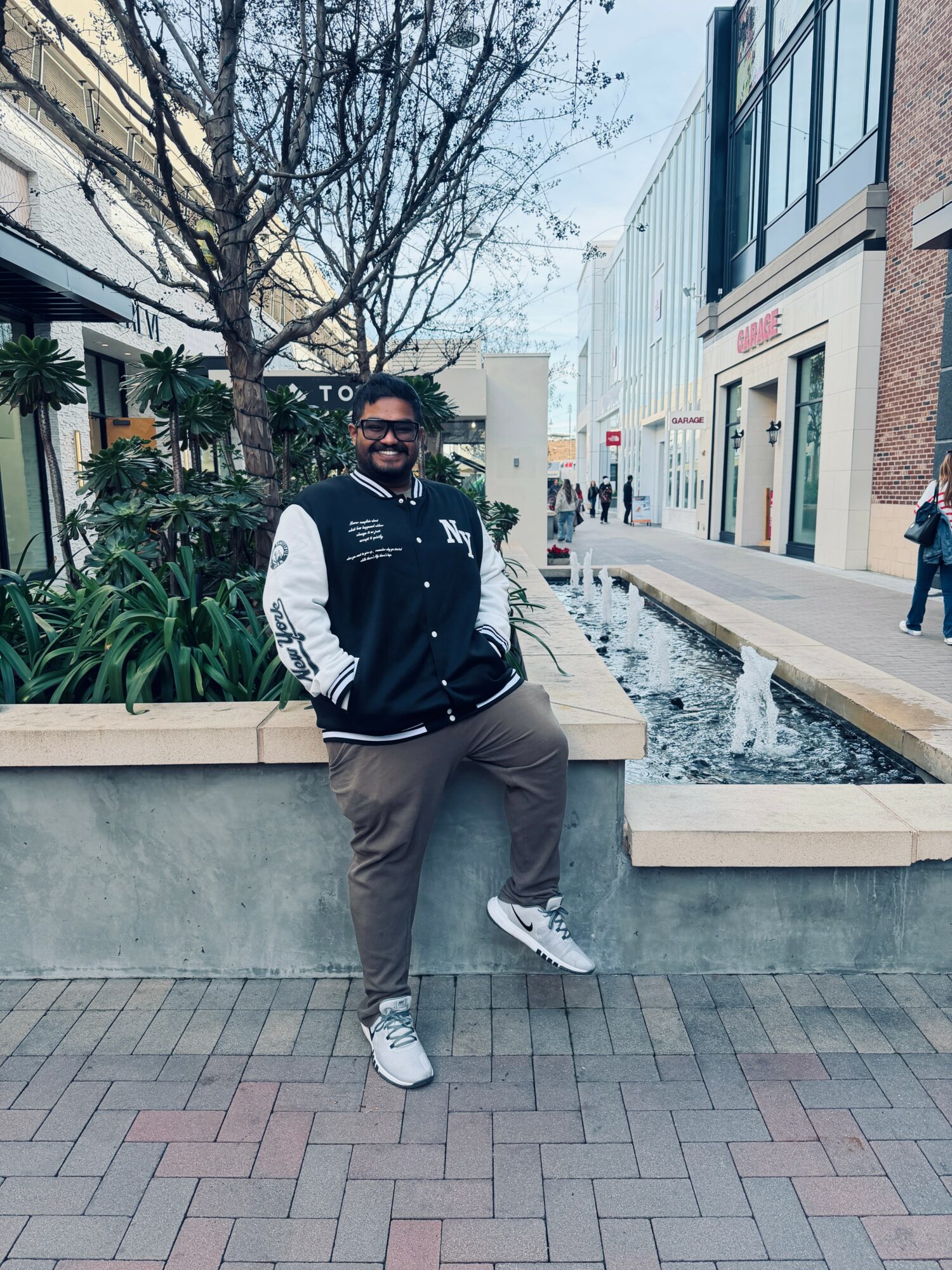
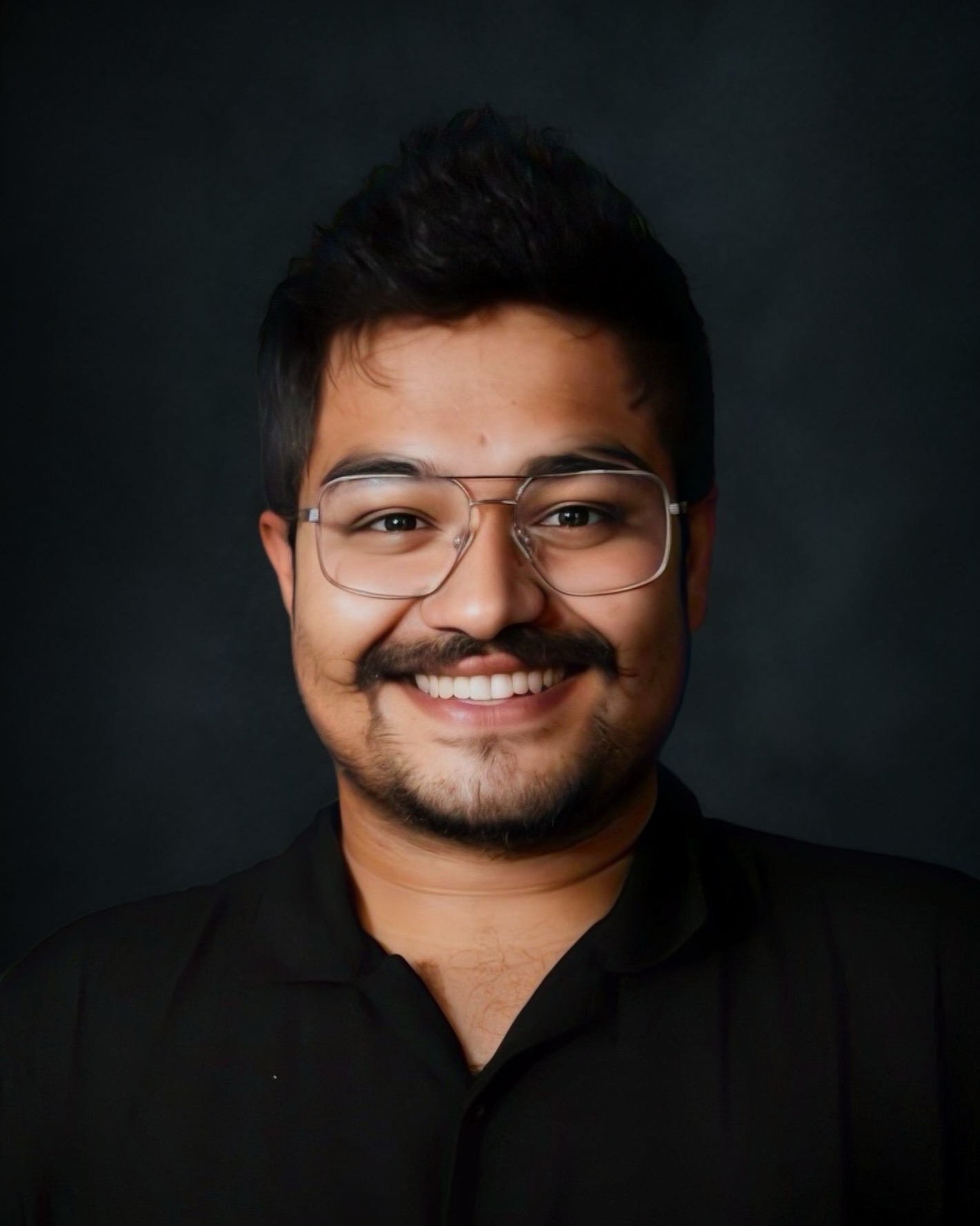
We recently had the chance to connect with Ashwin Challapalli and have shared our conversation below.
Hi Ashwin, thank you for taking the time to reflect back on your journey with us. I think our readers are in for a real treat. There is so much we can all learn from each other and so thank you again for opening up with us. Let’s get into it: What do the first 90 minutes of your day look like?
My day usually starts around 6 am. I get up, get ready quickly, and head straight to the gym by 6 30. I like starting with weights first. It wakes me up and sets the tone. After that, I move into cardio, whether that is treadmill, stair stepper, cycling, or whatever.
Cardio is when everything else starts running in parallel. I go through all my morning notifications, respond to clients, check my calendar and tasks for the day, and review my investments. I usually have the morning news playing across the gym screens, so I am absorbing what is happening in the world while organizing my own.
By around 7 30 or 7 45, I leave the gym feeling physically activated and mentally aligned. I like knowing that before most people have fully started their day, I have already taken care of my health, my work priorities, and my long term goals. It sets a focused and intentional pace for everything that follows.
Can you briefly introduce yourself and share what makes you or your brand unique?
My name is Ashwin Challapalli. I am a 3D Animator and VFX Artist with an MFA in 3D Animation and Visual Effects, and I currently work at the intersection of cinematic storytelling and technical precision.
My career has evolved across multiple spaces. I have worked in film and media pipelines, real time environments, and now in forensic animation where accuracy, clarity, and attention to detail are critical. What makes my work unique is that I approach every project both as an artist and as a problem solver. Whether I am designing environments, building simulations, animating characters, or reconstructing real world events for forensic analysis, I am always thinking about how visuals communicate truth and emotion.
I am deeply passionate about technology and constantly explore emerging tools, from Unreal Engine workflows to AI driven creative tools and procedural systems. I enjoy staying on the cutting edge because the industry evolves fast, and I believe artists should evolve with it. At the same time, my foundation in traditional art history and storytelling keeps my work grounded in strong visual principles.
Beyond production, I have also mentored artists and designed educational programs, which has shaped how I think about leadership and communication. I believe creativity is not just about creating something visually impressive, but about making complex ideas accessible, understandable, and impactful.
Right now, I am focused on pushing the boundaries of realism and clarity in animation, especially in areas where storytelling and factual reconstruction meet. For me, the most rewarding part of this journey is seeing something that once only existed in my imagination come to life on screen, and knowing it serves a meaningful purpose.
Okay, so here’s a deep one: What’s a moment that really shaped how you see the world?
The moment that truly shaped how I see the world was not a single event. It was a period of time when everything seemed to collapse at once.
I moved across the globe to pursue my master’s degree, stepping into an unfamiliar country surrounded by strangers, taking what felt like a shot in the dark. Who I was then and who I am now are completely different people. That experience alone expanded my worldview. But the real transformation happened after graduation.
It was a season of rejection, uncertainty, and pressure. I was juggling multiple projects just to stay afloat. I traveled back to India and nearly lost my job. I had a major accident and had to undergo surgery. My leave was extended unexpectedly, which complicated my visa situation. My income was unstable. Everything felt uncertain at once. I remember lying in a hospital bed thinking, this might be the lowest point of my life.
When I returned to the U.S., I was detained at the airport despite having valid documentation. I was in a wheelchair due to my injury and still spent hours waiting and being questioned. It was another reminder of how fragile everything felt.
Shortly after, I relocated from Los Angeles to San Francisco for a new opportunity. One week before starting, the position was canceled. I had already moved. I had already committed. Once again, I was forced to figure it out.
That period was relentless. But something shifted in me. I stopped waiting for circumstances to improve. I decided to take full ownership of my path. I followed up relentlessly. I cold emailed. I cold called. I networked aggressively. One opportunity took two months of consistent follow up just to get an interview, two more months to secure the role, and additional time navigating immigration logistics because the company had never handled my situation before.
The turning point was not when I got the job. It was the moment I decided I was not going to give up.
Standing outside my old apartment before moving into a new place for that role, I realized something profound. The world had not changed. I had. The second I took responsibility for my trajectory and refused to quit, everything began aligning differently. Opportunities did not magically appear, but I created momentum.
That period reshaped how I see the world. I now understand that adversity is not the opposite of progress. It is often the entry point to it. When you decide to take control of your narrative, even when everything feels stacked against you, that decision alone can redefine your life.
Who I was before that season and who I became after are night and day. And that perspective influences everything I do today.
Was there ever a time you almost gave up?
Yes. Not once. Many times.
It was rarely one dramatic moment. It was usually small, quiet moments at the end of a long week. Sitting alone after a rough project. After getting harsh feedback. After almost being let go. After getting injured. After dealing with visa uncertainty. After hearing yet another “we decided to move in a different direction.” or another mail that starts with “Unfortunately…..
There was a stretch of about six months where I was taking teaching jobs just to maintain legal status. I would travel nearly two hours to teach one class for an hour, then drive two hours back. I did that repeatedly, just to stay afloat while searching for something more stable. During those weeks, there was always that tiny voice in the back of my head asking, “Should I just go back? just run home? Should I reset everything?”
It didn’t help when well meaning friends or family would ask, “Why are you still doing this? Why not just come back home and start fresh?” Every time someone said that, that small voice got louder.
I think people don’t talk enough about that part. Wanting to give up is human. When something hurts, your natural instinct is to move away from it. To protect yourself. That doesn’t make you weak. It makes you normal.
Courage is not the absence of fear. It is moving forward even while you feel it. I am not saying I was some Courageous figure. There were moments I genuinely doubted myself. But what mattered was that the next morning, I still woke up. I still went to the gym. I still sent the emails. I still applied. I still showed up.
That was it. No grand strategy. Just movement.
One step at a time. One inch at a time. Just don’t stop.
Over time, something interesting happens. What feels impossible slowly becomes manageable. Then momentum builds. Eventually you are not crawling anymore. You are running. At some point, you are flying. And suddenly the version of you that once wanted to quit would not even recognize who you have become.
So yes, I almost gave up many times. The difference was simply that I did not stop moving. And in the end, that is what changes everything.
I think our readers would appreciate hearing more about your values and what you think matters in life and career, etc. So our next question is along those lines. Is the public version of you the real you?
To be honest, the public version of me is not that different from who I really am. I have never felt the need to build a separate persona. What I share publicly is real, it is just curated. And I think there is an important difference between curated and fake.
For example, my Instagram started almost like a digital gallery. I used it to archive important moments, travels, milestones, creative work. In a way, it became a memory bank for my future self. If I ever lost my phone or data, those moments would still exist somewhere. What I post usually reflects what I am actually doing, traveling, creating, working on something I am proud of, or capturing a moment that felt meaningful.
That said, social media shows highlights. It shows the best angles. It does not show the 2 hour commutes to teach one class. It does not show the visa stress. It does not show the weeks of rejection or self doubt. Those moments are real too, but they are not necessarily things you turn into public content.
I think that is true for most people. Everyone has challenges, uncertainty, and private struggles. The difference is that we choose not to make every low point a public performance. We share what brings joy, what feels meaningful, what we are proud of. The deeper conversations happen with close friends, family, and people we trust.
If anything, I would say the public version of me represents the direction I am moving toward. It reflects the mindset I am trying to live by, growth, creativity, discipline, optimism. And even when things are difficult, that mindset is still real.
So yes, the public version is not a mask. It is just a filtered lens. The core values, work ethic, curiosity, and resilience people see publicly are the same ones that guide me privately.
Okay, so let’s keep going with one more question that means a lot to us: What are you doing today that won’t pay off for 7–10 years?
There are two types of investments I am making right now that will not fully pay off for another 7 to 10 years.
The obvious one is financial. I consistently invest in diversified funds, including Fortune 500 index funds and technology and AI focused portfolios. I am slowly building capital, not for short term gains, but to create long term leverage and stability. That kind of growth compounds quietly in the background.
But honestly, the bigger investment is in myself.
Almost every evening after work, I am learning something new. Exploring emerging AI tools. Testing new workflows in Unreal. Experimenting with procedural systems. Studying evolving pipelines. None of that immediately changes my paycheck tomorrow. Most of it does not even show up in my current job description.
But I believe skill accumulation compounds the same way capital does.
We are living through one of the biggest technological shifts in creative industries. AI, automation, real time rendering, simulation, these are reshaping film, games, advertising, and even forensic visualization. If I only focus on what pays me today, I risk becoming obsolete tomorrow.
So I deliberately stay uncomfortable. I learn tools before I need them. I research systems before they become mainstream. I build skill sets that may not be fully monetized yet.
Seven to ten years from now, I believe the version of me that invested this time will have optionality. The ability to lead, adapt, pivot, and survive whatever global changes come next.
In my view, long term relevance is not accidental. It is built quietly, consistently, long before the world realizes it is necessary.
Contact Info:
- Website: https://ashwinreddy9342.wixsite.com/portfolio
- Instagram: https://www.instagram.com/ashwin_reddy_?igsh=NTc4MTIwNjQ2YQ%3D%3D&utm_source=qr
- Linkedin: https://www.linkedin.com/in/ashwin-reddy-742612a1
Popular
-

Portraits of the Valley
-

LA’s Most Inspiring Stories
-

Rick Norris Learned That Building a Successful Business Means Building a Life You Actually Want to Live
-

How Olivia Rush Turned Survival Into a Mission to Help Others Keep Going
-

How Bibi Goldstein Is Helping Entrepreneurs Reclaim Their Time by Embracing the Power of Delegation
-

Victoria Hasson is Redefining Voice Coaching Through Community and Collaboration


