




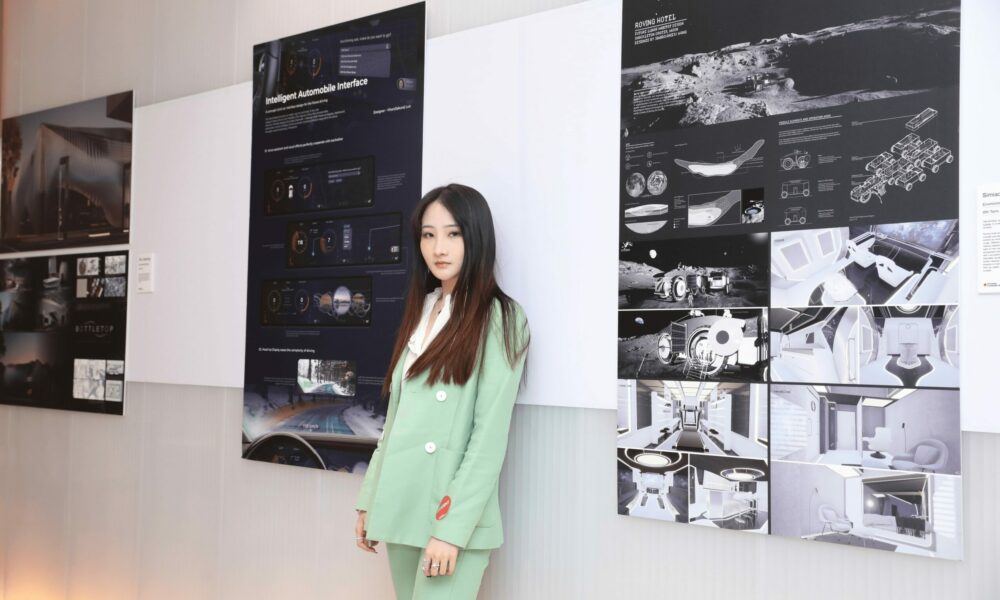
Today we’d like to introduce you to Yihan Luo
Hi Yihan, it’s an honor to have you on the platform. Thanks for taking the time to share your story with us – to start maybe you can share some of your backstory with our readers?
Growing up in an art family, I was deeply influenced by my father, an expert in Chinese painting at the Palace Museum. From a young age, he would take me along to observe his studies and works in the Forbidden City. His job—and indeed his dream—was all about heritage. While I passionately loved art as a child, my true calling was to create something new, something beautiful that had never existed before.
I pursued my studies at ArtCenter College of Design, focusing on AR/VR, and applied my user experience knowledge to these emerging fields. Later, at the University of Southern California, I collaborated with fellow students to develop a VR game called Neon City, a city-building game where players create their own cities within the game’s rules. In this project, I designed a VR hand gesture interface and ensured a seamless player experience within the VR world.
As my interests evolved, I became intrigued by the potential of serious games. This led me to join USC’s World Building Media Lab, where I worked as a user research and experience designer on a biology teaching VR game. This experience further solidified my passion for merging innovative technology with creative expression.
Can you talk to us a bit about the challenges and lessons you’ve learned along the way. Looking back would you say it’s been easy or smooth in retrospect?
Before I ventured into AR/VR interactions, I was an 18-year-old passionate about creating art installations. I soon realized that design is not a solitary endeavor; it thrives on interaction and engagement. My early works aimed to use art as a medium to influence people and create a positive social impact, helping others lead better lives. However, I found that art, while impactful, was not always the most direct way to achieve this goal.
This realization led me to discover “product design,” which is fundamentally based on user-centered interaction principles. Intrigued by its potential, I immediately shifted my focus to user experience design and committed myself to mastering this field. Although starting from scratch was challenging, I remained steadfast in my pursuit, continually reaffirming my dedication.
My projects since then have been centered around designing solutions with social impact, employing innovative and entertaining approaches such as IoT (Internet of Things) and futuristic design to address everyday challenges. My work strives to merge creativity with technology, ultimately aiming to improve people’s lives in meaningful and lasting ways.
As you know, we’re big fans of you and your work. For our readers who might not be as familiar what can you tell them about what you do?
Have you ever been inspired by your dreams? My project “Dreamio” is the culmination of my passion for technology, art, and design, aimed at helping dreamers achieve their dreams, enhance creativity, and find entertainment within their dreams.
As a research assistant at Tsinghua University, I participated in a groundbreaking dream experiment where my sleep was meticulously recorded. I wore a polysomnography sensor kit and learned about the various stages of sleep, including the intriguing Hypnagogia State. Through my research, I discovered that during the Hypnagogia State, people can be guided to speak and even direct their dreams. Historical figures like Thomas Edison and Beethoven reportedly used this state to boost their creativity.
Inspired by these findings, I designed the futuristic project “Dreamio.” This innovative project connects with the player’s brain, guiding them to murmur descriptions of their dreams. Upon waking, players can wear VR headsets to view, build, and interact with their dreams, transforming the abstract world of dreams into a tangible, creative playground.
Another project, “ARtistic Tales,” is an AR-powered app that brings storybook characters to life, creating an immersive reading experience for children, including those with dyslexia. With interactive quizzes, learning becomes fun and engaging. Our team designed this app not only to enhance immersion in children’s reading but also to address the needs of over 40 million U.S. adults with dyslexia. Early assessment and intervention lead to the best outcomes, and our mission is to help children who struggle with reading by captivating them with AR animations. Through our app, they can practice reading, spelling, and pronunciation in an enjoyable and effective way.
Are there any apps, books, podcasts, blogs or other resources you think our readers should check out?
“Speculative Design” by Anthony Dunne and Fiona Raby stands out as one of my favorite books, profoundly shaping me into a more insightful thinker, designer, and creator. The concept of speculative design involves projecting, imagining, and critically evaluating the future based on current realities, using design to present a fictional yet plausible future.
Speculative design is not about whimsically fabricating future scenarios; it demands rigorous research and experimental evidence to substantiate its feasibility. This approach requires designers to develop robust research skills, logical reasoning, creativity, and effective communication abilities.
Moreover, it encourages us to view society and the world from diverse perspectives and dimensions, enabling us to tackle complex issues more comprehensively. While we cannot predict the future, through speculative design, we can strive to shape it in meaningful and positive ways.
Contact Info:
- Website: https://www.yihanluo.com/
- Instagram: https://www.instagram.com/sakura_luo/

Image Credits
Yihan Luo, Yi Zong
Popular
-

Finding Balance Through Art: Theresa Croft on Blending Music, Wellness, and Visual Storytelling into a Holistic Creative Identity
-

From Street Corners to City Tours: Chef Chuck Glaster on Building SOULD Out Into a Culture-Driven Culinary Movement
-

Portraits of the Valley
-

LA’s Most Inspiring Stories
-

From Rock Bottom to Calling: How Hasani McLean-Davis Found Purpose Through Faith and Music
-

Building a Scalable, Soulful Travel Brand: How Abboud Khallouf Turned Morocco Into a Global Experience


