




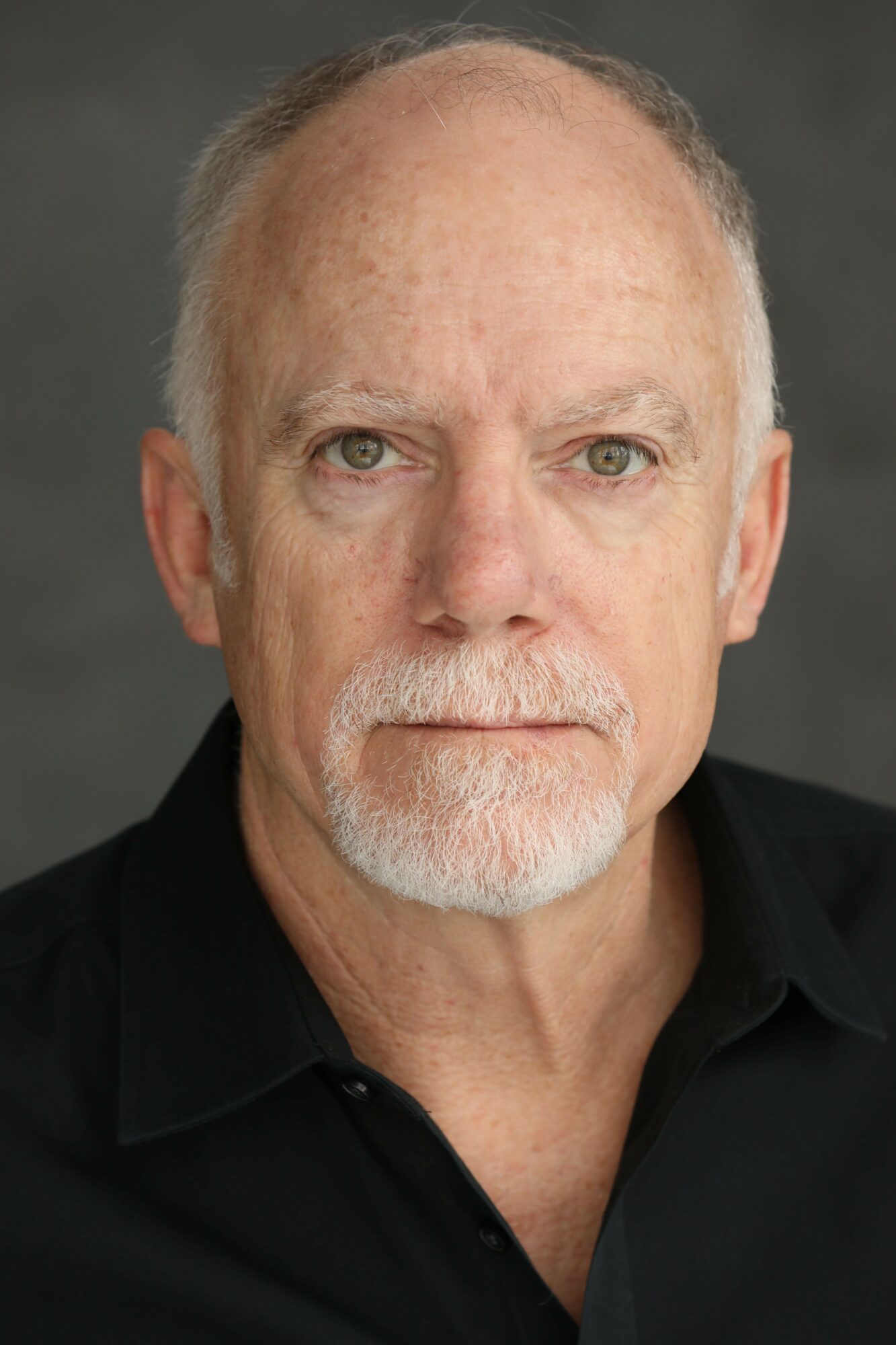
Today we’d like to introduce you to Bryan Rasmussen.
Hi Bryan, so excited to have you with us today. What can you tell us about your story?
I grew up in Colorado Springs, Colorado and moved to California to attend college in San Francisco in 1977. After college at Long Beach State, I attended the American Conservatory Theatre for training. I came back down and started working in theater in Los Angeles. I began at South Coast repertory and did nine seasons there. I went on to do approximately three shows a year for 15 years which included roles in Enemy of the People as Dr. Stockman, Vincent van Gogh in my solo show Sincerely Yours, Vincent, Moritz in Spring Awakening . and Alan in Equus. That production of Equus was my first professional show in Los Angeles and became a huge hit directed by Mark Travis, It enabled me to get a fantastic agent and soon I was auditioning for major feature films, including Amadeus and Reservoir Dogs. .I worked continuously in Theatre and worked 50 different jobs including bartending, catering, waiting tables, etc. in order to make ends meet. In 2005 I was able to purchase the business of Whitefire Theatre in Sherman Oaks California. The crazy thing is that I didn’t have any money! Again, I was a bartender, trying to make ends meet and didn’t think I would even be able to do that. And it wasn’t on my bucket list or goals that I had had in mind. I was trying to have a serious career as an actor in film and television as well as Theatre. So many things had happened to make that possible with help from friends and family. So n 2005 I stood on the Bear stage thinking how did this happen. It was clear that it was meant to be. Everything went great for about 3 years booking back to back rentals, which is what the Whitefire was when I obtained it. But then I saw that I had an open slot of six weeks that I had not booked yet, and I wasn’t able to survive that because that’s how we were able to pay the rent which is very high in Sherman Oaks. So there’s nothing more motivating than a dark, desperate, night trying to figure out how I was going to fill that slot. I was developing a couple of solo shows in my class that I was teaching, one about Billie Holiday and one about Humphrey Bogart, which were both really well written and decided to combine them into one night since they both were about an hour long and with an intermission. I had two acts of solos and named it, Billie and Bogey and had that play on six Saturday nights. I had friend who had some one acts that he wrote and they did six Friday nights and then we had some 10 minute comedies that we put on Thursday nights. And that worked! So I was then wondering if I could do that for all of the shows. The Whitefire Theatre is one of the best spaces in town and we had some incredible sets in built in there. The final one that we did before we turned it into a black box you could’ve shot a series on it was so incredible. But it didn’t necessarily help the play. I love great stagecraft but I think Theatre should be theatrical and I think the reason that Theatre is still relevant is because it’s a different storytelling process than film or television. In Theatre you tell the story to the audience and they create the images in their heads while listening to the dialogue. Where is in television and film the story is told by editing and visuals. I think Los Angeles is a hybrid town with films, television, and theater all happening at the same time. A lot of actors who do theater in New York, Chicago, etc., then come to Los Angeles in order to do film and television to make a living. But they also still want to do Theatre. So I decided to change it back into a black box with access to a video screen for films, which can then be converted back into a theater with curtains or use the screen for projections in theater. We continue to do all of our shows in what we now call vertical repertory where shows run once a week on one night and which able us to do anywhere from 4 to 5 different shows per week and they run for six weeks, which is the normal runtime. With only one performance per week it enables press to write reviews, etc. Because that’s the normal length of regular runs of three shows a week six weeks. We just figured that one night of 60 people was better than three nights of 20 and 1:3 the cost. Prices had gotten pretty steep and we wanted to keep it affordable for independent companies and producers. So we made it into a brick and mortar ticket sales coproduction type of business structure instead of just a rental Theatre. The great thing about this particular structure which is also called Vertical Rep and also called festival scheduling which I learned to do back when I ran the Itchy Foot cabaret in downtown Los Angeles which the Mark Taper Forum used for their literary cabaret. The costs were cut down by 2/3 and we allow the productions to pay the fees for their shows out of their box office rather than upfront like all of the rental theaters everyone else does including Fringe. Because I was a solo artist doing the van Gogh show, I learned a lot about producing solo theater, which takes a very particular kind of producing. I was in the Edinburgh Fringe twice and you really have to hustle your shows in order to get audience. So when I got the Theatre, I wanted to create a safe space for soloists because they usually get the short end of the stick by having to perform on someone else’s set with someone else’s lighting, etc., and that just didn’t seem very conducive to a good production. So I created Solofest to help with that idea that if we just had everyone do one performance, I found that almost all of the shows could sell enough tickets for one performance to pay for their performance so that the audience pays their bills rather than their own checkbook. And that worked fantastically!! We are now in our 15th year of Solofest having produced over 1000 solo shows. Solo work is very dear to my heart and I think now one of the most important voices in Theatre. We were able to stay afloat during the pandemic by live streaming 175 solo performances and broadcast them live worldwide. By selling tickets to them online we were able to pay our rent! Since we’re not a 5013C nonprofit and we still had to pay rent on our building while we were going through the pandemic. luckily we had already been experimenting with live streaming prior to Covid and so we were able to pivot fairly quickly and get a Gofundme started to pay the first couple of months of rent until ticket sales from the live streaming were able to pay our rent, etc. We were one of the only theaters in the world continuing to produce live content throughout the pandemic. I’m extremely proud of that accomplishment working with technology and only three of us in the audience running the computers and cameras, etc., and one person on stage, keeping everybody safe from getting infected by Covid.
In the 21 years, I’ve owned the Whitefire now, we’ve been able to launch many world premieres, full length productions, Solofest, films, and a theater company of actors producing original 10 minute comedies. as well as classes with Academy award winners Bobby Moresco and Helen Hunt. Nowadays, I don’t act anymore on stage, but continue to produce and direct Theatre as well as acting still in film and television. For years, I couldn’t figure out why this was all happening since it wasn’t on my plan sheet. But now realizing it was meant to be. I’m extremely grateful to be able to make a living through a life in the Theatre. Coming up in September I celebrate 10 years after I had a near fatal heart attack. The difficulty of running a Theatre was incredibly stressful and for approximately four years I thought I was going to lose the Theatre every single month. I was waking up every morning and having to vomit to get the gnawing pain in my stomach to go away from the stress and worry. But one of the great lessons I learned through that process was there were no shortcuts and that you have to go through the fire in order to learn the lessons that, I believe, we are here to learn.. The stress finally caught up with me and fortunately I was able to survive that heart attack and was able to continue my work teaching classes and running a Theatre.
I’m the luckiest Artistic Director in town because I get to work on projects I want to work on and with whom I want and not have to get anything approved by a company, or a board of directors or to please subscribers.. I think my turning point of deciding not to create a nonprofit, which are how most theaters in town are run, nonprofit ensembles are constantly fundraising. And I was a member of many and every single one of them all suffered from fundraising burnout. So one of my goals when I got the Theatre was to set out on a new path in order to figure out how I could have the support come from audience and not from donors. We have now been doing this particular way of producing with a vertical rep (shows are once a week with multiple shows per week) and solo work for over 15 years now and it has changed the game, especially for solo artists who are notoriously low budgeted. The Whitefire is a special place that’s been a part of Los Angeles Theatre for 44 years. I’ve never taken for granted the magic, of not only having my own Theatre, but having one of the best in all of Los Angeles. I still marvel at that very thing every single day I stand on stage looking out at the empty seats before shows. My friend Bobby Moresco, who’s won Oscars for writing Crash and Million Dollar Baby and directing many others, once told me when I was struggling said “Bryan, I have Oscars and let me tell you, true success is doing what you love”. I keep that in my heart every day when things get difficult and running a Theatre is one of the most difficult things you can do. So when people ask me how I got through all of this, I tell them that story. My dream was not to be rich and famous but it was to be a working actor, and remembering that changed everything. So in trying to remember what I had as my dream, it hit me that I had said that I wanted to be a working actor and it hit me like a ton of bricks when I realized I was a working actor!!. I just wasn’t working as much as I had hoped to be. Had I not had that epiphany, I may have not made it through this journey. But now every day I’m grateful and so happy that I hung in there, risked it all and continue to do what I love.
I’m sure it wasn’t obstacle-free, but would you say the journey has been fairly smooth so far?
There have been many… too numerous to mention, but as I was struggling and trying to figure it all out, I realized that the worst of times were really the best of times because you don’t learn from success you learn the most from failure. And that risk is all!
As you know, we’re big fans of you and your work. For our readers who might not be as familiar what can you tell them about what you do?
One of my most valuable lessons on my career path that I have learned is the value of who you are and your personal essence. In theater training, you try to immerse yourself completely into another character and transforming into that. But on camera, you already are the character through your particular personal authenticity. Camera involves specific internal thought whereas Theatre is performing to an audience. Basically, the magic “if”.
If I am this person, with this set of circumstances, how would I be?
I’ve been able to work on over 50 films and television shows as well as 75 pieces of theater. But the surprise when I started working on camera was how ill prepared I had been even with all of my Theatre training. I wasn’t really prepared to work on set and what that entails. I’ll never forget on my very first movie after the first take, the assistant director said “all right everybody back to One!”. I had never heard that phrase before and I leaned over to the actor next to me and I said “what does he mean by that?” and the actor said “oh we’re going to do another take!”. And I thought why hadn’t I ever heard that before, no one ever mentioned that in all of the training that I had done and I trained probably more than 95% of the actors working. But most of the training is to prepare you for Theatre because the truth is very few teachers have actually worked on set extensively in order to learn all of that information. So I have created a personal technique that allows Theatre actors to work on set organically. Everybody has different techniques. Everybody has different verbiage so to be able to talk to a director, which you rarely do on camera, it’s important to be able to communicate to the actor exactly what they want. And to use common verbiage.
The most important thing I think, now looking back, is to understand what you convey to others. Michael Caine wrote that in his book. He said “the most important thing an actor has to learn is what do they convey to others”. At the time I read that book. I didn’t really quite understand that. But after some 40 years in audition rooms, doing hundreds of auditions, it finally hit me what I personally conveyed.
I thought it was being the best actor at the audition. But ultimately, I found out that no matter how good of an actor you are if you’re not right for that part, that you’re not that character, you’re not gonna get it. So I had to learn what I conveyed to strangers and what that was ultimately is that I had an authoritative look. A rather stoic essence and authoritative figures and characters like detectives, military, etc. were my essence. When I first started out, I guess I had an innocence and I was a redhead. I had a comedic background and was the class clown. But once I got into a serious path of Theatre, etc. and doing darker character work, I realized that that had changed.
What are your plans for the future?
I’m still running the theater and I’m working right now directing a piece about the Declaration of Independence for the 250th anniversary with producer Suzanne DeLaurentiis. I’m also scheduled to shoot another feature film, as an actor, about the 1980’s with Director and friend Martin Guigui. I am so grateful to be living my dream.
Contact Info:
- Website: https://Whitefiretheatre.com
- Facebook: Bryan Rasmussen/Whitefire Theatre
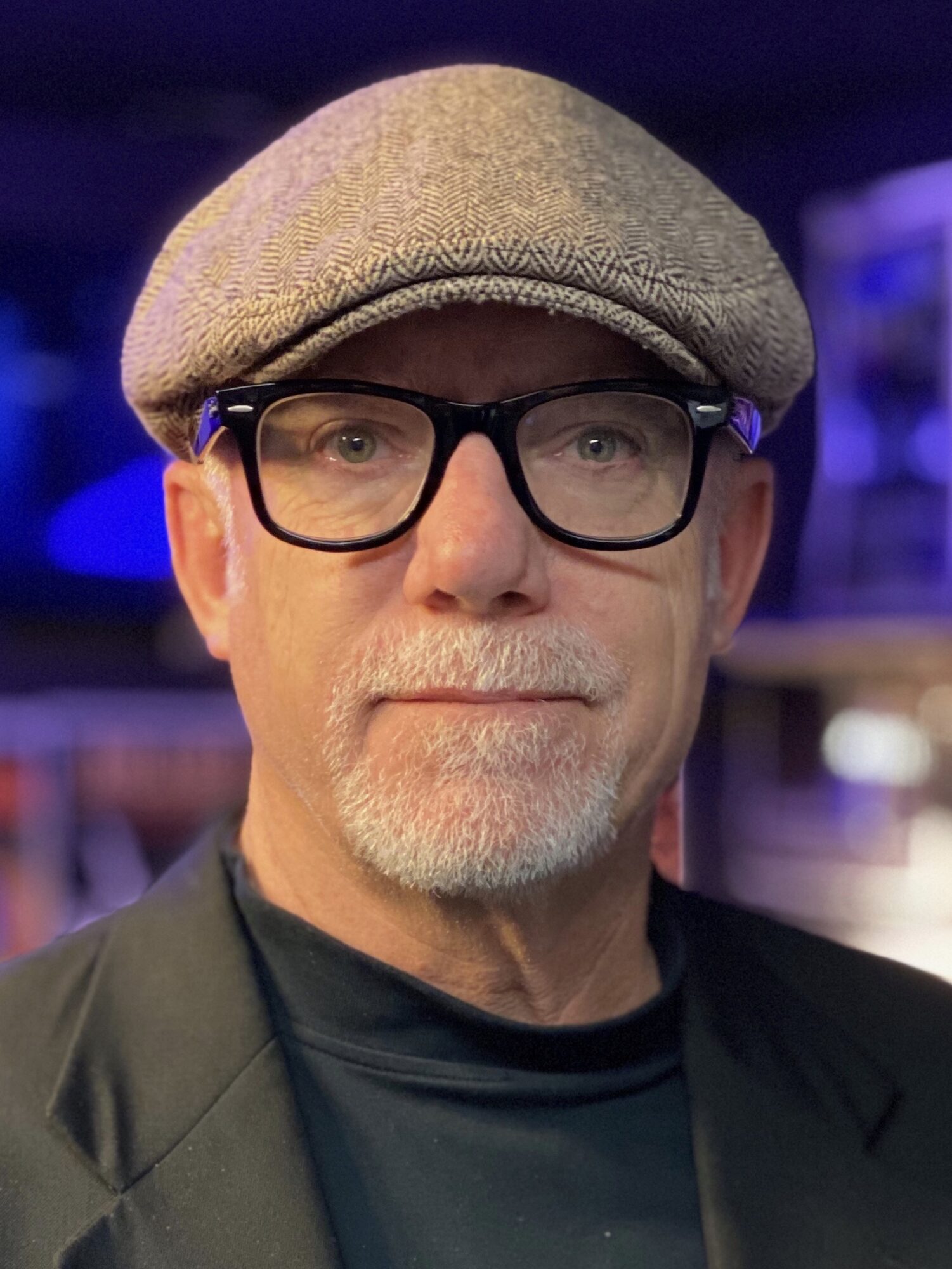
Image Credits
Lesley Bohm and Brandon Loeser
Popular
-

Cedar Boschan on Elevating Black Music Rights and Driving Urgent Conversations Around Credit, Equity, and Artist Protection
-

Portraits of the Valley
-

LA’s Most Inspiring Stories
-

Robin Olive on Building an Inclusive Performing Arts Movement and Expanding Opportunities for Every Student
-

Que Johnson on Building Brands That Last: From Visibility to True Market Authority
-

Christina Wren Steps Into the Director’s Chair to Tell Stories That Feel Like Home


