




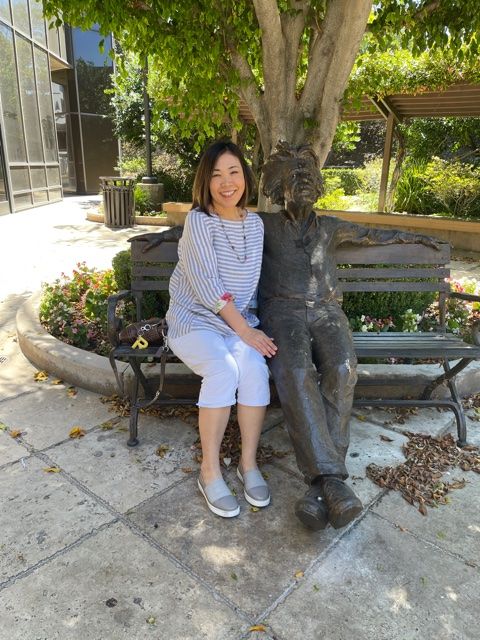
We recently had the chance to connect with Reiko Aoo and have shared our conversation below.
Good morning Reiko, it’s such a great way to kick off the day – I think our readers will love hearing your stories, experiences and about how you think about life and work. Let’s jump right in? What are you most proud of building — that nobody sees?
People know acupuncture is good for pain. And it really is. But what’s amazing is that it doesn’t only treat the pain. When I treat someone, I’m also looking for the underlying weakness in the body. I assess what’s out of balance, make a diagnosis, and support the whole system at the same time.
So even if we’re focusing on pain, people often notice other improvements too: feeling less stress, happier, better sleep, better digestion and bowel movements, and more energy. Acupuncture can help regulate and strengthen organ function, which helps the whole body work better. That’s why people feel more balanced overall. It’s hard to find another kind of medicine that can support so many areas at once.
A lot of people wait until they have a clear disease and an official diagnosis—then they take medication. But many people feel exhausted or “off,” and their tests come back normal, so they don’t know why they feel that way. Acupuncture can help identify what’s happening and support the body before things get worse.
I strongly recommend using Western and Eastern medicine together. Sometimes acupuncture isn’t the right tool for something, and that’s okay—there are times when you need Western medicine. But acupuncture can be incredibly powerful as part of a whole approach.
I’m passionate about this because I’ve been through my own struggles. I had depression before, and life felt miserable—like there was no hope. But even small improvements in how you feel emotionally can change your whole life. When people are happier and/or in less pain, life becomes much easier. That’s why I believe acupuncture should be a first choice for many people.
Can you briefly introduce yourself and share what makes you or your brand unique?
My clinic is called Kenko Acupuncture. “Kenko” is a Japanese word that means good, balanced health. And the type of acupuncture that I follow is the Japanese style.
The difference between Japanese acupuncture and other schools is subtle but profound. Japanese meridian therapy focuses on balancing the meridian (the pathway of energy and blood) to find weak organs and tries to improve the organ functions. It also improves other basic functions like good bowel movement, good sleep at night, pain reduction, increasing energy etc. All these help the patient to combat illness more efficiently.
But the most significant difference is that Japanese-style acupuncture is very gentle compared to other styles. We use a smaller, thinner needle and we don’t penetrate the skin usually as deep as the other schools do. We want our patient to be totally relaxed during the treatment. If you feel pain from the needle, your body gets stressed and tightens up, which reduces the effect of the treatment.
But don’t mistake a lack of depth for a lack of power. Japanese-style acupuncture is actually more powerful because the patient is more relaxed. And because of the gentle nature of the Japanese style, energy flows better during treatment, resulting in good, balanced health.
Appreciate your sharing that. Let’s talk about your life, growing up and some of topics and learnings around that. Who taught you the most about work?
The person who taught me the most about work is my grandmaster, Dr. Ikeda Masakasu. He is Japanese, and he organized and preserved a traditional Japanese approach to medicine—this is the style I practice.
I studied Chinese medicine in school, and I also learned some Korean-style approaches. I practiced both in clinic settings, but Dr. Ikeda taught me something deeper: where traditional medicine comes from and how to practice it in a more complete, integrated way. I’ve been learning from him since 2007, and overall I’ve studied with him for nearly two decades. His training gave me real confidence—because when you can accurately identify what’s wrong and treat it correctly, people get better. I’m very grateful for how hard he pushed me to study, and I feel lucky to have learned from him.
I’ve also studied Tai Chi for 30 years, and I’ve been fortunate to learn from and practice with some incredible teachers, including Dr. Carl Totton and Grandmaster Don Baird.
Tai Chi and acupuncture are connected through the meridians. Tai Chi helps you move energy through the meridians and improve circulation—so it’s something you can do yourself to build and maintain your health.
Acupuncture works through the same system, but it can be much faster and stronger because the needle stimulates the meridians directly. If someone doesn’t have time for regular acupuncture, Tai Chi is a great way to support their energy and circulation on their own. For me, Tai Chi is also a personal practice and something I love.
If you could say one kind thing to your younger self, what would it be?
I would tell my younger self: “Good job. You’re doing great. You’re going in the right direction.”
I would also remind myself how lucky I am. I’ve been blessed to learn from incredible people—true grandmasters—and that has guided my life. For a long time, I didn’t fully understand why I was drawn to practices like tai chi, but now I do. I can see that I was being led in the right direction, and that my path has had meaning the whole time.
So I would tell my younger self: keep going. Trust the direction you’re being guided toward.
Next, maybe we can discuss some of your foundational philosophies and views? What’s a belief or project you’re committed to, no matter how long it takes?
One project I’m deeply committed to is supporting people with Parkinson’s disease—especially people in the early stages.
I feel for these patients, because many of them spend so much money on medications, and even with all of that, the disease can still progress. I’ve seen patients who only came to acupuncture after their symptoms had become severe, and by then they had already lost so much. Parkinson’s is progressive, but I’ve also seen that symptoms can improve and quality of life can get better with consistent treatment.
The challenge is that consistent care can be expensive. Acupuncture isn’t cheap, and Parkinson’s patients often need treatment once or twice a week to get the best results. Even when they feel improvement, it can be hard for them to continue because of the cost—and that makes me sad. But I still believe there is hope, especially for people in the earlier stages. Even if someone doesn’t have a clear diagnosis yet, if they notice early symptoms, I want them to come in. The earlier we support the body, the more we may be able to help.
I became interested in this work because I saw how much it affects someone’s life—not only physically, but emotionally. When people feel better, they can live better. I also learned a lot from my teachers, including my grandmaster in Japan, who has experience treating these kinds of cases.
I’m seeing many different cases, and I haven’t fully decided yet how I want to document them—but I am continuing to work with Parkinson’s patients, and I would like to keep building case studies over time. I really want to do something meaningful for them. The hardest part is making it sustainable for patients over the long term.
The belief at the center of my work is this: we can’t change a person’s lifespan, but we can change the quality of their life.
Many people don’t want to spend the last ten years of their life in bed. With regular care—whether that’s weekly acupuncture or consistent maintenance over time—we can help people maintain function, reduce suffering, and live with more strength and dignity. Quality of life can be improved with good, balanced health.
Before we go, we’d love to hear your thoughts on some longer-run, legacy type questions. If you retired tomorrow, what would your customers miss most?
I think my patients would miss the way I help them find balance—physically and emotionally. Not just pain relief, but overall balance: less fatigue, better sleep, and feeling more stable and well in their everyday life.
That’s what kenko means: good, balanced health. Please be kenko, please take care. Please stay kenko. That’s what I want for every patient: real health and balance.
Of course, there are other acupuncturists in the world, so people could go somewhere else and still receive acupuncture. But what they would miss about me is my approach and the depth of training behind it. My teacher emphasized that root-cause diagnosis is extremely important. Many practitioners simply use a set of standard points without fully diagnosing what’s going on in the person’s body. They place needles in the same places and hope it works—but if you don’t truly understand what you’re treating, the results can be limited.
In my experience, school alone is not enough.
Even Chinese medicine training can become too formulaic if it’s treated like a checklist. For example, “If someone has a thyroid problem, use these points,” or “If someone has headaches, use these points.” My teacher has taught the necessity of finding the root cause of any disease or ailment, which is a much more complex process. It takes years of study and constant practice to learn something I continue to do in my work as an acupuncturist.
That’s also why I strongly recommend Traditional Japanese Medicine. The diagnostic approach is deeper, and the treatments are more precise and individualized.
Contact Info:
- Website: https://www.kenkoacupuncture.com/
Popular
-

Portraits of the Valley
-

LA’s Most Inspiring Stories
-

Rick Norris Learned That Building a Successful Business Means Building a Life You Actually Want to Live
-

How Olivia Rush Turned Survival Into a Mission to Help Others Keep Going
-

How Bibi Goldstein Is Helping Entrepreneurs Reclaim Their Time by Embracing the Power of Delegation
-

Victoria Hasson is Redefining Voice Coaching Through Community and Collaboration


