



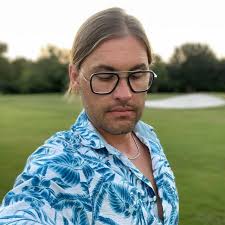
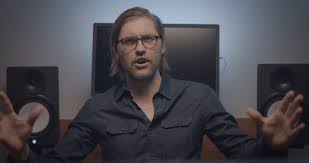
rand Courtney shared their story and experiences with us recently and you can find our conversation below.
Good morning rand, it’s such a great way to kick off the day – I think our readers will love hearing your stories, experiences and about how you think about life and work. Let’s jump right in? What is something outside of work that is bringing you joy lately?
VR Boxing
Can you briefly introduce yourself and share what makes you or your brand unique?
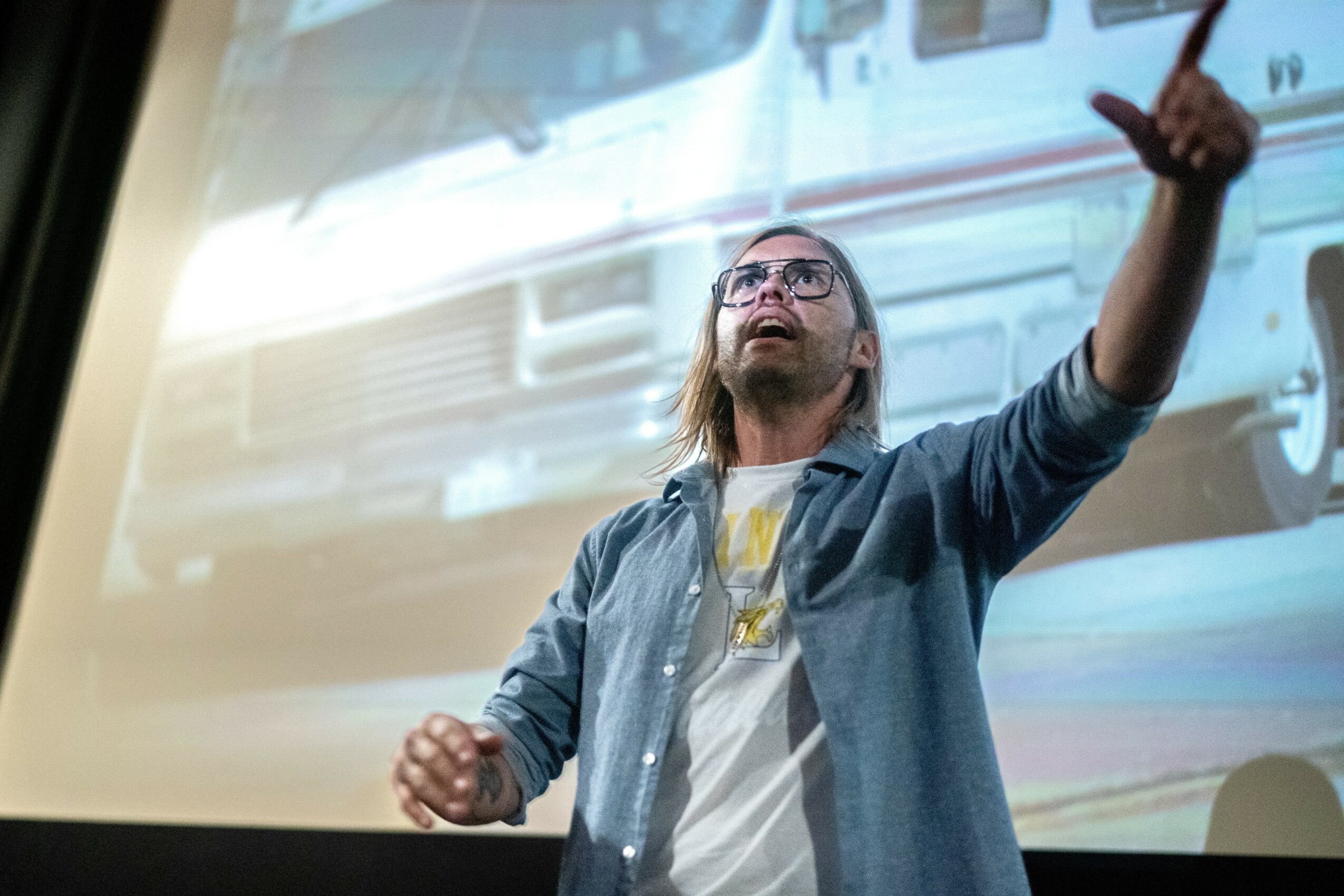
My name is Rand Courtney. I am a documentary filmmaker and video producer, and the founder of Creative Deviants, a production company based in Southern California. I have been working in film and video for over fifteen years, primarily focused on documentary, brand storytelling, and character driven content that sits somewhere between cinematic film and real world impact.
Creative Deviants was built out of a frustration with formulaic content. Too much video today feels disposable. I wanted to create work that actually moves people, whether that is a long form documentary, a brand film, or more recently, AI driven visual storytelling. What makes the company unique is that we operate comfortably in both worlds. We have deep roots in traditional production with real crews, real cameras, and real stories, but we also embrace emerging tools like AI when they serve the story rather than replace it.
A big part of my recent work has been the documentary La Lucha: Getting Schooled in America, which explores alternative education for at risk youth and the systems built to support them. That film represents a lot of what I care about as a filmmaker: social impact, empathy, and giving voice to people who are often overlooked. At the same time, Creative Deviants has been pushing hard into cinematic AI video, creating story driven, emotionally resonant content for brands and organizations that want something more ambitious than standard marketing.
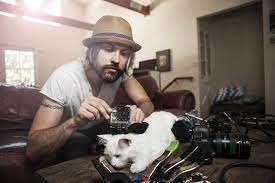
My background is very hands on. I direct, shoot, and edit much of my work myself, which keeps the process intimate and intentional. I care deeply about authenticity, about not over polishing the humanity out of a story. Whether I am working with a nonprofit, a brand, or developing a narrative film, the goal is always the same: make something honest, visually striking, and emotionally grounded.
Right now I am continuing to develop feature documentary and narrative film projects while also expanding Creative Deviants as a studio that blends cinematic craft with new technology in a thoughtful way. I am not interested in chasing trends. I am interested in using the tools available to tell better stories and to do work that actually lasts.
Appreciate your sharing that. Let’s talk about your life, growing up and some of topics and learnings around that. Who were you before the world told you who you had to be?
Before the world told me who I had to be, I was a kid who felt like an outsider and used imagination as a way to survive. I grew up feeling unseen and unsafe a lot of the time, and creativity became the place where I had control. Acting, storytelling, and observation were how I made sense of the world and how I protected myself from it.
I was curious, sensitive, and paying close attention to people, even when I did not fully understand why yet. I noticed behavior, power dynamics, pain, and kindness early on. I think that instinct came from needing to read a room quickly, to understand where I fit and how to move through it without getting hurt.
Before expectations, careers, and responsibilities set in, I was someone who believed stories could change how people see themselves and each other. I did not have the language for it then, but I knew that art could be a bridge between isolation and connection. That part of me never really went away. It just got layered over with survival, ambition, and learning how to function in the real world.
What I do now is essentially a return to that original version of myself. I am still trying to understand people. I am still trying to create spaces where truth can exist without judgment. The difference is that now I have the tools, experience, and perspective to do it intentionally.
What have been the defining wounds of your life—and how have you healed them?
The most defining wounds of my life came from growing up feeling unsafe, isolated, and misunderstood at a young age. I learned early how to be hyperaware of my surroundings and of other people’s moods, because it felt necessary for survival. That kind of environment teaches you to shrink parts of yourself, to stay quiet, to adapt quickly, and to believe that belonging is conditional.
Another wound came later, from trying to prove my worth through achievement. For a long time I believed that if I just worked harder, accomplished more, or stayed productive enough, I would finally feel secure. That mindset can get you far professionally, but it also disconnects you from yourself. You stop listening to your body, your intuition, and your need for rest or softness.
Healing has not been one big moment. It has been gradual and ongoing. A lot of it came from naming those early experiences instead of minimizing them, and from understanding that the coping mechanisms that once kept me safe were no longer serving me. Therapy helped. So did slowing down, becoming a parent, and learning how to be present instead of constantly bracing for what might go wrong.
Creativity has been one of the biggest tools for healing. Making films, telling stories, and creating work rooted in empathy allows me to transform pain into something meaningful. I have learned to replace self judgment with curiosity, and urgency with intention. The wounds are still part of me, but they no longer run the show. They inform the work, give it depth, and remind me to lead with compassion for myself and for others.
Next, maybe we can discuss some of your foundational philosophies and views? How do you differentiate between fads and real foundational shifts?
I differentiate between fads and real foundational shifts by looking at whether something deepens human capability or just optimizes convenience. Fads usually promise speed, shortcuts, or surface level results. They spike fast, look impressive, and then fade when the novelty wears off. Foundational shifts tend to feel quieter at first. They change how people think, create, or relate to each other over time rather than delivering instant wins.
I also pay attention to whether a tool or trend gives more agency to the creator or takes it away. If it flattens originality, replaces judgment, or encourages sameness, it is usually a fad. If it expands what individuals can express, lowers barriers without lowering standards, and still requires taste, intention, and responsibility, it is more likely to last.
In my own work, especially with emerging technology like AI, I test whether the tool can serve story, emotion, and meaning, or if it is just spectacle. If it cannot hold up in a quiet room without explanation, it is probably not foundational. Real shifts integrate into craft, they do not replace it. They reward people who already care about quality, ethics, and depth, and they make it possible to go further, not just faster.
Time is the final filter. Foundational shifts keep creating value even after the hype cycle moves on. Fads need constant noise to stay alive.
Okay, we’ve made it essentially to the end. One last question before you go. What are you doing today that won’t pay off for 7–10 years?
Investing deeply in AI video, without chasing quick wins, is the thing I am doing today that likely will not fully pay off for seven to ten years. Right now, the space is noisy and fragmented. A lot of people are using AI for novelty, speed, or cost cutting. I am taking a slower, more deliberate approach, treating AI as a new cinematic medium rather than a shortcut.
I am spending time building taste, process, and ethics around it. That means learning how to direct AI the way you would direct actors or a camera, figuring out consistency, character continuity, emotional pacing, and visual language. It also means understanding where AI belongs and where it does not, especially when it comes to documentary, truth, and representation.
Most of that work is invisible. It does not always translate into immediate revenue, and it would be much easier to package it as a trend and sell it quickly. But I believe AI video is a foundational shift in how stories will be made, not just a temporary tool. The real value will go to the people who understand storytelling first and technology second, not the other way around.
I am building systems, instincts, and creative frameworks that will still matter when the tools change and the hype fades. When AI becomes normalized and expected rather than exciting, the difference will not be who can use it, but who can use it with restraint, intention, and emotional intelligence. That is the long game I am playing.
Contact Info:
- Website: https://creativedeviants.com/
- Instagram: https://www.instagram.com/creativedeviants/?hl=en
- Youtube: https://www.youtube.com/@creativedeviants
Popular
-

Portraits of the Valley
-

LA’s Most Inspiring Stories
-

Rick Norris Learned That Building a Successful Business Means Building a Life You Actually Want to Live
-

How Olivia Rush Turned Survival Into a Mission to Help Others Keep Going
-

How Bibi Goldstein Is Helping Entrepreneurs Reclaim Their Time by Embracing the Power of Delegation
-

Victoria Hasson is Redefining Voice Coaching Through Community and Collaboration


