


 Today we’d like to introduce you to Solange Aguilar.
Hi Solange, so excited to have you with us today. What can you tell us about your story?
I am a 26 years old queer, Indigenous and Filipinx (Mescalero Apache/Yoeme/Kalinga/Kapampangan) artist, photographer, and poet living in Syuxtun, Chumash Territory (Santa Barbara, CA.) My work focuses on the revitalization/ normalization of Indigenous cultures in mainstream society, uplifting and supporting communities of color, and bringing important issues to the forefront using a mix of mediums ranging from watercolor to digital collage to slam poetry.
Pronouns: They/She/He/Ze Ever since I can remember, I’ve been enamored with art. Both of my parents are artists. My father is an actor from Flint, MI and my mother is a classical pianist turned keyboard player who immigrated to America from the Philippines with my grandfather in the 1970s. Growing up in Hollywood, I consumed a lot of media specifically for the art and knew deep down in my bones that I was going to be an artist. There was never any fluctuation from that goal and that main dream, but there have always been additions, new skills acquired, different mediums, different parts of my identities to delve into and express. My Indigeneity in particular has become such a beautiful launchpad for my creativity.
We all face challenges, but looking back would you describe it as a relatively smooth road?
And on the flip side of all this beauty and life and creativity within me have been the shadows of trauma that have followed me my whole life. My parents had a very messy divorce when I was around three or four and my father moved to Paris shortly afterward. I was raised mostly by my mom as she went from wrong relationship to wrong relationship. I carried depression and ideations of suicide with me my entire life. When I was a teenager, each year felt heavier and heavier with event after event of death (my grandmother, my oldest brother) to sexual assault to eventually a nervous breakdown when I was seventeen. At eighteen, I saw a therapist and was officially diagnosed with PTSD, manic depression, and OCD. I got culturally married the summer after I graduated high school and I carried my diagnoses and depression with me.
At twenty, my mother disowned me for opposing her newest relationship. We didn’t speak again until I was twenty-three which caused me to have another nervous breakdown, one so bad that I ended up hospitalized because of it. But something happened there that changed me forever. As I sat for three days waiting to be released, free from the struggles of day to day life, I realized that I never wanted to go back there ever again. I wanted to be alive. I wanted to be happy. I wanted to stop feeling so heavy from the things that I carried my whole life. And so I did and I have done and I continue to appreciate this life after trying to be away from it for so long. Now what does this have to do with making art? Everything. Art is everything. The story of my life has shaped and changed the way I do art and art has helped shape and change me in the process. If I had killed myself, I would have never seen myself actually become a full-time artist or create the things that I have always wanted to create. My story is one of survival and resilience after a lifetime of storm and I am beyond grateful to have weathered it.
Thanks – so what else should our readers know about your work and what you’re currently focused on?
I do a lot of medium hopping, but I mostly specialize in watercolor, graphic design, digital collage, and poetry. I’m most known for my Indigenous Postcards series, my digital collage work, my Decolonial Dreams series, and for creating a post about alternatives folx could use instead of white sage, palo santo, cedar, sweetgrass, or copal. I’m most proud of the piano I painted recently in collaboration with the Museum of Contemporary Art Santa Barbara for Pianos on State, an event where local artists paint pianos that are normally placed on State St. for the public to play. The piano I created showcased the mediums I specialized in and was a reminder to whoever sees it that Chumash peoples are still here and thriving in a place that consistently prides itself in celebrating missionization, gentrification, and on-going genocide. The thing that sets me apart from others is my story, the way I interpret Indigeneity, and the vulnerability of my work.
Can you talk to us a bit about the role of luck?
For me personally, I’ve never really seen myself as being entwined with luck, but more so fate and divinity. I know lucky people – my father, for example, is truly one of the luckiest I’ve ever met – but I don’t consider myself particularly lucky. I believe that the events in my life have happened as they were supposed to be, both good and bad, to bring me where I am today.
Contact Info:
- Email: [email protected]
- Website: shesanargonaut.threadless.com
- Instagram: shesanargonaut


 Image Credits
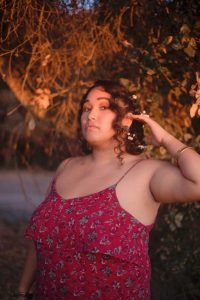
Personal Photo by Cher Martinez (@cherthismoment)
Popular
-
Los Angeles Barea on Turning Green Superheroes into a Global Movement for Youth-Led Change
-

Trisha DuVivier on Bridging the Franchisor–Franchisee Divide with Workhero and “Franulate”
-

Portraits of the Valley
-

LA’s Most Inspiring Stories
-
Cedar Boschan on Elevating Black Music Rights and Driving Urgent Conversations Around Credit, Equity, and Artist Protection
-
Robin Olive on Building an Inclusive Performing Arts Movement and Expanding Opportunities for Every Student