



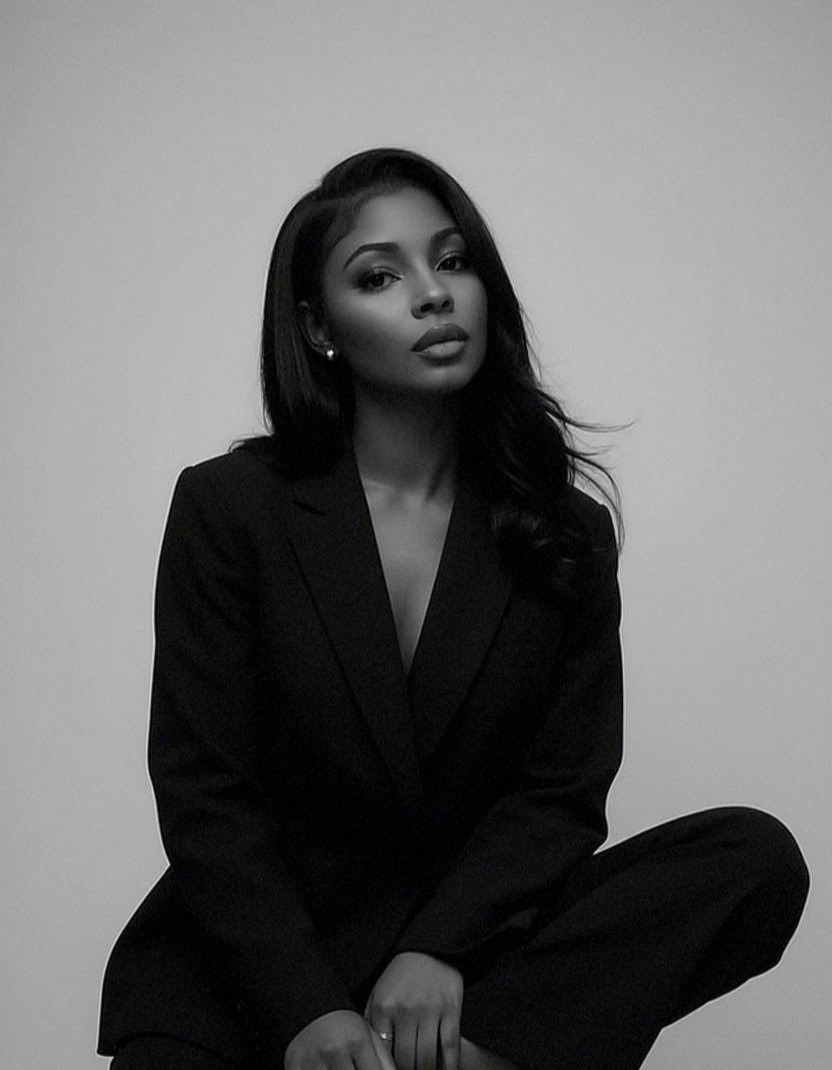
Today we’d like to introduce you to O’Mara Allen.
Hi O’Mara, thanks for joining us today. We’d love for you to start by introducing yourself.
I actually started my career in web design, which is funny considering where my path eventually led me.
At the time, I was working at a vase shop in LA’s Flower District. I was originally hired to create a website that reflected the products in the store, but I quickly became obsessed with something much bigger than the website itself. I kept looking around the shop and thinking about how the physical space didn’t match the beauty or sophistication of what people were coming there for anyway. I wanted the experience of walking into the store to feel as intentional as the branding online.
Over the next two years, I slowly redesigned the interior of the store to better reflect who we were as a destination for event décor, vessels, and beautiful objects. I didn’t realize it then, but that experience was the beginning of how I learned to think about design holistically: not just graphics or visuals, but environments, flow, emotion, and experience.
One day, a couple came into the store asking for help with their wedding. Even though I wasn’t technically a florist at the time, I was trusted to help bring something beautiful to life for them. The challenge was that I only understood design conceptually and creatively in a 2D sense. I had never physically executed florals or coordinated all the moving parts required to create an event.
That moment changed everything.
In order to make their vision happen, I had to find florists and vendors who could help execute the ideas I had in my head. That’s how I met Chila, a wholesale florist in the Flower District who became one of the most influential people in my creative journey. For an entire year, she essentially put me through floral bootcamp. She taught me the core principles of floral design, mechanics, composition, sourcing, and the discipline behind creating beauty professionally. So much of what I know about florals today started with her generosity, patience, and belief in me.
As time went on, I eventually left the vase shop and started my own company, The House of Beauty LA, where I combined my love of design and florals into a highly customized, full-service experience for clients. From the beginning, I knew I didn’t just want to create “pretty” things. I wanted to deeply understand how every piece of an event came together behind the scenes.
So I studied everything I could. I worked hands-on across different disciplines and learned directly from vendors, fabricators, installers, handicraftsmen, caterers, spatial designers and production teams. I wanted to understand not only the creative vision, but also the technical execution required to bring that vision to life. That process sharpened my taste, refined my skills, and gave me a deeper respect for the craftsmanship involved in experiential design.
One of the most rewarding parts of this journey has been the ability to create opportunities not only for myself, but for other small businesses and creatives as well. Because I understand the value of collaboration and community, I’ve always tried to bring visibility to talented vendors, artisans, fabricators, florists, and makers whose work deserves to be seen. There’s something incredibly fulfilling about being able to connect independent creatives with larger opportunities and watch their businesses grow alongside yours.
At the same time, this career has also allowed me to collaborate with some truly amazing brands and clients on projects that once felt unimaginable to me. Being trusted to help shape experiences, environments, and moments for both emerging businesses and established brands has been one of the greatest honors of my career. I think that balance of staying connected to small business roots while operating in larger creative spaces is what continues to inspire me most.
Fast forward to today, and my career has evolved far beyond florals alone. Over the last decade, my work has naturally expanded into fabrication, experiential production, and permanent spaces. I’ve had the opportunity to contribute to the creation of retail stores, pop-up shops, salons, hospitality spaces, and immersive environments.
Looking back, it feels like a full-circle moment that I always express so much gratitude for. Just 1 task changed my entire life.
What started with redesigning a small vase shop eventually evolved into designing and building environments that help brands and people tell their stories in physical space. At the core of everything I do is still the same thing that inspired me in the beginning: creating beautiful spaces and experiences for people to enjoy.
Can you talk to us a bit about the challenges and lessons you’ve learned along the way. Looking back would you say it’s been easy or smooth in retrospect?
It definitely has not been a smooth road, but I think that’s part of what shaped me both creatively and professionally.
A lot of my journey was built in real time without a traditional roadmap. I didn’t come into this industry through one specific lane or title. I started in web design, moved into florals, then events, then fabrication and experiential production. Because of that, I constantly had to prove that I belonged in rooms where people were used to more traditional backgrounds or linear career paths.
One of the biggest struggles was learning how to bridge creativity with execution. It’s one thing to have a vision or a strong design perspective, but it’s another thing entirely to understand budgets, labor, timelines, logistics, fabrication methods, vendor management, and the countless moving pieces that go into bringing an idea to life successfully. A lot of that knowledge came from working hands-on, asking questions, making mistakes, and staying curious enough to keep learning instead of pretending I already knew everything.
There were also moments where I had to navigate burnout and growing pains while building my company. When you genuinely care about the quality of your work, it can be hard to separate yourself from the pressure of wanting every detail to be perfect. In creative industries, especially experiential and event-based work, the timelines are intense and the stakes can feel very high because so much is happening live and in real time.
Another challenge was learning how to advocate for myself and my value as my work evolved into larger-scale projects. As someone who came from a small business and entrepreneurial background, I think there’s a period where you’re so focused on proving yourself that you under-recognize how much expertise you’ve actually developed along the way.
At the same time, I’ve also experienced incredible generosity from people who poured knowledge into me. Mentors, vendors, fabricators, florists, installers, and other creatives taught me lessons that you simply cannot learn from the internet alone. Those relationships became a huge part of my foundation and reminded me how important community is in this industry.
I think every challenge ultimately pushed me to become more adaptable, resourceful, and intentional about the work I create today. Looking back now, I’m grateful I didn’t take a perfectly straight path because every chapter taught me something different about design, storytelling, people, and business.
Thanks for sharing that. So, maybe next you can tell us a bit more about your work?
I’ve always been the type of person that looks at things beyond what they literally are.
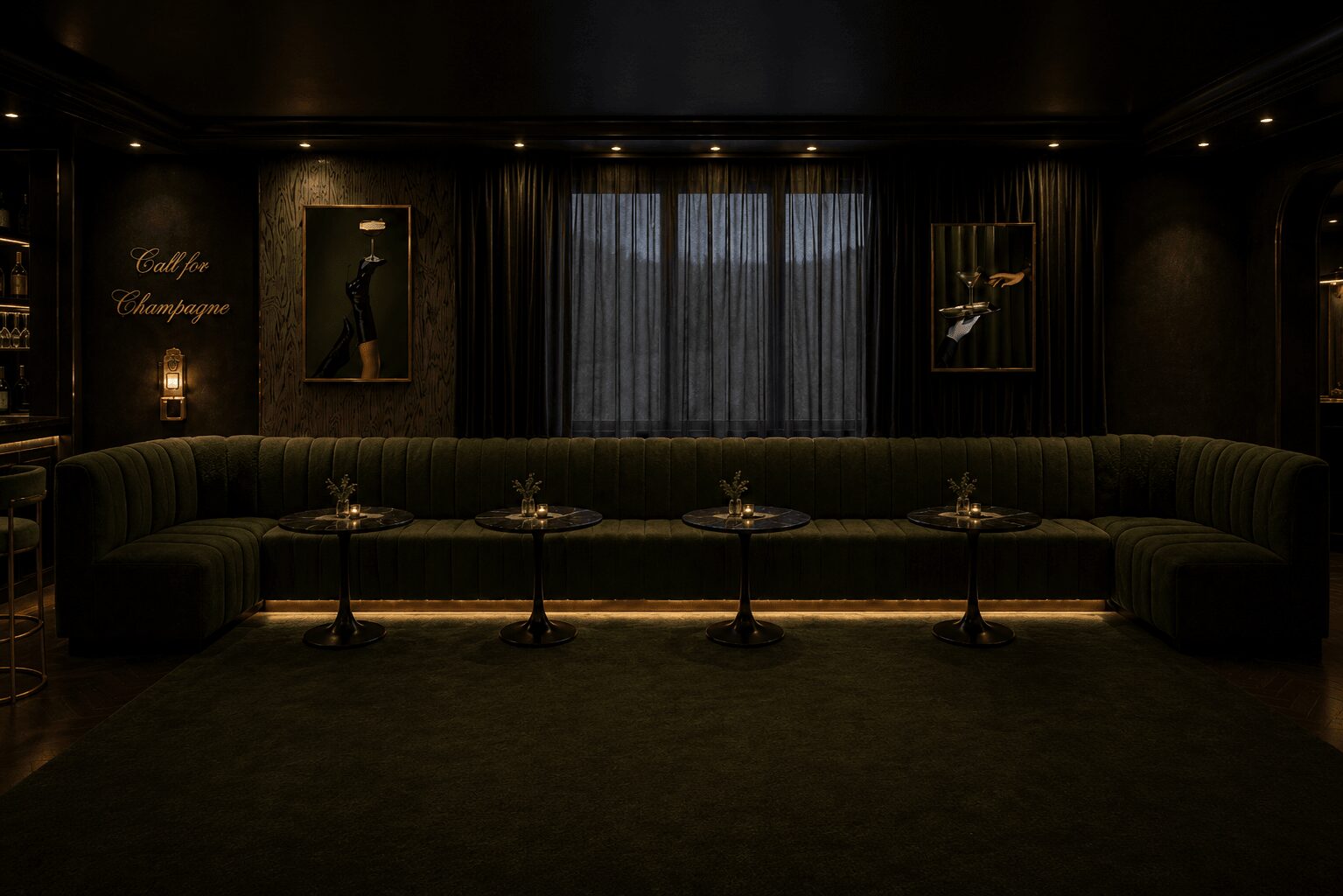
I love sculptural art, texture, and materials because they completely change how something feels without having to say anything. A piece of stone can feel cold and powerful, velvet can feel intimate, mirrored surfaces can make a room feel almost cinematic. I’m really obsessed with how materials create emotion and atmosphere.
What I enjoy most creatively is taking something super literal and breaking it down into a concept.
Like a restaurant isn’t just tables and chairs to me. I start thinking about the energy of the room, how people are supposed to feel when they walk in, what the lighting says, how the textures interact, what the space feels like at night versus during the day. Same thing with lounges, events, retail spaces, all of it.
I think that’s why I naturally gravitated toward experiential design and fabrication. I like translating ideas and feelings into something physical that people can actually walk through and experience.
Even when I first started working around florals and decor, I was less interested in the product itself and more interested in presentation, flow, and how the environment changed people’s perception of it. Over time that evolved into becoming really detail obsessed about materials, finishes, lighting, and sculptural forms.
Where do you see things going in the next 5-10 years?
I think our industry is moving toward a much more integrated way of working over the next 5–10 years.
The lines between experiential, hospitality, retail, fabrication, interiors, branding, and even content creation are already starting to overlap. Clients are no longer just asking for something that “looks cool” they want spaces that feel immersive, intentional, and emotionally connected to their audience.
I also think people are craving more tactile and human-centered experiences again. With everything becoming so digital and AI-driven, there’s a renewed appreciation for craftsmanship, materiality, florals, custom furniture, texture, lighting, and spaces that actually make people feel something in person. The physical experience matters more now because it’s competing with constant digital stimulation.
From the production side, I think there’s also going to be a major shift toward studios and agencies having more in-house capabilities. Clients want faster problem solving, tighter creative control, and teams that can bridge concept and execution without so many disconnects between design, production, and fabrication.
That’s actually a huge part of why I’m currently building a fabrication shop attached to our design agency. The goal is to create a creative hub that houses fabrication, floristry, furniture, décor, and design under one roof so ideas can move more fluidly from concept to execution. I really believe there’s value in having the creative and technical sides closer together because it creates a stronger end result and a smoother process overall.
I’m also excited about the collaborative aspect of that model. One of my favorite parts of this industry has always been being able to work alongside talented fabricators, florists, artisans, installers, and small creative businesses. I think the future belongs to people who know how to build strong creative ecosystems instead of operating in silos.
Overall, I think the industry is becoming more multidisciplinary. The people who will stand out are the ones who can think holistically not just about aesthetics, but about storytelling, execution, functionality, and how a space actually makes people feel when they walk into it.
Contact Info:
- Website: https://www.thobla.com
- LinkedIn: https://www.linkedin.com/in/omaraallen
Popular
-

Portraits of the Valley
-

LA’s Most Inspiring Stories
-
Robin Olive on Building an Inclusive Performing Arts Movement and Expanding Opportunities for Every Student
-

Que Johnson on Building Brands That Last: From Visibility to True Market Authority
-

Christina Wren Steps Into the Director’s Chair to Tell Stories That Feel Like Home
-

JordanL on ‘Breathe,’ Belief, and Building a Movement Beyond the Music


