





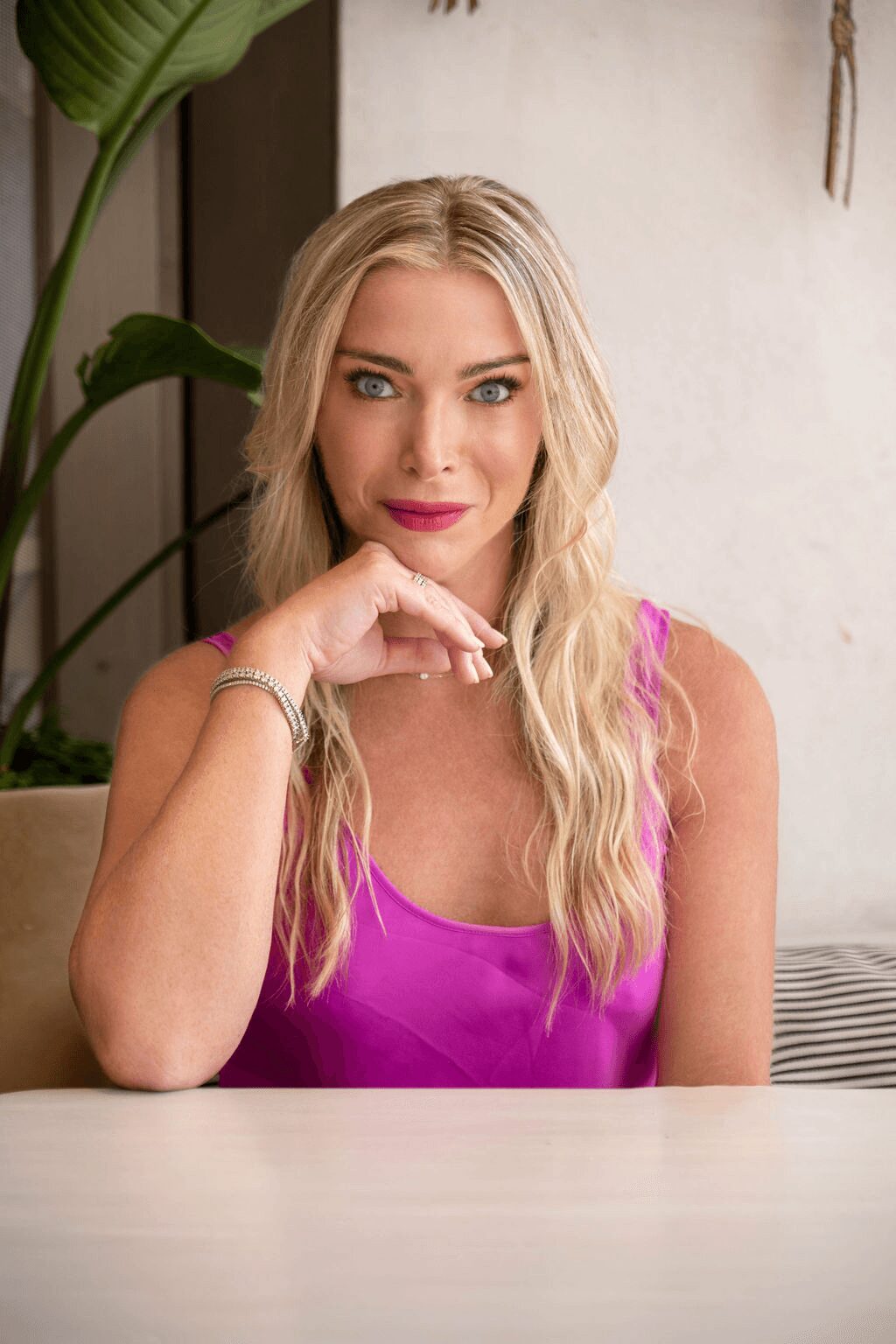
Today we’d like to introduce you to Alissa Ellis
Hi Alissa, so excited to have you on the platform. So before we get into questions about your work-life, maybe you can bring our readers up to speed on your story and how you got to where you are today?
Growing up in Indiana, in a large Irish-Catholic family, we weren’t ones to sit around and discuss our feelings–not that feelings were invalidated, they just weren’t a major topic. We tended to lean into the “suck it up and move on,” mentality. So when I experienced my first episode of major depression when I was 16, it was a first for something so serious to hit my family in terms of mental health. In me, this stirred an immediate interest in psychology, particularly in depression and anxiety, and fueled my career as clinical neuropsychologist. I was passionate about wanting to understand what made someone vulnerable to depression and anxiety, as well as why it was recurrent. This curiosity fueled my desire to get a PhD. After being on the swim team at University of Southern California, I attended graduate school at the University of Texas at Austin. In graduate school, I was obsessed with doing my own independent research, so I followed that up with a research fellowship at UCLA and eventually got an NIMH grant and joined the faculty of UCLA Medical School. I thought that my career as a research-scientist in an academic environment was set…until I started to really miss connecting with patients and being hands-on in their symptom recovery. This, among other considerations, precipitated the start of my private practice–Ellis Effect–where I specialize in treating teens and adults with depression, bipolar disorder, anxiety and ADHD using cognitive behavioral methods. Currently, I split my time as an assistant health sciences clinical professor in the department of psychiatry at UCLA and seeing patients in my private practice, Ellis Effect.
We all face challenges, but looking back would you describe it as a relatively smooth road?
I’d be jealous if anyone answered this question with, “yes…it’s been smooth!” I can’t imagine what smooth would look like, honestly. The easy answer to this question is, “No. It hasn’t been smooth at all.” In many ways though, I can’t imagine being where I am today without some of the obstacles. I can think of 4 broad/chronic, yet significant, obstacles. First, between graduate school and fellowship training, I was “in” graduate school for nearly a decade–which means almost 10 years without actually starting your career, without starting to save for retirement, without feeling like you were finished, and without a significant income. I created a number of side-hustles to stay above water, but the sheer persistence needed to continue toward the end goal was a challenge that I gladly accepted, but which came with its own difficulties. Next, like in almost any industry, wondering where your funding was coming from is a major concern in an academic medical setting, where you are often responsible for covering your own salary through grants. Even in graduate school, in a fully funded program, there was concern for summer funding, etc. As faculty at UCLA, writing grants and not knowing if they will be funded can be a source of significant stress and be a major challenge. Thirdly, a major obstacle that I experienced is trying to be an entrepreneur and business owner without taking a single business class or being taught anything in graduate school about how to actually run a business. How to be a psychologist? Yes! How to own a business? No! That is a very steep learning curve that I feel like I hit almost daily with a new challenge. Finally, I have had some significant health challenges. In addition to my history of depression, I have a congenital heart condition that I manage and has contributed to its own set of hurdles. As you can imagine, if your physical health isn’t good, you’re not good. While these broader challenges have brought on more acute challenges over the years, they have contributed to a sense of resilience that I would not trade for anything–and they have contributed to my ability to connect in a genuine and authentic way with my patients.
Alright, so let’s switch gears a bit and talk business. What should we know?
Ellis Effect is a group of psychologists and a psychiatrist who specialize in using empirically supported treatments to alleviate the symptoms of mental health disorders. Although each of the practitioners in the group have their own niches, Ellis Effect specializes in, and is known for, the treatment of mood disorders like depression and bipolar disorder, anxiety disorders and OCD, and attention disorders.
I am also the creator of the thinkSMART program, which is a behavioral intervention for adolescents and their parents to improve executive functioning skills such as time management, planning, organization, and task initiation. The program is backed by research and been shown to significantly improve executive functioning skills in teens with ADHD and without! Many parents also find the program useful for themselves, as the skills taught are not specific to just one age. Given the online nature of the program, we have had participants from across the US, all over California, and even in Australia. The program is novel in how its structured and in the research support of its efficacy. At Ellis Effect, we offer 1:1 coaching for teens and adults helping them improve these skills in an individualized setting. It’s one of our specialties, particularly in people who may also be experiencing a mood or anxiety disorder, in addition to these difficulties with attention and executive functioning.
Ellis Effect is unique in that we are a practice comprised of all doctoral level clinicians, the majority of whom have epitomized the scientist-practitioner model. This means that Ellis Effect psychologists typically have numerous peer-reviewed research publications and not only treat certain disorders, but have done the research to support their experience. This is truly special in an environment with so many options for therapy.
We’re always looking for the lessons that can be learned in any situation, including tragic ones like the Covid-19 crisis. Are there any lessons you’ve learned that you can share?
Lessons other than how nice it is to not have to commute every day? Seriously though, my primary experience of the pandemic was the importance of family, love, and shared values. Everyone has their own “pandemic story,” but mine is a story that brought me closer to my family in ways I’d never have imagined, especially being in California when they are in Indiana. In January of 2020, my aunt–who I was INCREDIBLY close to and with whom I spent a lot of time growing up–was diagnosed with a glioblastoma (GBM). This is an aggressive, terminal brain tumor, and following its removal, she was given one year to live. I’d gone to Indiana for the resection (tumor removal) in January 2020, returned the following month in February, and in the middle of March, we all went on lock-down. A lock-down was not consistent with how I imagined spending the final months of my aunt’s life. Thankfully, my family (uncle, cousins, parents, siblings) was all on the same-page about how WE were going to make the rules on how we handled the pandemic. Obviously, as carefully as can be, I continued to fly home to Indianapolis each month–and even bought a home in Indianapolis in June of 2020–to spend time with her. Given the remote nature of all work, I was able to maintain seeing my patients and doing research virtually, while also getting to spend these critical months traveling back and forth between Indiana and California and maximizing any time I could with her. While many were panicked about the “what if” of Covid and the ambiguity of the virus, there was zero ambiguity of the situation in which my family found ourselves. Time was limited and we had 2 choices: embrace the time we have together or regret not doing that. My extended family is closer than most, but looking back on my aunt’s final year and seeing us, together, being joyful, spending time together, making deeper connections, and having no regrets solidified the lesson I learned and will never regret: Make your own priorities and make them family.
Pricing:
- we do not accept insurance but can provide a superbill for submission for out of network benefits
Contact Info:
- Website: elliseffect.com; dralissaellis.com



Popular
-

Robin Olive on Building an Inclusive Performing Arts Movement and Expanding Opportunities for Every Student
-

Portraits of the Valley
-

LA’s Most Inspiring Stories
-

Que Johnson on Building Brands That Last: From Visibility to True Market Authority
-

Christina Wren Steps Into the Director’s Chair to Tell Stories That Feel Like Home
-

JordanL on ‘Breathe,’ Belief, and Building a Movement Beyond the Music


