


Today we’d like to introduce you to Alexander Blake.
Thanks for sharing your story with us Alexander. So, let’s start at the beginning, and we can move on from there.
As a classical musician of color, I have dealt with a myriad of unfortunate events around engaging with choral music of different cultures and becoming frustrated with the sense that more could be done to make this genre a more inclusive one. I wrote in a HuffPost article a while ago about a negative experience with a police officer the morning I went to teach one of my choral arrangements back in 2011 in NC.
That morning, as I left my friend’s house, there was a police car parked behind mine. As I approached my car to leave, the police officer got out of his car and asked me why I was there. Once I told him I was invited to teach at the local high school, he asked for my identification. When I told him it was in the house, he simply replied “I’ll wait.” I returned with my ID, and once he looked at it it gave me back to me without any words and just walked off.
These experiences stayed with me, and I did not think of a way to try to combat both of these things until I saw Conspirare (choir based in Texas) perform “Considering Matthew Sheppard” at the American Choral Director’s Association conference in 2016. That concert and presentation showed me how impactful it could be to combine storytelling and music together to broaden our understanding and encourage empathy among others.
Shortly after, I was asked what I wanted to do once I graduated. I mentioned that I might want to try to create a professional choir. After being asked about what would make my ensemble different than the others around, I realized that I had a chance to create a diverse ensemble that I had been searching for. In June 2016, I sent an email to some singers (with help from our eventual Board Chair, Dr. Zanaida Robles) and told them that I did not know what I was doing, but I wanted to start a group that was diverse and would meet to sing about unity and peace.
I was very nervous about my first experience working with professional singers, but that rehearsal was so inspiring. After the rehearsal, about a week later I was invited to apply for a spot in a musical series at a church. That was the beginning of Tonality. After that first season, more attention in the news was placed on police brutality. That combined with the mass shooting in Charleston at the church gave me the idea to use our voices and diverse perspectives within the group to do more than just sing about unity. We had an opportunity to sing about music that really spoke to issues of social justice and awareness.
We decided to perform a concert on gun violence in October 2017 as our first social justice concert, calling it “Put Your Guns Down,” We decided that we didn’t just want to perform music, but we wanted people to talk in the concert and share stories. Also, we wanted the concerts to provide practical ways that our community members and audience could connect, so we brought in organizations like the Brady Campaign to provide information about combatting gun violence. Unfortunately, another shooting happened six days before our first concert in Las Vegas.
One of our singers actually had a friend that died in that event, and he spoke about his friend in our concert. The stories, the music that supports those, and the organizations that came to offer solutions was such an impactful experience and has become the basis of our concerts. We have since used that model to present concerts on homelessness and immigration, women’s rights, democracy, and mental illness.
Great, so let’s dig a little deeper into the story – has it been an easy path overall and if not, what were the challenges you’ve had to overcome?
One of the biggest challenges of building a non-profit performing arts organization from the ground up is of course, fundraising, and having the resources to expand. We have been very fortunate to find some partners who helped support us as we began. Now the task is to make sure that we can sustain our concerts, support our artists and increase ways we engage with these issues of social justice and create a larger community. Learning about Board of Directors and grant-writing have been time-intensive as I was completing my doctoral studies, but wearing two hats as an entrepreneur and a performer brought many unexpected rewarding experiences too.
Another challenge occurred during our first concert when we were presented our first concert. During the concert, I talked about instances of police brutality.
One of the audience members wrote a note and mentioned their unease at our use of the word “murder” when talking about this particular issue. Many of the other challenges we have faced are just organizational growth challenges. Making sure that we have the programs ordered on time to worry about the ticketing processes when the performers are also the people responsible becomes a challenge that we have smoothed out as we have progressed in our organizational structure.
Really, we have been very fortunate that so many different people and organizations have supported us from the beginning. From rehearsal/performance space to the gaining of our nonprofit status to making of music videos, we have been able to progress quickly because of the assistance and guidance from so many in our community.
Alright – so let’s talk business. Tell us about Tonality – what should we know?
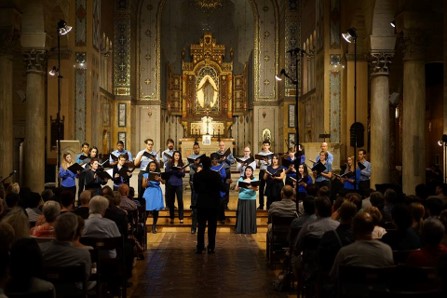
Tonality formed in June of 2016, first forming as a professional choir that presented diversity within the members of the ensemble and the genres and composers presented in our concerts. As classical choral music has historically been slower in progression of diversity in terms of racial and ethnic identity, Tonality served as an example of a professional choir that intentionally set diversity as a key component in the makeup of the ensemble.
After the first year, Tonailty also broadened the focus to present concerts on social justice themes, such as gun violence, women’s rights, homelessness and immigration, democracy, and mental illness. We have become known for our unique choral experience where we infuse personal stories and involvement with organizations related to each concert topic into the musical experience.
Our concerts have been described as experiences and glimpses of connected humanity and have helped to further connect and activate our community in practical ways to improve the lives of people around us. I am proud that people consider our concerts as healing (though difficult) experiences that allow those in attendance to emotionally involve themselves in empathy and love for their neighbors through our concerts.
Tonality definitely speaks to issues of social justice in a more direct way than most choral organizations. The stories we involve within our concerts and the music that is specifically tailored to the stories make for a very unique concert experience. Also, we are particularly proud of the range of genres that we feel we authentically present within our concerts. We sing music with Hindustani singers next to hymns.
For example, our last concert had works from Carlo Gesualdo on the same concert that we sing pop song arrangements from Jessie J. Because of the diversity within the group, the genres accessible span a great deal and therefore we have a unique circumstance of bringing in diverse audiences (racial, range of age, etc.) who can appreciate hearing many types of music in each concert.
Is there a characteristic or quality that you feel is essential to success?
I think the quality that is most important to our success is our intentionality.
From the different attire to the stories to the inclusive representation of composers, each aspect of our concert is thought out and discussed to make sure that we approach the difficult topics with care and forethought. It is not easy to address issues like sexual assault and suicide within musical settings.
However, with many conversations and consultations with different organizations, we are able to produce events that can tackle triggering subjects with care so that people feel safe to come to our events and be vulnerable.
Pricing:
- General Admission: $25.00
- Student Admission (with ID): $10.00
Contact Info:
- Address: 325 N Larchmont Blvd Suite 306 Los Angeles, CA 90004
- Website: www.ourtonality.org
- Phone: 910.358.7130
- Email: [email protected]
- Instagram: https://www.instagram.com/ourtonality/
- Facebook: https://www.facebook.com/ourTonality/
- Twitter: https://twitter.com/ourtonality


 Image Credit:
Baxter Stapleton, Graphic by EVOLCreative
Getting in touch: VoyageLA is built on recommendations from the community; it’s how we uncover hidden gems, so if you know someone who deserves recognition please let us know here.
Popular
-

Maagic Collins on Building a Fearless Publishing Platform for Truth, Advocacy, and Underrepresented Voices
-
Los Angeles Barea on Turning Green Superheroes into a Global Movement for Youth-Led Change
-

Trisha DuVivier on Bridging the Franchisor–Franchisee Divide with Workhero and “Franulate”
-

Portraits of the Valley
-

LA’s Most Inspiring Stories
-
Cedar Boschan on Elevating Black Music Rights and Driving Urgent Conversations Around Credit, Equity, and Artist Protection