




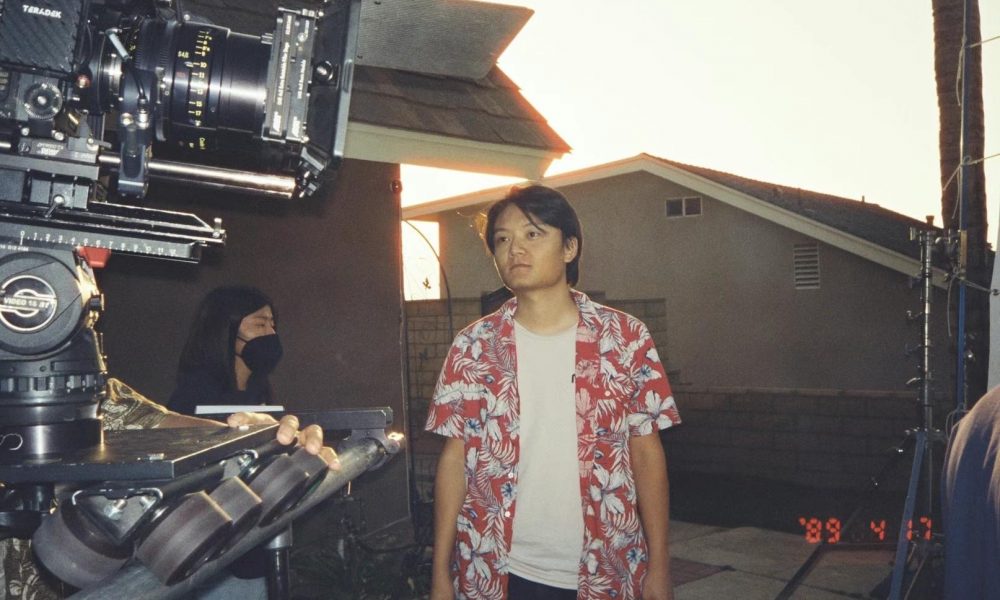
Today we’d like to introduce you to Zhen (Donny) Li.
Hi Zhen (Donny), thanks for joining us today. We’d love for you to start by introducing yourself.
I was born in Sichuan, China, and from a young age, I was more interested in arts and literature compared to science. When I was in high school, I started doing radio programs at school, preparing topics that were currently popular, and co-hosting talk shows. One day, my high school English teacher listened to my program and suggested that I pursue a career in television. From then on, I began to consider a future in media-related work and gradually realized my passion for storytelling. Becoming a film director and creating my own scripts was my initial dream. While studying film in China, I was influenced by many European films and film movements. Afterward, I enrolled in the University of California, Santa Barbara (UCSB), where I continued to study film and broaden my perspectives. Majoring in film study has provided me with a strong foundation for my future film creations. Combining the theoretical knowledge gained from studying film with practical experience in film production has been a unique and valuable learning experience for me. I believe that both aspects of learning complement each other in important ways. Currently, I am pursuing a Master’s degree in cinematography at Chapman Dodge College. I wish I could let my eyes be the conduit of my heart and deliver the most authentic human emotions through the image.
Can you talk to us a bit about the challenges and lessons you’ve learned along the way. Looking back would you say it’s been easy or smooth in retrospect?
The career development of a cinematographer is not always predictable, the fear of an unknown future has caused me to experience moments of panic and despair. However, I have learned that instead of letting fear paralyze me, I must use it as a motivator to work harder and become better prepared for any challenges that may come my way. For me, cinematography is not just a profession but a way to express myself and tell stories that can connect with others on a deeper level. And that is why I will continue to pursue this path, no matter where it may lead me. After all the years of studies, I learned how much I love it, and I wouldn’t choose any other career in my life rather than being a filmmaker. I remember telling my parents that I never wanted to regret my decision to become a filmmaker, even if it meant facing financial struggles in the early stages of my career. Of course, the road to success in the film industry is often fraught with obstacles and challenges. There may be times when I struggle to find work or make a living, and the pressure to succeed may feel overwhelming. However, I am prepared to weather these storms and face these challenges head-on, knowing that each experience will make me stronger and more resilient.
Can you tell our readers more about what you do and what you think sets you apart from others?
When I first started as a cinematographer, I worked on a documentary about human trafficking. The experience of filming a documentary was different from narrative live-action films. In a documentary, the reactions of the interviewees are absolutely genuine. During the shooting process, we often followed the interviewees as they walked around their neighborhoods and recounted their experiences. Through the lens, I could feel that everything was happening in a very real way, and this authenticity was conveyed directly to my heart through the monitor. Many of the precious moments captured could only happen once. This experience heightened my sensitivity toward capturing the right moment, and making quick decisions, even possibly being prepared before it could happen. This unique experience has provided me with a lot of help in narrative filmmaking, confidence in camera operation, and the ability to take advantage of natural light. Most importantly, it allowed me to approach narrative filmmaking with a strong emotional connection to characters.
What matters most to you?
It’s important to find my own voice and discover a visual expression that is unique to my culture. As a cinematographer, the images we capture are subjective, reflecting our unique perspectives on the world. I want to capture the most authentic emotions that can be communicated through the image. At the same time, I also hope to find my own style of image that creates a unique and personal voice that resonates with the audience. The entire film industry is becoming more international and open. I hope this openness and tolerance will allow for more diverse cultures to enter the mainstream film market.
Contact Info:
- Instagram: https://www.instagram.com/donnyli.film/


 Image Credits
Yunfan Xu Rutvij Reddy Chawin Terk
Popular
-

Robin Olive on Building an Inclusive Performing Arts Movement and Expanding Opportunities for Every Student
-

Portraits of the Valley
-

LA’s Most Inspiring Stories
-

Que Johnson on Building Brands That Last: From Visibility to True Market Authority
-

Christina Wren Steps Into the Director’s Chair to Tell Stories That Feel Like Home
-

JordanL on ‘Breathe,’ Belief, and Building a Movement Beyond the Music


