




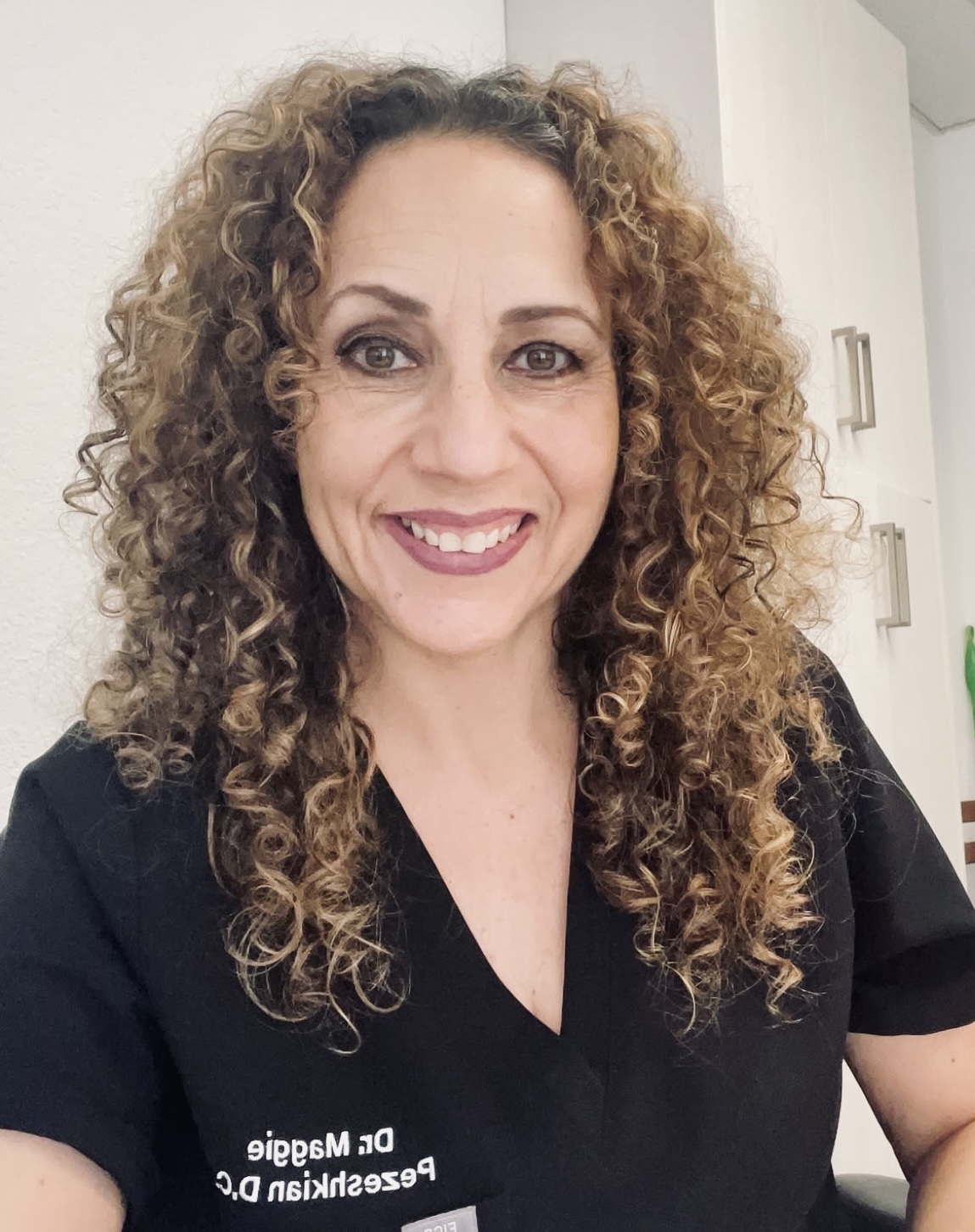
We recently had the chance to connect with Dr. Maggie Pezeshkian D.C., R.D.H., C.K.T.P. and have shared our conversation below.
Dr. Maggie , we’re thrilled to have you with us today. Before we jump into your intro and the heart of the interview, let’s start with a bit of an ice breaker: Are you walking a path—or wandering?
Some days, it feels like wandering—because I chose a path that isn’t well traveled in my specialty. There’s very little precedent, few guardrails, and no clear roadmap to follow. That can be nerve-racking. When you’re trying something new, especially in a field that values tradition and predictability, doubt becomes part of the process.
But I’m not moving aimlessly. I’m walking forward with intention, even when the direction isn’t obvious yet. Innovation doesn’t feel neat while you’re in it; it feels uncomfortable, uncertain, and occasionally lonely. I’ve learned that if it feels safe and familiar, it probably means I’m staying within someone else’s boundaries rather than expanding my own.
So if it looks like wandering from the outside, I’m okay with that. From where I stand, it’s a conscious decision to build something that doesn’t exist yet—and to trust that clarity comes not before the first step, but because of it.
Can you briefly introduce yourself and share what makes you or your brand unique?
I’m a Doctor of Chiropractic with a background in dental hygiene. I completed my dental hygiene training at the University of Southern California and earned my Doctor of Chiropractic degree from the Cleveland Chiropractic College Los Angeles. My clinical focus is on spinal and musculoskeletal biomechanics, posture, spinal curve integrity, and the jaw–neck–body connection.
I’m the founder of Jawmatrix, the only center in California utilizing Dynamic Digital Radiography (DDR) for real-time motion X-ray assessment. Unlike conventional static imaging, DDR allows evaluation of joints through movement, making it possible to assess functional joint behavior across the spine and extremities—not just the cervical spine or TMJ—when clinically indicated. This provides objective insight into instability, abnormal motion patterns, and biomechanical dysfunction that static imaging may not capture.
My approach is grounded in research-based methods of assessment and treatment aimed at correcting spinal and musculoskeletal dysfunction, improving posture, and restoring spinal curves where indicated. DDR is not used routinely, but selectively—when it adds diagnostic value and directly informs clinical decision-making. Each patient undergoes a comprehensive evaluation that integrates clinical examination, biomechanical analysis, and imaging findings to develop a precise, individualized treatment plan.
Patient care in my practice emphasizes transparency and accountability. Patients are educated on the why behind their symptoms, the objective findings contributing to them, and the rationale for each phase of care. This data-driven, movement-focused model allows treatment to move beyond symptom management toward measurable, outcome-oriented correction.
In addition to clinical practice, I’m actively involved in professional education and multidisciplinary collaboration, with a focus on advancing standards for how spinal, postural, and TMJ-related conditions are evaluated and managed.
Amazing, so let’s take a moment to go back in time. Who saw you clearly before you could see yourself?
One of my early mentors recognized it first—not in terms of a specific title or career path, but in how my strengths and education could be combined into a fulfilling and sustainable way of practicing. They saw that my curiosity, precision, and interdisciplinary background didn’t need to be narrowed to fit a traditional model.
Later, my husband reinforced that vision at moments when doubt naturally crept in. He consistently reminded me that leaning into what made my approach different was not a liability, but an advantage. A few childhood friends echoed the same sentiment.
Together, they helped me see that doing what I do and success didn’t require becoming something else—it required fully owning what I was already trained to do well. Their clarity gave me the confidence to build a practice around my strengths rather than suppress them to fit an existing mold.
Was there ever a time you almost gave up?
No—giving up was never an option for me. There were quiet moments of doubt, but my faith in God, belief in myself, and the constant support of my family always pushed me forward. Persistence has shaped every step of my journey, and when things felt difficult, it led me to adapt and continue—not quit.
Sure, so let’s go deeper into your values and how you think. Is the public version of you the real you?
Absolutely. What you see is what you get—I’m not great at being anything else. If anything, I can be too honest at times, which can be a little tricky, but I’ve learned to see that as a strength rather than a flaw. Authenticity matters to me, and I don’t believe in showing up as a version of myself that isn’t real.
Thank you so much for all of your openness so far. Maybe we can close with a future oriented question. Are you doing what you were born to do—or what you were told to do?
I believe I’m doing what I was born to do. I still feel there’s more for me to give and more to build, and I’m open to where that journey leads. Rather than following a script, I’ve learned to trust the process and allow my work to evolve as it’s meant to
Contact Info:
- Website: https://www.digitaldynamicxray.com
- Instagram: https://www.instagram.com/jawmatrix/
- Youtube: https://www.youtube.com/@Jawmatrix
- Other: https://www.jawmatrix.com/
Image Credits
I own the images.
Popular
-

Portraits of the Valley
-

LA’s Most Inspiring Stories
-

Rick Norris Learned That Building a Successful Business Means Building a Life You Actually Want to Live
-

How Olivia Rush Turned Survival Into a Mission to Help Others Keep Going
-
How Bibi Goldstein Is Helping Entrepreneurs Reclaim Their Time by Embracing the Power of Delegation
-

Victoria Hasson is Redefining Voice Coaching Through Community and Collaboration


