




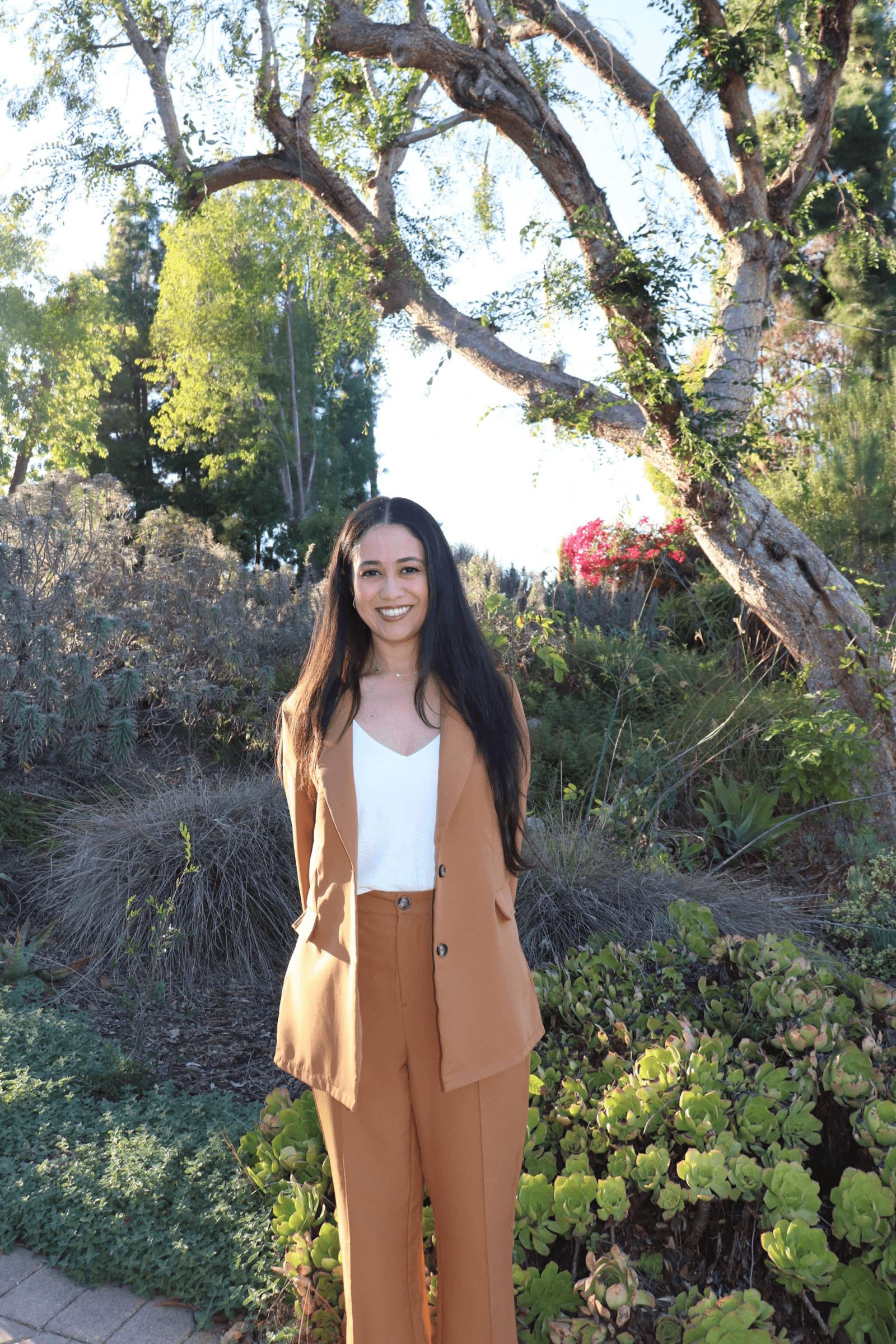
Today we’d like to introduce you to Monica Nevarez.
Hi Monica, we’d love for you to start by introducing yourself.
I’ve always been fascinated by how we function as humans, and by all the systems that shape us, from our families to our communities to the wider culture we live in. That curiosity led me to study sociology at Northern Arizona University, with a minor in criminology.
After college, I started experiencing pretty severe anxiety, and I really needed support. I didn’t think therapy was for someone like me, whatever that meant, and I found myself sitting in a therapy office with no idea what to expect. The tools I walked away with changed my life. That experience is what brought me into this work.
I began my career in community mental health in 2017 and earned my Master of Social Work from the University of Southern California in 2018. In 2021, I found my way into the eating disorder field, where I’ve worked across the full continuum of care: residential, partial hospitalization, intensive outpatient, and outpatient.
Watching someone get their life back is incredible. Clients can’t always see their progress while they’re in the middle of it. It’s a bit like watching a plant grow — if you stared at it every day, you wouldn’t notice much change, but compare a photo from day one to four months later and you’re looking at something incredibly different. When we’re so in it, we can’t always see the strides we’ve made, just the little adjustments along the way. Then we compare how a certain scenario would have felt at the start of our work versus now, and clients are often blown away.
That work led me to found Calibration Psychotherapy, my own telehealth practice for adults in California.
Would you say it’s been a smooth road, and if not what are some of the biggest challenges you’ve faced along the way?
It’s certainly been a winding road. Like any journey, there have been bumpy stretches and unexpected curves, but that’s what makes it so meaningful. This work can be very challenging, but it’s also incredibly rewarding.
One of my biggest struggles has been imposter syndrome. Alongside that, I work hard to make sure I’m always operating from a place of humility, because each person I work with is the expert in their own life. In this field, we often see similar struggles, and it can be tempting to approach them the same way. I try to stay focused on the individual in front of me, because even when two people’s struggles look alike on the surface, the story underneath is always their own.
Working within insurance-based systems also shaped me. Insurance is a beautiful privilege that makes care accessible to so many people, but at times it made the work feel pressured and rushed. Now, in my own practice, I’m facing a new challenge, and it’s a wonderful one to have: reminding myself that I can slow down and be fully present with each client. Healing isn’t a race against the clock, and I get to honor that.
And of course, like any business, building a practice takes a great deal of time, work, and dedication. Stepping out of structured treatment teams and building something of my own, from the clinical work to the business side, has been its own learning curve. It’s been a lot, but I’m so excited to finally enjoy what I’ve built, and even more excited to share it.
We’ve been impressed with Calibration Psychotherapy, but for folks who might not be as familiar, what can you share with them about what you do and what sets you apart from others?
Calibration Psychotherapy is my private practice. I work exclusively with individual adults via telehealth throughout California. I specialize in eating disorders and food anxiety, working with adults of all genders, including men, who are too often assumed not to struggle with this.
It’s not just the diagnoses most people recognize, but the quieter struggles that still take up enormous space. That includes restrictive eating, binge eating, bulimia, ARFID, orthorexia, and compulsive exercise, as well as the anxiety around food, rigid rules about eating, and guilt or self-punishment after meals that so many people live with quietly. A lot of people living with this think it isn’t enough to count as an eating disorder — that they’re just a little anxious around food, or that it’s not that big of a deal. That quiet anxiety still deserves support.
I also work with general anxiety, depression, trauma, and attachment and relational concerns, because these often live alongside disordered eating and deserve equal attention.
What sets my work apart starts with how I see people. My training in sociology gave me a lasting lens: I see people within the systems that shape them, from family to community to culture, and I carry that perspective into every clinical relationship. My clinical background does too. Before private practice, I worked across the full continuum of eating disorder care — outpatient, intensive outpatient, partial hospitalization, and residential treatment. That breadth matters in outpatient work, because I understand what higher levels of care look like, when they’re needed, and how to help someone get there.
The people who tend to find their way here are capable, high-functioning people — often the ones everyone else leans on — whose lives look like they work, and mostly do. But something feels off: anxiety around food, a low hum of worry that won’t quiet on its own, a pattern you can’t quite shift on your own. You don’t have to be in crisis to deserve support here. If something feels off, even if it’s hard to name, that’s enough of a reason to begin.
I hope to be a safety net for those who may not realize they’re struggling. Eating disorders can be insidious, and many people don’t believe they’re “sick enough” to need help. I want to reach people before they fall too deep — and if someone ever needs more support than outpatient therapy can offer, I will help them find and connect with a higher level of care.
My approach is eclectic and client-centered, tailored to your history, your pace, and your life. I draw from multiple evidence-based frameworks rather than applying a one-size-fits-all method. I’m not here to hand you a roadmap — I’m here to walk alongside you as we figure out together what fits, what no longer serves you, and how to move toward the life you actually want.
That’s really what the name Calibration Psychotherapy means to me, and what I’m most proud of brand-wise. It’s built on a belief at the heart of my work: that nothing is wrong with you, and that sometimes our perceptions simply need recalibrating. To become aware of the patterns that once kept you safe and now keep you stuck, and to make small, sustainable adjustments that change how you move through everything else. Small shifts build momentum, and momentum creates lasting change.
We usually begin with a complimentary 15-minute consultation call, to explore what’s bringing you in, answer any questions, and see whether we’re a good fit for working together. From there, we move into intake and ongoing work — and that’s where the collaboration really starts. You tell me what you want your life to look like, what your goals are, and what you’d like to get out of investing your very valuable resources: your time, and your money. As your clinician and support throughout this journey, I’ll bring evidence-based tools to help you build the life you want, at your pace.
Let’s talk about our city – what do you love? What do you not love?
I’m fairly new to the South Bay, and I have to say, I really love it. I grew up in the Valley and went to college in Flagstaff, Arizona, so I’ve known both sides: the hustle and bustle of the city, and the quiet of a smaller town. I always loved coming home to the Valley’s energy on breaks from school, but as an adult, I’ve found I’m drawn to places with a more secluded feel.
The South Bay gives me the best of both worlds. It feels like its own little pocket, tucked away from everything, yet I can still get to just about anywhere in the city when I want to. Almost everything I need is within a few miles of home, which makes life feel calm and easy.
If I had to name something I like least, it’s probably that the freeways are a bit farther away. I know that’s a common complaint, but with my lifestyle it rarely gets in the way. Honestly, it’s part of what keeps the area feeling so peaceful. I feel lucky and grateful to call the South Bay home.
Pricing:
- $250 hr
Contact Info:
- Website: https://calibrationpsychotherapy.com/
- Instagram: https://www.instagram.com/calibration_psychotherapy/
- Other: https://www.psychologytoday.com/us/therapists/monica-nevarez-palos-verdes-peninsula-ca/1868725


Popular
-

Portraits of the Valley
-

LA’s Most Inspiring Stories
-

Greg Hex Is Turning the Everyday Kitchen Knife Into a Modern Design Object
-

Rick Norris Learned That Building a Successful Business Means Building a Life You Actually Want to Live
-

How Olivia Rush Turned Survival Into a Mission to Help Others Keep Going
-

How Bibi Goldstein Is Helping Entrepreneurs Reclaim Their Time by Embracing the Power of Delegation


