




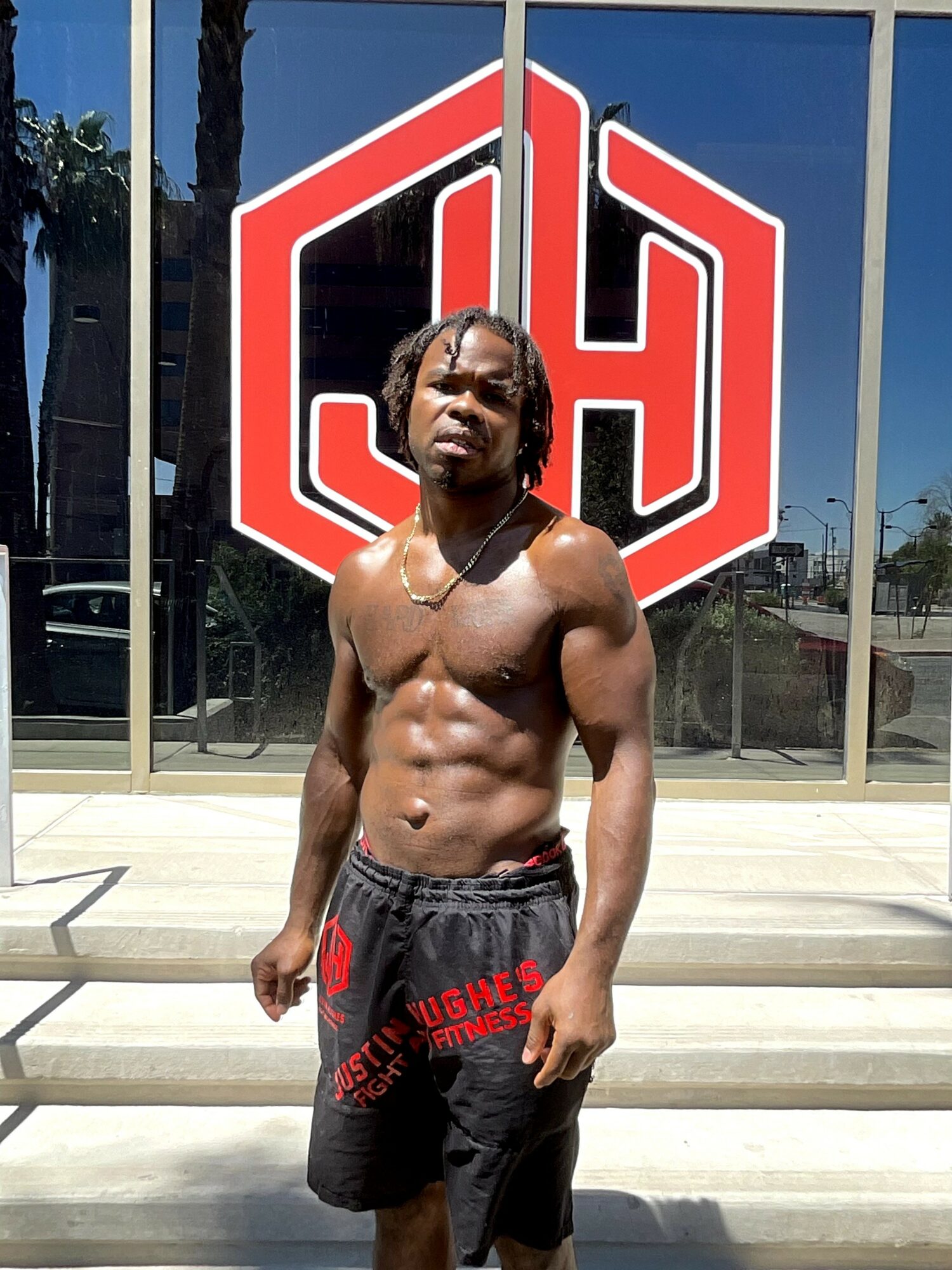
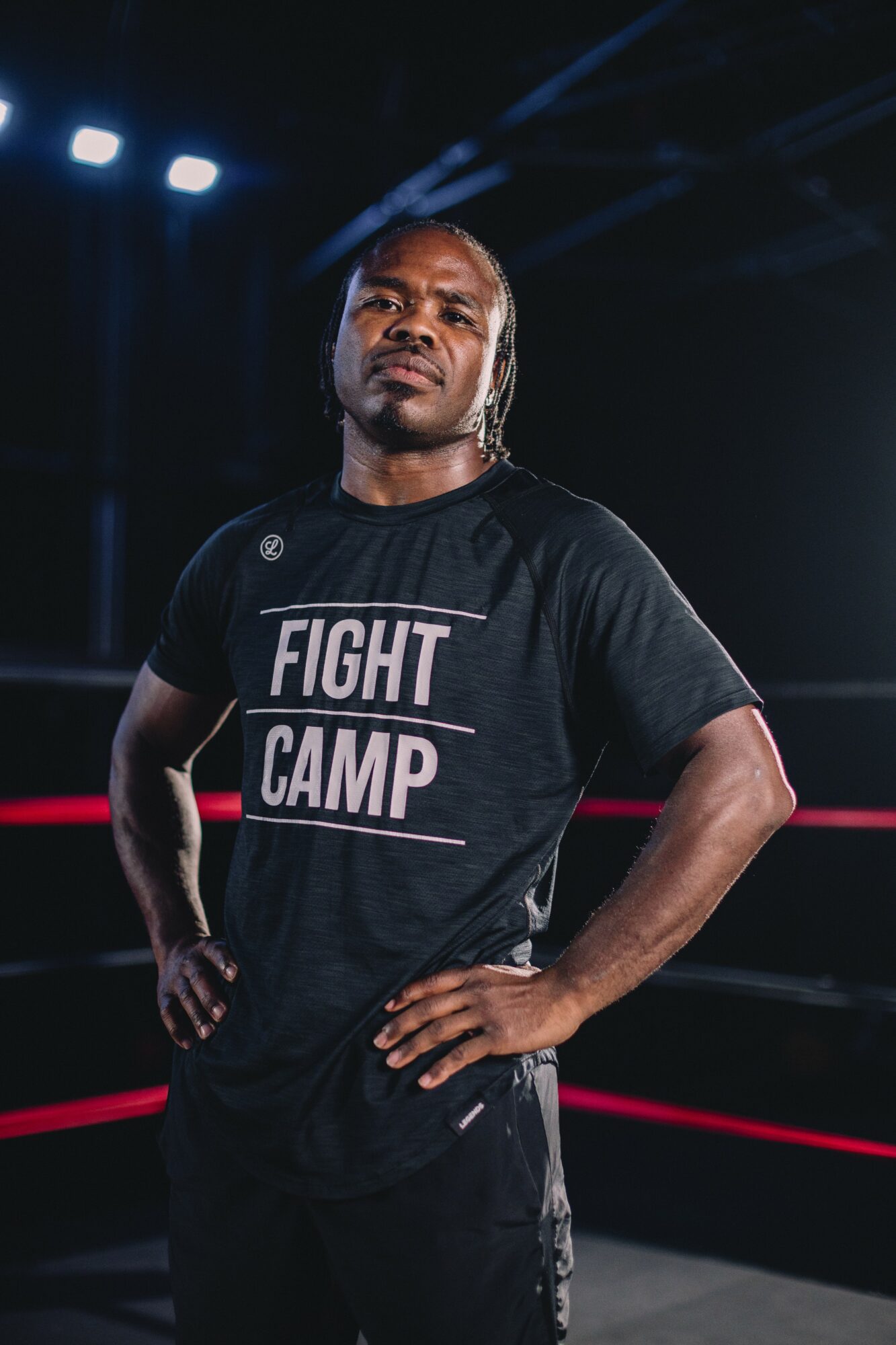
Today we’d like to introduce you to Justin Hughes.
Hi Justin, so excited to have you with us today. What can you tell us about your story?
I was born and raised on the East Side of Chicago, and a lot of the skills I use in business, fighting and life today came from learning how to survive there.
Chicago can be extremely territorial, and where I grew up, some of the conflicts you encountered weren’t necessarily conflicts you created. There were neighborhood rivalries and generational street politics that existed long before you were old enough to understand them. In some ways, you could feel like you were born into somebody else’s war.
Growing up in that environment, sometimes you weren’t choosing between a clearly good option and a bad one. You were choosing between two difficult options and trying to determine which one gave you the best chance of making it through the situation safely. In that sense, you almost felt born a soldier. Survival wasn’t something somebody sat you down and taught you. The environment taught you.
And for me, that wasn’t an occasional experience. It was part of everyday life.
There were a lot of fights. There was a lot of tension. Moving through the city required a level of awareness that became almost instinctive. I traveled between neighborhoods to attend better schools, so every day I had to understand the lay of the land: what was happening, which way I should travel, who I could interact with, where tension might be developing and when yesterday’s safe route might not be today’s safe route.
You learned to make audibles.
Looking back, some of those decisions weren’t that different from decisions made in competition or business today. You assess the environment with the information you have, anticipate what might happen next and make the best move available to you. The consequences back then were simply much more serious.
At the same time, I was a very very strong student. From elementary school through middle school especially, I was the kid bringing home straight A’s. My family knew me as smart, creative and ambitious. So there was always this contrast in my life: I could excel academically and still have to become extremely tough to function in the environment around me.
Chicago taught me diplomacy, but it also taught me aggression.
It taught me when to talk, when to listen, when to move, when to stand my ground and, quite literally, how to fight. Fighting wasn’t an abstract concept where I grew up. There were real confrontations, and you had to learn how to handle yourself. That environment developed a toughness and an aggressive side of me that would eventually become part of my professional fighting style.
I didn’t understand it at the time, but those experiences were teaching me emotional intelligence, adaptability, composure, negotiation, aggression, toughness and survival.
Coming out of my teens, I was also involved in street life myself and had some trouble with the law. At the same time, I was trying to build a completely different future. I went through different schools and colleges before eventually studying interior architecture and design.
Those different lives existed simultaneously for a long time.
There were periods where I was involved in the streets at night while trying to pay for books, architectural models, materials and all the expenses that came with design school. I was still navigating neighborhood conflicts, fights and situations where decisions sometimes had to be made simply for survival.
Then I would have to walk into school.
One night could involve street life, confrontation or figuring out how to safely navigate something happening in my neighborhood. The next morning I might be presenting a design project, building an architectural model or sitting through a studio critique.
Somehow, I learned to move between those worlds.
Martial arts eventually gave me another world to move into—and, more importantly, somewhere constructive to put the aggression I had developed.
Instead of all of that energy having to come out in the streets, I could go to the gym. I could train. I could compete. I could turn aggression into technique, discipline and preparation.
By my senior year of design school, I was balancing all of it: school, street life, survival and training for fights. I had my first competitive fight during that period. At one point I came close to failing design school, but I turned things around, finished strong and graduated. I also had opportunities to intern and learn from instructors who were accomplished designers and architects running their own firms.
Then I graduated into the Great Recession.
Entry-level opportunities in design were extremely limited, and I had to adapt again. I found part-time work as a draftsman for a structural engineering company, producing technical drawings and blueprints. It gave me valuable professional experience, but it wasn’t enough to build the design career or income I was looking for.
And the truth is, I hadn’t magically escaped the environment I grew up in because I earned a degree.
I was still living around the same street life and still participating in parts of it to make ends meet while actively searching for a better way forward.
At the same time, another part of my future was developing almost accidentally.
I’m extremely family-oriented, and I started training my younger cousins because I wanted them to know how to fight and protect themselves. Other people eventually started training with me. What began as me passing survival skills down to my family slowly became personal training and coaching.
That eventually led me to UFC Gym.
I worked my way up to becoming a head trainer and later helped lead and develop other trainers. At the same time, I continued fighting and eventually turned professional in Chicago.
Fighting is actually what brought me to Las Vegas.
I came out for a trip and taught a class while I was here just to meet people and have some fun. The owner of the gym saw me teach and ended up offering me a fitness management position helping train and develop coaches in Las Vegas.
I took the opportunity and moved to Vegas in 2016.
From there, everything started connecting.
I worked as a head trainer across multiple gyms, started building my own fitness brand, continued my professional fight career and eventually found my way back into interior design as well.
Since then, I’ve essentially been living in three worlds at once: fighting, wellness and design.
What’s interesting is that living in multiple worlds wasn’t new for me.
I had been learning how to do that since I was a kid.
Back then, I was navigating school, street life, different neighborhoods, design and eventually fighting—environments with completely different people, expectations, languages and rules. I had to learn how to walk into each one, understand the room and operate effectively without losing who I was.
Today, I’m still moving between very different worlds. I can be training for a professional fight, working with a wellness client, walking a design project, filming content or sitting in a business meeting. The difference is that I don’t have to look over my shoulder anymore.
The environment changed. The skill stayed with me.
Entrepreneurship brought another round of lessons. I opened my first brick-and-mortar location in 2022. There were successes, but also difficult partnerships, operational challenges and plenty of moments where I had to rebuild and adjust. I eventually moved into another location and continued growing the business through private training, events, partnerships and online coaching.
Earlier this year, another major chapter opened when I joined FightCamp as an on-screen trainer. That opportunity expanded my work into Los Angeles, where I now spend significant time filming, working with clients and building relationships while continuing to operate between L.A. and Las Vegas. It has also helped accelerate the digital side of what I’m building and shown me how much further this work can travel beyond a physical gym.
Looking back, the interesting part is that the same skills I learned trying to survive Chicago are the same skills I now teach and use professionally.
How do you stay calm when the environment around you is chaotic?
How do you read a room?
How do you know when to be diplomatic and when to be aggressive?
How do you adjust when the original plan disappears?
How do you keep moving when things get uncomfortable?
How do you protect yourself without allowing survival mode to control your entire life?
Those lessons became fighting lessons, then coaching lessons, then leadership and business lessons.
That evolution is a big part of what Fighter’s Edge represents today. I’ve taken the tools that once helped me survive and turned them into systems that help other people perform, lead, rebuild and navigate pressure more effectively.
I’m still actively competing as a professional fighter, working in interior design, coaching clients in multiple cities and continuing to grow Fighter’s Edge both in person and online.
In a strange way, it all connects.
Design taught me how to shape environments. Fighting taught me how to operate inside difficult environments. And Chicago taught me how to survive them in the first place.
Can you talk to us a bit about the challenges and lessons you’ve learned along the way. Looking back would you say it’s been easy or smooth in retrospect?
Definitely not.
One of the biggest lessons of my life has been that changing your circumstances doesn’t automatically mean you’ve escaped the environment that shaped them.
Even after graduating from college, I was still living around many of the same pressures and influences I grew up with. I graduated during the Great Recession, when opportunities for young designers were limited. I had a degree and ambition, but I was still trying to figure out how to make ends meet, working part-time as a draftsman, training people and trying to find a sustainable path forward.
That transition taught me something I’ve carried with me ever since: sometimes growth happens before your environment catches up with you. You can know where you’re trying to go and still have one foot in where you’re coming from.
Professional fighting brought its own challenges. Combat sports are unforgiving. There are injuries, losses, financial uncertainty, difficult training camps and long periods where you’re putting tremendous amounts of work into something without any guarantee of what comes next. I’ve had to learn how to lose, make adjustments, rebuild confidence and come back better.
Entrepreneurship has probably tested those same skills in even more ways.
I opened my first brick-and-mortar location in 2022, which was a huge milestone for me. But having your own location doesn’t mean you’ve made it. I dealt with partnership challenges, operational mistakes, financial pressure and situations where the vision I had for the business didn’t always match the reality of running it.
There were moments when things I had spent years building had to be restructured or rebuilt.
I’ve also had to learn how to manage the fact that I’ve never really lived a one-lane life. I’m simultaneously a professional fighter, entrepreneur, coach and interior designer. Today, I also work as an on-screen trainer with FightCamp and spend significant time between Las Vegas and Los Angeles.
For a long time, I thought having so many different worlds in my life might be a weakness because conventional wisdom tells you to pick one thing.
Eventually I realized navigating multiple worlds is actually one of the things I’ve been trained to do my entire life.
The environment changed. The skill stayed with me.
The biggest struggle has probably been learning how to turn survival skills into sustainable skills.
Aggression can become discipline.
Hyper-awareness can become emotional intelligence.
Having to constantly adapt can become strategic thinking.
Being comfortable in chaos can become leadership under pressure.
But that transformation doesn’t happen automatically. I’ve had to learn when the traits that protected me in one environment were helping me in another environment — and when they weren’t.
I’m still learning that.
I’ve had fights I didn’t win, business decisions I would make differently today, partnerships that didn’t work, opportunities that disappeared and plans that had to be completely rewritten.
But I don’t really measure resilience by whether something knocks you down anymore.
I measure it by what you learn about yourself while you’re rebuilding and whether the next version of you operates better because of it.
That’s probably why Fighter’s Edge has evolved the way it has. I’m not teaching resilience as an abstract idea. I’m building systems around lessons I’ve had to use repeatedly in my own life.
Thanks for sharing that. So, maybe next you can tell us a bit more about your business?
Justin Hughes Fight and Fitness is the company I’ve built around the different lessons and disciplines that have shaped my life.
At its core, we help successful people rebuild the parts of life that success quietly broke.
Over the years, I’ve worked with entrepreneurs, executives, professionals and other high performers, and I’ve noticed an interesting pattern: success in one area of life can sometimes come at the expense of another.
Someone can build an incredible career while their health deteriorates. They can become financially successful while living under constant stress. They can be highly disciplined professionally but struggle to create that same structure around their nutrition, recovery, relationships or personal life.
That’s a big part of why I developed the Fighter’s Edge Experience.
The Fighter’s Edge Experience is one of our core offerings and represents the philosophy behind much of what we do. We take principles from professional fighting — preparation, composure, adaptability, discipline, recovery, strategy and performing under pressure — and translate them into practical systems people can use outside of the cage.
A fighter can’t afford to look at performance through only one dimension. Training harder doesn’t solve every problem. You have to understand your body, mindset, recovery, nutrition, environment, relationships, strategy and the pressures affecting your performance.
I believe life and leadership work similarly.
That’s also why Justin Hughes Fight and Fitness has evolved far beyond traditional personal training.
Today, we provide private and online coaching, corporate wellness and leadership experiences, residential and hospitality wellness programming, workshops, self-defense experiences, kickboxing activations and live events.
Within that ecosystem we’ve also developed experiences like Drill & Chill, which brings together martial arts, music, fitness and community in a more social environment.
My work as a professional fighter and on-screen FightCamp trainer continues to expand the combat-sports and digital side of the company as well.
What sets us apart isn’t simply that we incorporate fighting.
It’s where the philosophy came from.
These principles weren’t created in a conference room and then given martial arts terminology afterward. Many of them began as skills I needed to navigate my own life.
Chicago taught me awareness, toughness and survival.
Fighting taught me how to refine those instincts into discipline, strategy and controlled performance.
Design taught me to understand how environments influence people and how those environments can be intentionally changed.
Coaching taught me how to transfer those lessons to someone else.
Entrepreneurship forced me to turn those lessons into systems.
Justin Hughes Fight and Fitness became the business through which I could bring those systems to other people.
One of the things I’m most proud of is that the company has been able to expand without losing the authenticity of where it came from.
The same underlying philosophy can help an individual rebuilding their health, an executive dealing with pressure, a company developing its leaders, or a residential community or hospitality partner trying to create a meaningful wellness experience.
The application changes, but the principles remain consistent.
We’re also increasingly interested in the relationship between people and the environments they’re operating in.
Instead of only asking, “What’s wrong?” we ask:
What environment is this person operating in?
What pressures exist inside of it?
How are they currently responding to those pressures?
What skills would allow them to navigate it more effectively?
And what can be intentionally redesigned — in their habits, health, mindset, strategy or environment — to help them perform better?
That’s where my background in design and fighting unexpectedly intersect.
Design taught me that environments can be changed.
Fighting taught me that sometimes the environment won’t change, so you have to become better equipped to operate inside it.
A lot of what we’re building through Justin Hughes Fight and Fitness and the Fighter’s Edge Experience lives at the intersection of those two ideas.
Ultimately, I want people to understand that we’re building more than a fitness company.
We’re building a performance and wellness ecosystem around a principle that has followed me throughout my entire life:
You can’t control every environment you’re going to enter, but you can develop the tools to navigate it — and you can intentionally redesign the parts that are within your control.
We’d love to hear about any fond memories you have from when you were growing up?
I don’t know if I have one single favorite childhood memory, because there are so many different parts of my childhood that stand out. But one of the first things that comes to mind is going away to summer camp when I was a young boy.
I applied for and was awarded an opportunity through a program that sent inner-city Chicago kids to summer camp. Coming from the East Side, it exposed me to a completely different environment and activities I had never really experienced before.
We learned how to sail, shoot archery and rifles, swim in lakes, camp in the woods and do all kinds of outdoor and survival activities. For a kid growing up in a neighborhood where violence and street life were very present, suddenly being surrounded by nature and having the freedom to explore all of these new things was incredible.
I would be away from my mom and family, living in a cabin for about a month at a time, so it also gave me independence at a really young age. I had to learn how to live with other kids, adapt to a completely different environment and experience life outside of everything that was familiar to me.
More than anything, it was just fun. I remember being a kid and getting to explore, learn new things and experience a world that I didn’t really know existed.
Looking back, though, I think that experience affected me more than I realized at the time. It showed me very early how much your environment can expand your perspective. It probably has something to do with why I still love nature, travel, new experiences and putting myself in environments that expose me to different people and ways of living.
Growing up in Chicago taught me how to navigate the environment I was born into. Summer camp was one of my first experiences realizing there were entirely different environments out there to explore.
Pricing:
- Private Training & Performance Coaching — starting at $175/session; packages available
- Online Coaching — starting at $115/week; customized monthly programs available
- Fighter’s Edge Experience — individual and group programs available
- Drill & Chill Experiences — private, group and community events; pricing varies by group size and location
- Corporate Wellness & Leadership Experiences — custom pricing based on program scope
Contact Info:
- Website: https://www.justinhughesfightandfitness.com
- Instagram: https://www.instagram.com/jhfightandfitness?stkn=bGFjMGhpbXN2Mm1s
- Facebook: https://www.facebook.com/JustinHughesFightandFitness
- LinkedIn: https://www.linkedin.com/in/justin-hughes-/
- Youtube: https://www.youtube.com/@justinhughesfightandfitness


Popular
-

Portraits of the Valley
-

LA’s Most Inspiring Stories
-

Greg Hex Is Turning the Everyday Kitchen Knife Into a Modern Design Object
-

Rick Norris Learned That Building a Successful Business Means Building a Life You Actually Want to Live
-

How Olivia Rush Turned Survival Into a Mission to Help Others Keep Going
-

How Bibi Goldstein Is Helping Entrepreneurs Reclaim Their Time by Embracing the Power of Delegation


