




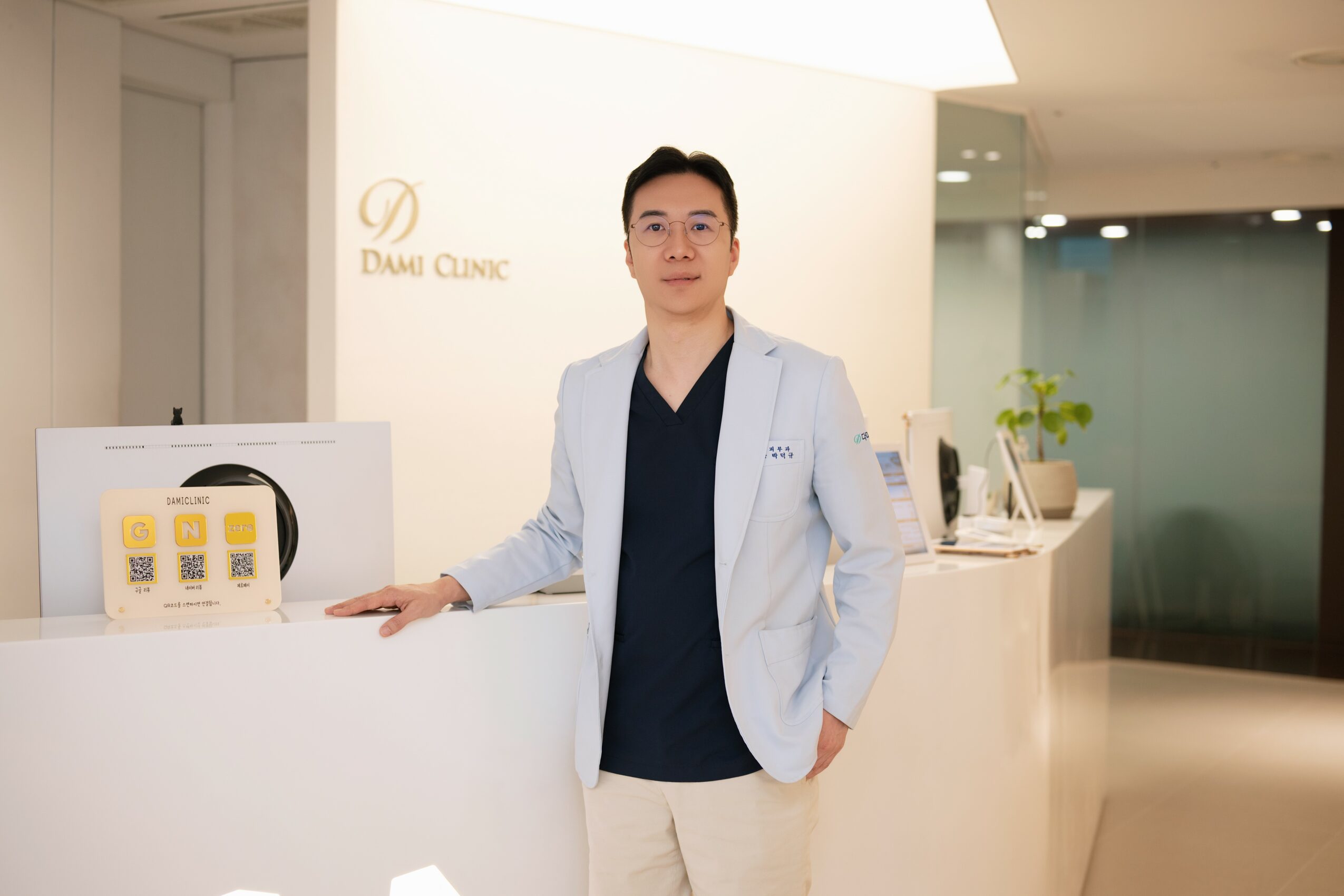
Today we’d like to introduce you to Duk-Kyu Park.
Hi Duk-kyu, so excited to have you on the platform. So before we get into questions about your work-life, maybe you can bring our readers up to speed on your story and how you got to where you are today?
The Hidden Side of K-Beauty: What Americans Should Actually Know About Pain, Downtime, and Sedation at Korean Skin Clinics
As medical tourism to Seoul booms, doctors and patient advocates warn that the “painless, no-downtime” marketing rarely matches reality — and that the safest choice often comes down to one thing: the injector’s hands.
________________________________________
Seoul has become the global capital of cosmetic dermatology. According to Korea’s Ministry of Health and Welfare, foreign patient visits hit record highs in recent years, with dermatology and plastic surgery driving the surge. American travelers, in particular, are flying to Korea for everything from filler and Botox to biostimulators like Sculptra, Rejuran, and the increasingly popular collagen-stimulating injectables.
But behind the glossy K-beauty Instagram aesthetic, a quieter conversation is happening inside Korean clinics — one that English-speaking patients rarely hear before booking. It’s about how much these treatments actually hurt, how long the real downtime is, and why the rise of “sleep anesthesia” at aesthetic clinics is making senior Korean dermatologists uneasy.
Here’s what you should know before booking a flight to Seoul for filler, Rejuran, Thermage, Ultherapy, or any injectable.
________________________________________
1. The “No-Pain, No-Downtime” Promise Is a Marketing Story
Walk into almost any Gangnam skin clinic’s English-language landing page and you’ll see the same phrases: “lunchtime procedure,” “zero downtime,” “back to work the same day.”
Patients tell a different story.
Bruising after filler can last 5 to 10 days, particularly around the under-eyes, lips, and temples. Swelling after collagen stimulators like Sculptra or Korea’s locally popular Rejuran can persist for 3 to 7 days. Thermage and Ultherapy — the two most-searched skin tightening treatments among foreign patients in Korea — involve real, sharp heat-based pain during the session itself, even with topical numbing.
The marketing implies an aesthetic vending machine. The medicine says otherwise.
This isn’t unique to Korea, but the volume and competition in Seoul’s clinic market has pushed the “painless” claim further than the science supports. Foreign patients often plan their return flights 24 to 48 hours after a procedure — and end up flying home swollen, bruised, or both.
What to ask before booking: request realistic downtime photos from days 1, 3, and 7 — not just the “after” shot.
________________________________________
2. Why Top Korean Dermatologists Say the Hand Still Beats the Machine
A growing number of Korean clinics now advertise automated injector devices — robotic or semi-automated tools that deliver filler or biostimulators at a fixed pressure and depth. The marketing claim is that machines are “more precise” and “less painful” than human hands.
Senior Korean injectors disagree, sometimes strongly.
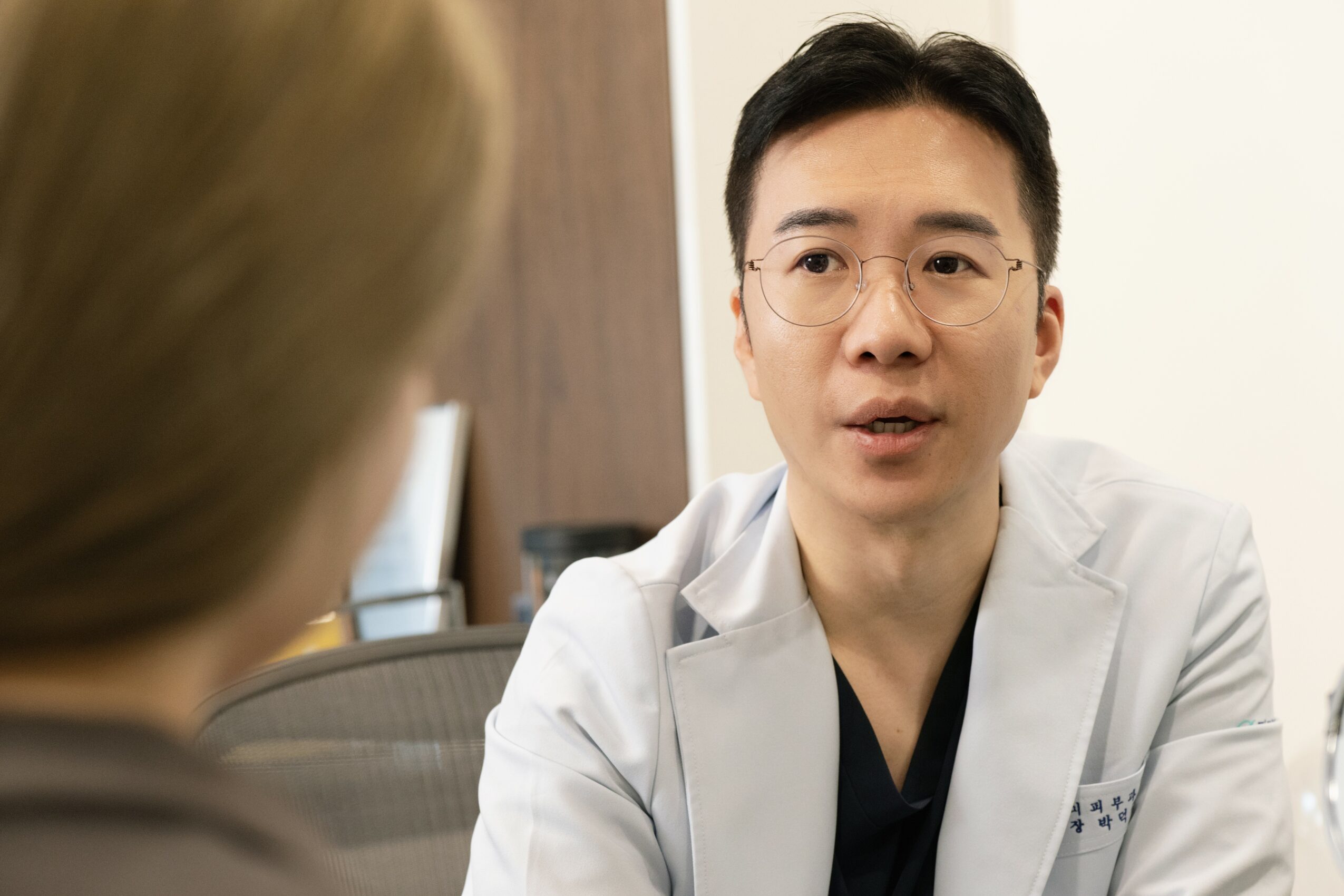
Dr. Park Duk-kyu, director of Dami Clinic in Seoul and a Key Opinion Leader (KOL) for several global filler brands, has spent more than 20 years training other physicians in injection technique. His view is direct:
“A machine delivers consistent pressure, but a human face is not consistent. Skin thickness, vessel location, scar tissue, and pain sensitivity vary millimeter by millimeter. The fingertip reads resistance in real time. A device cannot.”
Dr. Park, who lectures other physicians as a certified Key Doctor for major filler manufacturers and completed advanced training at UCLA’s Division of Cosmetic Surgery, argues that hand injection — when performed by an experienced injector — is actually less painful, not more, because the operator can adjust angle, depth, and speed instantly based on patient feedback.
His clinic uses what he calls a “Swift & Accurate” protocol: rapid, targeted injection at precise anatomical points to minimize tissue trauma, bruising, and swelling — without sedation.
For American patients used to seeing high-tech devices marketed as upgrades, this is counterintuitive. In aesthetic injection, the technology is the hand.
________________________________________
3. The Sedation Problem No One Wants to Talk About
Here is the part of Korean cosmetic medicine that English-language coverage almost entirely misses.
A growing number of Korean aesthetic clinics offer — and sometimes recommend — sleep sedation for procedures that, in the United States, would be performed with only topical numbing cream. This includes routine filler, Rejuran, and even laser treatments.
The pitch is appealing: “You won’t feel anything. You’ll wake up and it’s done.”
The risks are not trivial.
Propofol and other sedation agents used in outpatient aesthetic settings can cause respiratory depression, blood pressure drops, and in rare cases, cardiac events. Korea has documented multiple high-profile fatalities tied to sedation in aesthetic clinics over the past decade — including cases that drew national media coverage and prompted calls from the Korean Medical Association for stricter oversight of sedation outside hospital settings.
The American Society of Anesthesiologists has long held that any procedural sedation requires dedicated airway monitoring, emergency resuscitation equipment, and trained personnel separate from the operating physician. Many Korean aesthetic clinics that offer sedation do not meet this standard.
Dr. Park is blunt: “Filler and collagen treatments were never designed to require sedation. If a patient is being told they need to be put to sleep for a routine injection, the question isn’t whether the treatment is painful. The question is whether the clinic is offering sedation as a substitute for skill.”
What to ask before booking: Is a licensed anesthesiologist on-site? Is emergency airway equipment available? Why is sedation being recommended for this specific procedure?
If the answer to any of these is unclear, walk away.
________________________________________
4. How to Actually Choose a Safe Korean Skin Clinic
The Korean dermatology market is enormous — over 500 aesthetic clinics in Seoul alone. Most foreign patients pick based on Instagram, influencer videos, or Google reviews translated through aggregators. None of these reliably indicate safety.
A practical checklist used by Korean patient advocates and physicians:
✔ Foreign Patient Attraction License — Issued by Korea’s Ministry of Health and Welfare. Clinics legally permitted to treat foreign patients must be registered. This is publicly verifiable.
✔ Medical Malpractice Liability Insurance — Not all Korean aesthetic clinics carry it. Ask directly, and ask for proof.
✔ Board-Certified Specialist — Confirm the treating doctor is a board-certified dermatologist or plastic surgeon, not a general physician operating an aesthetic practice.
✔ Transparent Local Pricing — Korean clinics are legally required to display prices. If foreigners are quoted significantly more than locals for identical procedures, that’s a red flag — not a service upgrade.
✔ Reasonable Sedation Policy — Clinics that default to sedation for routine injectables warrant additional scrutiny.
Independent patient advocacy services have emerged to fill the gap for foreign patients. Seoul Skin Concierge, an English-language advisory service operating in Korea, screens clinics against the Ministry of Health registry, verifies malpractice insurance independently, and operates a Local Price Guarantee — refunding 100% of any markup over the Korean local price for identical procedures.
“Out of 500-plus clinics in Seoul, we reject roughly 80%,” a Seoul Skin Concierge representative said. “Being featured in a YouTube vlog or a beauty magazine doesn’t mean a clinic is safe. We only partner with the verified top 20% — clinics that hold the government license, carry insurance, and let our clients pay the local rate.”
________________________________________
5. The Real K-Beauty Standard: Quiet Expertise, Not Loud Technology
The most accomplished Korean injectors tend to be the least visible on social media. They train other doctors, lecture at international academies, and serve as Key Opinion Leaders for global pharmaceutical brands — but their clinics rarely run aggressive Instagram campaigns.
Dr. Park, whose Dami Clinic in Seoul has become a quiet referral point for Korean celebrities and VIP clients who can’t afford visible bruising before public appearances, summarizes the philosophy this way:
“Filler isn’t a technique for filling in hollows. It’s the work of redesigning balance and impression across the entire face. Collagen stimulators aren’t about inflating skin — they’re about training the skin to regenerate itself. In both cases, the result depends almost entirely on whose hands are doing the work.”
For Americans considering a trip to Seoul for K-beauty treatments, the takeaway is simple: the safest, least painful, lowest-downtime experience is not the one with the newest machine or the deepest sedation. It’s the one with the most experienced hand and the most transparent clinic.
Ask the right questions before you fly. The Korean clinics that answer them clearly are the ones worth visiting.
Alright, so let’s dig a little deeper into the story – has it been an easy path overall and if not, what were the challenges you’ve had to overcome?
One of the biggest challenges has been balancing medical integrity with the reality of modern K-beauty marketing. The aesthetic industry in Seoul is extremely competitive, and many clinics focus heavily on trends, influencer exposure, and “instant beauty” messaging. At Dami Clinic, we’ve taken a different approach by prioritizing safety, transparency, and long-term outcomes over aggressive marketing claims.
Educating international patients has also been a challenge. Many foreign visitors arrive expecting completely painless procedures with zero downtime because that’s how treatments are often presented online. In reality, aesthetic medicine still involves recovery, discomfort, and medical risk. Having honest conversations about bruising, swelling, downtime, and sedation sometimes goes against what patients expect to hear, but we believe transparency builds trust and leads to better outcomes.
Another challenge has been maintaining a high standard of personalized care while the demand for Korean aesthetic treatments continues to grow globally. Rather than operating like a high-volume factory clinic, Dami Clinic focuses on individualized treatment planning and physician-led procedures. That means growth has been more intentional and slower compared to clinics built around volume and automation, but we believe that maintaining quality, safety, and natural-looking results is the right long-term direction.
There’s also the broader challenge of misinformation in the medical tourism space. Many international patients struggle to verify whether a clinic is properly licensed, insured, or staffed by board-certified specialists. Part of our mission has become helping patients better understand what questions to ask and what standards truly matter when choosing a clinic abroad.
Alright, so let’s switch gears a bit and talk business. What should we know?
• “Zero downtime” is marketing. Plan for 3–7 days of visible recovery after filler or biostimulators.
• Hand injection by an experienced specialist often causes less pain and bruising than automated devices.
• Sedation for routine cosmetic injections is a red flag, not a feature. Verify anesthesia protocols before consenting.
• Verify the clinic’s Ministry of Health foreign patient license and malpractice insurance. Both are non-negotiable.
• Use an independent patient advocate if you don’t speak Korean or can’t verify pricing yourself.
What do you like best about our city? What do you like least?
What we appreciate most about Los Angeles is its openness to global culture and innovation. LA has become one of the few cities where Korean beauty, wellness, and aesthetic medicine are genuinely understood and embraced beyond trends. There’s a strong appreciation for preventative skincare, natural-looking results, and advanced cosmetic treatments, which aligns closely with the philosophy behind modern Korean dermatology. The city is also incredibly diverse, which creates an environment where international medical and beauty concepts can evolve quickly and reach a broader audience.
We also value how entrepreneurial and forward-thinking the city is. Patients in Los Angeles tend to be highly informed, research-driven, and interested in the latest developments in skincare, longevity, and aesthetic medicine. That pushes clinics and brands to continuously improve rather than rely on outdated methods.
What we like least is that the aesthetic industry in Los Angeles, much like Seoul, can sometimes prioritize hype over education. Social media trends often move faster than medical discussions, and patients are frequently exposed to unrealistic expectations around “instant” results or “no downtime” procedures. It can make it difficult for people to distinguish between good marketing and truly safe, experienced medical care. We believe there needs to be more emphasis on transparency, patient education, and long-term outcomes across the industry overall.
Contact Info:
- Website: http://www.damiskin.com/
- Instagram: https://www.instagram.com/damiclinic_official/
- Facebook: https://www.facebook.com/profile.php?id=61589145726125
- Other: https://seoulskinconcierge.com/
Popular
-

Portraits of the Valley
-

LA’s Most Inspiring Stories
-

Robin Olive on Building an Inclusive Performing Arts Movement and Expanding Opportunities for Every Student
-

Que Johnson on Building Brands That Last: From Visibility to True Market Authority
-

Christina Wren Steps Into the Director’s Chair to Tell Stories That Feel Like Home
-

JordanL on ‘Breathe,’ Belief, and Building a Movement Beyond the Music


