




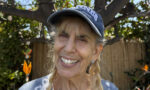
Today we’d like to introduce you to Emily Baker.
Emily, we appreciate you taking the time to share your story with us today. Where does your story begin?
My journey is a continuous upward spiral that began on the shores of the Salish Sea and eventually brought me to the vast, quiet landscapes of the high desert. I was born in Seattle (occupied Duwamish territory) in 1975, and spent my childhood summers on Vashon Island, the ancestral land of the Swiftwater people. My earliest relationship with the world was deeply sensory, somatic, and necessary. As a seven-year-old running wild along the Puget Sound, gathering shells, driftwood, and tasting the salty blades of bull kelp seaweed, I escaped the chaos of my household. In that solitude, I learned a fundamental truth that has guided my entire life: that our bodies might not be able to hold everything we think they can, and that the Earth is always ready to receive what we can no longer carry.
Nature became my first therapist, and sound became my first medium of magic. At age eight, I produced a radio broadcast from my bedroom called The Deeboo Club Meeting, using an abstract language I had created at age four after my younger brother was born on my birthday. By mixing two tape recorders and playing AM/FM radio frequencies, I created layered talk shows where I voiced fictional guests alongside mid-80s pop hits. This early love of sound eventually evolved into an active, self-taught music career in the Pacific Northwest, where I performed and recorded as a vocalist, drummer, and percussionist across genres—from feminist folk and all-dyke metal to shoegaze and post-punk. Seeing my bands reach the Top Ten on Seattle’s KEXP and performing at venues like the Time-Based Art Festival in Portland and Mercado Sagrado in Los Angeles solidified my belief in art and sound as vital, communal forces.
Alongside my music, I pursued my deep love for plants. While studying environmental horticulture and landscape design at South Seattle College and Edmonds College, I designed a landscape for the Vashon Island Growers Association and the Maury Island Trust at age twenty-five. In 1999, I founded Islandula, a botanical wellness and skincare line crafted from homegrown calendula and ethically foraged native plants, which I sold as a crafter at Seattle’s historic Pike Place Market. In 2008, I expanded this vision by opening Sword + Fern in Portland, Oregon. It was a unique boutique, design studio, and community hub where I handmade sustainable jewelry using recycled materials for brands like Anthropologie, Alternative Apparel, and Levi’s, and was featured in ELLE Japan and The New York Times. Within the shop, I opened the New World Apothecary, a first-of-its-kind space that nurtured and celebrated local herbalists, carried my wildcrafted skincare, and featured my custom tea line, Moon Day Tea. My work was shown at the ACE Hotel’s CONTENT in 2011 and 2013. This era of my life was highly visual and communal, and my home and interior styling were featured in publications like The Kinfolk Home book and The New Bohemians by Justina Blakeney.
In 2014, I moved to Los Angeles to bring my eye for atmosphere to the film industry. For a decade, I worked as a Production Designer, Set Decorator, and Prop Stylist, directing large-scale visual logistics and budgets for networks like NBC and global brands like Nike, Samsung, and Sonos. While film production was an incredible training ground, my true north was always plants and healing. In 2023, the loss of my film career due to the labor strikes, and the sudden emergence of unregulated AI, I was inspired to seek a deeper, internal ground. These experiences coincided with a pivotal period in my life, as I completed years of study in Ayurvedic medicine, yoga, meditation, and energy healing—allowing me to move from simply studying healing to truly embodying it.
Beginning in 2015, I intentionally used the resources and income from my film production career to support a deeper commitment to spiritual practice and holistic wellness. Over the following years, I trained with Leia Hart, Christina Pratt, and Janet Iris Sussman in cross-cultural shamanism and energy medicine, in Reiki at the Institute of Psycho-Structural Balancing (IPSB) in Santa Monica, completed yoga teacher trainings through People’s Yoga and Highland Park Yoga, and studied Vipassana meditation in the tradition of S.N. Goenka. I later deepened my meditation practice at Dhamma Dena in Joshua Tree and through Metta training with teacher Mel Coates.
This path culminated in 2023 when I graduated from the Southern California University of Health Sciences and the California College of Ayurveda, becoming a certified Ayurvedic Wellness Counselor. Together, these years of study and practice transformed healing from an area of interest into a lived way of being.
To find clarity, I chose sobriety in 2019, rejecting chemical and psychedelic escapes to meet my mind with the same love I meet the ocean, mountains, and desert. Through my project Plant Mother Sister, I lead native plant walks and offered pro bono Ayurvedic care through my company You Joy Life to Southern California wildfire survivors, and shared free Ayurvedic workshops with the LGBTQIA+ community through Queerly Connected, an event organized by Open Space Therapy Collective in Los Angeles.
Today, all of these seemingly separate paths—botanical science, production logistics, sound art, and deep healing—have integrated beautifully in the high desert. I am the founder and steward of Wonder Mountain Open Source Space in rural Wonder Valley, a two-acre artist residency that centers Queer and BIPOC creators, writers, and artists. Here, near Joshua Tree National Park, I live with my partner Sterling and our two dogs, Jasper and Ozzy. I created my Experience, Observe, Share (EOS) somatic framework, offering guided rewilding meditations on the new and full moons, and I am currently writing a book titled Coming To Your Wild Senses. Every step of my twenty-four-year career has prepared me to steward this refuge, reminding me and others that our truest alignment is found in the clarity, boundaries, and meditation that nature provides.
Alright, so let’s dig a little deeper into the story – has it been an easy path overall and if not, what were the challenges you’ve had to overcome?
The road has been far from direct. It has been a winding path of challenge, discovery, and transformation. For much of my life, I was searching for a deeper sense of stability, belonging, and connection to myself.
Coming out as a young lesbian in the early 1990s was challenging. I was navigating my identity within a devoutly-Catholic family and a broader culture that often viewed people like me with suspicion, rejection, or outright hostility. Like many queer people who came of age in a less accepting era, much of my youth was shaped by the effort of finding my place in a world that did not always make space for who I was. Navigating family tensions and cultural expectations often left me searching for a stronger sense of belonging and direction. Through it all, I discovered that creative expression, music, and the relationships I nurtured became powerful sources of connection, purpose, and resilience.
Through my twenties and thirties, I devoted much of my energy to making art, music, and building community. At times, my ambition and intensity led me to overextend myself, often at the expense of rest, balance, and self-care. In 2013, when I completed my first ten-day silent Vipassana meditation course in the tradition of S.N. Goenka, I began developing the inner tools to slow down, observe my experience more clearly, and relate to life’s challenges with greater steadiness.
When I relocated to Los Angeles in 2014 to pursue a career in the film industry, I entered a fast-moving and highly demanding environment. Long hours and the pressures of production often left little room for balance, and I faced a series of personal and professional challenges that tested my resilience. Those experiences ultimately became a catalyst for change, leading me to prioritize my health, strengthen my boundaries, and deepen my commitment to the practices that would later shape my path in wellness and healing.
Personal transformation required clear boundaries, honest self-reflection, and a willingness to make difficult changes. In 2019, I made the conscious decision to embrace sobriety. For me, it was less about giving up alcohol and more about creating a different foundation for connection, presence, and well-being. It also marked a shift away from patterns and environments that no longer supported the life I wanted to build.
Another significant turning point arrived in 2023. The end of a long-term relationship coincided with the near-total shutdown of my eleven-year career in Hollywood art departments during the historic labor strikes and the rapid emergence of generative AI. Faced with profound professional and personal change, I stepped back and returned briefly to the Coast Salish lands of my childhood to reconnect with what mattered most.
The timing aligned with my graduation after four years of intensive Ayurvedic study. What had begun as an intellectual pursuit was becoming something more integrated. Life was inviting me to move beyond learning the principles of healing and to embody them in my daily life.
Every trauma, accident, and near-miss of my life has been a teacher. I had to learn how to allow the Earth to be my very first therapist when human relationships brought too much pain. My shamanic and energy work apprenticeships eventually confirmed what I had intuitively known as a seven-year-old combing the beaches of the Salish Sea: that when our human bodies are overwhelmed, the Earth is always ready to receive what we can no longer carry. Surviving these deep valleys is what allows me to hold a truly safe, compassionate, and trauma-informed space for others today. I had to walk through the fire of my own recovery to build the sanctuary of Wonder Mountain and write my upcoming book, Coming to My Wild Senses. The road was rough, but it led me exactly where I needed to land.
Thanks for sharing that. So, maybe next you can tell us a bit more about your business?
Wonder Mountain Open Source Space is a two-acre off-grid artist residency, regenerative land project, and creative sanctuary nestled within the rural landscape of Wonder Valley, California, near Joshua Tree National Park, the Mojave National Preserve, and Death Valley. I founded this space to create a physical refuge that intentionally centers and protects Queer and BIPOC creators, writers, and artists working across multiple disciplines.
Designed as a place for deep integration and renewal, it offers an alternative to the constant demands of modern productivity. The land features a carved stone soaking tub fed directly by an underground aquifer, inviting visitors to slow down, reconnect, and inhabit a different relationship with time.The guiding ethos of the space is rooted in two concepts I originally cultivated when I opened Sword+Fern: “You Are Wild, You Are Free, You Are Home” and “YOU JOY.” Together, these principles continue to serve as our radical hope at WMOSS today. My intention is to create a space where people can reconnect with their innate wildness and remember their place within the larger rhythms of the natural world.
At the heart of the residency is my personal, intuitive art practice, Wonder Mountain Color. In this practice, I explore the intersections of geology, indigenous history, and somatic resilience. By ethically foraging and hand-milling natural mineral pigments from the volcanic transition zones of the central Mojave Desert, I create living paints that capture the true, sun-baked hue of the desert. My process honors pre-industrial mineral harvesting, utilizing the ancient alchemy of fire to awaken colors sourced directly from the earth. Through this work, I invite residents and visitors to connect with the deep time and ancient footpaths of the desert landscape. My work, paintings, and pigment practice at the studio will be open to visitors this coming fall, on the first three weekends of October, for our first time on the Highway 62 Art Tours here in our vibrant high desert art community!
What sets Wonder Mountain Open Source Space apart is its holistic integration of art, ecology, science, and embodied practice. Drawing from my twenty-four-year background as a master horticulturist, a Hollywood production designer, and a certified Ayurvedic Wellness Counselor, I have developed a residency model that transcends the traditional boundaries of artist residency programs. Rather than functioning solely as a site where creative work is produced, WMOSS operates as a living ecosystem, a regenerative land project, and a participatory framework for inquiry, observation, and transformation.
The residency is stewarded simultaneously as a living museum collection, an ecological research site, and a therapeutic environment. We do not simply provide studio space; we cultivate a sovereign landscape in which the land itself serves as teacher, collaborator, and archive. Artists are invited not only to make work, but to engage directly with the living systems that sustain life and shape perception.
At the heart of this praxis is my somatic framework, Experience Observe Share, which serves as the operational philosophy of the space. Through twice-monthly guided rewilding meditations held on the new and full moons, participants are invited to cultivate deeper relationships with seasonal, ecological, and lunar cycles. These gatherings extend beyond the boundaries of the physical residency through a free and paid membership community on Substack and will soon expand onto the airwaves through Other Desert Radio.
In this way, Wonder Mountain Open Source Space positions art not as a product isolated from life, but as a living practice of relationship—between self and community, creativity and ecology, observation and action, human culture and the more-than-human world.
What I am most proud of is that this project has grown slowly and organically, without waiting for institutional permission. Over time, Wonder Mountain has become a place where creativity, rest, curiosity, and connection can coexist. Again and again, I have watched people arrive carrying the weight of burnout, isolation, or uncertainty and leave feeling more connected—to themselves, to one another, and to the living world around them. That transformation is what continues to inspire my stewardship of this land.
Wonder Mountain Open Source Space remains an active and evolving practice. Whether someone encounters the work through a residency, a moon-phase meditation, Coming to Your Wild Senses, or simply a conversation over a shared meal, my intention is the same: to create opportunities for people to slow down, listen more deeply, and rediscover forms of belonging that are increasingly difficult to find in modern life. This work is especially meaningful for those who have often felt out of step with conventional spaces—the sacred introverts, the sober-curious, the socially anxious, the seekers, the artists, and anyone longing to learn from a teacher larger and older than themselves: the natural world.
How do you think about happiness?
Happiness has never been an achievement or a destination. It is a feeling of complete immersion—a moment when I forget myself and become fully present in the living world around me. I find it while beachcombing along a quiet shoreline, listening to the rhythmic pulse of ocean waves, discovering a secluded lakeside campsite beneath the stars, or wandering through the desert with my dog and finding a vibrant Mojave Chrysocolla stone glinting beneath the sand.
These experiences are so deeply woven into me that they even appear in my dreams. My truest image of joy is one I have carried since childhood: diving beneath the surface of the ocean, opening my eyes underwater, and discovering delicate seashells scattered across the seafloor. It is the sound of rain moving through a Pacific Northwest forest, water falling from the needles of a giant Douglas fir, or the feeling of standing quietly in a landscape long enough for it to reveal itself.
Over the years, my studies, my creative practice, and my relationship with the natural world have all pointed me toward the same understanding: we are not separate from nature, and we are rarely as disconnected or broken as we believe ourselves to be. Some of the most meaningful experiences available to us are also the simplest—looking closely, listening carefully, and allowing ourselves to be fully present to what is already here.
As an artist, I also find immense joy in witnessing the creativity of others. Building WMOSS has shown me that my own happiness is deeply connected to creating environments where people feel supported enough to reconnect with themselves, their work, and the more-than-human world around them. There is something profoundly moving about watching someone arrive exhausted, distracted, or uncertain, and leave feeling more grounded in their own voice.
In many ways, that is why Wonder Mountain exists. It is a place where people can step outside the pressures of performance and productivity, breathe a little deeper, and remember that they belong to something larger than themselves. My happiness is found in those moments of return—to the land, to creativity, to community, and ultimately to our own wild nature.
Pricing:
- Application Fee: There is no fee to apply for our residency programs.
- Standard Stay: We offer a standard two-week residency, designed to give artists time to settle in, focus on their work, and engage with the natural rhythms of the high desert.
- What Is Included: This contribution includes a private bedroom with a dedicated workspace, access to a fully equipped kitchen, shared bathrooms, a 50-foot outdoor patio, high-speed internet, and our mineral-rich natural spring water soaking tub, fed by the ancient aquifer beneath the property. It also includes personal, on-site support from our team for desert safety, navigation, and creative grounding.
- Scholarships and Financial Aid: We are deeply committed to making this sanctuary accessible to those who need it most. Dedicated scholarships and sliding-scale financial aid are available to honor and support the work of LGBTQIA+ and BIPOC creators, writers, and healers. Applicants interested in financial support may indicate their interest directly within the formal residency application.
- Accessibility: As an off-grid desert property, Wonder Mountain Open Source Space currently has physical accessibility limitations. We are actively working to improve accessibility and reduce barriers to participation wherever possible. We welcome conversations with prospective residents about their specific access needs and are committed to exploring reasonable accommodations as the space continues to evolve
Contact Info:
- Website: https://you-joy.life/ | https://cometoyourwildsenses.substack.com/ | https://www.emilybakerworks.com/
- Instagram: https://www.instagram.com/wondermountaincabin/ and https://www.instagram.com/you.joylife/


Image Credits
Photo #1, (full exterior of house) -credit: Kindred Concepts
Photo of Bunny Michael -credit: Bunny Michael
The remaining images are photographed and designed by Emily Baker/Wonder Mountain Open Source Space.
Popular
-

Portraits of the Valley
-

LA’s Most Inspiring Stories
-

Dricka Crawford Is Expanding Two Girls & a Drink by Bringing Globally Inspired Cocktail Experiences to Weddings, Corporate Events, and Celebrations of All Ages
-
Saba Moor-Doucette Is Redefining Longevity by Building a Career Fueled by Creativity, Fitness, and Fearless Reinvention
-

Antonio Josh Medina Brings Beloved Characters to Life While Building a Future in Film, Live Entertainment, and Storytelling
-

Tom Bugansky on Redefining Post-Surgical Recovery Through Luxury Medical Care and a Safer Healing Experience


