




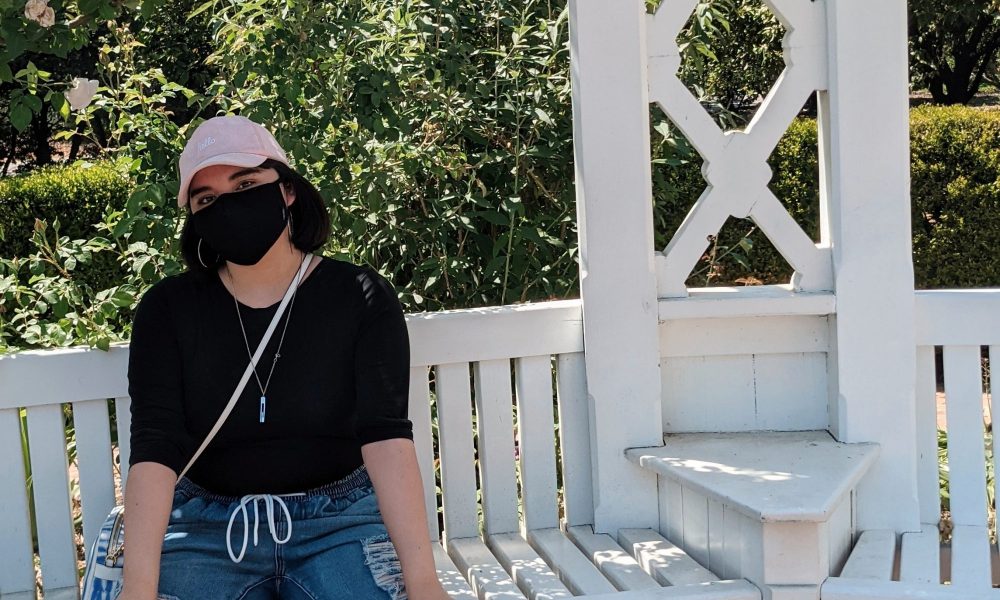
Today we’d like to introduce you to Ren Aguilar.
Hi Ren, can you start by introducing yourself? We’d love to learn more about how you got to where you are today?
It was right in the midst of the pandemic. Around Fall 2020, many of us were home, either after going back home from university or being there because our jobs were now fully remote. We had to adjust to a different routine and way of surviving. It wasn’t what we were used to, but for the sake of our health and that of others, it was something we had to do because it was simply the right thing. It was also one of the safest ways to go about our days while protecting others and ourselves. During these days trying to navigate this new “normal”, we noticed how our communities were doing across the nation, and even in our own little neighborhoods. What we saw helped create this project.
For me, I am part of communities near LA county (Pomona and West LA) and the Inland Empire. I have family in both places as well as friends. These areas have a particularly large number of disabled, working class, immigrant, Black Indigenous POC, and Non-Black Indigenous POC. These communities know hard times, and the pandemic exacerbated so many of our struggles. Folks were losing jobs, losing income, and weren’t able to switch their whole work life to remote work life. That option wasn’t one for them. There wasn’t much consistent stimulus money or government aid that could sustain these families, which many are multigenerational and could have upwards of 5+ folks in their homes. My abuela had to go on unemployment for a while and even though her job was still open, she could not work there due to being under cancer treatment and thus being more at risk. We continuously saw the anti-masking and anti-vax movements. We saw so many people downplay the severity of the pandemic and so many folks who went about their lives and still do as if disabled/immunocompromised folks don’t exist. We saw so many folks be okay with spreading a deadly virus and/or possibly debilitating someone with Long COVID. Life went on after a while as if the pandemic wasn’t still raging and killing thousands as each month went on. Millions now had Long COVID as well.
We saw our government think the same, the CDC think the same, and even hospitals think the same as ventilators were reserved for those deemed worthy of life, the non-disabled and non chronically ill ones. So many folks had their lives turned upside down in ways they could not afford. But disabled poor BIPOC had their lives negatively affected the most. So many of us had to go to these in-person manual jobs. We were putting our lives on the line for little reward, no higher pay, no better benefits, and for companies that put profit above our lives. The pandemic was affecting folks left and right, so instead of sitting back and watching all these folks suffer, we decided to do something about it. And by we, I mean my fellow disabled pals, organizers, and volunteers of this project. We started off within Southern California but now have volunteers, folks we support, and organizers from across the United States and Canada. We primarily help aid folks nationally in the United States right now, though we hope to be able to add more folks to the list of those we support long-term as we gain more of that capacity. We do aim to globally help folks and not just those in the Global North and imperial core.
We wanted to go about it in the safest way possible in doing something about it, and what better way than what everyone else was doing? Virtual. Believe it or not, we’ve done everything we have entirely online. Through Zoom, Google Meet, Singal, DIscord, phone calls, video calls, Google Drive, and more. We wanted a space in which our disabled, chronically ill, and immunocompromised bodyminds could safely and comfortably do this kind of work. We also wanted those we support to directly, quickly, and safely receive the aid they needed in a format they too were more comfortable with. Starting our mutual aid project entirely through social media and online was the best route, and as this pandemic doesn’t end and more variants come about it is still the option we choose. Folks who organize think that the “real work” is on the ground, in-person, and by doing things face to face. But that simply could not work for us and excluded disabled folks from ever organizing. We didn’t want to create such an unsafe and unwelcoming space so we made our own, by us and for us.
Back then, we started off small by only fundraising and pooling together funds to help a couple of folks per month with rent, hotel, and motel rooms if they were without shelter at that time, food, and medical needs. We found these folks on social media by contacting them and building a relationship with them through messaging, phone calls, video calls, and such. It started off by putting out an ask of who needed help, verifying everything briefly, getting to know each other, and then getting them material support. Folks from LA, Washington, the Midwest, the Inland Empire, and even Canada had seen our post and reached out. Though we were small, with less than 200 followers when we put out this ask, folks who needed it still saw it and we started to build support networks for them. We wanted to create trusting relationships where there was mutual respect while also helping them with material needs. Some folks we knew personally prior to the pandemic needed help now. Some folks were new but knew someone else who had put out our ask on social media.
As for our mission, or moreso core beliefs, we knew our project had to be about disability justice. We wanted to center the most marginalized, materially aid our most vulnerable community members directly (Black/Indigenous Disabled, Trans, Queer, Poor, and/or Houseless folks), and have clear anti-ableist, anti-imperialist, and anti-capitalist principles. Making our project about disability justice was also a direct response to how the pandemic was treating disabled BIPOC. You can find a more detailed list of who we are and what we do in a blog post we wrote but mainly, “We operate by crowdfunding. We get funds from the community solely and we do not have funds of our own to give as it is all from the community and social media promotion and engagement. We are not a business or non-profit and we don’t plan to be one anytime soon.”
Link to article here https://spoonieunipapers.substack.com/p/brand-new-2022-guidelines-and-info
We didn’t think anything of our project or that it would grow much. Our first ever big crowdfund was our Disability Justice Xmas Fund in December 2020. We had a very small goal then of about $800 and ended up raising $836. We were barely starting off then and were surprised by the support from our fellow community members and even school peers. Some of us were still in college at the time Spoonie Uni was created but doing school virtually from our homes. We were able to give to 4 disabled Queer, Trans, Black, and Non-Black POC who had reached out to us for help and were able to give them around $200 each to help them amidst their lives changing for the worst during the pandemic. Christmas was a particularly hard time for all of them especially those struggling to make a living wage, and we wanted to repay them. We had our goal much lower around this time because we honestly didn’t think folks on social media/online would even care or help us reach such a goal. We started off like that and slowly evolved into what we are now. We now have annual themed crowdfunds like our Juneteenth Fund, the Black History Month Fund, the DisXmas Fund, and other seasonal/holiday funds to help our folks out. They always meet their goal and usually exceed the original goal we had in mind, and help us help even more folks! We help our folks mostly with rent and utilities more than anything but also groceries, transportation, hotel and motel stays, and medications. Rent and funds for utilities and other bills have probably been our highest need. We also have long-term members we’ve been supporting since Dec 2020 and have been adding new folks to our list as we gain more support and develop more of that capacity. Members are those we support and send aid to, but organizers can be both a member and organizers, which a few are!
We have since personally sent out over $40.9k for dozens of disabled Black and Non-Black IPOC and their families. Some of this was also possible due to the help of grants and other mutual aid groups lending their aid to us, which we are forever grateful for. We’ve created care webs and have established a community of thousands who want to learn more about disability justice and mutual aid and who want to enact mutual aid and community care in their daily lives. Mutual aid and other community care practices are the only way many of us even survived the worst days of this ongoing pandemic. When some of us got COVID and got severely sick, it was the community and our supporters who got us through it. So many folks supported us without even ever meeting us in person, and it showed us how we could build community and trust online with transparency, honesty, and community care as our ultimate guiding principle. Looking at our social media insights a majority of our supporters and followers are from the US, but over the past two years, we’ve seen folks come to know us from Canada, the UK, and even parts of Latin America.
I’m sure you wouldn’t say it’s been obstacle free, but so far would you say the journey have been a fairly smooth road?
It hasn’t been the smoothest road. Because it’s online doesn’t mean crowdfunding won’t get you harassed, doxxed, and accused of being a “grifter.” Our biggest obstacle has been just that. Folks have tried to shame us and our project for supposed “panhandling” and helping out “scammers” when we know the folks we help, know their needs are real, and always post receipts of the money we send out and are happy to provide data if needed. When we say this to them, suddenly there is no response but we are still met with harassment and disbelief nonetheless.
Trying to fight such an individualistic meritocratic society has been a challenge. Folks think we are giving free handouts and that the members we support haven’t tried hard enough. They believe that they have to pull themselves up first before anyone else does and that only when they burn themselves out from trying to survive do they deserve any support. Individualism lies at the core of the U.S’s founding. Independence and getting things done yourself is what folks are supposed to aim for, and dependency is a weakness and something to be shameful of. This shame heightens for Black Disabled Trans Queer folks, who are accused the most of being “lazy, “liars,” and “freeloaders.” They face the most harassment, abuse, and emotional trauma. It has been scary for some of our members to ask for help and receive help so often because they feel at any moment, someone is going to reject their requests and accuse them of being someone they’re not. A lot of our folks haven’t formed trusting relationships with us easily, as being dependent and being honest about all your needs wasn’t something they were used to. They weren’t used to being met with help either. Especially out in public on the streets, where they are more likely to be scoffed at and ignored. We have been a stepping stone in getting them the aid they deserve, and also by shielding them from harassment as we try and crowdfund for our members rather than them crowdfunding all the time for themselves. It gives them a break and also allows them to rest and not see all the negativity that pervades social media, particularly Instagram and Twitter.
Another smaller struggle that fluctuates in severity often, is getting people to do their part. We ask that folks give funds only if they can and want to, and don’t aim to guilt or force anyone to commit to mutual aid. We want them to do it because they feel it is the right thing to do and they truly want to be a part of community care. However, sometimes folks think funds are all we are asking for and need but shares and increasing exposure are also what we look for! Many folks don’t want to repost mutual aid requests or let their networks know of the need. Some don’t want to ruin their aesthetic feed or flood their stories and have people think negatively of them. Sharing for us is the bare minimum, and even when we ask folks to do just that we still have a lot of people scrolling by, ignoring our posts, and thinking that they don’t have a part to play. Mutual aid isn’t just about getting funds to our folks but is also done through reposting, sharing, commenting, and liking posts. It’s also about helping with exposure and educating others on the importance of participating in mutual aid. As we always say to our followers and viewers, even if you personally don’t have the social or financial capital to help much, somebody in your network of followers and friends just might! And they might even contribute. The butterfly effect is how we get a lot of requests and needs met. It’s how we have come to be what we are.
Thanks for sharing that. So, maybe next you can tell us a bit more about your work?
I’m currently working at a teaching center with younger kids, mostly as a grading assistant. However, since I recently graduated from college with my Bachelor’s Degree in Liberal Arts, with a concentration in Social Behavior Sciences, I aim to eventually get my Master’s in Disability Studies or Disability Services in Higher Education. I have been passionate about Disability Justice, Critical Disability Studies, and Mad Studies for a good chunk of my life now. I want to change how folks look at disability and how it shapes our world. I want disability and disabled folks to matter more to those outside our communities. I’ve been engaged in disability activism since my college days, and it’s also what inspired me to help create The Spoonie Uni Project. The first bit of disability justice I was exposed to was through Sins Invalid and Patty Berne. Once I discovered these people and groups and also discovered disability studies was even a field I felt that I finally found what I’d been looking for my whole life. I never heard of it and was only able to discover its existence due to my Sociology professor in college including it in our syllabus and being one of the only professors who actually did it at our university. They’re a professor I’m forever grateful for, and I guess you can say Spoonie Uni wouldn’t be possible without them. I was afraid and ashamed of calling myself disabled openly before and rejected the identity for so long because my family always did that to themselves, but college actually helped me discover my identity in this regard through both positive and negative experiences.
I finally found a field that made me feel more authentically seen and it was something I actually wanted to dedicate myself to. Disability has always been a part of my life and also that of my family. We’ve had a long lineage of disabled elders as my mama, my abuela, my tia, my abuelos, and many other family members all are disabled and have been disabled as a result of migration, trauma, and separation, US imperialism, extremely grueling manual minimum wage jobs, and living in a country that has constantly disregarded them and their needs, though a while back they thought this place was a safe haven where they could find an “American Dream.”
Academia has and currently excludes disabled bodyminds. It is not a place that prioritizes our health, happiness, and accessibility. I experienced firsthand what it was like to be disabled in academia, and during my 4 years, I always felt that academia wasn’t a place built for me, but that only made me want to create a type of academia where it included me, my friends, and folks like my family. I wanted it to be better and kinder to disabled, trans, queer, and BIPOC bodyminds because it was far from doing so. Accessibility wasn’t a priority to higher educational institutions but rather a federal obligation. They painstakingly had to grant accommodations occasionally because they rejected many of my accommodation requests before. It wasn’t something they wanted to do or believed they should do out of values of disability justice, but rather felt they were obligated due to do it out of the word of the law and possible punishment if they didn’t follow. I didn’t want academia to exist as it currently does, but aimed to create something new in my future career through both community organizing and becoming an educator myself one day. Right now, I’m working at the teaching center part-time and also working for the Critical Design’s Lab Remote Access Archive occasionally. My passions are education and disability justice, and I’m trying to do both in my daily life through both my professional and personal life.
The crisis has affected us all in different ways. How has it affected you and any important lessons or epiphanies you can share with us?
Community care and mutual aid have been some of the only ways we have been able to survive. It’s what should guide us the rest of the way forward and not be something that’s forgotten but here to stay. It mattered before the pandemic but especially matters now as we have to protect ourselves and each other, where our governments won’t. These are especially vital lifelines for disabled folks, as we have been most disregarded in this pandemic compared to our non-disabled non-at-risk counterparts. We have been forced to push forward, even as many disregard our lives and find them disposable. We have been forced to live in a world that continually leaves us behind, and that tells us to keep going and try “a bit harder” when they are the ones making us push this hard amidst making our lives as unlivable as possible.
I have learned that most of the time, all we got is us. The folks in power who are supposed to be looking out for us often leave us behind in pursuit of their own personal goals and profits. Community is where we will find most of our support, and folks should make it a daily practice to help each other out, not just only occasionally doing it. It’s the only way forward and what many people are not practicing. Disregarding notions of community care and love is a big part of how we ended up where we’re at now in this pandemic. Still in it, with thousand still dying or being debilitated by COVID for the long-term.
Contact Info:
- Website: https://linktr.ee/spoonieuni
- Instagram: https://www.instagram.com/spoonieuniproject
- Twitter: https://twitter.com/spoonieuni
- Other: https://www.patreon.com/spoonieuni


 Image Credits
The Spoonie Uni Project, Instagram
Popular
-

Portraits of the Valley
-

LA’s Most Inspiring Stories
-
Robin Olive on Building an Inclusive Performing Arts Movement and Expanding Opportunities for Every Student
-

Que Johnson on Building Brands That Last: From Visibility to True Market Authority
-

Christina Wren Steps Into the Director’s Chair to Tell Stories That Feel Like Home
-
JordanL on ‘Breathe,’ Belief, and Building a Movement Beyond the Music


