




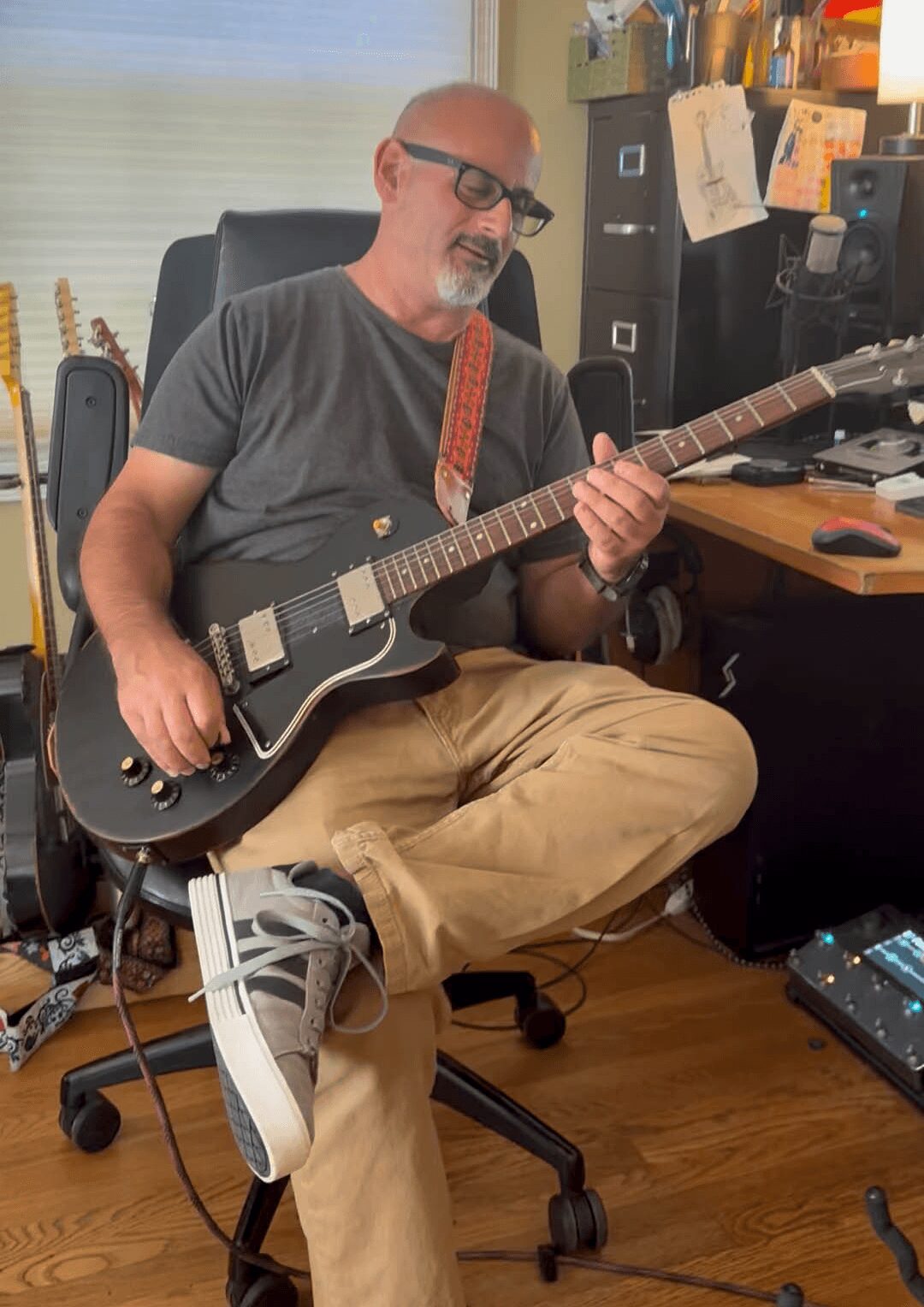
Today we’d like to introduce you to Matt Rosenfeld.
Hi Matt, can you start by introducing yourself? We’d love to learn more about how you got to where you are today?
I got into guitar the way a lot of people do — obsessed with The Who, playing air guitar on a tennis racket until my mom suggested I try the real thing. At 14 I started lessons with a 65-year-old classical teacher who thought the Beatles’ best song was When I’m 64. I was hoping for A Day in the Life. That wasn’t happening — so I borrowed a Who songbook from the kid next door and just started figuring it out myself.
That led to studying at USC Thornton’s Studio Guitar program, then years of session work and band fronting in Chicago in the 90s — right in the middle of a scene that included Smashing Pumpkins, Liz Phair, and Urge Overkill. I recorded with producers including Ric Ocasek and Mike Clink, shared stages with The Toadies, Lenny Kravitz, and others, and built a busy teaching practice on Chicago’s North Shore alongside it all — because I genuinely enjoyed teaching and was good at it.
I moved back to LA in 2002 and spent two decades in visual effects as a freelance 3D generalist — lighting, look development, and supervision for film, TV, and commercials at studios including Framestore, Digital Domain, Sony Imageworks, and MPC, on projects ranging from Transformers to Apple to Toyota. Along the way I founded a VFX industry lobbying coalition that successfully pushed for the inclusion of a 25% tax credit for visual effects in California’s AB 1839, signed into law by Governor Jerry Brown in 2014.
At Gnomon — one of the top VFX schools in the world — I served as Education Lead, overseeing the Generalist track with 22 direct reports. I hired 15 new instructors, authored 380 pages of curriculum material, and was a major contributor to the curriculum redesign that achieved BFA program accreditation. My student evaluations averaged 4.7 out of 5 — in the 90th percentile across 84 instructors. Students consistently noted that the depth of my handouts and my ability to make complex material genuinely understandable set the class apart. I took a basic texturing course and pushed beginner students to produce work at a professional production level — something that hadn’t been done in that class before.
That experience forced me to get very clear about something most teachers never think about: not how to present information, but how to make it actually stick. How to meet students where they are, understand how they learn, and build a path that gets them from confusion to capability.
The VFX industry runs on impossible deadlines, and I have ADHD — which in that environment was something of a superpower. Deadline pressure sends me into hyperfocus. I was always the person who could figure out how to get everything done in time. Effective, but not enjoyable. I was waking up nightly worrying about renders, client notes, failing infrastructure. Twenty years of late nights, weekends, and holidays in a high-stress industry will do that to you.
When the industry was effectively shut down during the 2023 strikes, my wife Amy suggested I go back to teaching guitar. It hadn’t even crossed my mind — teaching was something I’d done seriously years ago and largely set aside. But after two decades of that grind, I was ready for something different without even fully realizing it. It turned out to be exactly the right call.
I brought everything from those years into the guitar studio — the Gnomon approach to curriculum, the hard-won understanding of how different kinds of minds actually learn. In 10,000 hours of teaching I’ve found that students whose brains work differently often thrive when the approach meets them where they are rather than forcing them down an established path. ADHD isn’t an obstacle. Done right, it’s a superpower.
Most guitar instruction teaches you what to play — here’s the chord, here’s the scale, memorize the pattern. What’s almost never taught is how: tone, feel, rhythm, fretboard navigation that actually makes sense. That’s what I focus on. My students notice.
I teach in Atwater Village, Los Angeles, and online worldwide.
Would you say it’s been a smooth road, and if not what are some of the biggest challenges you’ve faced along the way?
Not even close to smooth.
The VFX industry collapse during the 2023 strikes was a shock I wasn’t prepared for. There had been strikes before, but this one felt different from the start. It seemed like the studios saw an opportunity — they were already looking for ways to cut costs, and the strikes gave them cover to do exactly that. It dragged on far longer than anyone expected, and the industry never really snapped back. Work that used to flow steadily through the pipeline dried up, and a lot of experienced people who had spent decades building careers in VFX found themselves in the same position I did — suddenly having to figure out what came next.
I’d spent two decades as a freelancer and had always been able to hustle up the next project. That world operates on relationships, reputation, and timing — and I knew how to navigate it. Guitar students are a completely different animal.
Suddenly I was starting from zero in a space I didn’t understand. How do you find students? How do you build visibility when you’re a one-person operation competing against established music schools with marketing budgets? My first instinct was to build a website — so I put up a Squarespace site that, as I later learned, was essentially invisible to Google. No SEO, no local presence, no idea what I was doing wrong.
The learning curve was steep and humbling. I had to educate myself on things I’d never thought about — how search works, what makes a local business findable, how to present yourself online in a way that builds trust before anyone has even met you. I eventually rebuilt the entire site from scratch and started learning tools that could help — including AI tools like Claude — to handle things that would otherwise require a full marketing team.
It’s still early days. But the students I have found me through that work, and the process of building something from the ground up after a long career in a very different field has been one of the more challenging and unexpectedly rewarding things I’ve done.
Appreciate you sharing that. What else should we know about what you do?
One of the most surprising things about coming back to music after twenty years in visual arts is how much the two disciplines share — not just in spirit, but in the actual mechanics of how you learn to see, hear, and perceive.
I recently sat down for a podcast with Tiana Laurent, a former Gnomon student who has gone on to become a talented 2D and 3D artist. We spent the conversation exploring creativity across disciplines — and what kept coming up was how interchangeable the core lessons are. I used to draw comparisons between music and visual effects for my VFX students. Now I bring elements of visual art into my guitar teaching.
One of my favorite examples is blind contour drawing — an exercise where you draw your own hand without looking at what you’re putting on the paper, only at your subject. The point is to force yourself to truly observe rather than rely on assumptions. People naturally make broad observations and then fill in the details themselves from memory and expectation. The drawing exercise breaks that habit and teaches you to see what is actually there.
I teach my music students the same concept — what I call blind contour listening. We often play things wrong not because we lack technique, but because we haven’t actually listened carefully enough. We hear a song in broad strokes and fill in the rest ourselves. To play like David Gilmour, Eddie Van Halen, or Stevie Ray Vaughan, you have to listen the way a blind contour artist draws — for the subtle details, not the general shape.
One of my lines from my VFX days was that subtlety is the key to realism. It applies equally to music. The details are where the magic lives.
Networking and finding a mentor can have such a positive impact on one’s life and career. Any advice?
I’ve been on both sides of the mentorship equation — I’ve had a couple of people who meaningfully shaped how I think, and I’ve mentored many students over the years, both in VFX and now in music.
The best advice I ever gave my students about networking is simple: stay in touch with people when you don’t need anything from them. Most people only reach out when they’re looking for work or a favor, and everyone on the receiving end can feel it. If you’re only present when you need something, you’re not networking — you’re transacting. Relationships built over time, with no immediate agenda, are the ones that actually hold.
The other thing that served me well throughout my VFX career was being the person who knew people. I made it my business to know who was good, who was reliable, who could be trusted to deliver under pressure. Studios started coming to me not just for my own work but because they knew I could point them toward the right artist for a given job. Being genuinely useful to people — not just competent at your own craft — is what makes you irreplaceable in a network.
Both of those lessons apply just as much to building a guitar studio as they did to a freelance VFX career. The medium changes. The fundamentals don’t.
Contact Info:
- Website: https://www.mattrosenfeldguitarstudio.com
- Instagram: https://www.instagram.com/matt.rosenfeld.guitar/
- Yelp: https://www.yelp.com/biz/matt-rosenfeld-guitar-studio-los-angeles-2
- Spotify: https://open.spotify.com/artist/48plmEljx5uFGP9qLtbRBL
- Other: https://share.google/PAL4Dth2Fr0suJdBc
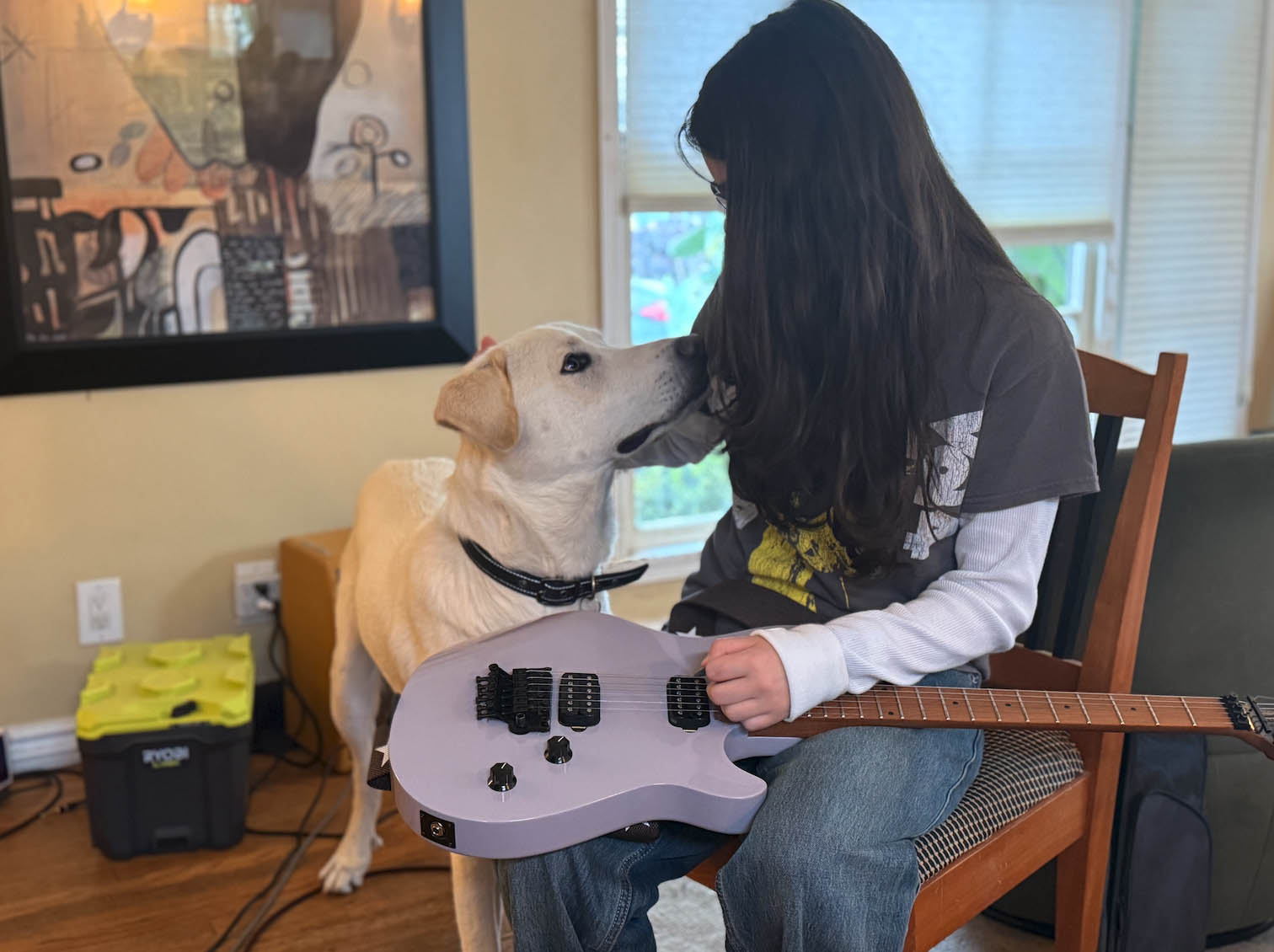
Image Credits
My student shot this photo. I have others and am working on a professional photo
Popular
-

Portraits of the Valley
-

LA’s Most Inspiring Stories
-

Robin Olive on Building an Inclusive Performing Arts Movement and Expanding Opportunities for Every Student
-

Que Johnson on Building Brands That Last: From Visibility to True Market Authority
-

Christina Wren Steps Into the Director’s Chair to Tell Stories That Feel Like Home
-

JordanL on ‘Breathe,’ Belief, and Building a Movement Beyond the Music


