




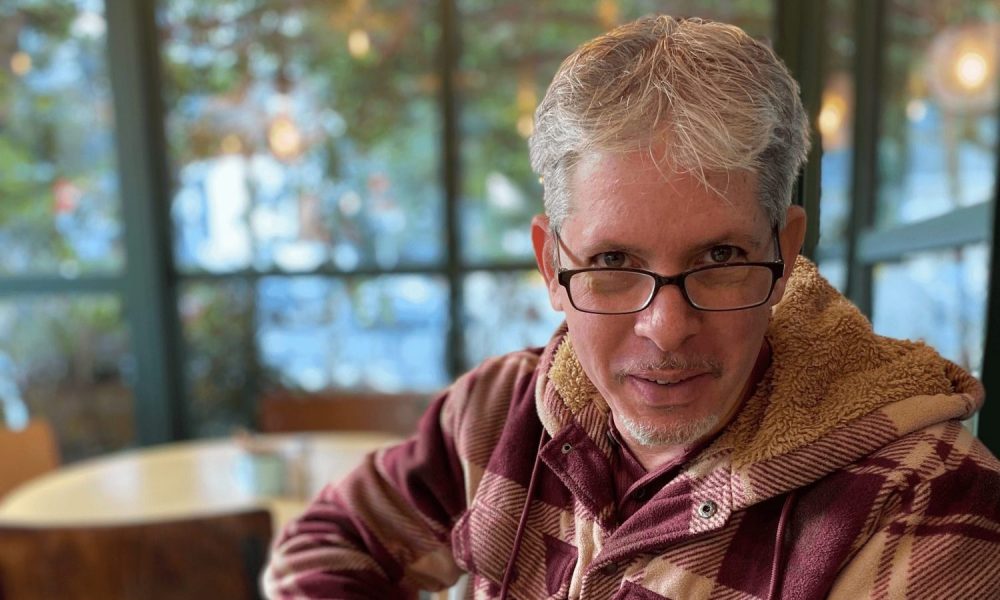
Today we’d like to introduce you to Hanoch Agassi
Hi Hanoch, it’s an honor to have you on the platform. Thanks for taking the time to share your story with us – to start maybe you can share some of your backstory with our readers?
Beyond the many things I’ve done or experienced, I now understand that my story is about one thing—the unfolding of consciousness. Looking back, it is clear that, although I didn’t realize it for many years, I was following the almost silent voice of my heart, leading me toward destiny.
Of course, the road is long and still unfolding, but I am grateful for the part I have already covered. I hope that by sharing some of it with you, it may serve you in your own journey. I grew up in Israel. One part of my ancestry consists of Jews who fled Germany with the rise of Nazism before WWII, and another part were refugees from Poland, most of whom died in the Holocaust, with a few finding their way to Israel after the war. That past had a profound impact on me, as it did on many others in Israel. Life was not bad, but it was clear that responsibility and obligation came first, and that it was necessary to help others and to help build society together, rather than investing in a more individualistic lifestyle.
When I was contemplating a profession, I didn’t know exactly what I wanted, but I knew it involved a deep connection with other people. It always amazed me how relationships between people can move from a relatively superficial place to one of true care and friendship. The fog then scatters, and a sense of “I see you” emerges. This is the type of relationship I wanted to participate in, so I decided to study psychology.
The undergraduate degree wasn’t yet what I was hoping for, and I awaited graduate studies and licensure. At that time in Israel, there were very few places that offered graduate studies in clinical psychology, so I worked very hard to get good grades and be accepted. However, helping others was not my only concern. I also wanted to prove myself and to be appreciated. To succeed. It is not bad to want to succeed, but it becomes problematic when success becomes more important than listening to oneself. That was certainly my case. Although I was doing well externally, I was in a bad relationship with myself. Fortunately, as part of the training for a psychologist, I needed to undergo my own therapy.
I started therapy with a psychologist in Jerusalem. After some time, she began her psychoanalytic training and offered me the chance to shift to psychoanalysis at a very discounted rate. I hesitated because of the commitment (a few sessions a week) but decided to go for it. It was probably one of the wisest decisions I ever made. By delving deep inside myself, I started to really get to know me. It helped me develop real compassion for others. The more I looked inside, the more I saw that all the things I scorn or criticize in others are also found within me. It gave me a profound sense of peace and the understanding that we are all human, we are all in the same boat. It doesn’t matter how problematic you think you are or how bad you think something you did is, you really didn’t invent anything. These are all human traits. We all have faults and vices, and I believe we also share a deep wish for the good. I haven’t met in my life a “bad” person, even though I did meet people who suffer and then spread suffering. I truly believe that people are good.
The more I untied the entanglements within me, the more I became ripe for a spiritual process. I became interested in Eastern philosophies, tried studying Kabbalah, and eventually found New Acropolis, which is a school of Applied Philosophy. From my first encounter, I knew I had come to the right place. Finally, a place that grapples with the “big” questions, the “why” of things. I didn’t want any more training in “how to” (how to be a psychologist, how to be successful, how to be happy, etc.). What I wanted was to learn wisdom, to understand what is beyond the matrix. In New Acropolis, I found that and more. I was very enthusiastic about learning teachings from a wide range of cultures, ancient and modern, rather than limiting myself to only one tradition. I was also enthusiastic about the practicality of the teachings. Most of all, I was touched by the strong sense of ethics. The people I met were just good and honest, and volunteering was part of the school’s activities. This was very important to me. It attested to the content of the teachings and answered my need to give to society instead of just expecting to receive. From that moment on, I started to practice philosophy. And I still do.
Jumping forward, in 2019, I came with my wife, Merav, to Los Angeles, and after some time, we settled in Pasadena. Here, I earned a second Master’s in Mythological Studies from Pacifica Graduate Institute and am now pursuing a Ph.D. I find the connections between psychology, mythology, and applied philosophy fascinating. For me, these are not merely academic studies. I live them in every moment and every decision, and I try to help others get in touch with this knowledge. I truly believe that we, as humanity, have lost something along the way. We invested so much in external development that now we are very advanced in science and technology, but we neglected our interiority and now we struggle to be happy. Fortunately, there is a rich collection of attitudes and inner tools for life that are ready to use. We just need to know them and start using them.
For me, the school of New Acropolis in Pasadena is where I do my practice and interact with others that are very diverse and still like-minded. Everything is done with good will and not for profit. I truly recommend giving it a shot.
We all face challenges, but looking back would you describe it as a relatively smooth road?
It wasn’t a smooth road, and I’m glad it wasn’t. Leonard Cohen’s song lyric, “There is a crack in everything, that’s how the light gets in,” resonates deeply with me. It’s very true. From crisis to crisis, I became who I am today. A “smooth road” means no development.
Probably the most important crisis was when I decided to delve deeper into spiritual work and volunteering, knowing it would require a commitment that would come at the expense of professional development. Through this crisis, I became aware of this intersection in life and could make a conscious choice that I have never regretted. It demonstrated that the heart’s intuition knows better than the brain. Eventually, my work also benefited from that choice.
Can you tell our readers more about what you do and what you think sets you apart from others?
Professionally, I am a Clinical Psychologist, but here I don’t want to write about my private practice. Instead, I want to focus on the practice that anyone needs and can benefit from. Life is full of mysteries. Children know it, but adults tend to forget. The intensity of life, the demands, being a grown-up… and the magic is gone. We find ourselves running in the hamster wheel, troubled by different responsibilities while the sand in the hourglass runs out. There is a choice. Life is no different from the gym. You can practice living and get good at it. No special instruments are required, only your goodwill.
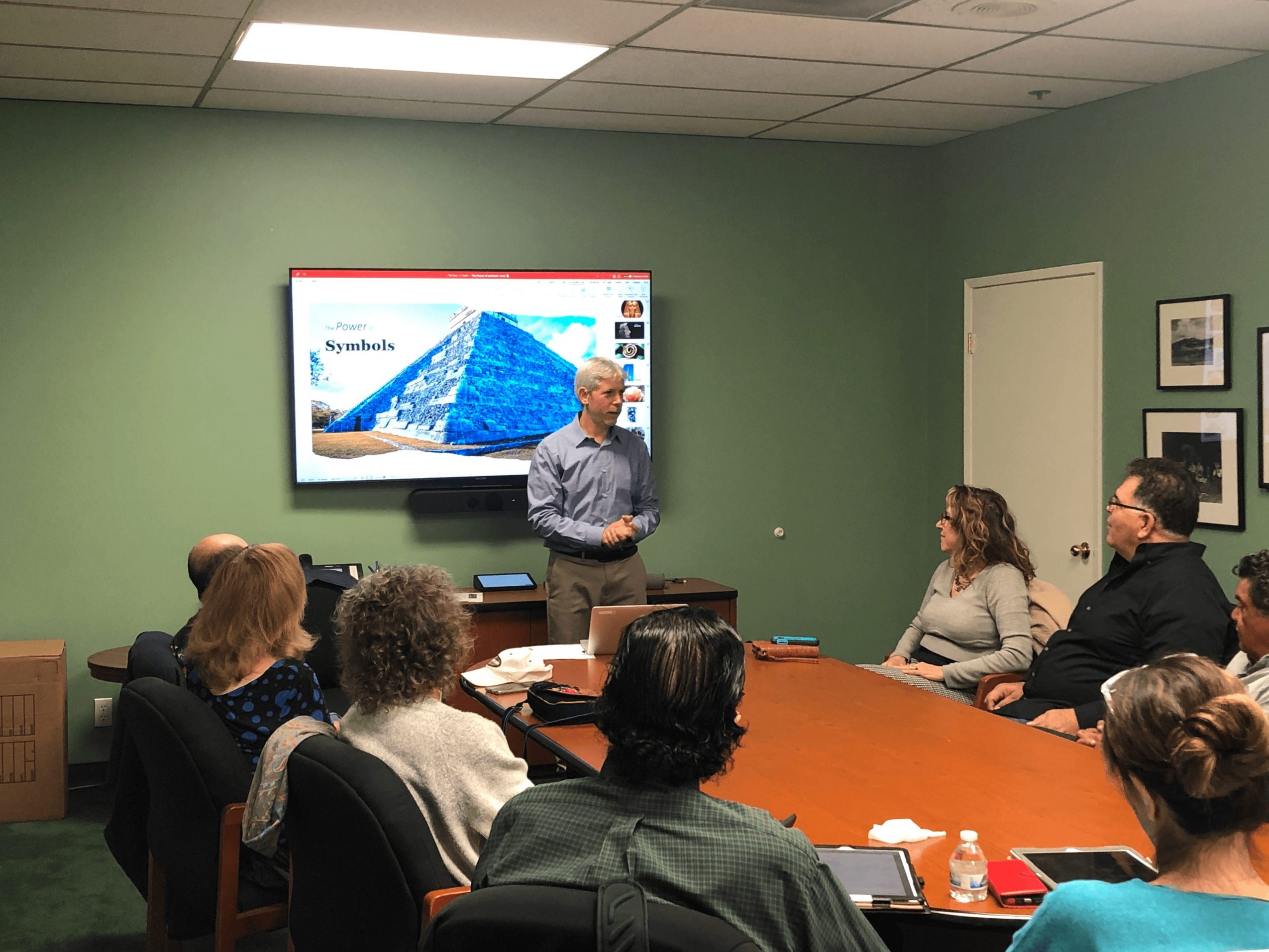
Interestingly, the question I am asked here in the interview is about my work and what I do. I do philosophy! Not the kind that might come to your mind involving dusty statues and worn-out books, but applied philosophy—living consciously. Applied philosophy that is inspired by diverse Wisdom Traditions. Referring to the question, this is what I do, this is what I specialize in, this is what I am known for and most proud of. Come and study philosophy with me. “Make the world better by making yourself better.” This is the slogan here in the school.
We’re always looking for the lessons that can be learned in any situation, including tragic ones like the Covid-19 crisis. Are there any lessons you’ve learned that you can share?
I learned two things from the Covid-19 period. First, when I am truly with myself, I am never alone. It may sound like a cliché, but it is true. We are vulnerable to feeling lonely because we don’t develop a deep relationship with ourselves. Nobody teaches this in school, but it is crucial to get to know ourselves better. At the temple of Apollo in Delphi, the famous saying was, “Know yourself and you will know the gods and the universe.” So, having a cup of coffee, gazing through the window, and having a true conversation with myself is a good start to knowing “the gods and the universe.”
Second, I realized that when we invest in our relationships and make them genuine, no Covid and no distance can come between us. The relationship will fill the heart and be present and impactful even through a call, a text, or a video. Although meeting friends in person is better, their presence and the sense of community and belonging do not depend on physical presence.
Contact Info:
- Website: https://www.acropolisla.org/main-workshop
- Instagram: https://www.instagram.com/newacropolisla/
- Other: [email protected]
Popular
-

Finding Balance Through Art: Theresa Croft on Blending Music, Wellness, and Visual Storytelling into a Holistic Creative Identity
-

From Street Corners to City Tours: Chef Chuck Glaster on Building SOULD Out Into a Culture-Driven Culinary Movement
-

Portraits of the Valley
-

LA’s Most Inspiring Stories
-

From Rock Bottom to Calling: How Hasani McLean-Davis Found Purpose Through Faith and Music
-

Building a Scalable, Soulful Travel Brand: How Abboud Khallouf Turned Morocco Into a Global Experience


