




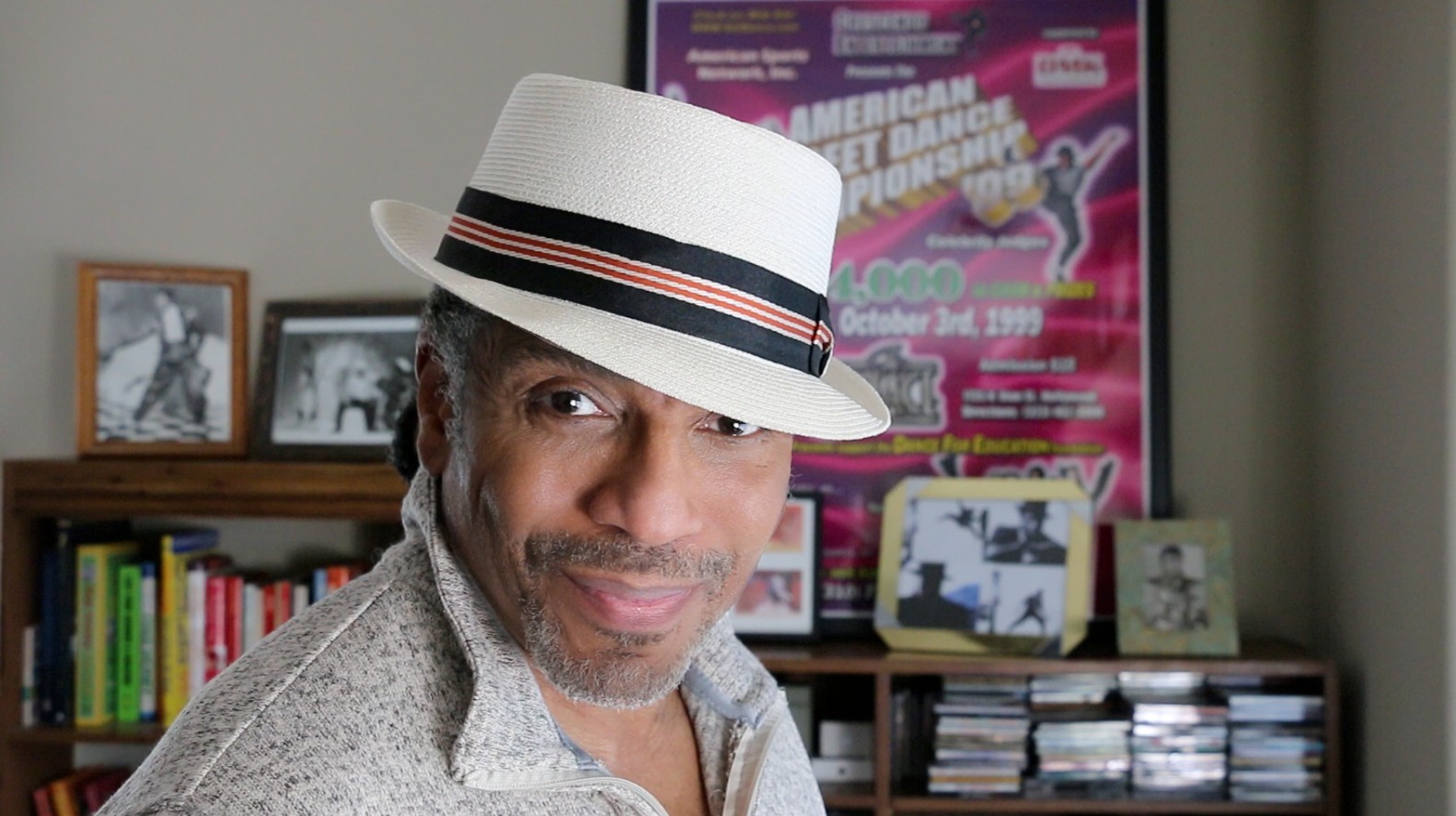
Today we’d like to introduce you to Crescendo Ward.
Crescendo, we appreciate you taking the time to share your story with us today. Where does your story begin?
I’m from Chicago, and I started out as a street dancer and bass player when I was 16 years old. I had a group called “The Puppets,” and we were literally a “dance band.” We’d perform as musicians, playing the top cover songs of the day, and then backup musicians would take over while we stepped out front and performed a full dance routine.
And we were good. So good, that we snuck into a taping of a Chicago production of a popular TV music show called “The Midnight Special” to see if we can get to perform on the show.
Now, anyone with common sense, or even a passing familiarity with the entertainment business – knows you cannot simply show up at a television studio and say, “Hi, we’re here. Put us on TV.”
That is not how the business works. Except, strangely enough, that is almost exactly what happened – Kind of. We were teenagers. We didn’t know any better. Sometimes ignorance isn’t a handicap. Sometimes it’s a strategy.
We showed up backstage wearing our elaborate costumes, and security took one look at us and apparently thought, “Well, nobody would dress like that unless they belonged here.”
Even better, they thought we were “The Ohio Players,” the famous funk and R&B band appearing on the show that day. Now, in hindsight, five teenagers being mistaken for The Ohio Players should have been the first clue that security was having an off day.
Eventually, somebody figured out that we were not The Ohio Players. We got busted. Thinking quickly, I told security that we knew Bob Smith – Wolfman Jack. Wolfman Jack was one of the biggest radio personalities in the country at the time, and I figured that knowing his real name might give us some credibility.
Apparently, it did. Instead of throwing us out, or having us arrested, which was still very much on the table — they escorted us to the production office.
Inside, Wolfman Jack was meeting with his manager, Don Kelly. Now, at the time, Don looked so much like Paul McCartney of The Beatles that all five of us were standing there thinking, “Why is Paul McCartney hanging out with Wolfman Jack?”
Wolfman looked up and saw five teenagers dressed in knickerbockers, pizza hats, striped socks, and God knows what else.
He pointed at us and said: “The Lockers!” The Lockers were a famous street-dance group at the time, and they were the group we emulated. Security looked at Wolfman and asked, “So you know these kids?”
Before Wolfman could answer, Don Kelly said, “Yeah. We know them. They’re with us.” We couldn’t believe it. We were thinking, “Ain’t that a bitch. Paul McCartney just vouched for us.”
The security guard left. The door closed. Don walked over, looked at us, and said: “Who the hell are you? You’re not The Lockers. We know The Lockers.”
Before we could even explain ourselves, Don basically reconstructed our entire scheme. He knew exactly what we had done because, when he was a teenager, he had pulled almost the same stunt trying to sneak backstage to meet Frank Sinatra. He understood the hustle because he had done the hustle. Don assumed we wanted tickets to see the show.
We said, “No. We want to be on the show.”
And of course Don said, “You can’t be on the show, because we are not a well known band, and we are not scheduled.” All reasonable points.
But Wolfman Jack was apparently impressed that five teenagers had risked getting arrested for trespassing just to get in front of him. He said, “Let ’em dance in front of the stage.”
So we did. And apparently, we were as good as we thought we were.
Wolfman and Don were impressed enough that they eventually hired us to tour and perform as dancers on “The Wolfman Jack Show,” which aired in Canada. Not bad for a group that technically entered the building under false pretenses.
Later, the group and I moved to California to find out whether we could actually make it in the entertainment business. We didn’t. I mean, we tried. We even had a record deal with MCA records and release an album. It bombed.
So I went solo. I started auditioning for professional dance jobs despite one minor technical problem: I had never taken a dance class in my life.
But I was very good at watching other dancers and learning their moves. At night, I started entering dance contests to help support myself. And I kept winning. A lot. I was winning so much that eventually I quit my day job.
My girlfriend at the time saw my calendar one day where I had written $100 on practically every day of the week. She asked, “You’re paying your bills with money you win in dance contests? What happens if you don’t win?”
I said, “It never occurred to me that I wouldn’t.” And then it hit me. And it taught me something. I remembered something Muhammad Ali said: “The fight is won before you ever step into the ring.” I had never considered losing because, in my head, I had already won.
Then one night, after I won a lip-sync contest, a man approached me, handed me his card, and asked if I would come in for a meeting with Dick Clark, the producer of “American Bandstand.” They were developing a new television lip-sync show called “Puttin’ on the Hits.”
So naturally, I went to the meeting. And naturally, I was late – 20 minutes late. This is not the recommended way to begin a meeting with Dick Clark. I came up with some combination of “Los Angeles traffic,” “something unexpected happened,” and probably the adult equivalent of “my dog ate my homework.”
Fortunately, they laughed and gave me a pass. I sat down quietly while the meeting continued. At one point, someone said: “So we’re agreed. Every contestant should dress like the recording artist they’re lip-syncing.”
And without really intending for anyone to hear me, I muttered: “Well, that sucks.” The room went quiet. It was that certain uncomfortable quiet that you know someone’s in trouble.
Dick Clark looked at me and said: “Before we escort you out, why does it suck?” At that moment I assumed it had probably been his idea.
So with nothing to lose, I started giving all of these funny and clever examples of people performing in the numerous dance and lip synch contests. Some were not appropriate for TV, but it made them laugh.
Then Dick Clark turned to his staff and said: “The kid’s right. Everybody doesn’t have to dress like the artist.” And somehow, instead of being thrown out of the meeting, I was hired to star in and choreograph the pilot/introduction show for “Puttin’ on the Hits.”
That pretty much describes my career. Walk into the wrong room. Say something inappropriate. Get hired.
Around that time, everything started happening at once. My dance partner and I gained national recognition as Grand Finalists on “Star Search ’85,” performing as the dance duo “Crescendo & Diamond.” Some people even compared us to the legendary Nicholas Brothers, which was both incredibly flattering and an enormous amount of pressure.
That same year, I was cast to star in and choreograph the television comedy series “FTV,” a parody of MTV. From there came television, music videos, films, and specials.
Some film credits include “Earth Girls Are Easy,” starring Jeff Goldblum, Geena Davis, Jim Carrey, and Damon Wayans, “The Naked Gun 33⅓” alongside Leslie Nielsen, “Maul Dogs,” “Sinbad & The War of The Furies” and The Rock Presents: “Ascendance” and many others.
A few TV credits include “In Living Color,” “The New Smothers Brothers Comedy Hour,” and “The Diana Ross Special,” and too many other TV specials to mention.
I also had the opportunity to work with top recording artists including Lionel Richie, Paula Abdul, including her “Straight Up” video, Gladys Knight, Natalie Cole, The Pointer Sisters, and many others. Out of countless TV commercial, my most noted was a Seagrams Wine Cooler commercial with Bruce Willis.
So during this time, I release a 12 inch single called “Master Dancer.” It made some noise in Germany. But here in the states – Nadda – zipp!
But there comes a point when every dancer learns an uncomfortable truth: You cannot dance forever. Technically, you can. But eventually your knees begin submitting formal complaints to management. So I began transitioning into producing and directing.
By then, I had built a nationally recognized career as a dancer and choreographer. My work became known for combining precision, theatricality, and the authenticity of street dance.
That transition eventually led me to form my company, Wardance Entertainment. I became deeply involved in urban dance entertainment and televised competition programming at a time when street dance was still largely being treated as something happening outside the mainstream entertainment industry. I believed it belonged on television.
In 2001, I created, produced, and directed “The American Street Dancer Championship,” which aired nationally on Fox Television. The program helped introduce competitive street dance to a broader television audience years before dance competition programming exploded around the world.
Unfortunately, my timing could not have been worse. The show premiered in 2001. And we all know what happened in September of that year. The entire country changed, television changed, priorities changed, and the momentum we had been building came to a sudden stop.
But we kept going. I later produced the Los Angeles Urban Dance Festival and the Hip-Hop Dance Awards, continuing to help bring street dance culture and its artists into the larger entertainment conversation.
Over the years, I have continued creating, writing, directing, and producing projects for numerous clients, while helping younger artists navigate this very strange business whenever I can.
Today, I’m no longer the guy entering dance contests every night. My knees have officially retired from competition. But as a producer, director, choreographer, and editor, I still approach the work the same way I did when I was that 16-year-old kid from Chicago: I see possibilities.
And that is what excites me so much about AI. AI has opened an entirely new creative frontier. For filmmakers and independent producers, the limitations that once came from budgets, locations, visual effects, sets, and distribution are rapidly changing.
For someone who has spent his entire career figuring out how to create something when people tell you it can’t be done, that is incredibly exciting.
One of my latest project, as director and editor, is “Alive, But Not Well,” a show for PBS. And we’re currently developing several projects that we believe have enormous potential for the coming year. And between AI technology, independent production, and the growing number of streaming platforms, creators now have more ways than ever to bring their ideas directly to an audience.
Which, when I think about it, is probably a good thing. Because apparently my entire career started with five teenagers sneaking backstage somewhere they weren’t supposed to be.
So if there’s one lesson I’ve learned, it’s this: Sometimes you wait for someone to open the door. And sometimes you put on a pizza hat and walk through it like you were invited.
Alright, so let’s dig a little deeper into the story – has it been an easy path overall and if not, what were the challenges you’ve had to overcome?
No, it hasn’t. But it’s all about the journey. My biggest struggle has always been not fitting in to what the gatekeepers wanted. And when I say gatekeepers, I mean agents. Do get me wrong. I’m not throwing shade on agents. I understand them. Their job is to find and pitch what they think producers and the public would like. Every major film, TV show, or commercial I got – I was never submitted for by my agent. So I bogarded the audition. (That’s 70s slang for just lying your way into an audition.) Now agents don’t like this, but they will always take the commission anyway.
Appreciate you sharing that. What else should we know about what you do?
As I stated before, my present work involves writing and creating sizzle reels for clients. Besides, my daughter, I’m most proud of peace of mind. I still have the hustle drive, but at this stage in my life, I work when I want to work. I take on projects that I feel are different. What sets me apart from others is my relentless imagination, and my slightly warped since of humor.
What do you like and dislike about the city?
What I like best about LA? This is where the action is. What I like least about it – is the traffic.
Contact Info:
- Website: https://wardanceentertainment.com
Popular
-

Portraits of the Valley
-

LA’s Most Inspiring Stories
-

Greg Hex Is Turning the Everyday Kitchen Knife Into a Modern Design Object
-

Rick Norris Learned That Building a Successful Business Means Building a Life You Actually Want to Live
-

How Olivia Rush Turned Survival Into a Mission to Help Others Keep Going
-

How Bibi Goldstein Is Helping Entrepreneurs Reclaim Their Time by Embracing the Power of Delegation


