




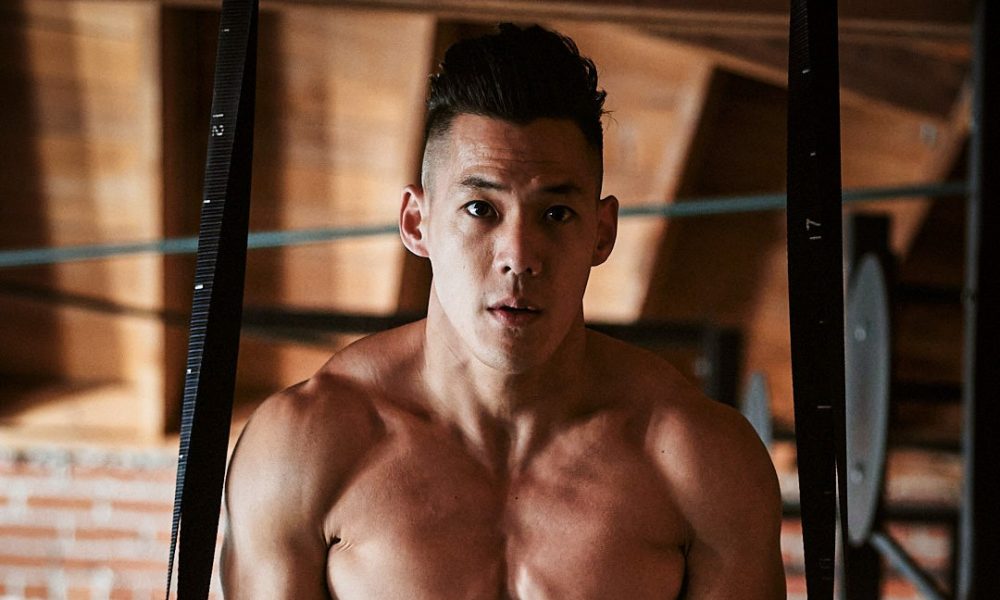
Today we’d like to introduce you to Charles Chung.
Hi Charles, we’re thrilled to have a chance to learn your story today. So, before we get into specifics, maybe you can briefly walk us through how you got to where you are today?
My journey to becoming the athlete I am today was not an easy one.
Born in Taipei, Taiwan, I was exposed to pollutants at an early age. I remember having asthma attacks so severe my parents kept an oxygen tank at home on standby to avoid trips to the emergency room. Although my parents pushed me towards academics, I was always drawn to the action and physicality of sports and training. I was never the fastest or strongest kid in school, and I envied the other children who seemed to have a natural athletic ability. I assumed that successful athletes must have been born that way.
When I was 10, my parents made a decision to immigrate to Canada, so I could grow in an environment that wasn’t hostile to my lungs. Although I still experienced asthma attacks, with the help of a newly prescribed inhaler, it was much more manageable and less frequent.
Although I participated in team sports (ice hockey, rugby, and basketball), I didn’t fully develop as an athlete until I found individual sports. I found my first passion for sport in bouldering. I loved the idea that I had everything I needed to solve a particular problem and that the technique and strength I lacked could be learned, developed, and trained. Through climbing, I discovered the importance of fluid motion and static tension.
When I moved to Los Angeles in 2012, I was challenged by my brother-in-law to attend my first CrossFit class. Watching some of the top CrossFit athletes in the world perform highly skilled gymnastics movements and heavy barbell lifts, I was immediately inspired to learn these skills and techniques, and to develop my own strength. I dedicated my spare time to learning everything I could about the movement mechanics, the training methodologies and performing the advanced movements. When I began shadowing and eventually coaching, I saw the disconnect between people and movement. I realized that many adults had not been inverted (required to perform a handstand pushup) and lacked the strength to do a bodyweight pull-up. Initially, this baffled me. Growing up around people like my dad, an amateur bodybuilder and his similarly athletic friends, I assumed most people had a similar level of strength.
I remember coaching an athlete through their fear of being inverted. Where would the hands go, what sensation should they expect? When I helped this particular individual get inverted for the first time since their childhood 30 years ago, it was as though I helped unlock a memory that had been lost to time.
I discovered my special knack for individualized communication when I realized everyone visualized, communicated, and understood movement differently. I believe my empathy and patience with my clients and athletes is largely rooted in the challenges and struggles I faced as a child and the lengths I was willing to go to overcome them.
Since then, I have worked diligently to learn the movement patterns and their respective idiosyncrasies that make each of my athletes and clients unique. To think that I once believed that only a person born with the right genes could be strong or athletic. But through my own personal growth and journey, I now believe with the proper guidance and dedication, anyone can achieve their goal of becoming a stronger, faster, and more fit version of themself. Where I used to complain about my physique and lack of “good” genes, I now am grateful for where I started and the journey that has brought me here.
Alright, so let’s dig a little deeper into the story – has it been an easy path overall and if not, what were the challenges you’ve had to overcome?
The biggest struggle I encountered came in the form of imposter syndrome. My upbringing fed into my perfectionism. I was often criticized for making minor mistakes as a child. It left very little room for exploration and experimentation. The rigidity and demands placed on me led me to doubt myself greatly. Even if I had the answers in class, I would rarely speak up for fear of being ridiculed.
When I started my personal training/coaching business, I always asked, “Why would they want to work with me if they could work with a more decorated, famous coach?” I could not see myself the way my peers and clients saw me. If 9 out of 10 athletes/clients spoke highly of me, it is the 1 with criticism that I would focus on.
In some ways, the fear of being an imposter shows that we care. It shows that we are constantly growing, always recalibrating. My fears of being an imposter led me to expand my knowledge, to gain experience in new methodologies. I want to be the guy with all the answers but also one that isn’t scared to say ‘I don’t know’ when presented with something unfamiliar. To become that coach, I have to be willing to admit what I don’t know first so that I may fill in the blank with new research and training.
Alright, so let’s switch gears a bit and talk business. What should we know about your work?
I am a personal trainer and Olympic Weightlifting coach who specializes in a holistic approach to helping my clients/athletes reach their goals.
In my personal training business, I work with clients with a variety of different goals and needs. I’ve been working with an 80-year-old gentleman whose goal is to gain strength and mobility post-back surgery. Our training sessions focused on “return to play” which has allowed him to stay active and develop his strength and coordination. He recently began learning and playing Pickleball, something he was not able to participate in prior. On the other end of the spectrum, I work with several competitive athletes who are honing their gymnastics and weightlifting technique with the hopes to compete at local and even national-level competitions.
I have often been given the feedback that what makes me a unique and sought-after coach is that I care more than the other coaches my clients/athletes have been exposed to… I know that something that sets me apart is that I will never give up on my athletes, and I will always dedicate the time and energy to fixing things or improving things that other coaches may have not had the patience, time, or knowledge to address. It is my greatest joy to find ways to communicate in a manner that is specific to my clients and athletes so that the message resonates and can be put into practice.
What sets me apart as a coach is my ability to look at my athlete/client’s growth and development at a micro and macro level to solve problems that may be causing a disconnect between hard work and progress. While many clients will have similar goals, the road to get there will be unique to their background, strengths, mobility limitations, time constraints, and other variables that might not be immediately obvious.
I have a passion project which is an Olympic Weightlifting Club: Wilder Athletics. Wilder Athletics specializes in athlete development. We are an inclusive group of athletes who love to have fun, work hard, and lift heavy while looking great doing it. The name is in honor of my son, Asa Wilder Chung, who I hope will one day see the tremendous effect he’s had on me to grow as a father and coach.
I am most proud of the clients who have had the greatest difficulty in their journey. They took the first step by reaching out for help and guidance, and they continue to put in the hard work day in and day out, regardless of how long or how difficult it might be to see tangible results. I have helped athletes perform movements they never thought were possible because other coaches had given up on them. I believe there are solutions to every problem, and often there is more than just one way of solving them; you just have to know where to look and how to look at it from different perspectives.
Where do you see things going in the next 5-10 years?
With advancements in AI technology and public accessibility, I believe we will see growth in AI-based programming and training. During the COVID-19 pandemic, we saw a shift towards online, video-based training, but when the quarantine ended, people clearly craved human attention and rapport. I think the future of fitness will be an amalgamation of AI tech and live video-based training.
I believe the technology accessible to competitive and professional athletes will trickle down to the general public. We will see glucose monitors be utilized to aid in fueling athletes and blood tests to identify nutrient deficiencies. This level of transparency will allow people to optimize their recovery and performance. There will be a demand for personalized meal prescriptions and the hope is for doctors to begin prescribing activity as a solution to many preventable diseases.
However, I think that regardless of technological advancements, the athlete/coach relationship is a sacred one, and if you can find someone who you click with, you will be hard-pressed to let them go.
Pricing:
- 30 Min Personal Training/Technique Tune Up $90
- 60 Min Personal Training/Technique Tune Up $150
- Personalized Programming 3-5 Days/Week $160-$235
- Nutrition & Accountability Coaching 1x/Week $150/Mo
- Nutrition & Accountability Coaching 2x/Month $100/Mo
Contact Info:
- Instagram: @charleschungfitness
- Linkedin: https://www.linkedin.com/in/charles-chung-11123330/
- Yelp: https://www.yelp.com/biz/wilder-athletics-san-fernando-valley-2?osq=wilder+athletics


 Image Credits
True North Motion Aly Whitman John McCrary Jesse Viray
Popular
-

Robin Olive on Building an Inclusive Performing Arts Movement and Expanding Opportunities for Every Student
-

Portraits of the Valley
-

LA’s Most Inspiring Stories
-

Que Johnson on Building Brands That Last: From Visibility to True Market Authority
-

Christina Wren Steps Into the Director’s Chair to Tell Stories That Feel Like Home
-

JordanL on ‘Breathe,’ Belief, and Building a Movement Beyond the Music


