




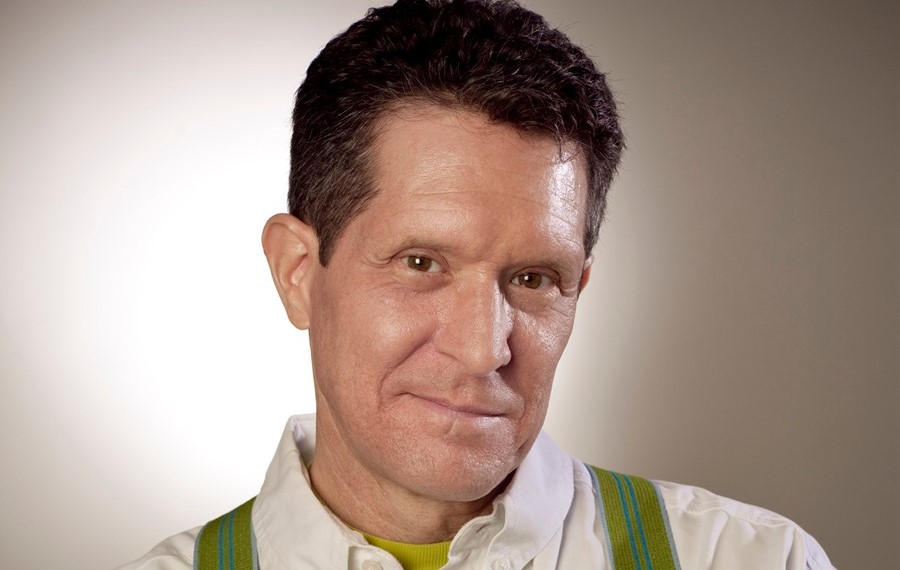
Today we’d like to introduce you to Brian P. McEntee AKA Aurelio O’Brien.
Hi Brian, thanks for joining us today. We’d love for you to start by introducing yourself.
Although I was born in San Diego in 1957, I spent most of my youth in a blended family with seven siblings in Sunnyvale, California, before it became Silicon Valley. Our father worked in aerospace engineering at Lockheed, so tech was already growing there, along with the cherry and pear trees. It was a wonderful place to grow up. My family was a creative lot too and there were always “projects” going, so I was encouraged to test and begin to develop my creative wings at a very early age.
Being around older smart and creative siblings, I ended up a soft-A student with broad aptitudes, which dismayed my parents when I chose to pursue a career in art rather than something more obviously practical or academic. Despite their lack of faith (or financial support), I was accepted into California Institute of the Arts’ Character Animation program in Valencia, CA, for two years (1978-79), after which Disney Studios offered me a trainee position in their animation department in 1980.
My education at CalArts forever altered my life, thanks to all my incredible teachers there—a who’s-who of creative talents from Disney Animation’s golden age. CalArts also began my life as a permanent Angeleno.
Once at Disney, my animation training continued under Eric Larsen, one of the legendary “Nine Old Men,” before I began slowly working my way up the creative ladder there on such films as, “The Fox and The Hound,” “Mickey’s Christmas Carol,” and “The Great Mouse Detective.” I spent time in a variety of different departments, enabling me to learn every aspect of animated feature filmmaking: character animation, story development, visual development, and pre-production, layout, effects animation, and clean-up. This broad training gave me the knowledge base and skill set to then leave Disney and join Hyperion Pictures in 1987 as a first-time Art Director on “The Brave Little Toaster,” which has since been deemed an adopted Disney classic.
Following that Art Direction credit, I returned to Disney as an established Art Director on “Beauty and The Beast” (1991), followed by leaving there to help develop and then Art Direct “Cats Don’t Dance” (1997) for Turner Feature Animation, and was later the Art Director/Production Designer on 20th Century Fox/Blue Sky’s “Ice Age,” (2002.)
After my work on “Ice Age,” I retired from animation and started a new career as a novelist under the pen name Aurelio O’Brien.
As Aurelio, I have authored four novels to date: EVE (2004), GENeration eXtraTERrestrial (2014), I Was a Teenage Cheerleader (2018), and Family Trees (2020). My writing is what I call speculative satire—blending either the genres of sci-fi or fantasy with heavy doses of social satire and humor. Family Trees is an exception—it is a semi autobiographical Christmas-themed story, akin to tales like “It’s a Wonderful Life” and “A Christmas Story.”
I am currently working on my fifth novel, a surrealist satire, which I hope to publish at the end of 2023.
Alright, so let’s dig a little deeper into the story – has it been an easy path overall and if not, what were the challenges you’ve had to overcome?
Any creative process is a struggle, but that is usually part of what makes it worth it. The most humorous struggle I faced since becoming a novelist, however, has been taking a pen name—but I felt it necessary to do so. How is taking a pen name necessary… or a struggle?
Example: George Sand was a woman. I’m not saying that to impugn his masculinity, but because he was literally a she, a woman writer with a male nom de plume, just like George Eliot. So, the Georgie-Girls, O. Henry, C. S. Forester, Lewis Carroll, George Orwell, Ellery Queen, Voltaire, Dr. Seuss, Ayn Rand, Molière, Mark Twain, and even Lemony Snicket all have names-full-o’-baloney, just like Aurelio O’Brien.
There are as many reasons for us writers to adopt pen names as there are writers with them, the practice so historically commonplace it is safe to call it a literary tradition, like the couplet or eschewing adverbs, but my own 21st-century experience with a pen name has made me ponder anew what it must have been like for all who forged this path before me.
First, let’s be clear: a pen name is not an alias. Yes, there may be a slight to healthy desire to mask or deceive, granted, but not for criminal intent. (Indeed, the real crime regarding the Georgie-Girls was that 19th century Europe required they do book-jacket drag in order to be taken seriously.) Others, like poet Lucila de María del Perpetuo Socorro Godoy Alcayaga, who became Gabriela Mistral, probably adopted one so her name would fit on a book spine. Yet I’ve experienced more than my fair share of jaundiced-eyed, who-did-you-murder looks from friends and family because from their perspective I’m not being me, and that makes them uncomfortable.
“What are you ashamed of?”
“What are you hiding?”
The simple truth is pen names are practical; such was the case with mine. Before I became Aurelio, I had spent over 25 years making animated feature films with singing animals, anthropomorphized household objects, and needy princesses with a penchant for ball gowns. So, when I announced to friends and family that I was writing a book, the conversations went something like this:
“Oh, a children’s book!”
“No. It’s a novel. No pictures, just words.”
“No pictures…?”
“It’s adult fiction.”
“Oh! Porn…???”
Sure, it’s only natural to assume that someone who drew cute, cherub-cheeked toons for a living would write and illustrate children’s books, as many of my animation colleagues do, but when—even after lengthy explanations of what my writing actually was and hoped to be—I continued to be asked, and repeatedly:
“How’s that kid’s book comin’?”
I knew something drastic had to be done. What if agents and publishers respond like this? Could the literary community take me seriously if they judged me with these same limited preconceptions? I couldn’t risk that. And what of the public? Any potential readers expecting a children’s book would be disappointed and adult readers might stay away, assuming my work was only for children. I wanted my writing to be judged on its own merits, to live free or die on its own. I needed a clean slate—so after a bit of brainstorming, Aurelio O’Brien was born.
This being the 21st century, I immediately Googled “Aurelio O’Brien,” as there would be no point in taking a pen name only to find I’d inadvertently started down the path to identity theft. But nothing came up. I figured if the Great Google Search Engine in the Ether didn’t know him, Aurelio was free to be whoever I wanted. I registered the name as a DBA, just to be on the safe side, and started constructing my new persona and career.
It was far easier than I anticipated and a whole lot of fun. I networked and blogged and joined social media as Aurelio. I made new friends who knew nothing of my creator-of-cartoon-kiddie-pabulum past. At long last, I had adult conversations about literature about my work, was asked my opinions as a writer rather than toonster, and I loved it!
And… the more I became Aurelio O’Brien, the more Aurelio O’Brien became me. And he is me, minus the past that didn’t fit his world. I was genuinely surprised how creatively freeing being him allowed me to be. By removing my outward impediments, I had also apparently removed some inward ones I didn’t realize I had. My writing flowed more easily, and my confidence surged.
There are some who knew me as Brian McEntee who still squirm and huff to this day, convinced there is something nefarious in the whole pen-name thing. One friend snarkily outed me on her blog, and occasionally get people who absolutely refuses to use my pen name—even when speaking of my literary works.
That many of the greatest authors throughout history, Nobel Prize winners, and Dear Abby had pen names too means nothing to them.
It used to really bother me, but not as much once I truly became Aurelio O’Brien. I Googled myself again the other day. More than a dozen pages of links came up, and if the Great Google Search Engine in the Ether now says I am somebody, who are they to argue, eh?
Thanks – so what else should our readers know about your work and what you’re currently focused on?
Despite my now historically noted accomplishments in feature animation, I am most proud of my writing efforts and finding my voice in the realm of speculative satire, which is a delicate art.
For example, we science fiction fans are a peculiar breed. Anyone who has attended one of our conventions knows how serious we folks are about objects and ideas that may appear silly to the rest of humanity. But the almost religious reverence that our human subset has for our various versions of our future makes my injection of humor into this world a risky proposition. As a writer of speculative satire, I continually struggle with bridging the gulf between these two seemingly incompatible things I dearly love: humor and science fiction/fantasy.
It is never good to alienate one’s core audience, and since genre fans are more likely to view my humorous spins on their treasured genres as ridicule rather than playfulness, I have given this dilemma more than cursory thought. I also respect them—because I too am one of them. And we have good reason to reject ridicule, to be defensive. Science fiction has been right in our many predictions in the past: organ transplants, genetic manipulation, technological advancements of every kind. Indeed, it is arguable that cell phones and flat screens owe their direct development to the desire to fulfill the dreams of science fiction writers.
But, when I speculate on our future, humor springs forth naturally to me. It is an easy marriage. Look at it this way: science fiction takes the world we know and adds an element of surprise, pulls it out of the everyday, and humor does the very same thing. They both serve up twists on the norm in order to entertain. To combine them serves to enrich both; at least that is how I see it.
Attacking the status quo is the goal of satire; it makes fun of the powerful, the established, and the ensconced. My speculative satire pokes fun at the established versions of the future and fantasy realms, be they utopian or dystopian.
The philosopher George Santayana claimed that those who do not remember the past are condemned to repeat it. I even find humor in this thought. Further human evolution is unlikely to eradicate our funny bones. The props and locales may change, but our human foibles will remain, and we can see this borne out in many of science fiction’s past predictions today.
For example: cosmetic surgery—okay, perhaps this topic is more creepy than funny, but Mary Shelley’s Frankenstein could just as easily have been a comic novel about the King of Pop. We use powerful supercomputers and armies of artists to animate cartoon fart gags, and some see Hummers as commuter cars. We allow actors to lead governments and employ the internet as a dating service. We are like precocious children: simultaneously clever and naive, sophisticated and vulgar, and I doubt those aspects of our basic humanity will change any time soon.
It’s hard to completely admit to myself that I write speculative satire because what I write is so firmly grounded in reality. To me, it is merely life as it most likely will be. We writers all select and edit the things we observe to inform our writing, then reorganize them into something new. We lend them our peculiar perspective. We do this whether we write historic non-fiction or comic books – the process is the same.
Exploring serious things from a humorous perspective doesn’t necessarily render these speculations inconsequential or trivial. It can be a way to skew tired rhetoric and veer off of over-mined veins to allow fresh perspectives. Much current science fiction seems dominated by dark, nihilistic, Blade Runner-ish or Matrix-y things—everybody runs around dressed in black leatherette and we’re all doomed. There is no room for laughter in that now-clichéd future. It is primarily because of the omission of such a core human element as laughter that it can ring hollow to me.
So much of real life is observably funny and this heavily informs my writing. When I was creating my all-organic, genetically redesigned future of EVE, things like McDonald’s Characters directly inspired me to go further than I might otherwise think to go with my own future’s Creature Comforts™. The fact that Mayor McCheese’s head is actually a big slab of ground beef is pretty funny. Think about it. And, the little giggling “McNuggets” are chunks of dead fowl flesh with cute little smiles carved into them. They are urging you to eat them! I find these kinds of things to be so twisted and humorous and odd. Even more odd is the fact that most people don’t see them as such. Most people don’t think about these characters beyond their commercial surface appeal. So, for example, when people tell me my Lick-n-Span© is gross, I respond, is it really any grosser than having a hacked-up piece of chicken flesh giggle at you? The satire or humor comes from taking only a very small step away from our everyday reality.
Or, with my novel GENeration eXtraTERrestrial, I took a different slant on the sci-fi alien invasion norm—but instead of following humanity’s reaction to having space aliens living among us, I follow my space aliens’ reactions to being forced to grow up on Earth with us. They have to find their way in what to them is an alien environment, to fit in, stand out, and wonder why-the-heck they ended up here in the first place. All the classic social struggles we each face growing up take on a whole new humorous and amplified perspective for my alien kids.
I Was a Teenage Cheerleader is a satirical fantasy send-up of the classic high school milieu—my socially-ignorable brainy-girl protagonist is magically and periodically transformed into the school’s star cheerleader. In a way, she becomes her own worst enemy, which we can all relate to doing to ourselves from time to time. The novel thematically explores friendship and romance and social role-playing with a bit of a monster-movie twist.
Any form of satire makes publishers nervous. As George S. Kaufman said, “Satire closes on Saturday night.” This is why I doubt there will ever be a “speculative satire” shelf at your local bookstore but since most of us normal folks out here are not the establishment, it would follow that there is a large potential audience for it, shelf or no. It may be hard for major publishers to get their brains around it but take it from me: whatever our future holds, there will be a healthy dose of humor in it.
We love surprises, fun facts and unexpected stories. Is there something you can share that might surprise us?
People who only know me through my novels would be surprised that I’m a rather boring guy in person. I’m very ordinary in appearance and live a quiet life at home in our sleepy suburb of Altadena, spending most of my time alone with my husband of 40 years, Chuck, gardening, cooking, hiking, and puttering on our various hobbies and projects, with occasional trips exploring other places and countries.
Chuck collects antique automobiles and so when we do our infrequent socializing, it is either with other old-car enthusiasts or our animation folks.
They may also find it surprising that I decided to learn to tap dance in my 60’s—I’ve been at it for almost six years and perhaps in another six, I may start to feel like I know what I’m doing. It is great fun though and a good reminder that one never has to stop learning and trying new things.
Contact Info:
- Facebook: https://www.facebook.com/aurelio.obrien
- Youtube: https://www.youtube.com/@badattitudebooks8069
- Other: https://www.amazon.com/stores/author/B00MCHCK9I?ingress=0&visitId=fc5e788c-b3b3-43e1-a5f7-64406aa21e18


 Image Credits
Publicity photo by Erik Borzi
Popular
-

Candice Swanson on Honoring the Sacred Early Days of Motherhood Through Intentional Photography
-

Michael Johnson on Telling Untold Stories of Identity and Leadership Through SQUAD
-
Owning the Narrative: Drew Dusterhoff Steps Into Power with Lincoln Must Die
-

Portraits of the Valley
-

LA’s Most Inspiring Stories
-

Finding Balance Through Art: Theresa Croft on Blending Music, Wellness, and Visual Storytelling into a Holistic Creative Identity


