



Today we’d like to introduce you to Paul Redman.
Hi Paul , thanks for joining us today. We’d love for you to start by introducing yourself.
My name is Paul Redman and I want to talk to you today about how being a communicator helped me to heal and how I think it can help us all to heal becoming heroes in our own stories, to show up and bring abundance to our damaged planet.
Like any good communicator my starting point is the question, but when did I decide to question?
The community I grew up in knew abundance because they were white people living in apartheid South Africa. For those of you who weren’t around in the 80s, South Africa was being ostracized, and rightly so, with international boycotts against a legalized system of racial separation. But not everything was black and white, my parents weren’t political, they were working class and went to South Africa to make a life for our family, traveling out in 1975 to seek work, I was born in 76.
Raised in a large home full of love and laughter, happy parents with few arguments, regular poolside parties, beautiful gardens, a loving maid, a strong community and lots of time in nature. This was my foundation, where I learnt my core values. A beautiful moment of pure love. But in this story, like most, the seeds sown at the start of my journey held the conditions for my inner conflict.
In the words of the great polish travel writer, Kapuscinski, ‘Beauty and loss are two sides of the same coin’
Things changed. My parents split up, suddenly, and our loving maid angrily departed, or that is how it felt for me as a boy, and my mum took my brother and I back to England. That is when I learnt a further truth and began my first deep question, who am I?
In moving back to England in ‘89 the change was abrupt, I was lost, faced with insults for my skin color and nationality, a White South African, in rural somerset. The face of appartheit made real in a teenager. From wealthy suburb to tiny terrace house raised by a single mother. I was vilified by the kids around me. A ‘Spitting Image’ cartoon song at the time often sung to me on school trips said it best, ‘I’ve never met a nice South African and that’s not bloody surprising because they are a bunch of racist bastards’’.
But what are these people talking about? This is not who I am, or is it? So I felt guilt and this drove me to try and see the signs of apartheid in my childhood. My once solid upbringing became a mirage, a smoke screen for something I missed. It was disorientating, how could I possibly have grown up in such a peaceful and joy filled way, and missed something so vile as aparthied? Just as I once felt my family life was perfect, only to be blindsided by my parents split, what was once a feeling of deep pride I had in South Africa became clouded with shame and confusion.
I was not a racist white South African, that I knew. So I vowed to live a life of purpose and thankfully I found the camera, and documentaries. An excuse to dig deep, to ask questions and to explore truth, political context and understand people, bereavement and loss. I started exploring with my camera and finding solace in nature, working myself into a career with an investigative environmental charity – a perfect fit, now I think about it.
I then spent twelve years exploring with new miniDV cameras and online editing, at the time a revolutionary technology for the aspiring activist. We explored the question, how do we stop the trade in environmentally damaging commodities?
I got to live out my instincts, discovering the where, how, what and who of a situation. From investigating the tiger skin trade in remote Tibet, to tracking the trade in ivory in sub-saharan africa, exposing the Dall’s porpoise trade in Japan, and illegal logging in Indonesia – epic travel on a global scale. I witnessed what it takes to reveal the truth, to save the planet, to keep our human family together. I was also asked to train activists across 3 continents and I began to see the power of communications in the hands of others, to bring people together, to build movements, to change laws.
Whilst I traveled I recorded heart-wrenching and personal stories like the death of a loved one in a sudden fifteen minute landslide, of forest homes being suddenly wrenched from a villager by a bulldozer. I connected and it made me weep but I didn’t see where my feelings came from. I wanted to know how others felt to be suddenly bereft of home and family. I formed a production company and explored emotion and feeling further. I asked many questions, too many questions so I could feel the impacts of sudden change in others. I would admonish myself for missing something, a glance, a moment, a fragment of truth that had evaded my camera. Blaming myself, as I had as a boy, for not seeing the signs, for missing a truth.
Once I finished shooting I would toil on the edit, agonizing over emotional tone and inflection, hoping it would resemble a truth both emotional and intellectual. Thankfully work gave me deadlines, compelled me to put my films out to have impact, helping me see their value, my value.
I buried deep into African history, lived back in South Africa, volunteered in a Township, worked for 3 years supporting Tanzanian activists, lived with a white South African ex-paramilitary in his remote reserve in Mozambique; and I learnt about the Africa I missed. This made me realize that we all in some ways live in denial. We don’t fully understand our impact on the world. This helped me realize that we are not solely to blame, no individual is culpable, fully. Whilst I felt responsible, I could also say to myself that I am not. I was a child, how could I know? This awakened my understanding of the burden of responsibility. In a world besieged by climate catastrophe brought on by billions of individual consumer choices this is a vital understanding to avoid the pitfalls of guilt. Guilt is a destructive emotion allied to shame that can drive erratic and irresponsible decision making.
investigative films and exposes are only one aspect of social change, at the center is media as a tool to galvanize people to act, in its purest form it brings people together, uplifts and inspires.This is what I saw it giving to me and to others, a renewed purpose, evidence of making a difference, having an impact for the better.
I witnessed this for the first time in a remote village screening in South Luangwa, Zambia. We showed a short film we had made in partnership with the local wildlife rangers. The film showed the amazing work being done by local villagers to protect wildlife. In a quiet village with barely any electricity, to see the rapt attention at the screening was mind blowing. I lost track of how many times everyone wanted to see the film, again and again. The next day all the kids in the community had new heroes, inspired by the large flickering lights showing men and women who they knew from their village.
By carefully considering where we point our cameras and what we communicate we create new environmental heroes, new narratives for how to live. We can use story as the building blocks for a just climate future we cannot imagine yet. To use a quote from Boyd Varty, a fellow south african, ‘Purposeful action towards an unknown purpose’ .
If Not Us Then Who? This is the question that drove my next 8 years of work. How do we empower and become new environmental heroes?
Founding a storytelling organization – If Not Us Then Who? – that uses strategic communications participatory media, training, commissioning and pop up climate events – to amplify the voice of indigenous and local communities as heroes in the fight to save our planet. Making sure local peoples have a camera and tell their own stories, to connect back with their ancestral wisdom. We also create stages for new leaders so they can speak on their own terms. Today we have a global reach of over 60 million, creating award-winning documentaries and currently training over 205 local communicators last year alone, exploring the power of participatory and inspirational storytelling. To date we have put together over 20 global events at climate conferences from video projections in Times square, protests in parliament square to community corners at the pop up ‘Our Village’ event space where stories are shared, alliances formed and movements built. We answer questions like, ‘what unites us?’ a conversation between an astronaut, religious leader and an indigenous leader? Or ‘What is climate justice?’ with leading black and Indigenous leaders.
Through this journey I realized that the indigenous worldview resonated with me deeply. Community based thinking, the collective over the individual, of us as part of nature and not separate from nature and what it means to truly belong, something I have searched for my whole life. And through this work I realize I have healed my guilt and shame, understanding the illusion we all live under as part of failed political systems and broken economics designed to extract and exploit.
So how do we move on? How do we stop our current path towards environmental catastrophe? The answer, I believe, is in our hearts not our heads. The answer, is in acknowledging and accepting what was, what is and choosing to show up as the hero of our own story today.
For this I am inspired by the words of Desmond Tutu, who with Nelson Mandela, was the architect of the most transformative Truth and Reconciliation commission the world has seen, that birthed the South African ideal of a rainbow nation. The reverend Tutu titled his autobiography with one clear signpost, ‘No Future without Forgiveness’.
I believe these words point to the real stumbling block we have to embracing an abundant planet, // forgiveness for our collective climate culpability. Until we name that and forgive it we will continue to make the same mistakes, to tread the same destructive path, to act from guilt and shame as victims and not the heroes we need to be.
We all face challenges, but looking back would you describe it as a relatively smooth road?
see above
Thanks for sharing that. So, maybe next you can tell us a bit more about your work?
In the next 3 weeks I am launching my first documentary feature film in the UK on October 21st and in Los Angeles, at the Autry Museum, on November 7th. A collective film shot entirely by 76 Indigenous Peoples, local and Afro-descendant storytellers from 27 countries in 1 day. A Day on Earth is an intimate portrait of our relationship with the living world, told by those who know it most intimately.
Moving from birth to death and spirituality, the film reveals moments of beauty, struggle, humour, ritual and everyday life—offering an antidote to despair and a powerful reminder that another relationship with the Earth is not only possible; it is already being lived.
Having moved to Los Angeles 14 years ago I am deeply honoured to be able to share this film at a time when hope is a rare commodity, in a city besieged by climate impacts. This film is created to bring belief that change is possible at a time when mental health and dissolution about our future is crushing. Today, at any given moment, someone is doing something to change our planet for the better.
What matters most to you? Why?
In the words of Shan Chi’s grandmother from the Marvel classic, ‘If you aim at nothing, you hit nothing’
We need to believe that transformation is possible, that if we set our sights on a goal of an abundant and livable planet, with a harmonious and balanced eco-system, then it will become our reality.
Contact Info:
- Website: https://www.powersofmadeleine.me
- Instagram: https://www.instagram.com/p_redman/
- LinkedIn: https://www.linkedin.com/in/redman-paul/
- Other: https://www.ifnotusthenwho.me
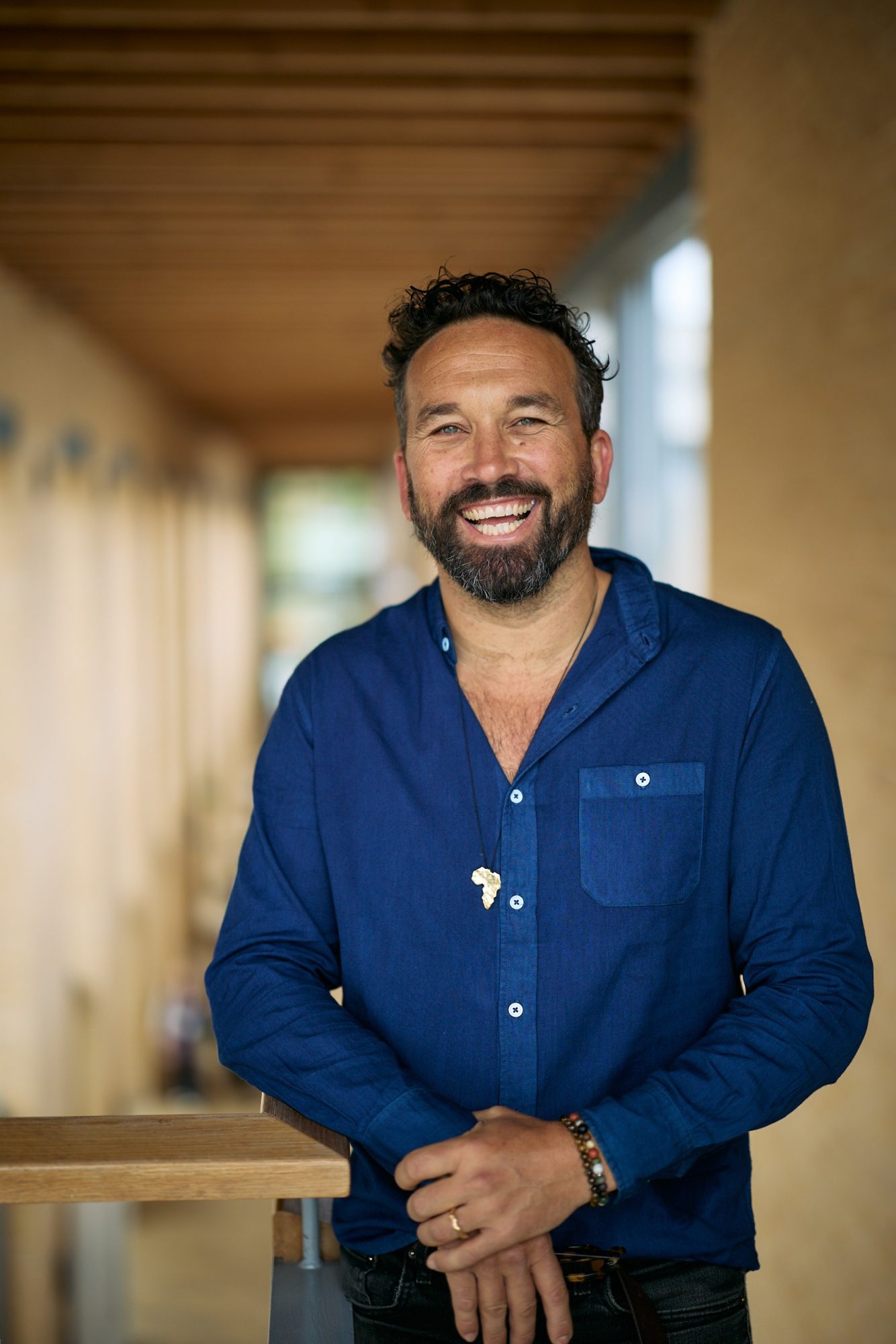
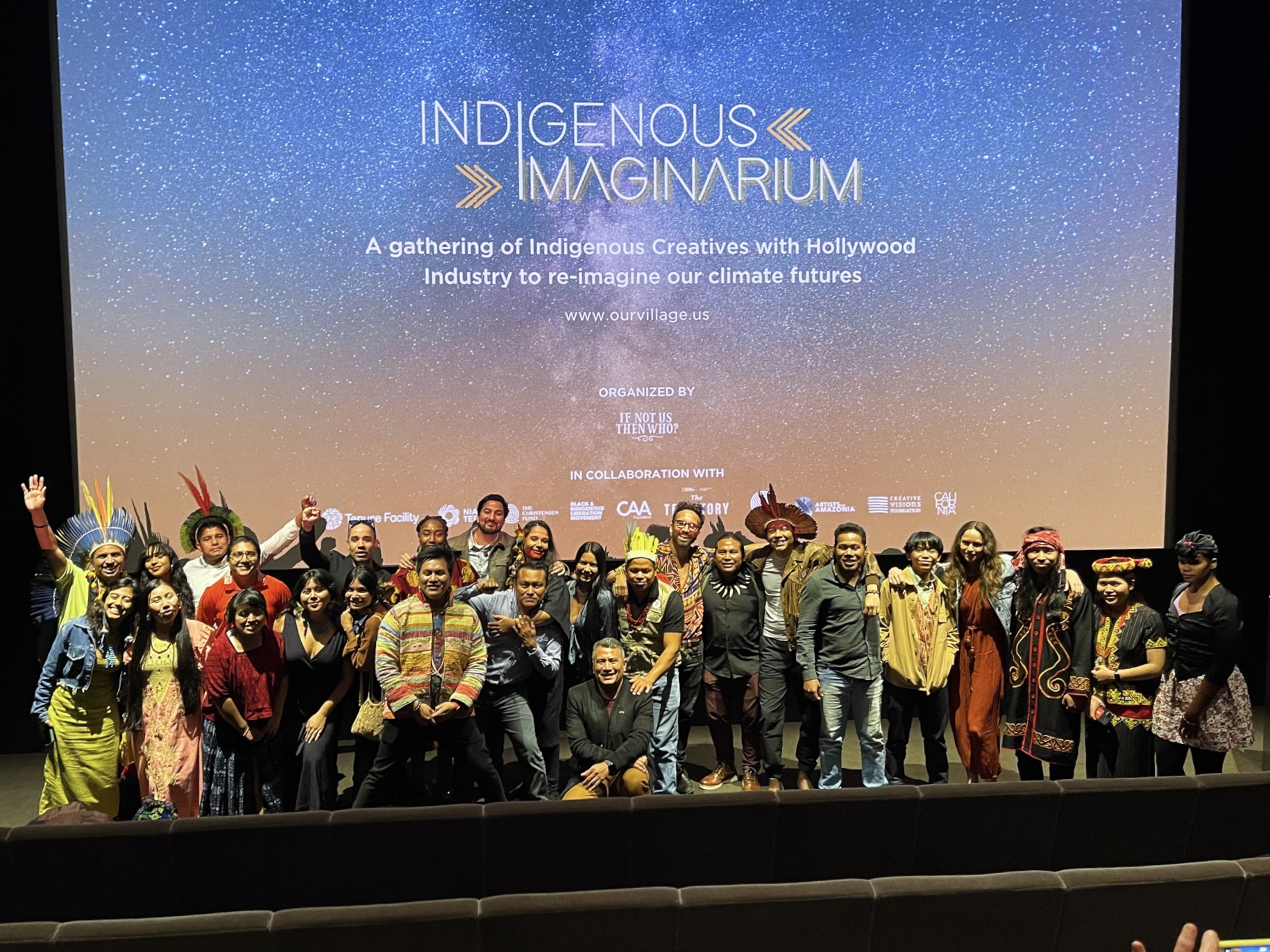
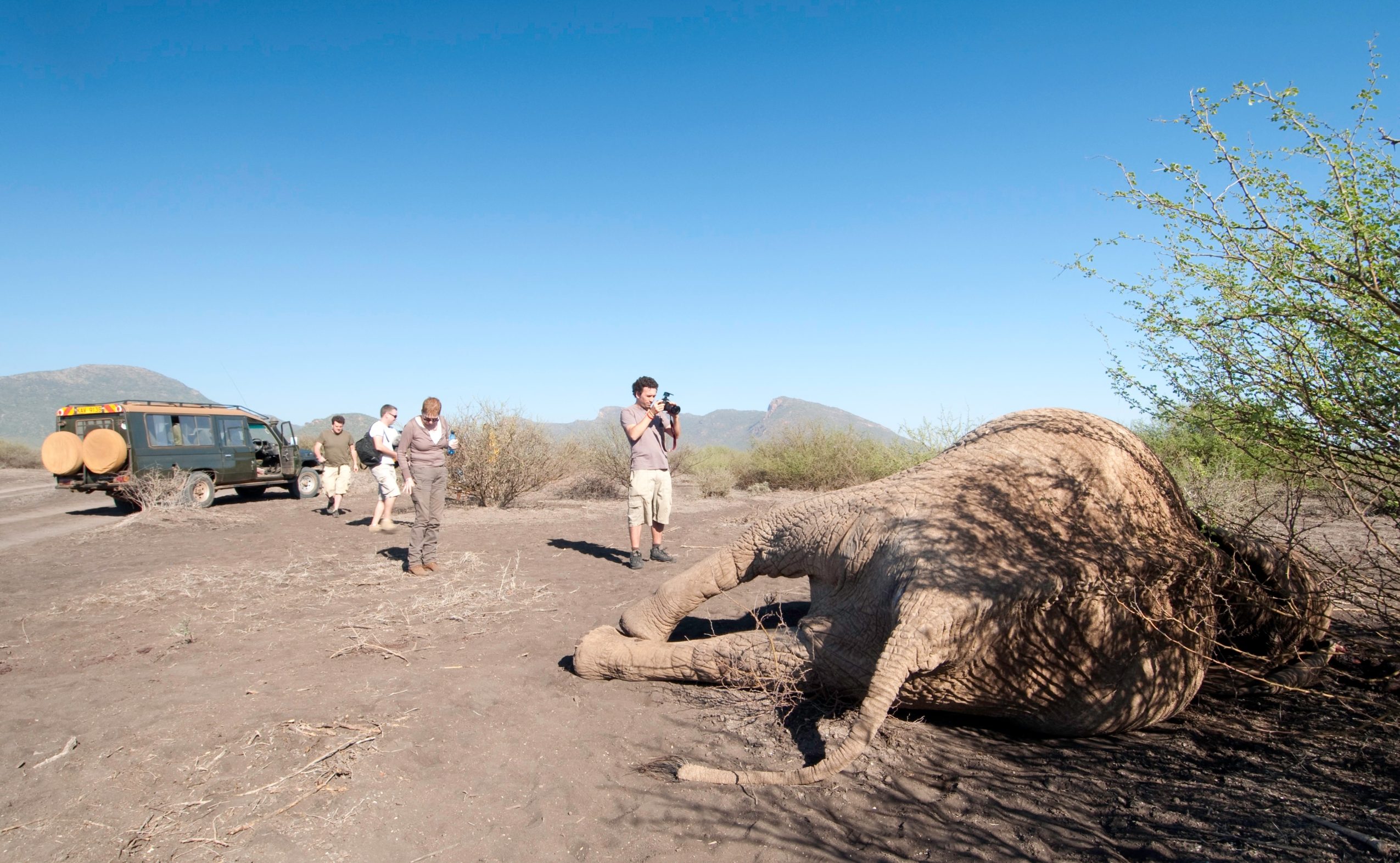
Image Credits
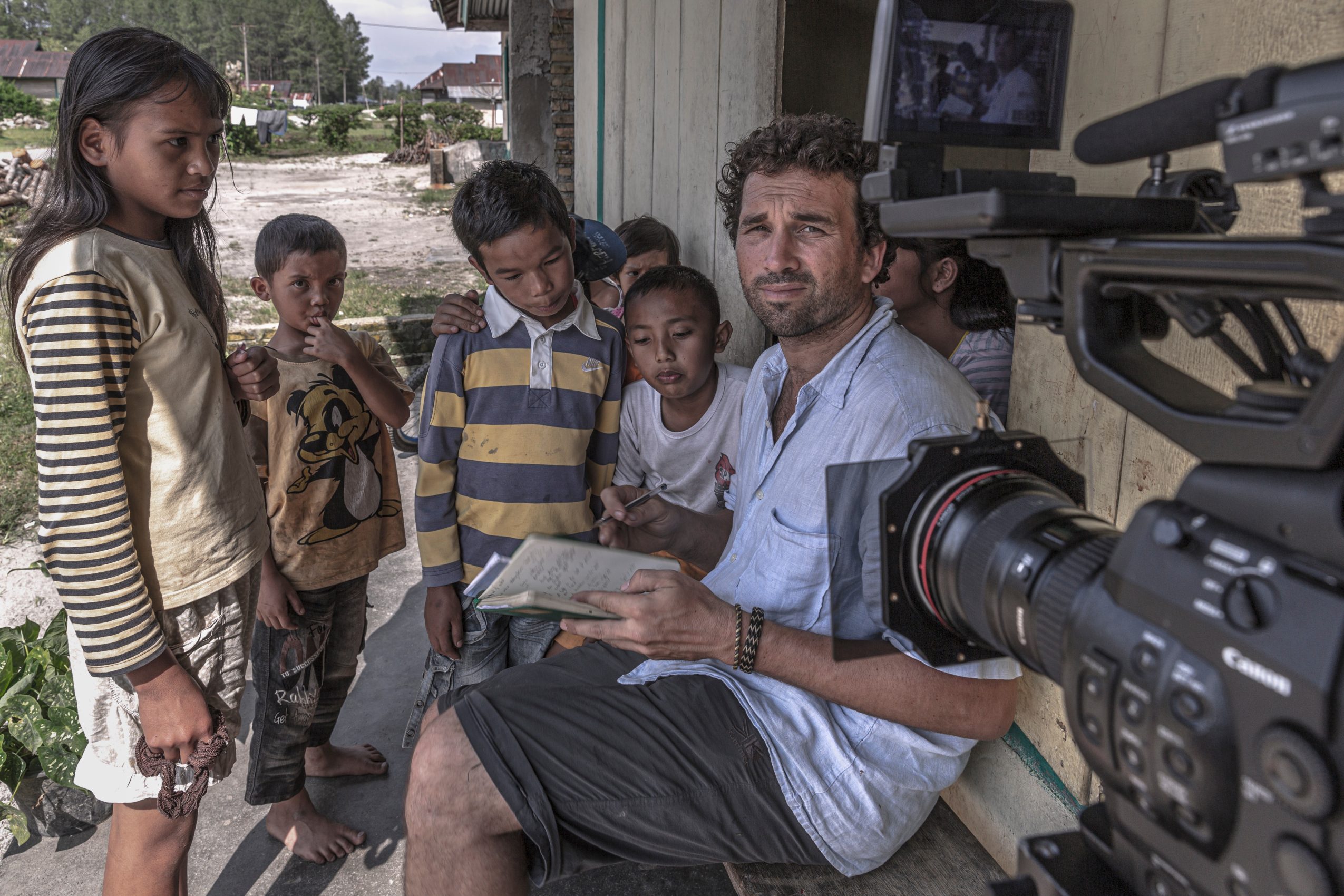
photo by Nanang Sujana (me looking at Camera surrounded by villagers)
photo of Adam Docker (me filming a dead elephant)
Popular
-

Portraits of the Valley
-

LA’s Most Inspiring Stories
-

Greg Hex Is Turning the Everyday Kitchen Knife Into a Modern Design Object
-

Rick Norris Learned That Building a Successful Business Means Building a Life You Actually Want to Live
-
How Olivia Rush Turned Survival Into a Mission to Help Others Keep Going
-

How Bibi Goldstein Is Helping Entrepreneurs Reclaim Their Time by Embracing the Power of Delegation


