




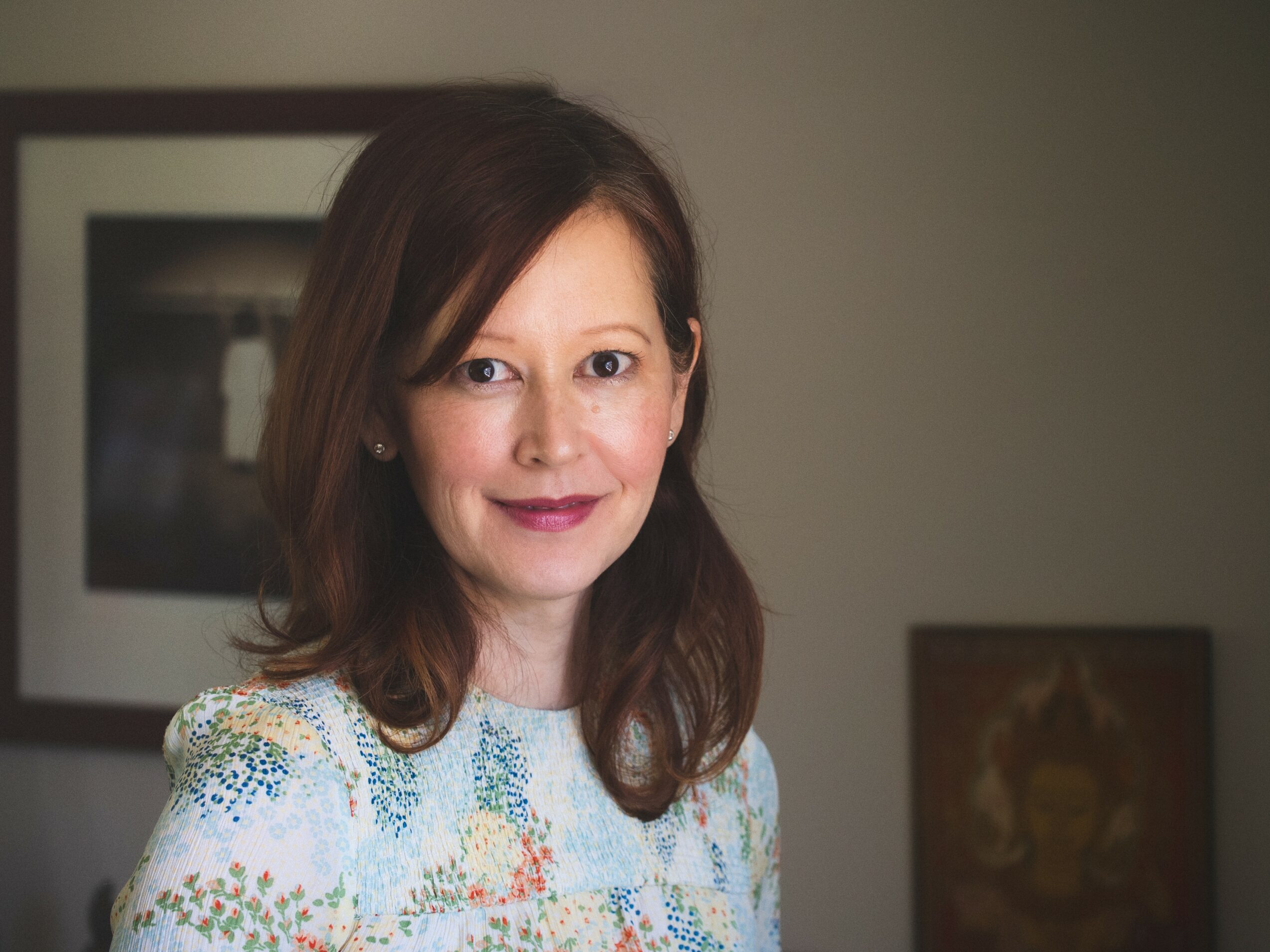
Today we’d like to introduce you to Noelle Wittliff, LMFT.
Hi Noelle, so excited to have you on the platform. So before we get into questions about your work-life, maybe you can bring our readers up to speed on your story and how you got to where you are today?
My journey to becoming a therapist—and understanding the importance of belonging—began in childhood. I grew up with my twin brother, traveling between two homes on opposite sides of the world. I spent summers in Japan, Hong Kong, and Taiwan with my dad and the school year in the Bay Area with my mom. I learned to move fluidly across cultures, but I didn’t feel a clear sense of belonging in any one place.
My upbringing was culturally diverse, and so were the parenting styles I experienced. Between my biological parents and step-parents, I encountered a wide range of approaches to raising children. There were times when I felt safe to express myself—purple hair and black eyeliner included—and other times when I learned to stay quiet and out of the way. I didn’t realize it then, but those experiences would help clarify the values I eventually brought into my own parenting.
In my early twenties, after a year living and working in Tokyo, I began practicing mindfulness. Learning to slow down, notice what I was feeling rather than distracting myself from it, and respond with kindness instead of judgment changed the trajectory of my life. It wasn’t immediate—it required commitment and practice—but over time it gave me a sense of self-compassion and, with it, a feeling of belonging within myself that continues to support me.
When I became a mom, I quickly realized that we don’t simply choose how we parent—our histories and nervous systems influence our reactions. Mindfulness gave me tools to pause in difficult moments, turn my attention to what was happening inside, and choose a response aligned with the kind of parent I wanted to be. When my toddler dumped his smoothie on the sofa three minutes before a work call or my child left a bar of chocolate on the floor for the dog to discover, I could take a deep breath and remind myself, “It’s okay. You’ve got this.”
Around that time, I found myself inundated with parenting advice that emphasized consequences and prioritized compliance. I knew I wanted something different for my family.
I sought out approaches centered on raising children with empathy and respect. I found community at the Echo Center in Los Angeles, where I became certified as a parent educator, and later deepened that foundation through RIE parenting classes. Over time, I wove together my clinical background, mindfulness practice, and lived experience as a parent into the Mindful Parenting approach I now teach and practice in my own family.
What began as a personal search for belonging became my life’s work: helping families strengthen relationships rooted in empathy, understanding, and connection.
I’m sure it wasn’t obstacle-free, but would you say the journey has been fairly smooth so far?
It hasn’t always been smooth.
Early in my career, I worked in county mental health in South Los Angeles, meeting families in their homes and children at their schools. That work was formative and expanded my understanding of how environment, access, and systemic forces impact mental health. At the same time, I was slowly building my private practice—seeing a handful of clients after work and on weekends. Over time, through word-of-mouth referrals from teachers, pediatricians, other therapists, and parents, it grew into a full-time practice.
In more recent years, the work has presented a different set of challenges. I’ve experienced firsthand the transformational effects of therapy and mindfulness, and I’ve seen what happens when people are given space to slow down and reflect. But in a world that moves quickly and runs on constant stimulation and competing demands for our attention, choosing something quieter and more intentional can feel countercultural.
And yet, when a parent or young person finishes one of my classes or attends a therapy session, I often hear the same thing: “That wasn’t what I expected.” Many come reluctantly at first, sometimes encouraged by a parent, partner, or friend. They leave feeling more grounded, balanced, and less overwhelmed. Some tell me they didn’t realize how much they needed those tools.
That’s why I continue to offer spaces like these. My hope is that more families will come to see the value in slowing down, connecting to the present moment, and relating to themselves and one another more compassionately.
Thanks – so what else should our readers know about your work and what you’re currently focused on?
I’m a marriage and family therapist with over twenty years in private practice. I provide trauma-informed therapy for individuals, couples, and families, teach mindful parenting courses, and offer mindfulness workshops for children and teens. I also have a specialized focus on supporting gender-expansive youth and their families.
Across all of this work, my focus is the same: helping people build resilience, a genuine sense of belonging, and a kinder relationship with themselves.
What sets my work apart is the way I bring together mindfulness, attachment theory, trauma-informed care, and lived parenting experience to support individuals and families.
One of the projects closest to my heart right now is a book I’m co-authoring with my colleague Dr. Caroline Carter for parents of gender-expansive youth. Drawing on neuroscience, developmental psychology, and our work with families, the book explores how parents can support children in developing resilience and an authentic sense of self. It’s scheduled for publication early next year.
What I’m most proud of, though, are my children, now 12 and 16. They’re kind, principled, engaged with the world, and committed to causes they believe in. Watching them grow into themselves has been the greatest teacher of all and continues to shape how I show up in this work.
Alright so before we go can you talk to us a bit about how people can work with you, collaborate with you or support you?
I’m licensed in California and Oregon and work with therapy clients virtually in both states. I also offer online mindful parenting consultations for families anywhere.
In addition to my clinical and mindfulness work, I provide training and consultation for schools and clinical organizations. Most recently, I presented at The Institute for Girls’ Development and The Center for Connection, founded by Dr. Tina Payne Bryson, in Pasadena, where my co-author and I offered trainings on supporting gender-expansive youth through an attachment-centered, whole-brain framework.
The best way to connect is through my websites or by reaching out directly. I’m always open to collaboration and thoughtful partnership. Supporting people as they live fuller, more intentional lives is a true gift. I’m grateful every day that I get to do this work.
Contact Info:
- Website: https://noellewittliff.com
- Instagram: https://www.instagram.com/themindfulpath
- Other: https://mindfulparenting.com


Image Credits
Derich Wittliff
Popular
-

Maagic Collins on Building a Fearless Publishing Platform for Truth, Advocacy, and Underrepresented Voices
-

Los Angeles Barea on Turning Green Superheroes into a Global Movement for Youth-Led Change
-

Trisha DuVivier on Bridging the Franchisor–Franchisee Divide with Workhero and “Franulate”
-

Portraits of the Valley
-

LA’s Most Inspiring Stories
-

Cedar Boschan on Elevating Black Music Rights and Driving Urgent Conversations Around Credit, Equity, and Artist Protection


