
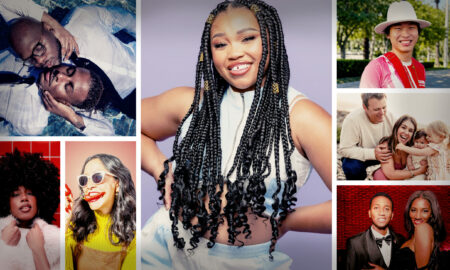




Today we’d like to introduce you to Darius Riley.
Hi Darius, thanks for sharing your story with us. To start, maybe you can tell our readers some of your backstory.
I feel like photography has always been part of my life, but there are a few key memories that stand as catalyst for my journey.
One of my earliest memories was when I was around 2 or 3 years old. My mom,dad, and I lived in an apartment in lost vegas. There wasn’t much furniture, but I remember having a lot of fun. We sat on the couch in the living room. My mom blew up a yellow balloon and released it. The farting sound it made was the most hilarious thing I’d experienced. Shortly after, I recall my mom taking photos of me with a black Polaroid camera. The photo came out and she asked me to shake it. I was fascinated with the magic my mom invited me to participate in. Press this button and shake this little square and you will see yourself from a moment not too long ago.
A second catalyst had to be in 2008 when those dell “loli pop” commercials came out. She got a candy red laptop with a printer to match. My mom was (and is) the family historian. She was on her journey to fulfill a promise to her great grand mother to find her son. My mom’s dad left her when she was 7 years old. She stayed connected with family members from Oakland. Her Great Aunt, Helen, lent a huge bag of family photos she’d collected from the generations. My household had also moved a lot, so our photos were all over the place. I was fascinated with all of the images of faces familiar and foreign despite all being family. My favorite photos were the ones I found of my mom as a little girl with her siblings. It felt like time travel and made me feel closer to her. The images showed me that before she was my mom, she was just a girl. That summer, I made it my job to scan every last one of those photos. I clicked and scanned and organized all while putting this laptop to the test with my favorite young money songs from limewire.
My interest in photography was solidified in middle school. In 7th grade, I moved into the dorms at Eastside College Preparatory School in my hometown of East Palo Alto. Despite it being my hometown, my mom always wanted to protect from trouble, so she always had us staying in Bay Area cities outside of EPA. I’d lived in Fremont, Redwood City, and Hayward, but always went to school in EPA or even Menlo Park ( shout out to all the kids that went to James Flood Magnet School). Living relatively far from school came with some challenges though. My mom was responsible for getting me and my two younger siblings to school all while having to get to work across the bay. I was late to school everyday in elementary school unless I caught the bus from my aunty’s house in East Menlo or my Granny’s house on Kavanaugh. But there was no bus to my new middle school. I was late every day in 6th and 7th grade, and not by a little . On my 29th tardy, I had few options: go to a different school, repeat the 7th grade, or move into the dorms. Me and my mom chose the latter.
It was hard being away from home. I missed home cooked meals and precious time with my family. At 12 years old, I had to mature a little faster and take hold of my education. At home I was the big brother, but in the dorms, I was the youngest in the crew. There was one staff member in the boys dorm and he looked out after all of the guys, even on our boarding weekend trips to places like Tahoe and Big Sur. He would bring his super fancy Nikon cameras to the trips and let me take pictures. We were always in beautiful places, but I was often frustrated with my experience. I was in places that looked like National Geographic covers, but every photo I took was trash. I didn’t know what any of the settings, letters or numbers on the camera meant.
This frustration would last from middle school until about my junior year of high school when I bought my first point and shoot from a friend. it had a cracked screen, but it worked and let me focus on composition instead of settings. I took that thing everywhere. I had in basketball practice and our strength and conditioning classes. I brought it to student council. I took it on Boy Scout trips. I took photos in class when my teacher wasn’t looking. I loved it.
During my freshman year at Bowdoin College, an older friend of mine was working on his honors project. He wanted to make a documentary about the 20th anniversary of the Million Man March in Washington D.C. He had a budget for hotels and food and he rented out cameras for me and the 2 other students from the tech library.
This trip was a lot for me. I had already experienced a major culture shock going from East Palo Alto to Maine where the state was 98.9% white. Then I was smacked again being in D.C. with a million Black people. I had a list of questions in my notes on my iPod touch and my job was to interview people on. Camera about the significance of attending the March was for them and the culture. There was so much richness of stories and perspectives. So much beauty and diversity amongst everyone. I met people from all across the country and the globe. The coolest was meeting folks from the Bay who slid to DC to see what it was talkin bout and had also brought the hyphy energy. My biggest take away from the trip was realizing that people were open to being vulnerable on camera. People had a lot on their minds and on their hearts and the camera offered them an opportunity to express themselves and their truth, even if it hurt. I still didnt’ know much about photography and especially didn’t know much about video, but I did know how to press record and be an active listener. I realized that the camera could be used for more than just capturing beautiful compositions of nature, but also used as a tool for storytelling and expression people unseen and voices unheard.
The summer after my freshman year of college, I got really sick. 2 days into my internship in Oakland I started experiencing deep headaches and a sharp pain in my ear. I woke up on morning with half of my face paralyzed. I could feel it, but I couldn’t move it. My head ache was terrible. It was painful just to look left and right. After going to the hospital and getting a spinal tapped, it was determined that I had viral meningitis and shingles. That was a crazy summer to say the least, but it was also when I did my first professional photo shoot. After being out for 2 weeks, I went back to my internship and took portraits of all the staff. I was far from healed, but was starting to get the hang of this photography stuff.
I returned to school to start my sophomore year, still not well. I would have intense headaches that made it difficult to get out of bed and go to class. The facial paralysis didn’t help my confidence much when it came to group projects, presentations and participation in class either. To say the lease, I failed a class that semester. After several warnings, my dean encouraged me to take the next semester off. I was initially was stubborn and felt like I would do better the next semester after some rest, but she insisted. That semester off was one of the best decisions I’ve ever made.
That 2017 spring semester and summer away from school was an incredible catalyst for my vision for photography as a career. I took a digital media class at SJSU. One of our assignments for the class was to create an instagram page that would act as our portfolio. I decided to call mine HOUR VOYSES. (I’m a closeted rapper. I’ll let you find the quadruple entendre in the name) I was inspired by the visual storytelling of humans of New York. I initially wanted to interview strangers on the street for an hour like I was doing in DC, take their portrait, then share it on instagram. It would eventually become a portfolio for all things storytelling from Music, to documentary, to food, to people in my community, to people across the globe.
When I went back to school, I was ready to kill it. I was locked in on school and ready to switch my major from Chemistry to Visual Arts. I partnered with a friend to start a fashion magazine. I just wanted to create an opportunity for all the creatives on campus to express themselves. I was making money doing event photography and selling flicks to my classmates. I was traveling to multiple states and taking photos. I had dope internships and projects that allowed me to use the camera everywhere I went to do important storytelling. I even got to study abroad in the Czech Republic and make a documentary.
I came back to the U.S. in the fall of 2019 ready to graduate in the spring of 2020, but covid had different plans. Instead of walking across the stage, I streamed my graduation from the couch in my family’s apartment. I was disappointed that the journey had this anticlimactic sizzle out, but I kept going. My first job out of college was an internship at a San Francisco based Ad Agency. I got to learn the ins and outs of the business, but what was really beautiful is that the agency licensed my photos for a national campaign that was helping folks get registered to vote. This was the most I’d ever made from photography. It was at that moment that I realized that I could truly make a living from my craft. Shortly after that, I used the funds from that campaign to get my business going seriously and bet on myself.
That capital was also incredibly helpful after my family moved to Texas and I decided to stay in California. For the first 2-3 weeks, I stayed on friends’ and family’s couches and floors until I got a crib. I Started shooting a lot for chef’s, started making documentaries (Black Daddy the Movie), and working with rising artist in the Bay Area. I even got my own photo studio and gallery in downtown Oakland.
I’ve since traded my studio for the streets of East Palo Alto. These days you can catch me on my skateboard mobbing through the streets looking for community members to highlight and stories to tell. If I’m not there, I’m on a plane trying to see the world or hanging out with my students at Eastside College Preparatory School ( I know this is a lot, but I hope it’s helpful)
Would you say it’s been a smooth road, and if not what are some of the biggest challenges you’ve faced along the way?
Some obstacles I’ve faced were my family moving to Texas and trying to survive off of my craft on my own. I slept on couches and floors for the first few months I was back in the Bay, but that was all charging the battery in my back. I had to adapt to a “you eat what kill mentality” as an entrepreneur and knew I wanted to defy the idea of a starving artist. I did have some important equipment stolen from me in the summer of 2021 that I never got back. That set me back, but made me go harder. The biggest obstacle I’ve had is scaling. I’m always looking for the best talent to support my company and right now, I do most things alone with high demand. Good problems and good stress
As you know, we’re big fans of you and your work. For our readers who might not be as familiar what can you tell them about what you do?
I’m a photographer and filmmaker based in East Palo Alto, CA. I specialize in documenting and sharing important stories while also putting my city on the map. I’m known for taking photos thru the hood on my skateboard or always being on a plane traveling somewhere. The vibe is always catch me if you can. I think what sets me apart from other photographers is that my work is very organic. My favorite photos and portraits are often with imperfect strangers who I like to highlight. I often have conversations with my subjects to get to know them a bit better, sometimes up to an hour(partially where the name comes from). I’m most proud of how I represent my city and my family on a global scale. I hope to make sure the world knows about East Palo Alto before I leave this plane. I’m also proud of how I’ve been able to help so many other creatives eat off of their craft. I’m always uplifting other photographers and finding opportunities for creatives to thrive.
In terms of your work and the industry, what are some of the changes you are expecting to see over the next five to ten years?
I think photography will be in a weird place in the next decade. AI is giving people the power to create any thing they want digitally, but I think the value of real photographers and documentation of the moment will increase. Real photography will be one of the most valued ways to document the truth as our society and technology grow toward manipulating it. I can see film coming back in a serious way not just for the aesthetic that people crave, but for the tangible truth that the silver gelatin can hold when pointed the right way
Contact Info:
- Instagram: https://Instagram.com/hourvoyses
- LinkedIn: https://www.linkedin.com/in/darius-riley?utm_source=share&utm_campaign=share_via&utm_content=profile&utm_medium=ios_app
- Youtube: https://youtube.com/@hourvoyses3522?si=lRFKcy2qL8HR3qe3


Image Credits
All photos taken by me, Darius Riley
Popular
-
Maagic Collins on Building a Fearless Publishing Platform for Truth, Advocacy, and Underrepresented Voices
-
Los Angeles Barea on Turning Green Superheroes into a Global Movement for Youth-Led Change
-

Trisha DuVivier on Bridging the Franchisor–Franchisee Divide with Workhero and “Franulate”
-

Portraits of the Valley
-

LA’s Most Inspiring Stories
-
Cedar Boschan on Elevating Black Music Rights and Driving Urgent Conversations Around Credit, Equity, and Artist Protection


