




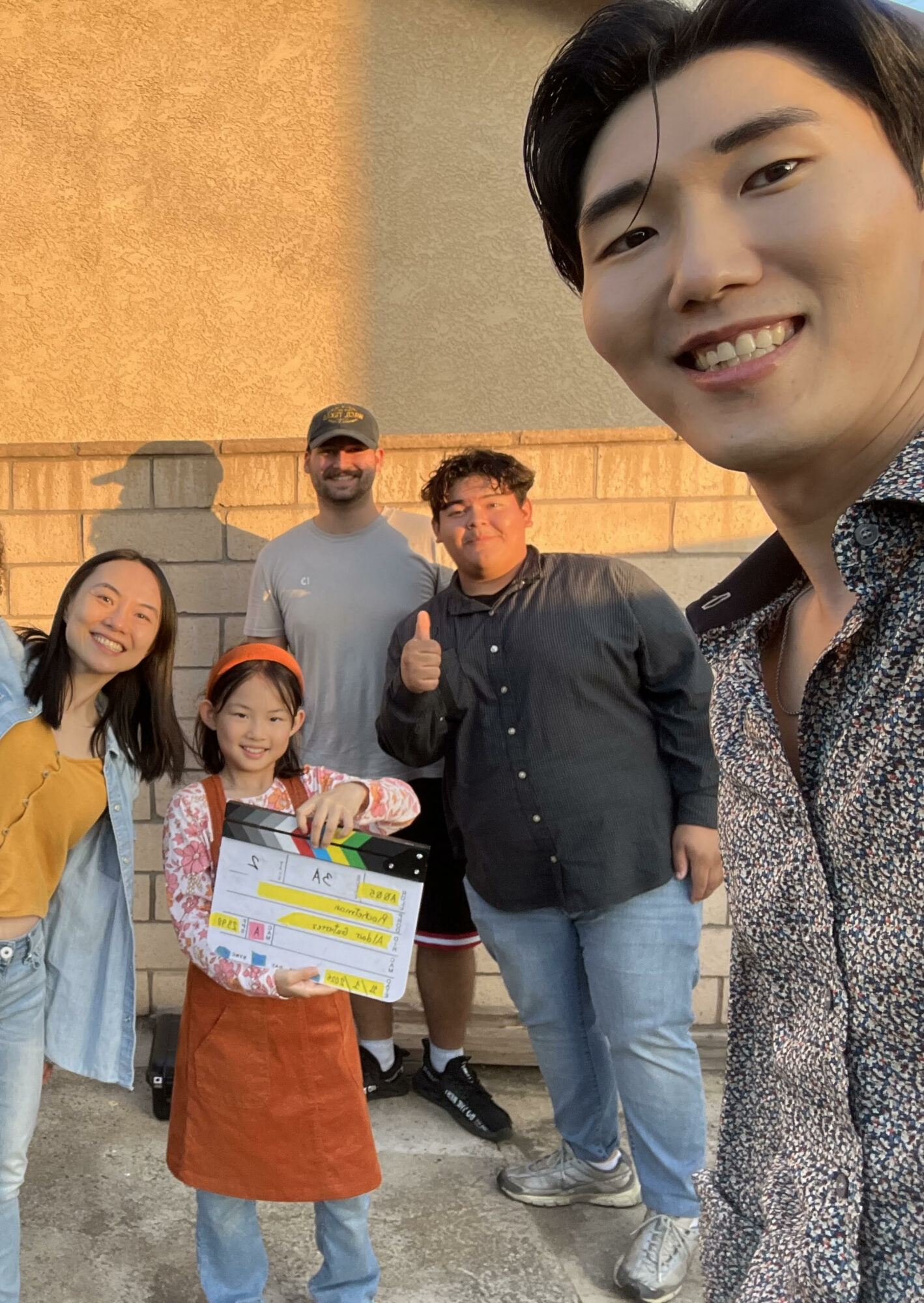
Today we’d like to introduce you to Carlos Ordonez.
Alright, so thank you so much for sharing your story and insight with our readers. To kick things off, can you tell us a bit about how you got started?
There is a particular kind of filmmaker that Los Angeles produces quietly, without fanfare — not the ones born into industry connections or launched by film school prestige, but the ones who came up through the neighborhood, through the work itself, through years of showing up before anyone was watching.
That is where this story begins.
It started in high school, with a film class and a camera and the streets of Los Angeles as a backdrop. What felt like an extracurricular became something closer to a calling. Editing student films on the side grew into a small business. Directing his own work led to producing. Producing pulled him toward the professionals — the working filmmakers, the ones with real sets and real schedules — and he began shadowing them, studying the industry the way a painter studies light.
The foundation, he is quick to say, was literary. His high school film teacher, Mr. Cohen, is a writer — and it was through him that the lesson took hold early: that everything in filmmaking, every frame and every performance, traces back to the page. Writing became not just a tool but a philosophy, one that continues to inform every creative decision he makes.
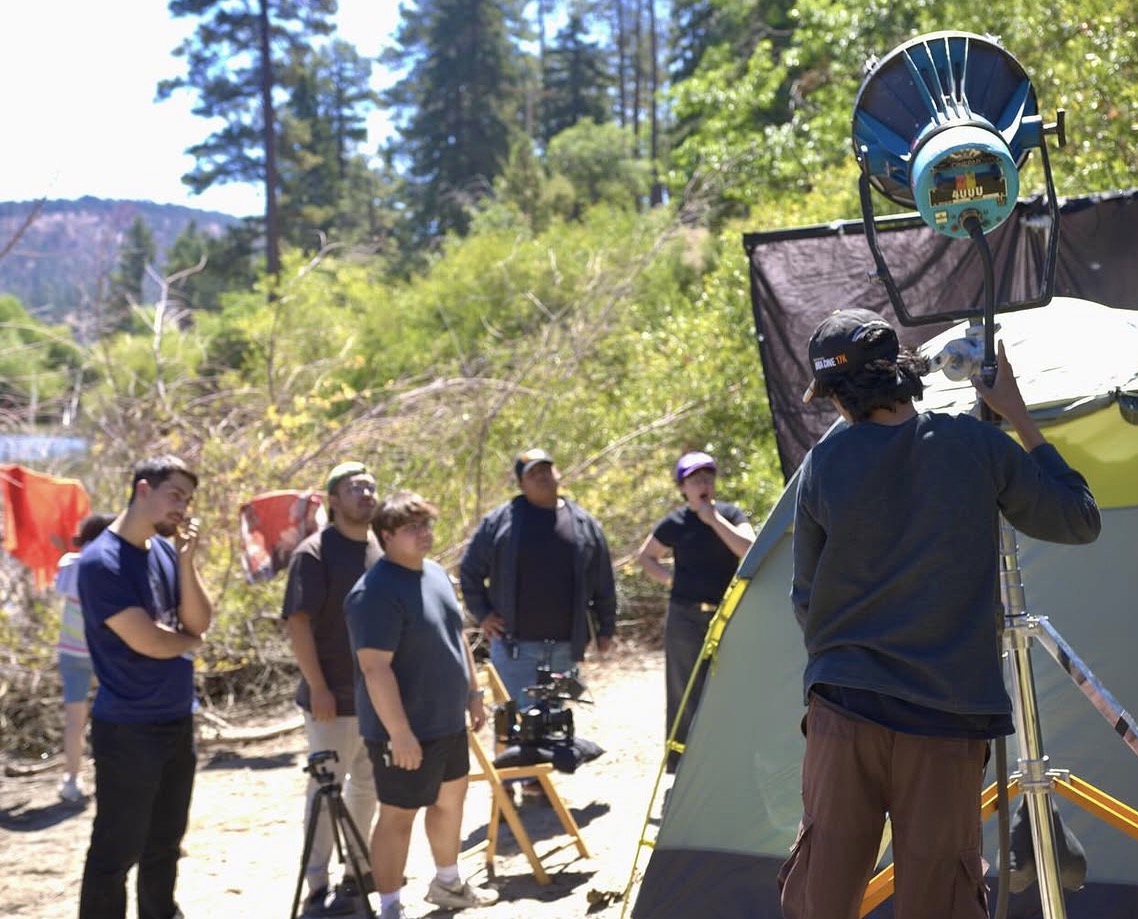
After graduating high school and completing his time at LACC, his first professional opportunity arrived — a paid editing position with a German cinematographer. From there, the path moved onto sets entirely. He worked as a Grip, part of the crew responsible for the physical rigging and camera support infrastructure that makes a shot possible. He worked in the Electric department, managing the lighting and power systems that give a scene its atmosphere and life. Two years of that work — hands-on, unglamorous, essential — gave him something that no classroom fully can: an understanding of what a film actually costs, in labor, in coordination, in the thousand invisible decisions made before a single frame is captured.
It is that understanding, as much as any creative instinct, that shapes what he is building now.
Today, he produces and edits narrative films, and is laying the groundwork for a production company designed around a specific kind of filmmaker — not simply the passionate ones, but the ones who love the craft and the discipline that sustains it. Those who understand that the business of film and the art of film are not in opposition, but in conversation. That to bring a story to life with integrity, you have to respect both.
He will tell you plainly that he is not where he wants to be yet. The dream — to make films that matter, to help restore a certain seriousness and soul to the moviegoing experience — is still being built, brick by brick, credit by credit. But every set he gripped, every cut he made, every conversation with a cinematographer or a director or a teacher who believed in the craft, has brought him measurably closer.
In Los Angeles, that is not nothing. In this industry, that is almost everything.
Alright, so let’s dig a little deeper into the story – has it been an easy path overall and if not, what were the challenges you’ve had to overcome?
No, it has not been a smooth road. For Carlos, it has been something closer to the opposite.
There were the financial losses that came disguised as opportunities — paid work that cost more than it returned, but that quietly built the network of relationships he would later depend on. There were the sets, stretching fifteen hours or longer, that forced the kind of honest reckoning that no career counselor can prompt: *Is this actually the industry for me?* He answered that question, again and again, by staying.
The early editing work carried its own particular indignity. Carlos did not own a computer. He edited on his clients’ machines, on their time, working around their schedules to do work that was supposed to be his. It was a quiet humiliation that he met with a quiet persistence.
And then there was the city itself. Los Angeles is not built for people without cars — a fact that becomes starkly apparent when you are crossing the county before sunrise and leaving sets well after midnight, on foot or on a bus, in an industry that has never been designed with that in mind. Carlos did it anyway. Early mornings. Late nights. The long ride home.
What made it harder still was the absence of a map. Picking up a camera and filming something has always been easy enough. But finding the actual entrance to a professional career — the real starting line, not the romanticized version — proved elusive in ways that no one warned him about. He had no inherited connections, no insider knowledge of how the machinery worked. The industry had been built over decades by people who largely knew each other, and he was arriving, as he puts it, from the outside.
He has worked his way up slowly, deliberately, across sets and cities — traveling across America, logging hours that most people never see, in a field that rarely acknowledges the ones doing exactly that kind of foundational work.
Carlos will not tell you it was easy. But he will tell you it was his. Every difficult mile of it.
Alright, so let’s switch gears a bit and talk business. What should we know?
—
The idea, at its core, is not complicated. It is, in fact, something the film industry has largely forgotten.
Carlos is building a production and distribution company — one designed not around the blockbuster machine, not around the prestige circuit that courts awards and critical favor, but around the filmmaker who started exactly the way he did. The one who picked up a camera, gathered their friends and family, and made something out of nothing. The student. The beginner. The young artist who has everything to say and no infrastructure to say it through.
Where the industry has historically looked in two directions — toward the independent film world on one side and the studio tentpole on the other — his company intends to look somewhere else entirely. Toward the voices that fall between those categories. Toward the creativity that never gets a seat at the table because no one thought to pull one up.
He is careful, though, about what he is and is not claiming. He will not tell you the company has arrived. That is not the point. The point is what it is being built to do.
At its foundation, the work is editorial — the solving of a puzzle, as he describes it, finding the film inside the footage and assembling it into something that moves people. But it extends beyond the edit. The producing side exists, in large part, as a form of protection. Filmmakers are notoriously vulnerable to the financial devastation that ambition, unchecked, can bring. Too many careers have ended not because the work wasn’t good, but because the business around it collapsed. Carlos wants to be the person in the room who prevents that — who makes sure that the creative vision survives contact with the reality of what it costs to bring it to life.
What he is most proud of, brand wise, is not a credit or a project. It is the intention. The clarity of who this company is for and why it exists.
He wants readers to know one thing above all else: this is for the filmmakers who were told, implicitly or explicitly, that there was no path for them. His answer to that is a company that creates one. Not by chasing trends or competing for the same projects every other production house is pursuing — but by championing the kind of raw, genuine, camera-in-hand creativity that made people fall in love with movies in the first place.
That, he believes, is how you bring movies back. Not with a bigger budget. With a better reason.
What would you say have been one of the most important lessons you’ve learned?
—
Carlos has accumulated a great deal of hard-won knowledge over the course of his career. Technical proficiency. Industry fluency. The particular discipline required to sustain a creative life inside a brutally practical business. But when pressed on the single most important lesson the work has taught him, he does not reach for any of those.
He reaches for something quieter. Something most people in any industry spend entire careers never fully confronting.
Know why you are doing it.
Not who you are doing it for — though that matters. Not what you are working toward — though that matters too. The *why*. The reason you are still on set at hour eighteen. The reason you are still solving the puzzle at midnight when the easier choice would be to walk away. The reason the vision, even when it is inconvenient and expensive and exhausting, still feels worth protecting.
“Most people focus on the who,” Carlos reflects. “Who they’re working for, who they’re building connections with. And yes, that’s real. That’s important. But the who can change. The what can change. The why is the only thing that stays.”
In an industry that runs on relationships and reputation, that framing is quietly radical. It locates the center of gravity not in the external — the clients, the credits, the opportunities — but in something internal and renewable. A conviction that does not depend on market conditions or the approval of gatekeepers.
For Carlos, that why has always been the same. It is the film. The story. The belief that what he is making has the capacity to make someone feel something they would not have felt otherwise. Everything else — the hours, the sacrifices, the long rides home on an empty bus — is simply the cost of honoring it.
In business, as in filmmaking, that kind of clarity is rarer than talent. And in the long run, considerably more valuable.
Contact Info:
- Website: https://carlosordonezjr06.myportfolio.com/
- Instagram: https://www.instagram.com/cine.carlos/?hl=en
- LinkedIn: https://www.linkedin.com/in/carlos-ordonez-825a2226b/
Popular
-

Portraits of the Valley
-

LA’s Most Inspiring Stories
-

Robin Olive on Building an Inclusive Performing Arts Movement and Expanding Opportunities for Every Student
-

Que Johnson on Building Brands That Last: From Visibility to True Market Authority
-

Christina Wren Steps Into the Director’s Chair to Tell Stories That Feel Like Home
-

JordanL on ‘Breathe,’ Belief, and Building a Movement Beyond the Music


