


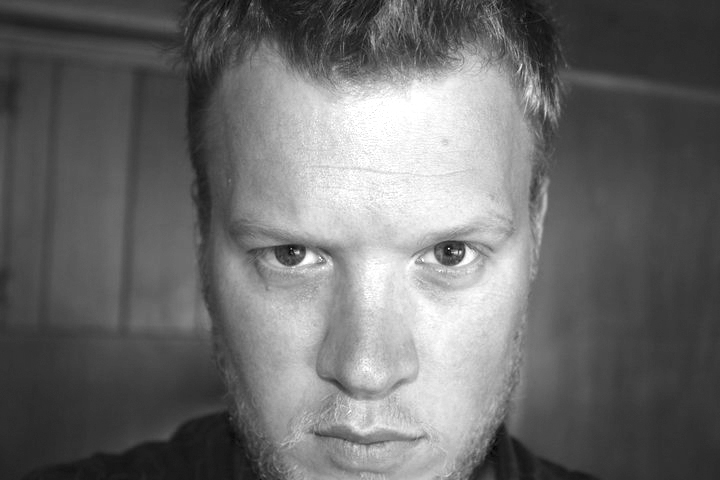
Today we’d like to introduce you to Nicholas Pisca.
Thanks for sharing your story with us Nicholas. So, let’s start at the beginning and we can move on from there.
If you want to go way back, I’ve always had a love of math and art. People told me those fields were rather incompatible, so I thought going into architecture was a happy medium of the two. The problem with design school is, it’s heavy on the art and devoid of logic. In response to that, I began integrating mathematics and programming into my designs in undergrad (UW-Milwaukee) and graduate school (SCI-Arc in Los Angeles) in the early 2000’s. Think MC Escher on crack. My work caught the eye of a few leaders at Frank Gehry’s technology firm, and they signed me on. I implemented a modeling process that integrated computer programming into the design and construction of many of Frank’s projects. This process is distinctly different than the traditional modes of architectural representation, currently called CAD or 3D Modeling. This new method involved authoring new software for each new building design that was custom tailored for its construction. I was given the opportunity to teach at SCI-Arc, UCSB-MAT, and USC, and present some of these burgeoning computational and algorithmic methodologies. I worked at Gehry Technologies for almost ten years eventually becoming the Technology Manager in Los Angeles.
Parallel to my efforts in academia and at GT, I had established a small avant garde laboratory in the mid-2000’s called 0001D, where I could explore the boundaries of Computational Design. In 2015, I elected to dedicate myself full-time to this continuing project, where I explore how algorithmic processes can be infused in architecture, gaming, visual effects, medical analysis, data visualization, and other fields. I also explore how AI, biological design, genetic engineering, and CNC technology can be integrated to redefine how a business is run.
We’re always bombarded by how great it is to pursue your passion, etc – but we’ve spoken with enough people to know that it’s not always easy. Overall, would you say things have been easy for you?
I was never classically trained to be a programmer. In fact, even though I have taught several corporate and university seminars, workshops, and studios on the use of programming in design, I have never actually taken a single programming class in my life. Being an autodidact means doing a lot of research that might come easier for someone who has conventional training. However, I also feel that my outsider status allows me to better communicate what is commonly-considered to be an incompatible subject to the more visually-minded.
Another struggle with having such a rational mind is navigating a design world mired in subjectivity. Only after embracing my mathematical abilities did I find my design calling: Computational Design. When other designers cite philosophical analyses and post-rationalize their work to lend gravitas, I simply allow the work to stand for itself.
While I have been very fortunate to get projects without marketing, a big hurdle for me is convincing that investing in a computational approach is the way to go. Typically, coding the work is a bigger up-front investment, but it typically results in less change orders and ultimately a lower overall cost. But people tend to have a vision of an architect with a drafting board or AutoCAD and swarm of interns, which is definitely not me. I hope someday to have 0001D running with various AI and automated robots conducting business in ways we never could imagine.
We’d love to hear more about your business.
0001D is a business where we combine design, technology, and biology to advance architecture, web design, medical research, visual effects, art, data visualization, and other fields. Basically, we use creative programming to enhance design.
I specialize in extrapolating existing workflows to increase productivity, establish new modes of design, and help make new discoveries. This can mean consulting, collaborating, and/or working independently from conventional modes. It can also mean producing a physical product and selling it. I find myself bouncing from field to field as the clients change.
Pride is a tricky subject. While I’m hesitant to express particular projects that evoke pride per se, I would absolutely admit that I love doing what I do. Every project has a deep meaning to me.
I have an odd distorted view on how my business is different. It’s kind of a temporal thing. While I know that my structure is very different than conventional firms, I would feel someone vindicated if, in a decade, most contemporary firms operated as I already do. So in a way, I kind of hope that in the future, my work and process will not be what sets me apart from everyone else.
Is our city a good place to do what you do?
Los Angeles provides a vast, open-minded client base that allows small businesses to flourish. With a metro area of millions, even a small niche group can consist of thousands of people. Plus, with all the various universities, museums, events, installations, and other projects existing here, it is great to network and establish connections.
Some advice: The first instinct for newcomers to Los Angeles is to plug into an existing firm or institution. Instead, maintain a diverse portfolio of projects and branch out to other fields. When one field is down due to the economy or other factors, another field will fill in its place.
The biggest problem with Los Angeles is the traffic. The city needs to rapidly expand public transit to make the outlying areas more accessible for business.
Contact Info:
- Address: Inglewood, CA
- Website: 0001design.com
- Email: 0001des@gmail.com
- Facebook: https://www.facebook.com/0001design
- Twitter: https://twitter.com/0001design


Image Credit:
Kieran McCaughey
Getting in touch: VoyageLA is built on recommendations from the community; it’s how we uncover hidden gems, so if you know someone who deserves recognition please let us know here.
Popular
-

Robin Olive on Building an Inclusive Performing Arts Movement and Expanding Opportunities for Every Student
-

Portraits of the Valley
-

LA’s Most Inspiring Stories
-

Que Johnson on Building Brands That Last: From Visibility to True Market Authority
-

Christina Wren Steps Into the Director’s Chair to Tell Stories That Feel Like Home
-

JordanL on ‘Breathe,’ Belief, and Building a Movement Beyond the Music