




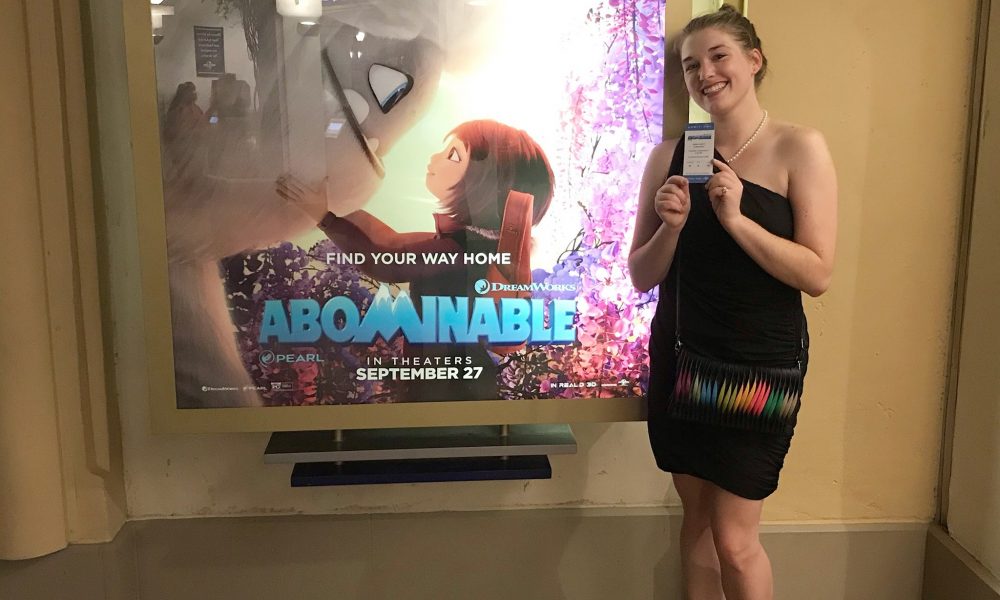
Today we’d like to introduce you to Emily Abele.
Hi Emily, thanks for sharing your story with us. To start, maybe you can tell our readers some of your backstory.
I came into my career in a non-traditional way. I knew I wanted to work in film from a very young age (seeing Fellowship of the Ring in theaters), and it led me to the conclusion I wanted to work in practical effects or stop-motion animation. I was used to working with my hands. I grew up around horses and doing manual labor, so it was an extension of that, I think. I essentially majored in stop motion animation when I went to college at the Rochester Institute of Technology– all of my films were stop motion, I took the classes, but where I really found my niche was compositing.
During a disastrous study abroad experience that ended with us needing to make films in a week, I crafted a torn paper animation that I drew and shot in the back of a moving car using a blue folder as a solid background. I had to learn keying on the fly, I had to learn everything on the fly because prior to that moment, everything I’d done had been live action and shot on physical media. I entered the world of digital in a panic and discovered serenity.
That film was relatively successful if rushed, and it opened my eyes to a digital world I hadn’t considered before. It led to me minoring in computer science, focusing on computer graphics, rendering, and light. There was no solid path for what I wanted to do in school, so I decided I was going to make my own: I wanted to work as a compositor in stop motion.
And I did, for a little bit! Right out of school I did some part-time work for Bix Pix on season 2 of Tumble Leaf and had the time of my life. The team was great, I learned so much, but once that wrapped, I was left with the realization that there was not a ton of that sort of work. I fell back on a tried and true, something I’d done in school and knew I could do again: render wrangling.
That led to working at Method Studios, where I discovered there was more to compositing than I’d imagined– but I was working in engineering as a tech ops technician (aka I was doing everything for the pay of a render wrangler). I wanted more than anything to be an artist again; every spare second was spent with artists who helped me, guided me, and advocated for me. I don’t know who wore it down, but eventually, I was allowed to work on a Target commercial and then a music video. I worked 4 am to 2 pm in Tech Ops and then 2 pm to 7 pm as a Nuke compositor. It wasn’t sustainable, it wasn’t ideal, but it was something, and I was happy. I learned very quickly that an offer to move into an art role was never going to come, so I started looking elsewhere and made a lateral move to DreamWorks Animation for more money, better hours, and a return to a medium I loved.
I spent a year there in Animation Technology and I pushed hard to find a place for art in my spare time. The rotating hours had stripped me of the ability to have time with friends, and I knew that after VFX, I needed something more like a 9 to 6. I studied Image Finaling, the department I wanted to move into, I read every available piece of documentation, I looked at their shots, I poured over their work. At the time, I was on a night shift, so when an opening popped up, I applied and then emailed the head of the department asking to get a coffee when she had a moment. Sure, it was sent at 4 am, and I probably looked a little insane, but it worked out in the end. Without Cassie, I wouldn’t be where I am now, and I am incredibly grateful she took the time for me that day.
Since 2019, I’ve been working as a Nuke compositor, both in animation at DreamWorks and VFX at Luma Pictures. Mostly animation, as it’s where my passion truly lies, but I won’t say no to a friend’s short film or project for fun. I’ve worked on features and TV now, and my last show was a learning experience– not only was I doing more technical director work and writing Nuke gizmos, I was also promoted into a lead role where I was responsible for reviewing shots, doing notes, and filling in for supervisor tasks as needed. I also started doing some lighting work while in the role!
It was a unique experience that allowed me to work more directly with our showrunner and art director than I ever had before, as well as other departments. It was truly a collaborative effort, and I learned so much over those years. Seeing a show from start to finish is not a common thing for a compositor, but I am glad to have had it.
Combined with having Cassie Fanning as a supervisor in Image Finaling, I realized I enjoy stepping into leadership roles where I can help people achieve their goals and creative vision, so I hope to do more lead or supervisor work in the future.
I also picked up some freelance 2D composting during that time, for fun rather than necessity, and got to work with Titmouse on Vox Machina and then on Hi-Fi Rush. Seeing my name in the credits for both those show was truly a highlight.
I’m currently looking for work in animation, either 2D or CG and I hope to work with more amazing people soon!
Would you say it’s been a smooth road, and if not, what are some of the biggest challenges you’ve faced along the way?
Making the jump from engineering into art again was difficult– having people see me as an artist rather than an extension of the render farm is something that I would still be reminded of, even years later. I’d get messages asking about the farm or about an aspect of technology despite not having been in those roles since 2019.
It was harder at Method, where people could walk up to me and ask; because it was smaller and because I was often one of the first faces associated with offering assistance in Engineering, I was not seen entirely as an artist. DreamWorks was an easier transition because it was much larger, and the teams were more split. I was not talking to artists directly, and I was only doing render wrangling work, so the disconnect made it much simpler to say, “I’m sorry, I don’t do that anymore.” It’s much harder to say ‘no’ to the artist you helped set up on their first day and that you know everything about. Well…everything work-related.
It was a smooth road for a bit after that, but now we face an outsourcing crisis. Studios are cutting more and more corners, jobs are being eliminated, and as a technical director, I find myself doing more fit-it work that would be done correctly in-house, or with better communication…or simply offering vendor studios more time and money like we are afforded here. There’s no good solution to it, and I know more than one person struggling to find work after the SAG-AFTRA and WGA strikes in summer 2023. I’m one of them.
Thanks – so, what else should our readers know about your work and what you’re currently focused on?
While I mainly work as a compositor, I am technically a Technical Director. I write tools, I fix things, I can step into the pipeline where I’m needed and smooth things over. It’s a combination of being technically minded while also being an artist. I can create beautiful images, I can elevate the renders we get in from overseas, but I can also write tools to help other do the same. I can help establish the look of the show as well as the pipeline.
I’m the person who does the fixing when you say, ‘We’ll fix it in post’– it’s me, I’m posting! I can redo layout, I can retime animation, I can completely change a shot if needed. I pride myself on being able to come up with creative solutions that can make or break a show. Having our showrunner turn to me and ask, “Can we do this in the comp? Can we fix this in the comp?” and being able to say, “Absolutely, I will find a way,” sets me apart. I wrote a gizmo that could retexture anything in comp when the show couldn’t afford to retexture every asset for a one-off episode. Not only that, but it had to match the frost on the existing assets; I had to look at the dev, comp, lighting, and more all-in-one tools for both vendor and in-house use.
I’m not just an artist. I’m a technical artist: I can and will find a way.
What do you think about happiness?
Happiness is a hard thing to define. There’s a satisfaction in a job well done that I would describe as happiness. A perfectly baked loaf of bread, the view from the top of a mountain, when there’s a feeling of ‘just right’– that makes me happy, I think.
Contact Info:
- Website: https://emilykabele.artstation.com/
- Linkedin: https://www.linkedin.com/in/emilykabele/
- Twitter: https://twitter.com/zemthings
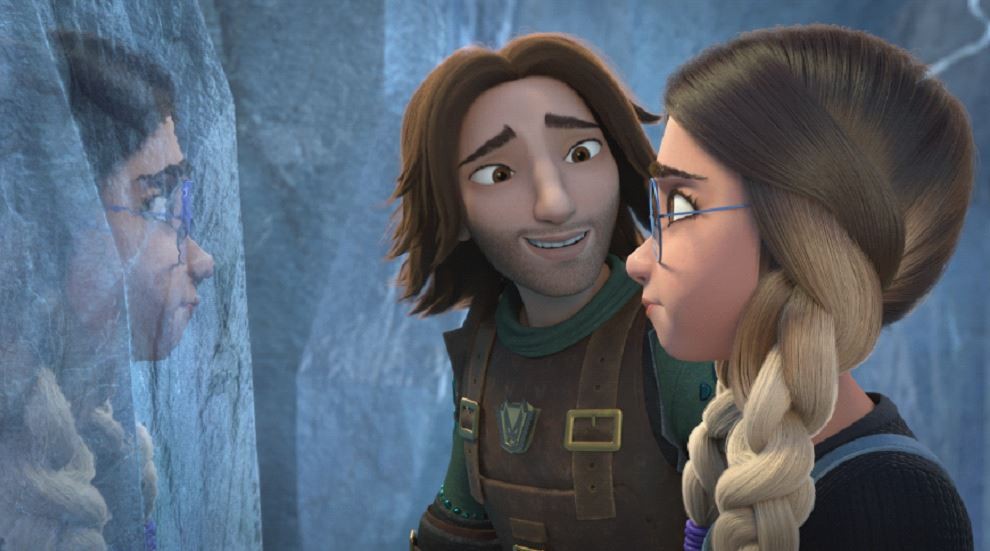
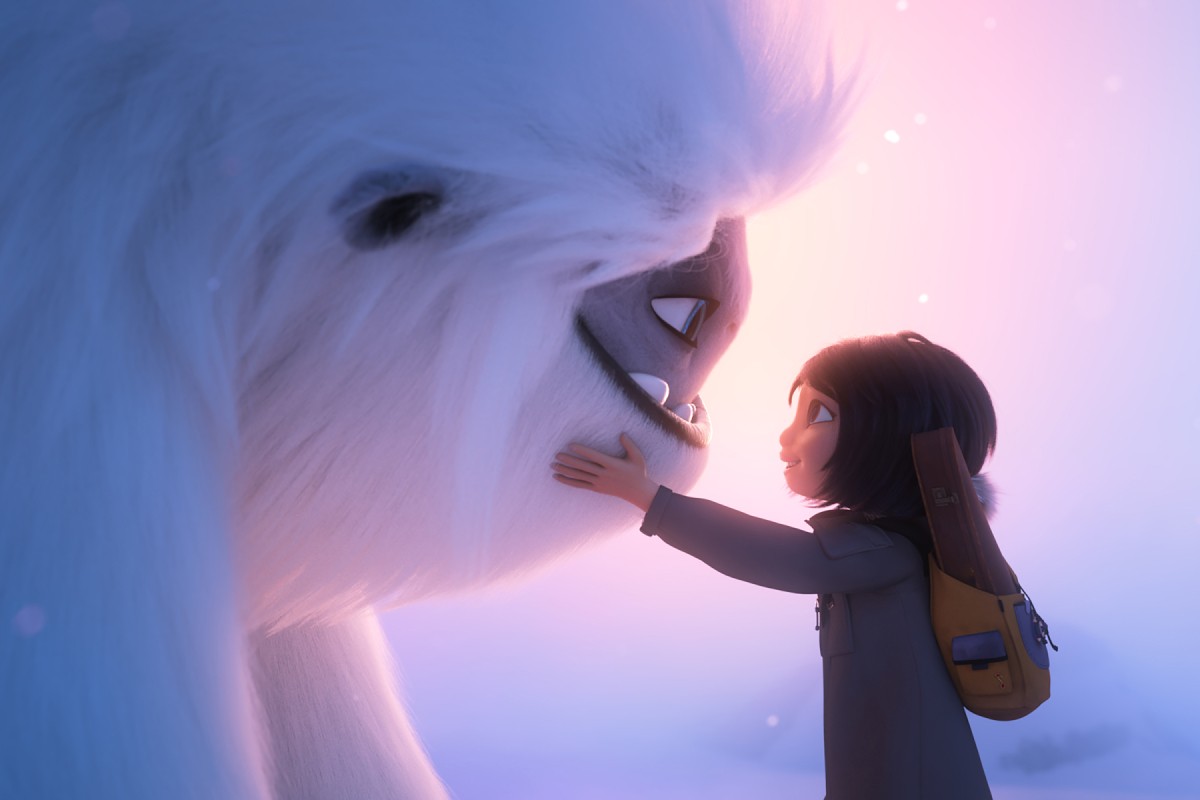
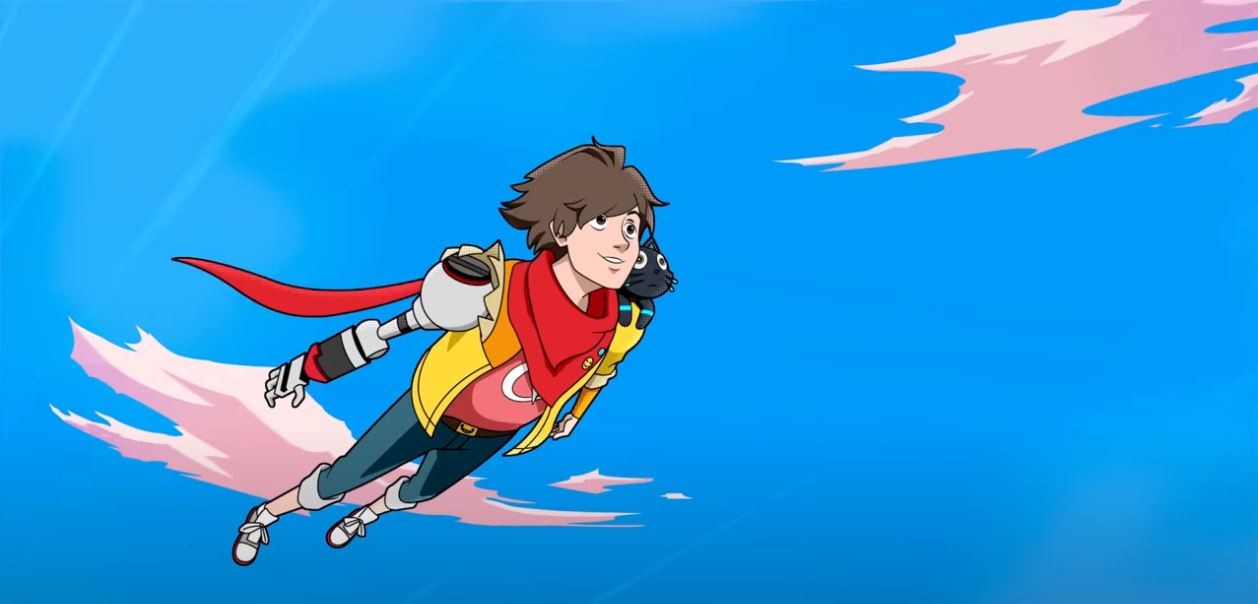
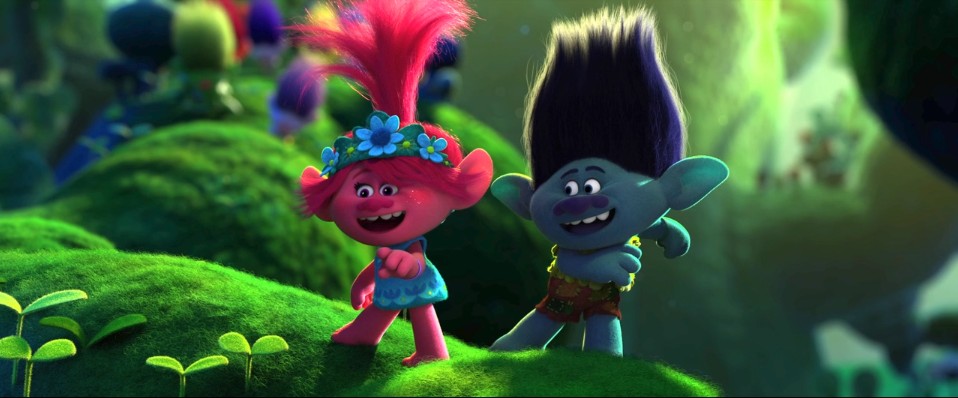
Image Credits
DreamWorks Animation
Tango Gameworks & Titmouse Inc.
Popular
-

Linda Villines on Releasing Stored Struggle and Reclaiming Ease Through the Body
-

Candice Swanson on Honoring the Sacred Early Days of Motherhood Through Intentional Photography
-

Michael Johnson on Telling Untold Stories of Identity and Leadership Through SQUAD
-
Owning the Narrative: Drew Dusterhoff Steps Into Power with Lincoln Must Die
-

Portraits of the Valley
-

LA’s Most Inspiring Stories


