



Today we’d like to introduce you to Laura Catania.
Alright, so thank you so much for sharing your story and insight with our readers. To kick things off, can you tell us a bit about how you got started?
I grew up as a performer: I started taking piano lessons at five and studied classical and jazz until about the age of 16. I also completely dedicated my elective courses to theatre all three years of middle school as well as all four of high school. After many years as a young person still figuring out my identity and feeling like I couldn’t thrive under the pressure of an audience watching me, I found the inverse type of creativity behind the camera. As much as I loved the creative expression and drive that it takes to perform, I became burned out from the pressure; I couldn’t separate the feelings of fear and pressure from my overall experience in music and on stage. I loved them both very much; I even considered going to undergrad for music.
But after I completed my first semester as an undeclared student at Virginia Commonwealth University in Richmond, Virginia, I was home in Arlington, Virginia for the summer and decided to enroll in a film photography 101 course at our local community college (shoutout NOVA!). There I learned about the principles of celluloid processing, light, aperture/shutter, and how to compose an image in order to develop my photographic “eye”. Soon after, even though I kept my 35mm camera, I got my first DSLR and began using photography as a creative and documentary outlet for my own life. Throughout college, though I was studying anthropology and loved the discipline, I felt like there had to be some way to combine the incredible knowledge anthropology provides us about human culture and visual media. I learned about the sub-discipline of visual anthropology then but was told that it was not a viable career path to pursue. I mostly forgot about it, except that there was one intriguing master’s program for it in Los Angeles, CA that never fully left my mind.
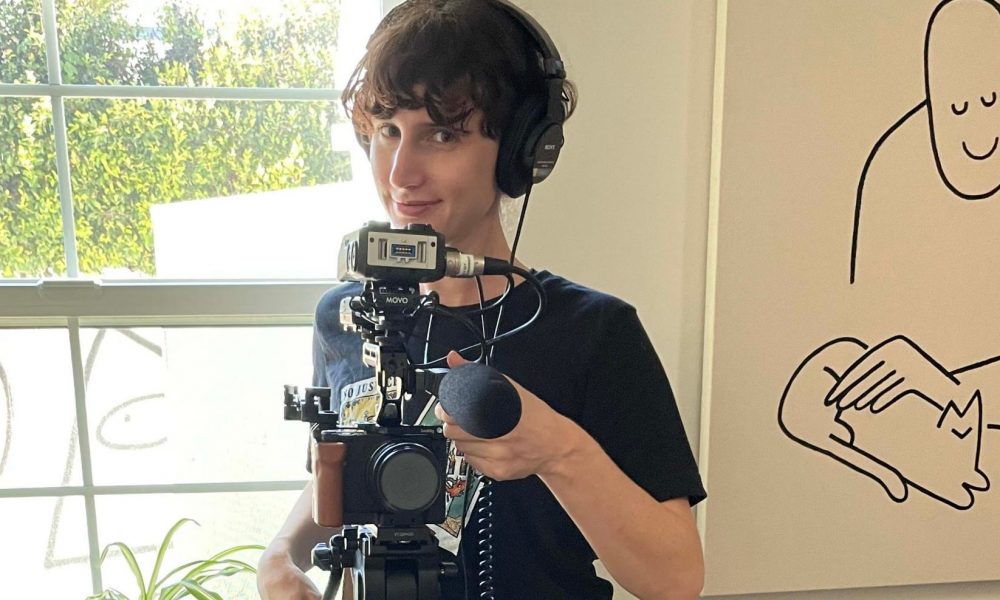
I used my photography skills heavily in my first professional role as an Outreach and Communications Coordinator for a grassroots non-profit called the Highland Support Project, which brought me to live and work in Guatemala for two years. I also assisted the videography team there with curiosity and apprehension, as the moving image is not as close to the still image as one would think. Many years later, after trying other roles in non-profit organizations and working with immigrant populations in my hometown region of Washington, D.C., I found my way back to the application site for the Master of Visual Anthropology program at USC, which requires a 20-30 minute thesis film along with two years of coursework. This was during the pandemic after I suffered a layoff, so I had the time to put together an application. I was accepted and began a new and exciting journey I had always dreamed of where I could combine artistic and social science practices/theory. I graduated from the program in August 2023 and completed my first documentary film, titled, “Bonnie Brae & 6th, Los Angeles”.
We all face challenges, but looking back would you describe it as a relatively smooth road?
I’m sure no one who answers this question says that their journey was a smooth road! For me, I think many of the obstacles and challenges I faced along the way to making my first film were very personal and related to struggles with mental health. At the same time, I was never the kind of person to prioritize work and career over a thriving social life; I also found creative release through steady gigs as a vinyl DJ over the course of three years in D.C. I volunteered in my community, I grew my own food in a garden plot, I assisted others with realizing their creative projects, and I prioritized traveling (prior to 2020). I think that for many years, though I was busy and engaged in many activities, I avoided dedicating time to a creative practice even though I had been an avid writer, poet, musician, singer in the church choir, and performer since I was a young child. I think the biggest struggle was finding where I felt like I could thrive or what kind of practice could hold my attention long enough not to give it up. Getting accepted to USC was the moment when I was going to fully dedicate myself to a process; I was going to have to learn new skills in order to produce a meaningful piece of work. I was ready to throw myself into a new venture knowing I’d be very humbled and embarrassed along the way. And it was incredibly difficult: we learned to shoot video, record audio, and edit our films all within one year. It was a crash course to say the least, but I think myself and my cohort were all very successful in what we produced. And both consistently and very luckily, I’ve always had the support of family, friends, and partners, so whenever the road gets bumpy, I have an incredible network of loved ones to lean on.
Thanks – so what else should our readers know about your work and what you’re currently focused on?
I’m a new documentary filmmaker, but instead of having been siloed into one type of practice within the industry, I’ve learned to see production from all sides. My work is also unique because coming from an anthropology background, I seek to work with ethnographic methods along with filmic techniques I learned in my courses at USC. This means spending a lot of time with film participants and in their environment, potentially before even filming. It requires extensive study of a culture’s history and contemporary socio-political realities. My film was about a Guatemalan street vending community near MacArthur Park in Los Angeles, and I spent nine months there before I started interviewing vendors on camera. However, the film is the result of a decade-long relationship with Guatemala that has sculpted my life’s trajectory, ultimately giving rise to this very personal yet informative cinematic project. From my first trip to there in 2013, my subsequent immersion into Guatemalan society, and my invaluable insights from 2 years of grassroots non-profit work with rural indigenous communities, everything set the stage for my ethnographic and cinematic practice in the Guatemalan vendor enclave in Los Angeles.
My motivation as a filmmaker is to try and bridge common misconceptions about the motives to migrate with the deeper forces that persist in every human to move, cultivate, explore, and provide. My reflexive and empathetic practice examines the difficult decisions confronting immigrants—decisions I have personally never had to make as a white U.S. citizen. How individuals navigate dual worlds should prompt audiences to reflect on living side-by-side with others who have differing freedoms; some of us move across borders by choice and not by necessity. The film weaves these themes across historical, spiritual, and present-day timelines and spaces, transforming it into more than a mere portrait of vendors. “Bonnie Brae & 6th, Los Angeles” emerges as a contemplation on enduring human pursuits and the idea of nourishment as it connects us closely to a population so commonly overlooked.
What sets visual anthropologists apart from conventional documentarians is that we take on challenging subject matter with an inclusive and sensitive approach, achieving a deeper impact than conventional documentaries’ tendency to amplify sensationalized or marketable stories. Visual anthropology also has a long history, continuing to the present, of incorporating avant-garde and experimental film methods to use art as a legitimate mode of knowledge production. I think these interdisciplinary connections make my work stand out and have the potential to be developed even further through the combined support of the art world, academia, and film production companies.
Networking and finding a mentor can have such a positive impact on one’s life and career. Any advice?
Following the connections of anyone and everyone who works in documentaries that I know of has been successful for me. This means following up with people after being introduced, conducting informational interviews, and supporting their work as a way to give back. I think mentors can come from anywhere; being willing to dedicate yourself to learning from someone is a practice that I’ve always employed and will never stop doing. So my mentors range from old bosses who are PhD’s in Anthropology, my aunt who is a documentary filmmaker and Hollywood studio veteran, my partner who is a fine art photographer, and anyone else that I regularly communicate with who I am inspired by.
Contact Info:
- Instagram: @_catatonic
- Linkedin: https://www.linkedin.com/in/laura-catania11/


 Image Credits
Vanessa Dos Santos, Laura Catania
Popular
-
Cedar Boschan on Elevating Black Music Rights and Driving Urgent Conversations Around Credit, Equity, and Artist Protection
-

Portraits of the Valley
-

LA’s Most Inspiring Stories
-

Robin Olive on Building an Inclusive Performing Arts Movement and Expanding Opportunities for Every Student
-

Que Johnson on Building Brands That Last: From Visibility to True Market Authority
-
Christina Wren Steps Into the Director’s Chair to Tell Stories That Feel Like Home


