




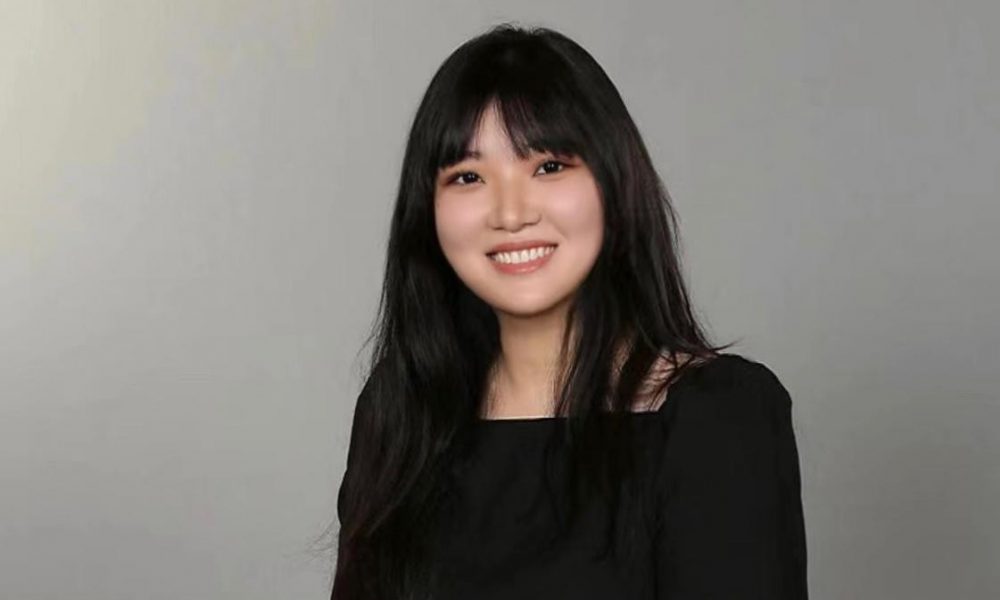
Today we’d like to introduce you to Sharon Shen.
Hi Sharon, it’s an honor to have you on the platform. Thanks for taking the time to share your story with us – to start maybe you can share some of your backstory with our readers?
My journey in film editing began with a travel experience in the Amazon jungle, where I was capturing the Inca culture and wildlife. This serene environment, free from digital distractions, revealed to me the true essence and power of editing – the capability to subtly shape and refine a story, making it an ‘invisible art’ with a significant impact on the audience. This realization was a turning point, prompting me to pursue a deeper understanding of film and storytelling, driven by my academic background in sociology from UCLA. Sociology enriched my perspective on human experiences and societal issues, directly influencing my approach to film editing.
After graduating from UCLA, I took my first professional steps in the film industry as an editing intern. And I realize that I love what I’m doing, and from there, I have a career goal as a film editor. So here I am, pursuing an MFA at the American Film Institute (AFI).
We all face challenges, but looking back would you describe it as a relatively smooth road?
Initially, I approached this industry with curiosity and anticipation but also with some reservations. My major in sociology, rather than film production, made me hesitant at the start. I was concerned that my academic background might not align with the requirements of the film editing industry and could pose obstacles in my learning and practical application.
However, I quickly realized that while a professional background might be important for entering a certain field, it is not the sole determining factor. My knowledge of sociology and a deep understanding of culture actually provided me with a unique perspective in film editing. I began learning relevant skills, such as using editing software and storytelling techniques and gradually discovered that I could combine my sociological knowledge with newly acquired technical skills to create film and television works that were both profound and appealing.
During this process, I learned an important lesson: don’t be afraid to start just because you don’t have a traditional “professional background.” Often, it is these seemingly unrelated experiences and knowledge that bring new perspectives and creativity. It’s never too late to start; what matters is having the courage and determination to pursue what you love.
Thanks for sharing that. So, maybe next you can tell us a bit more about your work?
As a film editor, my work revolves around the art of transforming raw footage into compelling narratives. My specialization lies in integrating my deep understanding of sociology with technical editing skills, which enables me to craft stories that are not just visually appealing but also rich in content and context. This unique blend of sociological insight and film editing expertise is what I am known for in the industry.
My role involves meticulously going through hours of footage, identifying the best takes, and piecing them together to tell a story that aligns with the director’s vision while also resonating with the audience.
One of my most notable projects is the editing work I did for the short film “EggMan,” directed by Charlotte Huang. This film not only won multiple awards, including recognition at the prestigious Cannes Short Film Corner, Another project I edited directed by Kira Powell.”The Good Mother” got into Screamfest 2023 and screened in TCL Chinese theater.
What sets me apart is my approach to storytelling. I don’t just edit to put scenes together; I edit to evoke emotions, provoke thought, and tell stories that might otherwise go untold. My background in sociology allows me to approach editing from a unique perspective, where I’m constantly thinking about how the narrative impacts and is perceived by different audiences. This sensitivity to diverse societal narratives and human behaviors gives depth to my work.
I am most proud of how I’ve seamlessly integrated my academic background into my professional life, creating a niche for myself in the film industry. This fusion of sociology and film editing not only makes my work distinctive but also adds a layer of depth to each project I undertake. My journey – from the challenges I’ve overcome to the successes I’ve achieved – reflects my commitment to storytelling and my passion for film editing.
What were you like growing up?
From an early age, I was perceived as quiet and hardworking, often immersed in my own world. However, this was just a facet of my personality. In reality, my heart was filled with a love for bold things and a longing for worlds that existed only in my imagination. Reading novels visualizing a fantasy world through literature was my greatest joy. Additionally, I have a strong interest in music, especially the violin. I studied the violin for eight years, and its sound has always been a solace to my soul.
During my adolescence, a particularly profound experience deeply influenced my growth and perspective on life. At a time when I was at a crossroads, filled with uncertainty about the future, my father noticed my distress and decided to take me to a Buddhist temple, hoping to help me find inner peace and direction.
I spent three days in the temple, immersed in deep contemplation and introspection. In this tranquil environment, I was temporarily freed from the noise and pressure of the outside world, giving me the opportunity to re-examine my heart and life. It was during this time that my father told me a story about a sick wolf on the grasslands.
This wolf, afflicted with painful ulcers and long tormented by the dry and hot climate of the grasslands, tried many methods to alleviate its pain, but nothing worked. One day, the wolf looked towards the forest to the north. The moist and cool air of the forest attracted it. Despite not knowing whether the forest would really ease its pain, the wolf knew that staying in the grasslands would not bring any improvement. So, the wolf made a decision to bravely head towards the forest.
My father used this story to teach me that life is full of uncertainties, and we cannot predict whether leaving our current environment will bring better changes. But importantly, when we are in pain and difficulty, sometimes we need to bravely take that step and explore new possibilities. This story deeply moved me and inspired me to pursue my own path, even if it meant leaving the traditional path expected by my family to follow my dreams and passions.
This experience and my father’s story became a turning point in my life, not only helping me find direction in my growth but also laying the foundation for my future work in film editing. I learned to find myself amidst uncertainty, to face challenges bravely, and to stick to my choices and dreams.
Contact Info:
- Website: www.sharonshen.com
- Instagram: https://www.instagram.com/sharonsycc/
- Linkedin: https://www.linkedin.com/in/sharon-shen-3457101b5/


Popular
-

Portraits of the Valley
-

LA’s Most Inspiring Stories
-

Matthew Hill on Turning Holiday Rituals into Haunting, Habit-Forming Storytelling with Long Winter Nights
-

Linda Villines on Releasing Stored Struggle and Reclaiming Ease Through the Body
-
Candice Swanson on Honoring the Sacred Early Days of Motherhood Through Intentional Photography
-

Michael Johnson on Telling Untold Stories of Identity and Leadership Through SQUAD


