




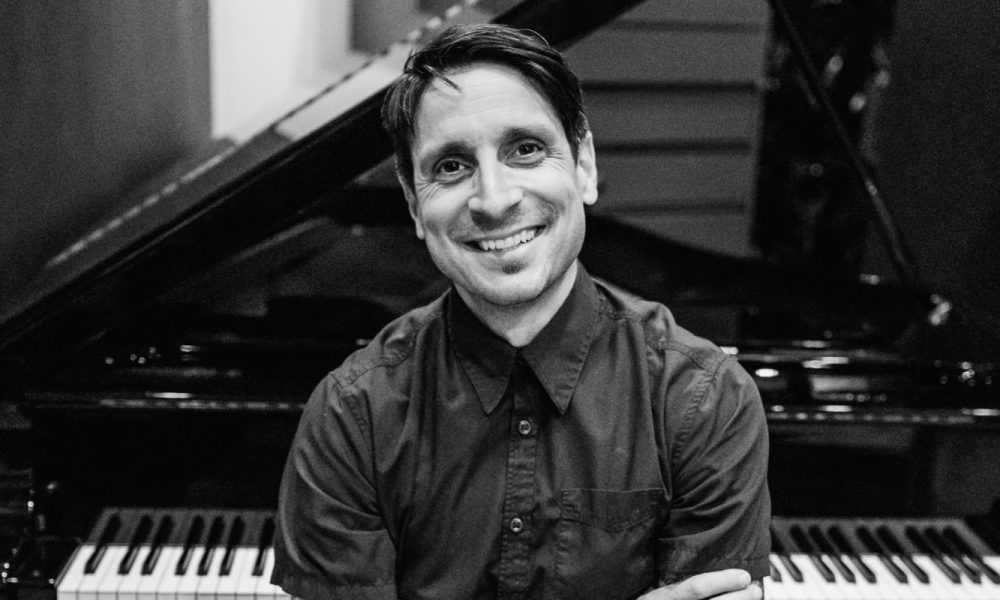
Today we’d like to introduce you to Luis Guerra.
Hi Luis, it’s an honor to have you on the platform. Thanks for taking the time to share your story with us – to start maybe you can share some of your backstory with our readers?
Luis Guerra is a career composer, arranger, and musician.
I was born in South Texas and grew up in a musical family in South Texas, not far from the border with Mexico. My dad raised four kids for about eight years by himself. I think he relied on music to teach us something and to keep us engaged in something productive. This was before the internet, so I sat for hours and hours learning about music. This really hasn’t stopped. If I’m not studying or listening to music, then I am composing it.
I was introduced to the drums at six years old. After that, I picked up the piano and dabbled in the guitar. I learned how to read the piano. Eventually, I found the bass. My dad did remarry, and our family expanded. A friend of my stepbrother had an electric bass with out-of-tune strings that were extremely dirty, and I fell in love with it. (side note) There is a great bassist who wrote about a similar experience with an upright bass when he was very young. If you are interested, read “Beneath the Underdog.”
Jump ahead some years… I was living in Austin, TX in the 80’s and some of the 90’s. At the time, I began working as a career musician – mainly as a double bassist. At that point, I had learned about jazz and genres from other parts of the world. Being of Latino descent, I gravitated toward Latin music. But truthfully, I liked all kinds of music. If it was performed and produced well, it was great as far as I was concerned. When I was about 18, I began getting into arranging and then film scoring. But I had no idea what I was doing. So I started working with James Lakey (RIP), who was my first arranging teacher. He pointed me in the direction of studying harmony and counterpoint. Learning and studying music has become a lifelong obsession of mine, but eventually, I began experimenting with sound in my group called Terremoto.
In that group, I worked alongside my homie, Mike Longoria. He is an accomplished drummer and producer whom I continue to work with to this day. We did a lot of sonic experimenting during that time. I delved into a world of rhythmic exploration, sonic discovery, and harmonic inquiry. I began laying the foundation for hybrid scoring. But I wanted to continue working as a musician, so I started recording with songwriters like Patty Griffin, Kim Richie, and Alejandro Escovedo. It was then that I realized music can connect with people not only on a cerebral level but more importantly through the heart.
I began to focus on a sound that connected with people rather than blow them away with virtuosity. It wasn’t until I was living in Santa Fe and I worked with pianist Kevin Hays (he was a prodigy who recorded on Blue Note at 21!), did I began to understand that you could do both – be an incredible musician AND connect with people. I began getting deep into jazz harmony. After a few years, I realized that I was better at writing vibey short segments rather than densely composed music. So, I got into writing for documentary films and ads. But… I also wrote for performance art and circuses and became educated in using notation programs while employing melody and harmony that I picked up over the years. It wasn’t until I moved to Los Angeles (I tried in the ’90s… didn’t work out!) and reconnected with an old friend did I began to understand how important production was to all of the music that we consume.
Making Los Angeles my home really changed things for me. Working in a building surrounded by successful producers and songwriters changed my view on how to become good at composing. I have been pursuing that ever since. I have worked with a range of clients, including Apple, Netflix, Pushkin Industries, Freakonomics Radio, WNYC, BMW, CNN, BBC, and others. I have been lucky to work with a great indie filmmaker named Dan Mirvish. I have scored two of his films and no plan to stop working with him. All of this has been happening alongside raising a daughter and realizing that my health is compromised. In 2021, I was diagnosed with Multiple Sclerosis and have lived with it for many years prior to the diagnosis.
These days, I spend a lot of time on my health and wellness, and the rest of the time is spent on writing music and parenting. I want to help others find their creative voice, and I would also like to help others with chronic conditions relinquish their fears and learn how to live their best life. Although a condition can be disabling, through acceptance, you can learn to live with it. I am doing my best to stay healthy and strong. More information can be found on my website. www.luisguerramusic.com
We all face challenges, but looking back would you describe it as a relatively smooth road?
Being a musician is never easy. Running your own business is hard.
Being diagnosed with Multiple Sclerosis was challenging.
The ups and downs of the entertainment industry are not easy to deal with.
As you know, we’re big fans of you and your work. For our readers who might not be as familiar what can you tell them about what you do?
I am a composer for media – TV, film, and podcasts. Podcasts and theme songs are my forte. I have scored many commercials and have worked on music for branded content. Although I have more experience working on podcasts, I enjoy film scoring and have written a few scores for live theater as well. I have also studied UX design and Human Behavior Interaction. I tend to concentrate on how sound and music resonate with people. My scores are often times considered the vibe of a show. I focus on the story and its characters.
Several of the questions I ask myself while working on a project are:
What do they sound like?
What does the story like?
How will the listener or viewer respond to the music?
That is how I approach creating a score theme song or a music cue for any given project.
A few stand-out credits that I am most proud of:
1. I am the composer and musical director for Malcolm Galdwell’s Revisionist History Podcast I also wrote and arranged the theme song for that show.
2. Two films made by indie director (and slam dance co-founder) Dan Mirvish. One of his films, “18 ½” did very well on the indie circuit. The music did well on its own and was even a contender for the 2023 Oscars.
3. I have composed a lot of music for Freakonomics Radio and have worked extensively with best-selling author, Stephen Dubner.
4. I have worked with Netflix a few times. Most notably, the score for a Netflix doc named “Art of Conflict”.
5. I wrote the music for award-winning actor Richard Cabral’s “Fighting Shadows”.
What sets you apart from others?
1. Music allows for an endless exploration of inspiration. I never grow tired of it. You can never learn it all!
2. I love to collaborate with people. I do not always have the answer. I love the processes of exploration and creating something from nothing.
Where do you see things going in the next 5-10 years?
My industry is experiencing a lot of shifts around technology, monetization, and consolidation. I try to approach it as “…just be the last man standing,” and I will continue to work AND I will continue to hone my skills. So far things have worked out!
Contact Info:
- Website: www.luisguerramusic.com
- Instagram: @luisguerramusic
- Twitter: @luisguerramusic


 Image Credits
Natalia Guerra
Popular
-

Que Johnson on Building Brands That Last: From Visibility to True Market Authority
-

Christina Wren Steps Into the Director’s Chair to Tell Stories That Feel Like Home
-

Portraits of the Valley
-

LA’s Most Inspiring Stories
-

JordanL on ‘Breathe,’ Belief, and Building a Movement Beyond the Music
-

Megan Birney Rudert on How Access to Light Is Powering a More Sustainable and Equitable Future


