




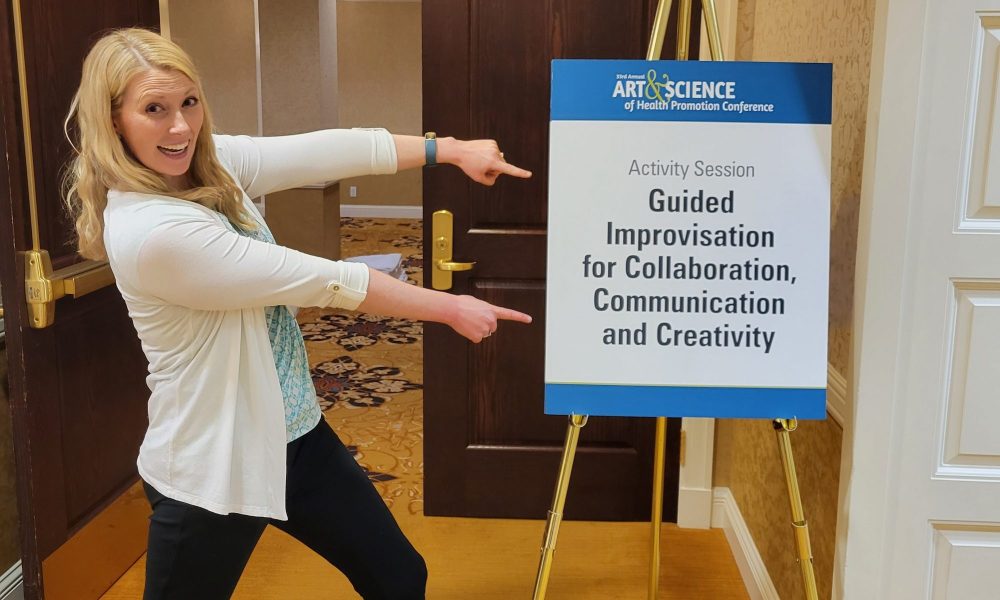
Today we’d like to introduce you to Dayna Gowan.
Hi Dayna, thanks for sharing your story with us. To start, maybe you can tell our readers some of your backstory.
For as long as I can remember, I have always been nervous about public speaking. I would get so red-faced and have shaky hands, shaky legs, and a shaky voice any time I got up to speak in front of a group (even small groups of 3-5 people). I hated the feeling of all eyes on me. I hated being “in the spotlight” and put on the spot. I did not have any control over my brain, my body, or my nerves, and as soon as I finished, I would have no idea what I just said up there. Even saying my name to introduce myself in college classes (a basic, easy task for most people) always got the heart rate pumping and my palms sweating. I thought that people who were good at public speaking were just born with this natural ability to be great public speakers, and I certainly wasn’t born with it. I truly believed that no amount of training would help me, and I also thought that it was just a school issue and would resolve itself when I started my career. But it didn’t…
In fact, it seemed to get worse and more unbearable as I progressed from college to my career as a Wellness Coordinator where I planned and implemented wellness programs for the employees at a large insurance company in South Carolina. My first presentation request was for a small group of HR employees on stress management, and it went horribly. I didn’t introduce myself, I called out how nervous I was, and I went way over time (like 15-20 minutes over time). I felt awful about it because this issue of nervous public speaking had now followed me from college to my career.
After that presentation, I went back to my office, ran to the bathroom and cried. I was so upset that this fear and anxiety of public speaking had followed me from school to my professional life. I was so tired of not getting my message across when presenting and feeling terrible about my performance afterward. I decided something had to change. I had to get over this crippling fear for the sake of my career and my well-being.
Fortunately, my employer at the time had a corporate Toastmasters club that met every Thursday during lunchtime, so I decided to check it out. I visited as a guest for a month or so, and then in October 2014, I made it official and joined as a member. My department paid for my membership, which was nice and supportive. I gave my Icebreaker speech a few weeks after joining. I had nine filler words like umms and uhhhs, relied fully on my notes, used lots of unnecessary movements and gestures, had a red blotchy face and neck afterward, and had to rush my conclusion to stay within a timeframe, but I was proud of myself for getting through it. No crying in the bathroom afterward at least!
I gave at least one speech a month, and in June 2015, I had given ten speeches to reach my Competent Communicator designation (Toastmasters has since switched to different curriculums, so this designation is not an option anymore). By that 10th speech, I had ZERO filler words, index cards that I didn’t end up using, purposeful movements, and a polished, effective conclusion. I had really pushed myself to get up there and give these speeches, and I found that I enjoyed it, even though I still struggled with it. I wasn’t where I wanted to be, but I was a whole lot better than when I started.
Eight and a half years later, I am still in Toastmasters, and I am enjoying getting to share my stories and practice my content. I also really enjoy hearing others share their stories. In this time, I have accomplished so many goals I NEVER thought I would reach. I got my Distinguished Toastmaster (DTM) designation, meaning I gave over 50 speeches and served in leadership roles, and it took me about five years to do that.
Conquering my fear of public speaking gave me the confidence to try out improv. I don’t think I would have tried improv if I was still terribly afraid of public speaking. I liked listening to improv podcasts, so when my husband got a job in Los Angeles, I had it on my shortlist to take an improv class. I didn’t jump in right away though. It took about a year and a half to summon all the courage to sign up for an improv 101 class at Westside Comedy Theater. Once I was finally in class, I loved it! I wasn’t good at it and struggled quite a bit, but I found it so fun and freeing. It was different than anything I had ever done before. I loved the freedom to be creative and makeup everything on the spot!
After that first class, I was hooked and wanted to sign up for all the improv classes! I got through 2 classes of Improv 201 at Westside Comedy Theater, and the pandemic hit. A lot of the theaters pivoted quickly to online classes, so I just kept taking improv classes online. It wasn’t quite the same, but in my mind, it was better than no improv at all. I think improv played a big part in keeping my spirits up during the pandemic. I got to meet a bunch of cool people from all over the US and the world through taking online classes and made some amazing friends that I still keep in touch with today. Even though the world news was scary and uncertain at that point, having a place to go and laugh and be creative was a nice break from it all.
I started to see how these skills of improv – saying “yes, and…”, listening and reacting, being present in the moment, embracing mistakes and letting go of perfection – could help me in my professional and personal life. I loved the improv games and exercises so much that I would facilitate them at my Toastmasters meetings and for co-workers at our team meetings. I got a ton of practice facilitating these exercises online, and I could see the connection, joy, and fun it would bring to the meetings.
At the time, I was watching a lot of online webinars and presentations that were very boring and dry, and I wanted to help the speakers and audience members have more engaging, interactive presentations to watch. I also discovered the world of Applied Improvisation, which takes the skills and techniques of improvisation that you see on stage and applies them to our professional work and also personal lives. I started joining some Open Space events offered by the Applied Improv Network (AIN), and I loved how supportive everyone was in this organization!
From there, my company Improvly Speaking was born. To me, the term improvly speaking means an opportunity to explore improv, public speaking, communication, performance, creativity, and everything in between. I provide presentations and workshops to companies to help them solve an issue amongst their teams and/or promote learning and development. The workshops are a chance for team members to connect with each other and learn important essential skills (some call these “soft skills” but I believe they are essential skills) that can help them in their daily lives, whether at work or at home. I also offer public speaking training, workshops, and one-on-one coaching that focus on finding the fun in public speaking or helping people improve in thinking quickly on the spot, like answering Q&A at the end of a presentation.
In November 2022, I launched my Improvly Speaking podcast, and I have had a blast growing the podcast. I call it my “little podcast baby” and joke that I am a Podcast Mom, because it’s so much work work and constantly on my mind now. It is a labor of love, but I really enjoy getting to interview and connect with the guests and also share my personal stories in my solo episodes. At the time I am writing this article, I am about 14 downloads shy of 1,000 total downloads! I try not to worry about the metrics too much (says the person who just said they’re at 986 downloads, haha). Certainly, the true crime and celebrity podcasts get 1,000+ downloads a day, but 1,000 downloads is a big milestone for me that I am going to celebrate big time!
Improv has been such a game-changer in my life! It has given me a creative outlet and space that I have not had before as an adult. It has pushed me way outside my comfort zone, and with all the focus on “yes, and…”, I started to say “yes, and…” to myself and go for it with my business. Improv has made me a more dynamic and engaging speaker and facilitator. It has helped me in so many ways, and I am excited to share it more with companies and people to help them grow in their skills and achieve their goals.
We all face challenges, but looking back would you describe it as a relatively smooth road?
I wish I could say the nerves are completely gone, but they still show up every now and again. I get upset when the nerves creep into my presentations and improv shows, but I am much more in control now of my speaking abilities. Usually, I am nervous before the presentation or show, but once I get on stage, I have trained my body and mind to be able to calm the nerves and take over as needed. The fact that I can say I love being on stage and performing and giving speeches is a major win for me! I never dreamed that I could be a good public speaker, but here I am – practicing and improving all the time!
There’s no real timeline in place for how long it takes someone to conquer their fear of public speaking. Even though I felt better about public speaking after giving my ten speeches at Toastmasters, I still had a lot of work to do. It took me about three years to feel comfortable giving speeches without any notes. It took me even longer to not write out word for word what I was going to say and just be comfortable with my outline of the speech or presentation. I had to learn to trust myself and trust that my mind wouldn’t go blank when I’m on stage like it used to do.
I’ve also certainly struggled with imposter syndrome. There are a lot of presenters and facilitators out there who lead these applied improv workshops and presentations. My mind would often think that I didn’t have as much experience as them and didn’t deserve to be in the same space. I am also still a newbie improviser, so I felt that I didn’t quite have the credibility that a more experienced improviser would have. I have worked on this and have reframed my mindset. I bring a unique perspective to the applied improv world as well, and I can lead these workshops in my own authentic way.
I’ve struggled with feeling overwhelmed and wanting to do “all the things” in my business, but when I feel like that, I usually do none of the things. I have no problem coming up with great ideas, but I struggle with the implementation process. I usually get in my head and start to doubt myself and question why I am doing this. As a business owner, I’ve had to work on disciplining myself and my schedule. I’ve had to work on having better boundaries and asking for what I want more. Starting my business has forced me to really look at myself and how I structure my day and my routines and how I regulate my emotions. I tend to procrastinate on tasks, and this adds stress to my life. I am currently working on prioritizing what needs to be done and structuring out when to do it. I am still not great at it, but I am a work in progress.
Alright, so let’s switch gears a bit and talk business. What should we know?
I specialize in workshops, presentations and trainings for companies and groups of any size to teach their employees and members how to improve their essential skills. Some people call these “soft skills,” but these are essential skills that are important across all business industries and sectors. These essential skills can include: growth mindset, listening and communication, teamwork and teambuilding, public speaking, collaboration, embracing mistakes and learning from failure, empathy, thinking quickly on your feet, and more.
Lately, I have been diving into the world of psychological safety for organizations and leading trainings on how companies can improve their psychological safety in their workplaces. Psychological safety has become a big buzzword, but it simply means that people feel comfortable to express their ideas and concerns at work, brainstorm freely, ask questions, take risks when trying to innovate and admit mistakes without the fear of judgment or negative consequences from their peers or leadership. I use improvisation, and more specifically applied improvisation, as a tool to teach these essential skills that can help improve psychological safety, innovation, team performance and communication, and creativity, among many other benefits. While the idea of improvisation may sound scary to many people, the improv games and exercises allow participants to practice the skills and learn how those skills can establish better psychological safety in meetings, interactions, and in the workplace in general.
I know the words improv or improvisation can seem scary. Many people think that improvisation is reserved for stage performers and actors, and I used to think that too. The truth is we improvise in life all the time. If you took a different route today, if you picked up a new food at the store, then you improvised today. We are always improvising, and if we allow ourselves to step back and learn the skills and techniques of improvisation, we can have some profound takeaways. I understand people’s hesitation and nervousness (because I used to be there as well), and I make sure to create an environment where people feel safe to participate and try something new. I always invite people to participate in the exercise but also have the option to sit and observe an exercise if needed.
It’s not enough to read about what works for psychological safety, emotional intelligence, acceptance and belonging, public speaking, leadership, communication, collaboration, and on and on. You have to practice the skills that are needed to establish a foundation of these important components of business and life. A lot of training will use role play to train these skills, and I believe that role-playing is too specific and drilled down. The improv games and exercises allow participants to practice these skills in very low-stakes environments, and then they can form their own conclusions and ideas about how these skills can apply to higher-stakes situations in their jobs and industries.
I cannot do or watch the talking head webinars and presentations anymore, where it’s one person talking for an hour or more and reading off slides. I always incorporate in some form of interactivity and engagement, which makes the presentation more memorable. Audience’s attention spans are becoming shorter and shorter these days, and I think it’s so important to infuse some form of connection into my presentations.
I want to remind people that learning and growth happen over time and usually doesn’t come after a one or two-hour workshop. If you’re serious about developing your skills and the skills of your employees, you have to invest the time and energy. I see a lot of companies schedule a thirty-minute or one-hour presentation about psychological safety and check the box that they offered it and talked about it. It takes more than that to establish psychological safety and a supportive workplace culture. Whether you work with me or other speakers and trainers, please invest in a series that not only teaches the skills but gives time for attendees to practice the skills and reflect on how to apply these skills. Talking about it is the first step, and then after, you have to put in the work and be willing to learn, grow, and change over time.
In my bio, I refer to myself as a speaker, improviser, and Facilitator of Fun, which is a term that I came up with to highlight the fun and connection I create in my presentations. I understand that most people think that play and business are two words that should never be used in the same sentence. I, and all the applied improv facilitators out there, are working to change that perception. We learn best when we are present, in the moment, and enjoying ourselves. We remember the takeaways better when we experience them for ourselves and can see how these skills relate to our jobs and lives. We learn when we’re having fun. I am most proud of the fun, joy, and self-discoveries I have been able to create in my workshops. Each workshop and training is special and becomes magical when people allow themselves to try something new and different (and maybe even a little outside the comfort zone), and I enjoy every minute of facilitating it and learning from the attendees as well.
Any advice for finding a mentor or networking in general?
When I was learning how to conquer my fear of public speaking, I had a lot of formal and informal mentors. The Toastmasters program will set you up with an official mentor to help you get through your first three speeches and some of the advanced speeches as well. I also found that watching others speak was a great form of mentorship in itself because I got to take notes about what I liked and didn’t like about their styles. I’ve learned a lot just from watching and taking notes and then working to develop my own authentic style.
I am a big advocate of coaching and working with someone one-on-one or in a group to work through problems and come up with solutions. I currently work with a podcast and business coach to help me move the needle in my podcast and business. I also work with a coach to help me deal with all the limiting beliefs and imposter syndrome thoughts I have. I am a very social person, and I work better when I work with other people, so I am naturally drawn to coaching and collaborative efforts.
I am also big on taking classes to grow in my personal and professional development. I usually have some kind of class going on to learn some new skills to help me grow. I like taking classes because it’s a great way to meet new people and make new friends! For 2023, my goals were to take a musical improv class and a stand-up comedy class. I am happy to report that I have taken both by the end of June 2023, but I plan to continue taking more of these classes because I enjoyed them so much. While I love improv and public speaking, I think it’s important to be well-rounded in my comedy and speaking skills, and all these performance classes are helping me be better on stage!
Contact Info:
- Website: https://www.improvlyspeaking.com/
- Instagram: https://www.instagram.com/improvlyspeaking/
- Linkedin: https://www.linkedin.com/in/daynagowan/
- Podcast: https://improvlyspeaking.buzzsprout.com


 Image Credits
(All these photos have been approved for use by the organizations – Toastmasters Santa Monica Club 21 or the Orange County Fellowship Program.)
Popular
-

Que Johnson on Building Brands That Last: From Visibility to True Market Authority
-

Christina Wren Steps Into the Director’s Chair to Tell Stories That Feel Like Home
-

Portraits of the Valley
-

LA’s Most Inspiring Stories
-

JordanL on ‘Breathe,’ Belief, and Building a Movement Beyond the Music
-

Megan Birney Rudert on How Access to Light Is Powering a More Sustainable and Equitable Future


